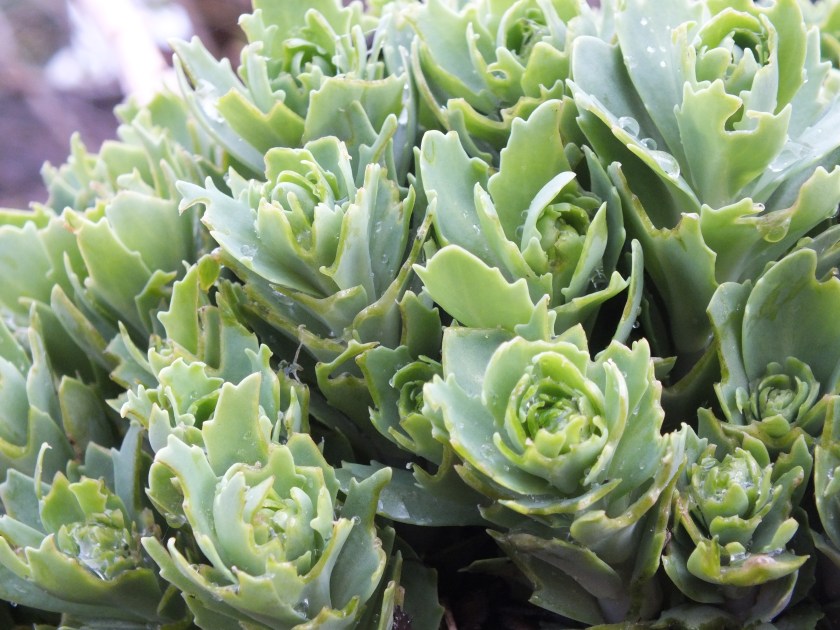
Sedum!

DSCF3709.JPGIf you could see my yard and house you’d find out quickly that I really, really love plants, but there are some plants I love more than others. Hostas are one, and we ripped up the little patch of grass in front of the house and have been turning it into a hosta garden.

Another I love is sedum. When the FFA had their plant sale a few years ago they had a lot of stuff left over that didn’t sell that they gave me a whole flat of young sedum plants that immediately came to live in our back yard, and they’ve been thriving ever since. They are all up now and looking very well. They’ve tolerated an amazing variety of conditions in the years we’ve had them, ranging from near flood to drought and are still hanging in there.

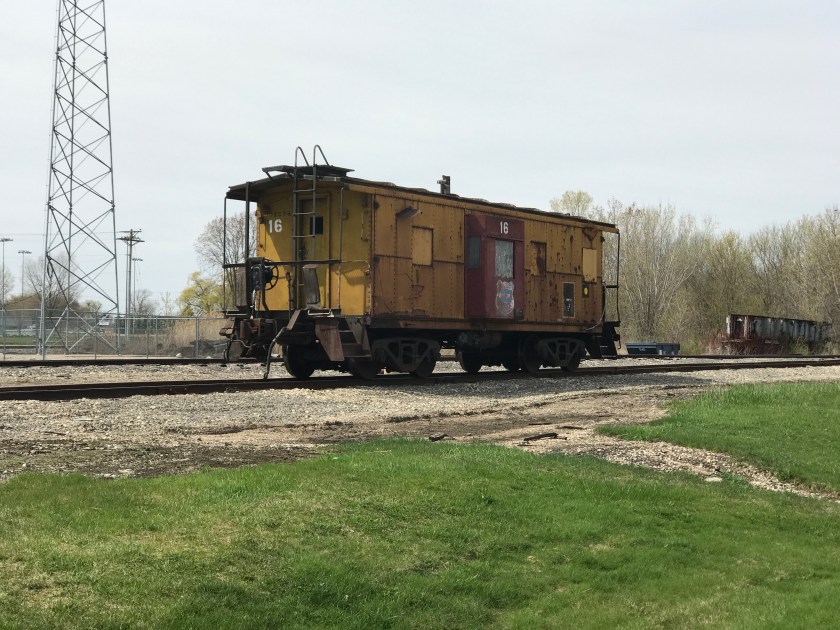
Caboose?

IMG_0186.jpg

I have a small railroad yard about a block away behind the house and this beastie is parked back here again. It turned up on a siding up by the old depot a few weeks ago, then disappeared, then reappeared at a siding down by Lunda Construction about two miles from here, and now it’s back up here again.

Speculation is that the former owner of Lunda bought it. He already has one fully restored caboose on his property just north of town, so we figure this one is destined for restoration as well.

Farm Round Up

Lettuce Shortage

MrsGF works with the state’s various food service operations, including monitoring food purchases, and she tells me that the state’s prime food vendor has put out a warning that it may not be able to fulfill orders for lettuce because of adverse weather in California. Those poor buggers out in California — first a years long drought, then they get so deluged with rain that they can’t get their crops planted on time…  They just can’t seem to get a break. She’s put out warnings to the state’s food service operations that they’re going to need to change menus, switch to different types of greens, etc. until the situation is resolved. Kale and cabbage haven’t been hit quite as hard, but they’re seeing some serious shortages for various types of lettuce. Apparently it’s hitting the consumer market hard as well and prices are going up fast at the retail level. The Chicago Trib had a story about it just the other day here. (warning: may be paywalled) I was just at the local grocery store this morning and noticed iceberg lettuce is now around $2.50 a head, a dollar a head more than what it was what it was a couple of weeks ago, and they’ve put a limit of 2 heads per customer on purchases. Romain lettuce has also shot up in price. Pre-cut salad mixes containing lettuce have also gone up in price.

If you’re really desperate for leafy greens, fresh spinach looks like a bargain, going for about one third of the cost of lettuce at our local store. It also tastes better and is significantly better nutritionally than iceberg lettuce.

Over Supply

The biggest problem with agriculture right now seems to be over supply. There’s just too much corn, soybeans and milk being produced. Here in the US I’ve heard of co-ops, large farmers and grain dealers renting abandoned airport runways to pile up corn because they don’t have anyplace to put the stuff. Corn prices on the futures market are sitting at around 3.63 right now, and haven’t moved more than twenty cents up or down for months. And with the US looking at a seriously huge corn harvest in 2017, barring some kind of disaster, about the only direction that price is going to go is down.

Low soybean prices have made farmers in Brazil hang on to their crop, storing it rather than selling it in the hopes of higher prices. But now the corn harvest is going to start in June, and with the bins full of beans, there’s no place to store the corn. The Ukraine is predicting a huge increase in corn production to further destabilize things.

And as for the milk market, oh brother… The market is so glutted right now, especially in the US, that they don’t know what to do with the stuff. I’ve heard of processors pouring milk down the drain because they can’t deal with all of it.

The ag industry is going to have to get a grip on the problems with over production or the whole system is going to come crashing down around our ears.

Herbicide Resistance On The Rise

Weeds resistant to commonly used herbicides are becoming a massive problem. Glyphosate resistant waterhemp, a type of pigweed, has been spotted in at least 17 counties here in Wisconsin, and its cousin, a resistant Palmer amaranth, has been spotted in the state as well. Pigweed is especially difficult to deal with because it produces massive amounts of seed.

This is just another indication that we really need change the way we deal with weed problems. We can’t just keep trying to come up with ever more toxic chemicals to kill off weeds and GM modified crops. That scheme will always result in weeds eventually developing resistance to the herbicides and the cycle starting all over again.

Climate Change

It’s interesting to note that while we have an administration that continues to deny climate change, everyone else seems to have just accepted it and is trying to deal with it. Even Wal-Mart, which isn’t exactly known as a bastion of liberal policies, is trying to deal with the situation and is putting pressure on its suppliers to do likewise. While the politicians bluster and bluff and bloviate and grasp at straws to try placate whoever writes them the biggest check that week, out in the real world a lot of major companies have realized that if anything positive is going to get done, they’re going to have to do it themselves. Even some of the oil companies have started to admit that something has to be done.

GIPSA Rules Delayed

I don’t blame you in the slightest if you don’t know what the GIPSA rules are. If you raise poultry or pigs for one of the big meat packers, you know all about this and are quite possibly pulling your hair out. But almost no one outside of the business does.

The rules were intended to protect farmers who contract to raise meat animals for a meat packing company from abusive and discriminatory practices. “because the processors own the birds, the feed, and other inputs, they can unfairly disadvantage or preference one grower over another as a way of forcing the growers to do things against their will or shut down dissent.” is how critics put the behavior of the processing companies in one article. The basic idea is that the rules would have given farmers who raise animals on a contract basis some minimal rights without having to jump through a lot of hurdles that are basically impossible to jump. The rules were changed by court interpretations about ten years ago so farmers now have to prove that a company’s actions harmed not just them, but the entire market, before they can try to take any kind of legal action against the processing company. As one representative for farmers put it: “We can’t overstate the level of fear and intimidation felt by poultry growers that contact us or our partner organizations,” says Harvie. “If they choose to speak up, they risk everything—their contract, their land, their homes.” You can read that whole story here.

The administration has delayed the implementation of the rules and right now it looks like they will be eventually be abandoned entirely and the meat packing companies are already celebrating a victory.

Vomitoxin

A nasty name for a nasty mycotoxin. Vomitoxin is nasty stuff and it seems to be getting more common in US corn. It is a toxin caused by mold in corn, and generally hasn’t been much of an issue in the US, but it seems to be getting worse, especially because of wet conditions during last year’s corn harvest. The toxin makes corn unfit for consumption, even as animal feed.

It isn’t even suitable for use for ethanol, because the ethanol makers depend on dried distillers grain (DDG) to make a profit. DDG is what’s left over after the ethanol making process. It’s a fairly high protein cattle feed. The ethanol making process concentrates the mycotoxin, making the resulting DDG even more toxic than the corn originally was.


Wisconsin Public Radio

Wisconsin Public Radio’s pledge drive is coming up May 2 – 5. I’m a big fan of WPR and it’s news, entertainment and music programming, and if you listen to WPR I am going to encourage you to kick in a few bucks to help keep the service going. Contrary to what you may have heard, the majority of WPR funding comes not from the taxpayers, but from sponsors, foundations, and people like you and me who are willing to throw them some money to help them keep going.

In an effort to help convince people contribute, certain individuals, foundations and companies do something called a challenge grant during the drive. For every dollar a contributor pledges during a specific time slot, the challenge grant will contribute a dollar. So anyone who pledges during that time essentially doubles their contribution. I’m doing a challenge grant again this year, this time during the Kathleen Dunn Show. So if you listen to WPR and want to support the service, this is a good time to do it. Not only will you be supporting an excellent radio service, I’ll double your money up to a certain limit.

When, exactly? Not sure yet. They’re still doing scheduling and planning but they’re going to let me know when the challenge will take place and if there’s any interest here I’ll pass the info along when I get it.

Changes… And New Toy… And My Mind Wanders. Again

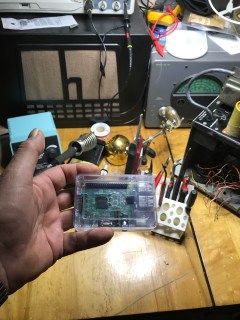
IMG_0167This is my new toy, a Raspberry Pi 3. If you want to experiment with building evil robotic minions to help you to take over the world, this is a good place to start. It has a 64 bit, quad core ARM A53 processor running at 1.2 GHZ, a gig of RAM, 4 USB ports, an HDMI port, LAN port, WiFi, reasonably good graphics and sound, and runs a version of LINUX. It can connect to the outside world to enable the computer to hook up to sensors, relays and controllers to make evil robots to allow you to take over the world, control devices, record data from sensors and all sorts of fun things.

And it costs a whopping $35. Less than what it would cost me to get a good meal at that fancy restaurant a couple of blocks from here. Hell, less than what just a bottle of wine would cost over there.

Now this, on the other hand… Well, not on the other hand because you couldn’t pick it up with one hand, but you get the idea. This is the first computer I ever owned. It is a Ohio Scientific C2-8P, and if you’ve 2ecd9544af30be5a0d4d8f7926065484never heard of it, I don’t blame you. Ohio Scientific is just one of many, many computer makers that tried to get into the home and small business market back in the late 1970s through the mid 1980s, and failed. It did better than a lot of them did, but eventually it failed, along with Atari, Commodore, Apricot, Coleco, Exidy, Franklin, Panasonic, Radio Shack/Tandy, Sinclair, Texas Instruments… Well, the list goes on and on.

Mine wasn’t even as good as the one in the photo over there. Mine was an early version that didn’t have the fancy paint and logo on the front. And it was nasty. It was about the size of a microwave oven, packed solid with circuit boards the size of a sheet of paper, each of those stuffed with chips of various types, all hooked together with miles of ribbon cables and wiring.

Mine was kind of odd. Kind of? Ha! It was seriously odd. I’d never seen anything like it before or since. I suspect it was an experimental unit that had been heavily modified. According to the photocopied documentation I got with it, it could support three different processors, a 6502, 6800 or 8080. Or maybe a Z80. Don’t remember. It was a long time ago. They were selected via a rotary switch on the back???? Really? Seriously? I never knew for sure. There was only one CPU board in it when I got it. There was a big rotary switch on the back but it wasn’t wired to anything. I think they had some kind of scheme where the switch would select one of 3 CPU boards connected to the backplane, but since there was only one CPU board and the switching system wasn’t connected I have no idea what the hell they were trying to do.

Why 3 different CPUs? I suspect they intended to use it as some kind of development and/or testing system for different types peripherals. The documentation I had was originally typewritten, with hand written notes in the margins, and then had been photocopied. It was interesting, that’s for sure. Large parts of the machine were wire wrapped and hand soldered so someone had been in there fiddling around. A lot.

It came with a whopping 4K of RAM. I spent hours hand soldering chips to the memory board to bring it up to 8K. The company I bought it from found an extra 8K RAM board for it and gave that to me. It was, of course, unpopulated, so I spent many more hours hand soldering RAM chips to the extra board.

Data storage was on a cassette tape. It read/wrote data to a cassette tape at a whopping 300 baud using the Kansas City Standard (if you know what that is, you really, really need to get out more and get a life). That’s 300 bits per second… Oooo, the excitement! To load the editor/assembler program so I could program in assembly language took 20 minutes. Video was black and white, text only, going to an old Panasonic B&W TV set that I had to re-wire to handle the video input from the computer. The company I bought it from offered to give me a “real deal” on the matching 8 inch floppy drive system for it. I passed because I could have bought a pretty good car for what they wanted for the thing.

What did it all cost? By the time I got it up and working (sort of) I probably had well over a grand invested in the thing.

In a way it was completely worthless, that computer. I never actually did anything genuinely useful with it. But on the other hand, if you count the intangibles it was worth every penny because I taught myself programming in BASIC and assembly language on that beastie. I learned how to solder IC chips to circuit boards. I learned how to hunt down failed components (capacitors failed all over the place on that thing for some reason). I learned why storing data on cassette tape is very, very nasty. Trying to get that thing running and keeping it running taught me more about the technology than all the computer science classes I took in college.

And I learned how to make my own Faraday cage because it put out so much RFI it screwed up every TV and AM radio in the area when I turned it on and had build one around it just so I could use it.

Now, where was I? How did I get off on this? Sheesh, I was going to talk about changes in technology, make pithy remarks about how almost no one back then foresaw how computer technology would evolve, morph into what it is today where computers are literally everywhere, in every aspect of our lives.

Instead I end up doing this ramble down memory lane babbling about a relatively minor player in the early computer market… Sigh.

Damn, I hated that computer. Wish I still had it.



Burbs and Compost

DSCF3697.JPG

Burbs

And the ever popular Compost!

IMG_0165.JPG

We finally got some fairly nice weather in between rains and I’ve been taking advantage of it to haul in some compost. The yard is too wet to drive the truck over it so I’ve been hauling it in the little trailer behind the lawnmower. Hopefully we’ll be able to grow something back here now other than weeds, oregano and dust baths for the burbs.


Catching Up

Brazil Scandal

I haven’t heard much about the meat scandal going on in Brazil on the main stream media but it’s been all over the ag press since the story first broke. According to reports, Brazil’s meat exporting companies have been involved in bribery scheme where government inspectors and auditors were bribed to permit the companies to ignore sanitary regulations and inspections, falsify medical records and certificates, and ignore tampering with products to disguise problems with the meat. It’s also alleged the producers used ascorbic acid and other chemicals to disguise rotten meat, injected water into meat to inflate the weights. It’s just nasty. The whole story sounds like something straight out of “The Jungle” by Upton Sinclair.

There are now reports of large numbers of arrests as the government tries to do damage control. Brazil is the largest exporter of beef and poultry in the world, and the scandal has decimated the industry. Many countries instituted outright bans on importing Brazilian meat and meat products or instituted much stricter inspection protocols. Things are slowly starting to get back to normal, but the Brazilian meat industry really took a hit on this one and it could take some time for it to recover.

The really scary part about this is that meat processing companies had allegedly been bribing the country’s federal meat inspectors for years before this was discovered.

Does No One Remember?

Does no one remember what things were like before the EPA came along and environmental laws were finally brought on-line? It seems not, judging from the stuff I’ve been hearing coming out of the “new” EPA and the new administration. If you read the laundry list of things the new administration is planning on doing when it comes to the environment, it seems none of them do.

And what’s up with this fixation on coal that this administration has? Pruitt just put on a staged event with coal miners in full gear standing around him to try to spin how the gutting of environmental regulations is going to somehow create massive “economic growth”. All things considered, coal is a very, very minor cog in the energy machine. For many years coal has been becoming increasingly irrelevant in the energy world, and not just for environmental reasons. It’s expensive, dangerous, dirty, inefficient, produces huge amounts of waste material when burned, it’s hard and dangerous to mine, and the coal industry doesn’t really employ all that many people.

When I remember what it was like back in the 1960s, and think that we might be going back to those days of cities being entombed in clouds of toxic smog, rivers that were so polluted they actually caught on fire, where if you fell into a river you’d probably die from poisoning before you drowned, and all just so a few politicians can pose for pictures with a handful of miners from an industry that was starting to fail even before they were born, it makes me wonder what the hell is going on.’

Rather than spending all this time, energy and government money propping up the coal industry allegedly to “protect” the jobs of a few thousand miners as the politicians claim they are doing, wouldn’t it make more sense to invest those resources in training the miners for other types of work, giving different types of businesses incentives to move into those areas, etc?

Canadian Dairy Fights Back

The Canadian dairy industry is pushing back against claims that it and the Canadian government are at fault in Grassland cutting off 75 dairy farms here in the state. As I pointed out previously, the story being pushed out by the company about why it abruptly cut off 75 farms, forcing them to scramble to try to find new processors to buy their milk, seems to be a bit disingenuous. Especially when Grassland is claiming it had to cut off those farms because it can’t sell the milk while the company itself is seeking permits to build it’s own 5,000 cow dairy farm.

The Canadians are pointing out that the real culprit is the US’s overproduction of milk. And they’re right. The market for dairy products is utterly saturated. Despite an increased demand for butter, the US domestic market has been flat for years, with some sectors, such as consumption of liquid milk, actually declining despite heavy marketing and various gimmicks. And while demand is shrinking, prices falling, the diary industry responds by drastically increasing production?

Even one of the farmers dropped by Grassland agrees as is noted in the story linked above.

One of the biggest problems with the whole dairy industry in the US is government intervention in the market. Political manipulation of the market has resulted in a maze of rules, regulations, laws, marketing schemes, surplus buys and I don’t know what all else, that has left us with a marketing system that is convoluted, irrational, and so outdated that parts of it go back 75 or even a hundred years.

More Spring

The cactus we rescued from the town compost pile was immediately named Mr. Spiny, IMG_0156and much to our surprise he seemed to actually like being out doors and in the corner garden. He doesn’t look too good at the moment after this winter, but MrsGF tells me he’s going to be just find once the weather starts to warm up. I hope so. I’ve become rather fond of the thing.

Then there is this thing, which I do not like. It’s a pretty bush, I’ll admit that. But dear lord it’s nasty. It has some of the worst thorns I’ve ever had to deal with. They’re so sharp they go right through even my heavy leather welding gloves. I’d like to get rid of them but MrsGF likes ’em for some reason, and they’re on the north side of the house IMG_0159where it’s hard to get anything to grow anyway, so it looks like I’m going to be stuck with the damned things for another year.

I never have to worry about these guys. They just keep going, and going, and going…

IMG_0158

I don’t know what they actually live on. There’s no soil here, just rock.

I got myself seriously chastised the other day because I’ve had this dopey thing for about 4 years and in that time have only 3,200 miles on it.

IMG_0162.JPG

Odd, really. I put something like 13,000 miles on my BMW the first season I owned it. But as soon as I picked up the Goldwing, which is far more comfortable to drive than the BMW was, I seem to have lost interest in motorcycling. Strange.

Enough. It’s supposed to start raining this afternoon and I have a lot to get done yet today!


Spring Prep

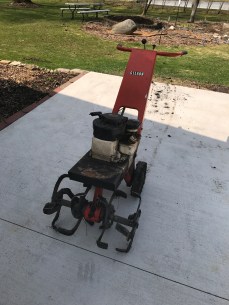
I dug the tiller out of the garage this morning and started doing some work in some of IMG_0148the beds here. That old tiller… It is literally almost as old as I am, probably dates to about the early 1960s. It’s exactly like one we owned when I was a little kid. The dopey thing is the most reliable piece of equipment we own here. It just plain works, and always has. Pull it out of the garage, fill it with gas, check the oil, and pull the starter a couple of times and it starts. It’s an ancient Briggs engine, the brand name, Gilson, is put on with stickers, but the thing is built like a tank.

I’m afraid I was a bit sneaky. Every year MrsGF agrees that we really, really need to work up some of the long established beds because the soil has deteriorated so badly. But when I finally get the tiller out and start to actually do it, ah, well… This flower is so neat and it will come back again this year, and the cone flowers are going to come up there, and this plant is in there and she doesn’t want to do that. And to be fair, there are some nice plants in there, but in order to save those few nice plants, it means the ground is so bad in those areas we can’t plant anything else but weeds.

So I got her to agree to do it yesterday, and while she’s at work this morning I got out there quick and worked everything up before she could change her mind.

IMG_0154.JPG

This area here was first an herb garden, then we tried strawberries, which didn’t work that well because, well, the soil was so bad. So the oregano more or less took over everything except for one patch where the cone flowers had established themselves. It’s a fantastic spot, sheltered in the “L” of the house, with exposure to the south and west, so it’s warm, sunny, etc. But the soil… Oh dear lord it was bad in there. When we first put this bed in we hauled in a lot of compost and worked it in, but that was something like 20 years ago and nothing has been done in there since. The soil was so hard I had to go over it four times with the tiller.

We call this spot the Stump Garden because that’s what it was, originally. It was a big old stuIMG_0151mp when we bought the place about 20 years ago. We could have hired someone to come in and grind it out, but why pay good money for something like that? My solution was to build a retaining wall around it, fill it with dirt and compost, and plant stuff on top of it, my thinking being that sooner or later the stump will take care of itself by rotting away.
And it did, and in a remarkably short amount of time. Within about three years there was nothing left of it under the dirt. We decided we liked having a raised bed there, so we lowered the retaining wall a half foot or so and kept it in place. We’ve found this is an ideal place for growing lettuce. It’s well drained and in partial shade which helps keep the lettuce and greens from bolting. We re-seed it a couple of times during the summer so we have a constant supply of fresh salad greens well into the fall of the year.

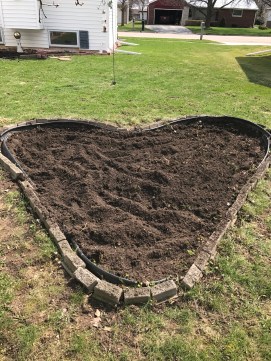
IMG_0152The heart garden is called that because it’s sort of heart shaped. My only regret is that I didn’t make it bigger. Much bigger. Because I hate lawns. No excuse for lawns. None at all. I keep trying to kill mine off, but it keeps coming back no matter what. But I’m still working on it…

It’s not far from the herb garden area and I’m seriously considering linking the two up and turning it into the “Shapeless Blob” garden as an excuse to get rid of more grass.

This is another one that desperately needs work, but MrsGF was reluctant to let me work up because there were some plants in there she liked. Even though she told me to work it up last night, I suspect now that I’ve actually done it I’ll hear about it, especially if whatever I plant in there doesn’t work out well.

One year we put the entire thing in alyssum, a variety with an incredibly intense smell. When you’d walk out the back door of the garage the entire area was covered in this incredible scent. I’m tempted to do that again. Maybe. Not sure. The area is shaded from about noon on by our pear tree so whatever we put in there has to be able to deal with that.

Then there’s the garage garden, which is by the garage. Well, of course it would be, IMG_0149wouldn’t it. Garage. Garden… We really worked this one over last year. The soil was terrible in there. I covered the entire area with about six inches of compost and worked it in last year, and that has helped enormously. I have high hopes for this area this season.