I haven’t been talking much about farming lately because not much has really been going on over the last month or so. But butter — good grief. The butter market has gone goofy.
Wholesale butter prices are flirting with record prices in some markets, even surpassing record levels in some areas. Retail prices have been creeping up. Demand for butter has been just about the only thing that’s been keeping farmgate fluid milk prices at a reasonably decent level over the last few months. Around here prices for generic butter is pushing close to $4/lb. while prices for the “premium” brands is in the $4.50 range, with some of the premium brands pushing $5/lb. retail prices. The exception is KwikTrip, which is selling their house brand for $2.99 in their convenience stores around here.
I’m always fascinated by how the public’s attitude towards butter and dairy fat in general has changed over the last few years. Thanks mostly to the marketing claims made by margarine manufacturers, and with little or no actual scientific studies backing those claims, butter and dairy fat was being blamed for everything from obesity, to heart disease, to stroke, to I don’t know what all else, while margarine was being pushed as a “healthy” alternative, when the opposite was true.
I always hated margarine. I hated it’s texture and flavor, I hated how it melted or didn’t melt, hated how it worked when used in cooking. But then I’m weird that way. I have one of those hypersensitive senses of smell and taste, especially smell. I’ve a bit of a reputation as being a picky eater, but I’m really not. The problem is that I smell and taste things most people seem to be unaware of.
But let’s get back to butter…
The item up there from AgriMoney reminded me of the Great Butter War going on here in Wisconsin right now. The picture of Kerry Gold butter up there isn’t just some random butter image, it’s appropriate because at the moment Kerry Gold is banned from sale in Wisconsin along with a lot of other brands of butter.
Before butter can be sold in the state, it has to be graded on taste, texture and color through some state accepted system, by state accepted inspectors. This means that if a butter maker can’t or won’t spend the time and money to put their product through the state’s inspection system because of cost or whatever reason, it can’t be sold in the state, even though it meets all other accepted federal standards.
Consumers didn’t know about this until one day Kerry Gold butter abruptly vanished from the shelves of the grocery stores here in the state not too long ago. It isn’t that the law was just passed, it’s been on the books since the 1950s. It seems that a lot of grocers just didn’t know about the law until fairly recently.
Wisconsin has a long history of laws about butter. It is still illegal for restaurants to substitute margarine for butter without the customer specifically requesting it. It is illegal to serve margarine in state prisons, schools and hospitals except for health reasons. And until the late 1950s it was illegal to sell margarine in the state that had been dyed yellow. Margarine is actually a rather sickly looking whitish color and is dyed yellow to make it look appealing. Margarine makers used to include a yellow dye packet with the margarine sold in Wisconsin so the consumer could dye it themselves.
I should point out that Wisconsin’s butter grading law has nothing to do with food safety. The grading system the state insists on is made up of largely arbitrary standards for taste, texture, smell and appearance. Kerry Gold and the other butters banned from sale in the state meet all USDA and other federal standards for quality. They just haven’t been subjected to these arbitrary tests.
Well, the whole thing is going through the legal system now, and I suspect that sooner or later the Wisconsin requirements will be overturned. But until then you’ll have to order your Kerry Gold online or hop across the border to Illinois or Minnesota to get your fix.
I’ve been procrastinating terribly with a lot of projects around here because, well, because summer! I’m sorry, but when the weather is reasonably nice outside I want to be outside doing stuff; puttering in the garden, biking around the back roads, walking
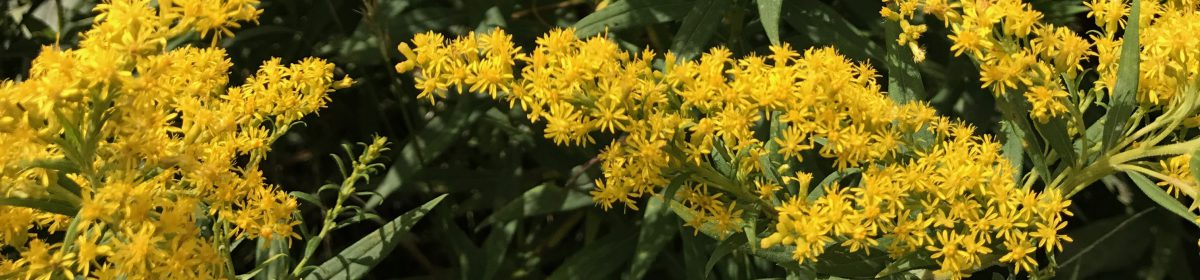
That’s one of the most perfect flowers I’ve ever seen growing out in my backyard. My wife picked up these seeds for almost nothing on sale, just threw them out into one of the gardens, and this is what we ended up with. Wow. That woman can grow anything.
around town, taking pictures of flowers and plants and trees and birds and… Well you get the idea. So indoor projects and hobbies take a backseat to outdoor stuff this time of year. When the temperature starts dipping below freezing and the snow begins to fly, that’s the time to work on those indoor projects. Maybe.
Speaking of flowers, I really, really wish I’d put in more of these guys. We only have two or three of these and they are absolutely amazing. The brilliant red color, the shape. They just shot up through the white alyssum with that amazing contrasting red. Make note to self to put in more of these next year.
We finally admitted that we planted a lot of stuff way too close together in the vegetable gardens and did some serious weeding out of the pepper plants last weekend. This wasn’t much of a sacrifice because we just pulled out all of the “cherry bomb” hot pepper plants which were just nasty. I suspected they were going to be a bust when I brought one in, cut it in half, and almost immediately my eyes began burning. I like a bit of heat, but these things? I gave one to my neighbor who loves really hot peppers, he took a bite, and about five minutes later put down a half gallon of milk to try to stop the burning.
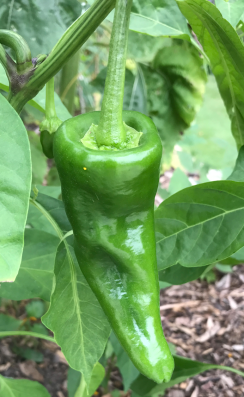
So out they went. And it’s resulted in an almost immediate improvement in the other peppers we had planted in there.
The poblanos and banana peppers began looking much healthier and started to set a lot more fruit as soon as we thinned things out.
I don’t know why we can’t learn this lesson. Every year we end up crowding things too close together in the beds, and at the end of every season we promise ourselves we won’t do it again. But the following spring there we are crowding things in again.
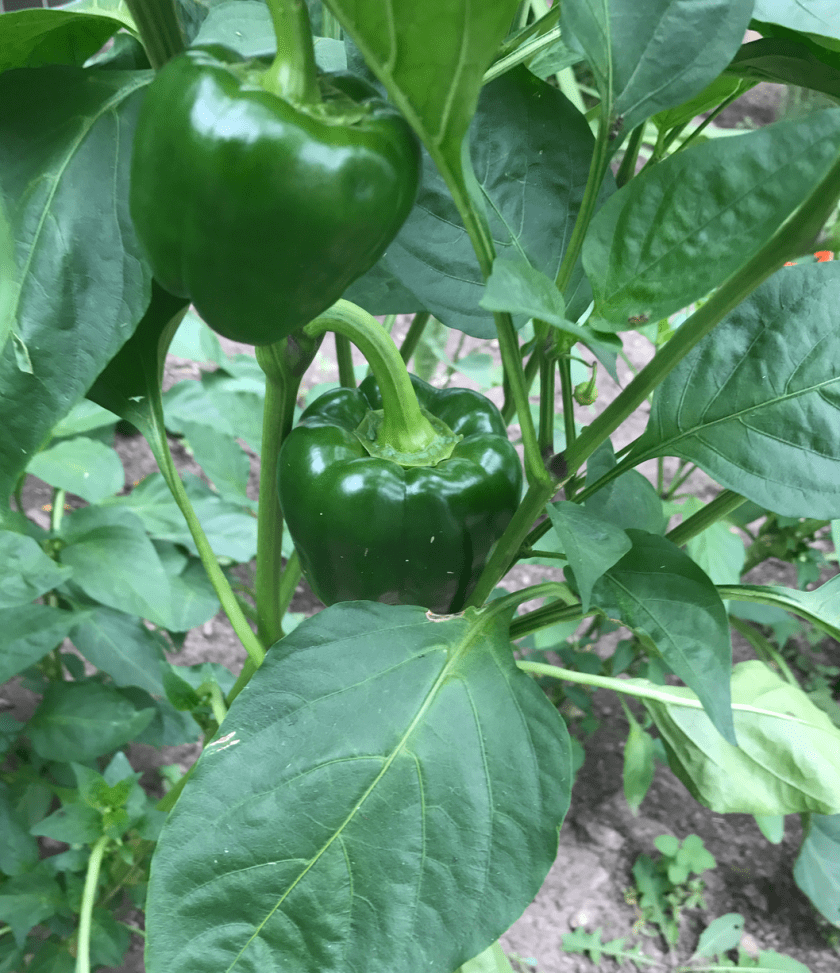
We really like the poblanos (ancho) peppers and the banana peppers. MrsGF and I both think they have far more flavor than the more common sweet bell peppers that are more commonly grown around here. But we did put in a few bell peppers as well and they seem to do be doing pretty good. We were a bit worried about them for a while there. The plants looked good but they were late in putting out blossoms and setting fruit, but now they seem to be making up for lost time.
We’d never grown squash here before, and since we love acorn and butternut squash, we put some in just to see what would happen and this is what we ended up with.
That’s only four plants in there, and they’ve taken over that whole garden on the west side of the garage. Loaded with squash now. I don’t know how they grow that fast. The other day I mowed the lawn near there, and the following afternoon there were vines running three feet out onto the grass. How does a plant grow that fast?
Some are just starting to come ripe. We had one of the acorn squash last night. Just cut it in half, scoop out the seeds, put some butter and brown sugar in the empty seed cavity and bake until tender. Then just scoop out of the skin and eat.
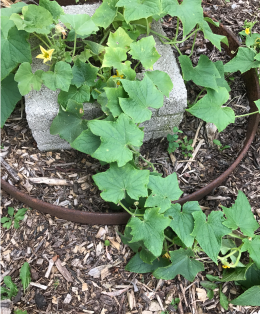
The cucumbers have been disappointing. I’m the only one who eats fresh cucumbers around here, so I only put in two or three plants and that usually gives me enough to satisfy my craving for fresh cukes, plus a few extra to make refrigerator pickles or something. But this year they haven’t been doing all that well. The plants themselves are doing just fine, they’re putting out flowers, but actual cucumbers? Not so much. I think I’ve gotten maybe six cucumbers off three plants so far this year.
MrsGF thinks it’s because we’ve seen so few bees around this summer. I hadn’t noticed it until she mentioned it, but she’s right. Aside from a few bumble bees, I haven’t really seen any. I haven’t seen any honey bees at all. Usually this time of year we have a many different types of bees busily working away at the flowers. I have yet to see a single honey bee here this year. That’s very troubling.
Then I ran into this yesterday. A single, lone raspberry. We only have a dozen or so raspberry plants tucked away in a corner of the garden behind the garage. I love raspberries but I’m not supposed to eat them because of the seeds. Still, it’s interesting how none of the berries ever seem to make it into the house. They seem to mysteriously vanish before they get in the door. Funny how that happens, isn’t it?
The raspberries were done producing fruit long, long ago, so I was surprised to see this lone berry out there when I was puttering in the garden yesterday. I’m surprised the birds didn’t get it.
Getting out of the garden and into the countryside, some people around here are wondering what in the world this stuff is. Fields of this have been popping up around here for the last couple of years now. It sort of looks like badly stunted corn, no more than three or four feet tall. It isn’t corn, though, it’s sorghum, or milo, and it’s being grown for Kaytee, the bird seed company. Their headquarters is in Chilton, about six miles from here. When I was a kid it used to be fairly common. It was grown as cattle feed or to make syrup. Looks like they have a pretty good crop of it this year.
Let’s see — The Old Timers are claiming we’re going to have a really, really nasty winter based on the proverbial “signs”. They’re also claiming winter is going to come early as well.
A few maple trees have started to turn color. This is supposed to be a “sign” that we’re going to have a miserable winter. A safe prediction because in Wisconsin we generally always have a miserable winter.
The “signs” — ah, yes, the signs… I’m told the Old Timers can predict the weather based on the signs provided by nature, if only we were smart enough to interpret them. Things like the width of the band on fuzzy caterpillars, how and when birds flock together in the fall, how fat the bears are (well, not that any of them have ever actually seen a bear because they’re sitting down in the restaurant lingering for hours while nursing a cup of coffee while the waitstaff go crazy because they’re taking up a seat that a paying customer could be sitting in), maple trees starting to turn color early, that kind of thing.
Exactly how these mechanisms work is something they never explain, of course. I would be very interested in knowing how a caterpillar knows we’re going to have three weeks of -20 temperatures in January, or the geese know that we’re going to have a blizzard right after Christmas so they’re flocking up in August so — so they can what, exactly? Why would the geese even care? They’re not here when it happens so a blizzard in January isn’t exactly something they care about in the first place.
Of course the Old Timers don’t care about accuracy. By the time winter comes, anything they said will be long forgotten. Unless, of course, they hit a home run and actually manage to predict something, in which case they will remember and make sure you do too. It’s harmless and they get a kick out of it, so I just sit there and nod.
Let’s see, anything else? Oh, almost forgot. I hit 500 miles on the bike last week. When I turned up with a new bicycle on the back of the truck everyone was thinking yeah, right, he’ll ride it once or twice and it’ll end up hanging on the wall gathering dust until he drops dead and then we’ll have to sell the damned thing at the estate sale. If I keep up my current pace and the weather cooperates I should hit 1,000 before winter shuts things down.
The eclipse was a bust for us. We were up on Washington Island on Monday and not only was it very cloudy, it didn’t get all that dark, either. MrsGF caught a glimpse of the very end of it but that was it.
The image is dark because it was eclipsing out when I took it.
We were on the island to visit a lavender farm up there, Fragrant Isle. If you want to know more about them here’s a link to their website. Interesting place and it is indeed, well fragrant.
My experiences with growing lavender myself have been disappointing. I’ve tried a couple of times with poor results. Wrong type of soil here, I’m told. Of course I didn’t try very hard because I don’t really like it all that much. I don’t think it’s a very good looking plant, and to be perfectly honest, I hate the smell of the stuff. But everyone is like “Ooooo – Lavender!!” so I just stand in the background and try not to inhale and let them enjoy themselves.
Anyway, I like Washington Island. I don’t get up there as often as I’d like because it’s about a two and a half hour drive from here, plus a ferry ride, so about the only time I can get up there is if I have at least an entire day and can get on the road by 6 AM, or can spend the night up there. It’s an interesting place. It has a permanent year around population of about 750 people or so, it’s own K-12 school system, own power plant. Once upon a time there was a lot of farming and commercial fishing going on up there and it was a fairly thriving little community, but commercial fishing has fallen off to almost nothing, and except for a few speciality things, farming has dwindled to nothing up there as well. They mostly survive on tourism now. While it hasn’t turned into the tourism insanity that’s struck (and pretty much ruined) Door County, that kind of thing has been sneaking in over the years.
One of my favorite spots up there is this little lake. It’s well off the beaten track, hard to find, and as a result no one goes there and it’s still unspoiled. And quite! It’s astonishingly quiet. Absolutely no noise at all. No cars, no ATVs, no jet skis, and because it’s well off the flight paths, not even any planes overhead. It’s probably one of the last really quiet spots left in the state, where you can sit for an hour and hear nothing except the frogs, crickets and birds.
Been playing around with taking panoramic photos once in a while. This is an over view of a marina north of Sturgeon Bay taken from the top of an abandoned quarry across the road.
Anyway, that’s how I spent “Eclipse Day”. No eclipse sighted, but we did have a very pleasant mini vacation.
In the last 72 hours I have been invited to go to a drag queen reading hour at a public library, a nude bean bag tournament, a gospel music festival, and a goat milking contest.
I almost never talk about politics here and I try to refrain from headlining a post with a referral to a news story, but this whole Foxconn deal has me rather concerned.
While the governor’s office and the state legislature are collectively wetting themselves over this deal, and are flooding the airwaves with self congratulatory images and stories hyping this whole thing, if you start to look into the deal itself, if you really look into the details of the whole thing, it starts to look more than a little concerning. There is so much misinformation and outright lying going on over this deal it’s hard to keep track of what’s a fact, what’s hyperbole, and what’s an outright lie.
The whole 13,000 jobs claim is, at best, a wild exaggeration, accompanied by rarely mentioned and even deliberately hidden disclaimers of “if this” and “if that” and “maybe”. The actual number of jobs Foxconn is going to develop is 3,000. And even that number is in dispute because if you read the fine print there are a lot of “maybes” and “ifs” buried in that as well.
Then the governor’s office is claiming that the plant will add 22,000 or even as many as 35,000 jobs in associated support industries. That is a number that is wildly exaggerated as well. If the company ramps up to the full 13,000 positions that the politicians are claiming, it might, might result in the creation of 15,000 new jobs in businesses that support the facility.
The state claims that all of this will be watched carefully, largely by the Wisconsin Economic Development Council or WEDC, to make sure they adhere to the terms of the deal. Well, that’s part of the problem. The WEDC has a long history of being utterly incompetent and there are charges of it being actually corrupt because of it’s dealings in the past. It has “lost” loans that it had given out, gave loans and tax deals to people under indictment on criminal charges in other states, given deals to individuals and companies that donated heavily to politicians or to their PACs, given deals to companies that moved jobs out of the state… The list goes on and on. And while the administration claims it’s all better now, recent audits of the organization’s operations indicate that no, it isn’t. It still has serious problems and if it were a department in a business out in the real world, most of them would have been fired for incompetence or even brought up on charges.
The data I’ve been seeing about the actual financial arrangements don’t look very encouraging either. Not only is the state giving the company exemptions from specific taxes, other tax breaks, free infrastructure and dozens of other deals, there are actual cash payments to the company in play as well. If I’m reading this right, not only is the company going to pay virtually no taxes at all, the state is actually going to pay them up to $250 million a year, depending on the number of people it employs.
Then there is the fact that a lot of those jobs aren’t going to be going to people from Wisconsin. The facility is being built down near the Illinois border, and they’re estimating that as many as 40% of the jobs are going to be going to people from across the border.
Then there is the company itself. Let’s face it, this is not a good place to work. They had to put safety nets around their factories in China because employees were committing suicide because of the working conditions. It’s CEO publicly called the company employees animals and said he hired zoo keepers to train his managers in how to deal with the rank and file employees.
This whole deal — I hope it works out, but nothing about this smells right.
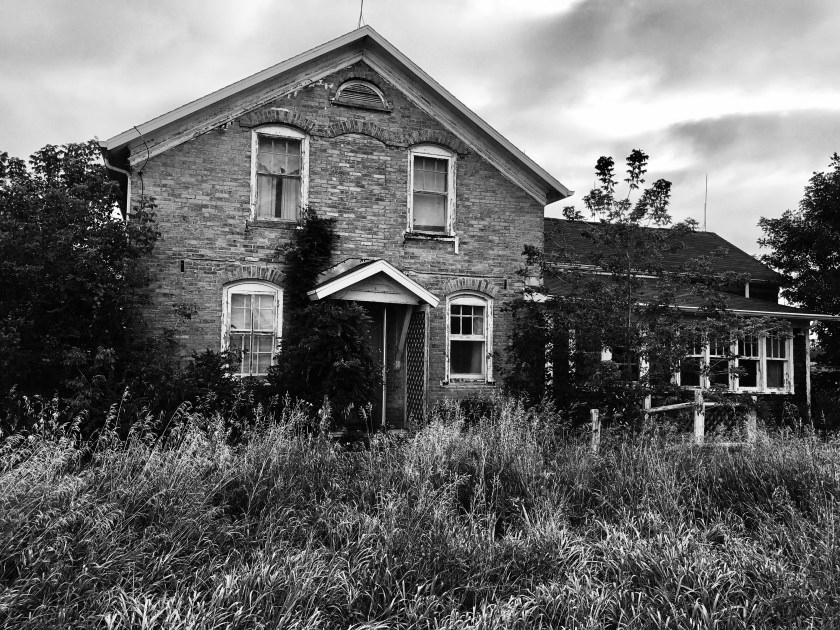
When I come across an abandoned house, especially one as nice as this one once was, it makes me wonder what happened. Why did they just up and leave, abandoning their home? I know why barns are abandoned. Old barns just aren’t useful for modern farmers any longer and they’re more trouble to maintain than they’re worth.
This looks like it was a pretty nice house, and it looks like it was still lived in and maintained until not too long ago. So what happened? One’s imagination starts to work, conjuring up all kinds of stories to try to explain why a family might abandon a house. I start thinking about the people who built it originally, the family it was made for. Once upon a time this was someone’s dream, a lovely brick house they could raise their family in. Well made, secure. Warm and snug against the Wisconsin winters. And now here it is, abandoned, slowly rotting away.
Why? What happened?
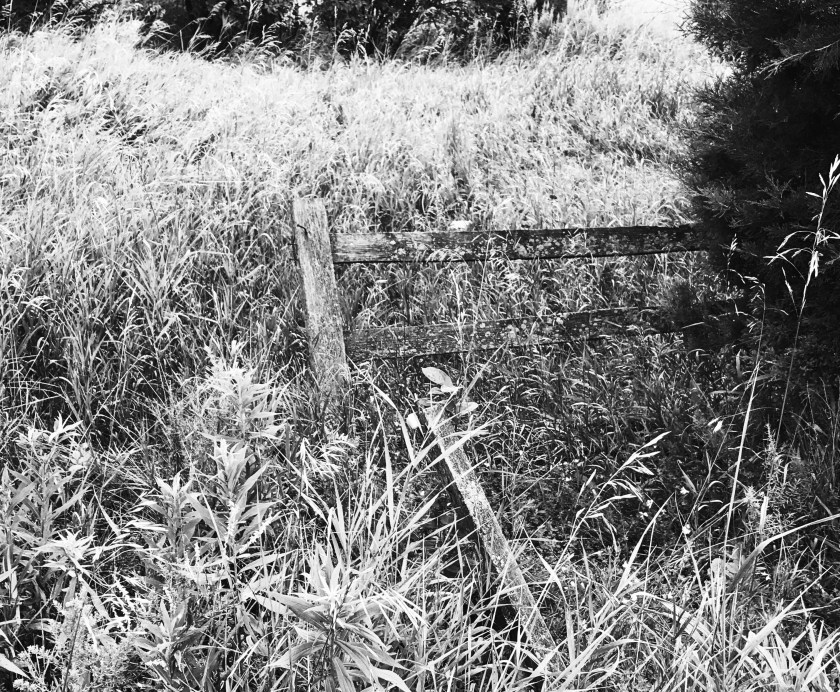
I need to do B&W more often. The original images were done in color and they just didn’t convey the mood I was looking for.
When I take an image I don’t usually fiddle with it afterwards. I don’t fire up PhotoShop and start tweaking things. For some reason it feels like, oh, cheating, I suppose. It’s silly, really. Pretty much every photo you see published is tweaked in one way or another. Colors are enhanced, lighting is altered, imperfections are removed. Tweaking photos has a long, long history, going back to the start of film photography. We used filters and processing tricks, did dodging and burning in when making prints. I did it routinely when I was processing and printing my own photos back in the days of film, so I don’t know why I’m reluctant to do it now.
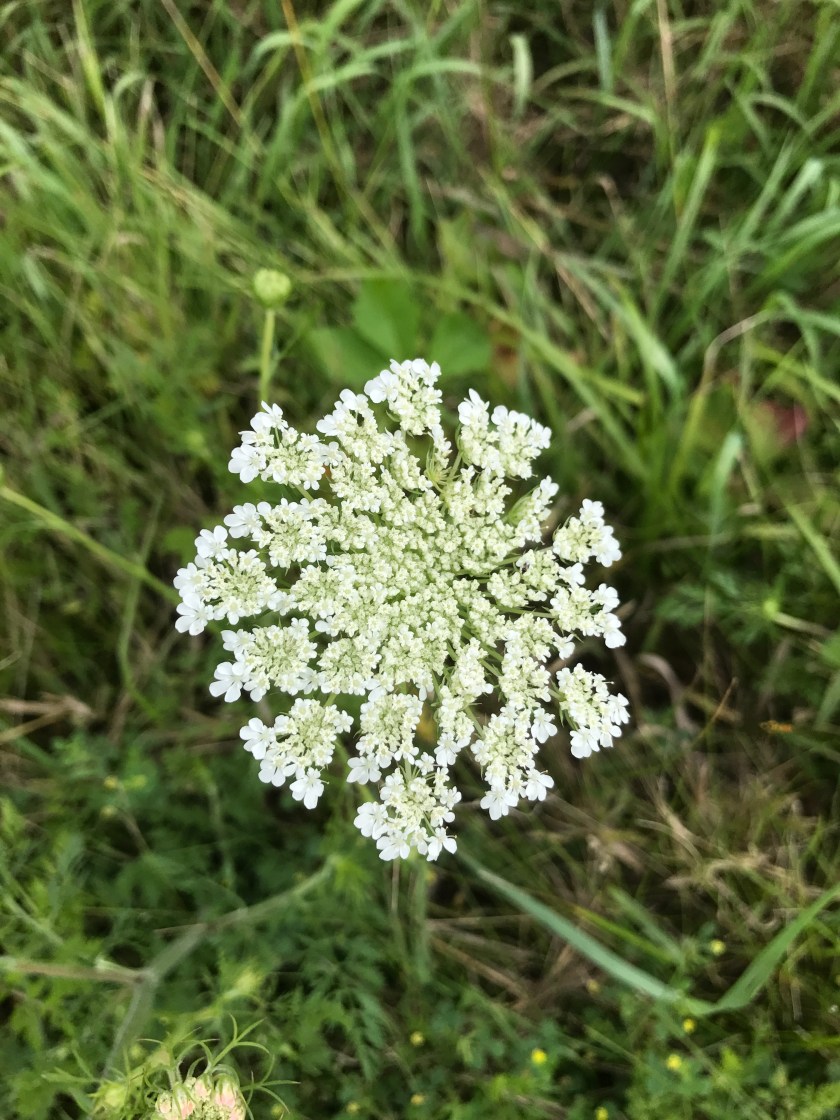
Queen Ann’s Lace grows along the roadsides, along lanes and trails, and while a lot of people treat it like a weed I’ve always thought the flowers are absolutely beautiful. We had it growing on the farm when I was a kid. It would pop up along the lanes, on sunny, sandy hillsides in the woods. It was very common. Still is.
It’s actually a wild carrot. Supposedly the roots are edible, at least when young, and taste like, well, carrot. Apparently some people claim they eat the leaves and flowers, and other people claim it’s poisonous and will kill you. I certainly am not going to volunteer to try it and find out which is true.
My mother loved them too. She’d collect them during the summer, tie up bunches of them and hang them in the garage to dry the flowers. She also told me that some people apparently made tea out of the stuff. According to the stories she’d heard as a kid the local Native Americans made an herbal medicine out of it by steeping parts of the plant in water. Years later I learned that apparently the stories were more or less right, although not in the way she thought. A local historian told me that it was used as an abortifacient and contraceptive.
Then along one of the bike trails this stuff is popping up:
It’s a striking plant, can get very tall, and the flower head is spectacular when it’s in full bloom. This stuff used to grow along the trails and fence lines on the farm too. My father called it “Indian tobacco” or wild tobacco.
It’s actually the common mullein, and isn’t native to North America. It’s fairly common. It isn’t a nasty plant, but it can harbor some nasties, like cucumber mosaic virus and powdery mildew, so you probably don’t want it growing in your garden.
And it seems my father wasn’t really wrong because while it is not tobacco, the Native Americans apparently did smoke it as a treatment for breathing problems. it’s also been used in a wide variety of other allegedly medicinal preparations.
It’s interesting how I seem to have come full circle. As a kid, seven, eight years old, I’d spend hours wandering around the more wild areas of the farm, watching the animals and insects that congregated around the stream, walking through the woods examining the plants and wildlife with intense curiosity, and now that I’m retired I find myself doing the same thing and enjoying it just as much as I did when I was a kid.
Stories you might have missed about food, agriculture, and the ever popular ‘stuff’, along with occasionally snarky commentary.
Coffee Linked To Not Dying!
Ooo, coffee — that delightful, delicious beverage that both pleasures the taste buds and enlivens the brain, oh I feel so sorry for those of you who drink tea. (Come on, you tea drinkers know what you’re drinking is lawn sweepings soaked in tepid water, right?)
Anyway, now that I’m done annoying the tea drinkers out there (you know who you are), let’s get on with this.
That headline up there is not clickbait. It’s true. According to a study published actual real live doctors from an actual research facility and published in an actual science journal (not the Flintstone’s Institute for Advanced Studies of Sciency Stuff and Flat Earth Society where most of the congress apparently gets its science information) you have almost a 20% less chance from dying from just about anything if you drink coffee. Well, probably not getting hit by an asteroid or something like that. They mean heart disease, stroke, cancer, that kind of thing. If you click the link it will take you to an article over on The Guardian and you can get the links to the actual study from there.
containing dicamba after it was learned that more than 200,000 acres of non-GM soybeans were allegedly damaged by the product. The Arkansas ban was approved by the Governor’s office and will go into effect on July 11, and is in effect for 120 days. The Missouri one doesn’t seem to have a specific time limit, but the agency involved in Missouri said it hoped the problems could be resolved and the ban lifted yet this growing season.
Dicamba has always been difficult to work with. It turns to vapor and can drift for extremely long distances. Non-GM soybeans are extremely sensitive to the product, and even a tiny amount can damage the crop, so any kind of drifting is a serious problem. Monsanto has claimed that it’s “VaporGrip” version of the product cured the problems when used properly. But it doesn’t seem to be working very well.
So, you ask, what dos Monsanto say about all of this? Glad you asked.
They’re blaming everyone else, of course. In an interview over at CropLife, a Monsanto spokesperson blamed everyone and everything except, of course, it’s product. Farmers spraying at the wrong time of day, having residue from other products in the sprayer’s tanks, not following proper procedures, using the wrong spray nozzles, spraying in windy conditions. And all, of course, without offering any proof that any of this actually happened.
More Chlorpyrifos Controversy
Five states (and I’ve heard several more are in line to do it too) are suing the EPA over it’s decision to permit the continued use of Chlorpyrifos, a very nasty pesticide that is known to cause serious health problems, especially in children.
I mentioned this before. Last year the EPA determined that chlorpyrifos was dangerous, and public health organizations, doctors and other health care professionals have been pushing for it to be banned for years. The EPA was going to ban the stuff at last.
But then along came Pruitt and he claimed the stuff is just fine and dandy and that they had real actual “meaningful data and meaningful science” to prove it. Associated Press, other media, and health officials have repeatedly requested the EPA provide them with the data, but the EPA has refused to respond to any of the requests.
I don’t like being a cynical old bastard, but I get the feeling the EPA hasn’t provided it yet because they have interns locked in a back room somewhere desperately trying to write something sciency enough to fool the average reader into believing this stuff is “safe”.
Oh, I should point out that DOW, which makes chlorpyrifos, contributed $1 million to Trump to fund his inauguration, its CEO is supposedly good friends with him, and it has spent over $13 million “lobbying” various politicians in the past year.
USDA came out with it’s crop status report, and it’s the worst that they’ve issued since the 2012 drought, with only 65% of the corn crop rated at “good” or better, and only 62% of the soybean crop rated “good” or better.
Now during the drought, corn and soybean prices skyrocketed, with corn pushing the $8/bushel range for a time. So you would naturally think that a report that bad would push the prices up, right?
Well, no. After the report came out, corn prices fell by about 5 cents a bushel, and soybeans dropped more than 12 cents.
Apparently what drove the morning price down was that the report wasn’t as bad as they thought it would be.
Bureaucratic Run Around
More on the dicamba front: BASF, which has partnered with Monsanto to produce the special dicamba blend that was just banned in Arkansas and Missouri after enormous numbers of complaints about crops damaged by the herbicide, is trying to pull a bureaucratic end run around the ban by applying for something known as a “special local need label”. This is a special permitting system that allows the use of a pesticide that normally cannot be used, because no other pesticide would be effective. Basically it was originally intended to help during emergency situations where there was an infestation of some pest that threatened to wipe out a crop, and only a non-registered pesticide would work. If you want, you can read the information about that whole process here.
Considering dicamba has damaged literally hundreds of thousands of acres of crops as it has drifted across the countryside, it seems that problem here is dicamba, not the weeds it’s supposed to control.
What The Hell Is Milk Anyway?
There is a lot of fighting these days over the definition of the term “milk” when it comes to products being sold to consumers, specifically over the use of the term in describing drinks made with various nuts and beans. I.e. “soy milk” and “almond milk” and that kind of thing. Even USDA isn’t sure, and is using the word “milk” in much of it’s literature when referring to these products.
I can certainly understand why the almond industry wants to use the term. It’s because calling “almond milk” what it really is, isn’t exactly appealing. If they labeled it accurately, they’d have to call it “97% water with a few ground up almonds, emulsifiers, stabilizers, gums, flavoring agents, coloring, added vitamins and minerals and preservatives and you’d get more nutrition from just eating five or six actual almonds than drinking this stuff beverage”.
Why won’t the ISPs connect rural customers? Cost, of course. It would take ages for them to make up the cost of connecting everyone outside of cities and towns. The same thing happened with electricity and telephone back in the day, the providers wouldn’t hook up rural areas until the government pretty much forced them to and paid a lot of the costs associated with it. And in this current political climate, well, a prominent Wisconsin politician (Sensenbrenner) is on record as saying that no one actually needs internet in the first place, thus illustrating that he hasn’t a clue as to what life is like out here in the real world.
The problem with most of these schemes is that they rely on some type of radio communication, either types of cellular networks, microwaves, or some kind of extended wifi system. And the fact of the matter is that we don’t really have the spectrum available to make these schemes work. The radio spectrum is so severely overcrowded now that cellular companies are paying billions of dollars for access to a few frequencies to expand their networks and improve their systems. So exactly where they’re going to squeeze in these new services is problematic.
The other problem is that some of these systems are already being tested or are even already in use in limited areas, and they don’t really work very well and they aren’t really all that fast. We have a kind of microwave system in use around here serving residents that live outside of the wired system, and it has some serious issues. Heavy rain and snow disrupts service, speeds slow to a crawl during ‘prime time’ when many people are trying to use the system, and most of these systems are very expensive, have some very serious data caps, and have lots of other issues associated with them.
Yet another problem is that what the feds are calling “broadband” isn’t really broadband by anyone’s definition. The US has some of the most abysmal internet speeds of any first world country. The ISPs here have been concentrating on throttling back usage, restricting bandwidth, charging utterly ridiculous amounts of money for going over artificially created caps so they can cram ever more paying users into an already overloaded system, and not investing any of that money in improving the infrastructure or in extending their coverage. The result is that US speeds are about half of what they are in the UK, the EU, Japan, Korea, and even the metro areas of China.
The feds definition for “broadband” internet for rural areas is even worse than what it is in urban areas, about 10 meg/second. So you can forget about making that conference call to work if your kid is playing WOW or your dear spouse is down in the basement watching PornHub.
Why is she wearing a mask? If you had to pose in a swimsuit with a bunch of cows, you’d probably wear a mask too.
manure from farming operations. I’ve mentioned before that we have had problems with well contamination from farm runoff, especially in Kewaunee County, were it’s estimated that 30% – 40% of the wells are contaminated. It hasn’t been widely reported, but the problem is so bad that local organizations, schools and others have been giving out drinking water to local families because of the widespread contamination of the wells up there.
The state is going to be issuing new rules that will finally put some restrictions on when, how and where farms can spread manure. Hopefully this will help.
Okay, okay — I know that photo has nothing to do with the story. But if I come across a photo of a person in a swimsuit, wearing a mask, standing with a bunch of cows, I’m going to put it up. I can’t help myself.
Yoplait sales have fallen by 22% as the brand’s popularity continues to diminish. I have to point out that I hate Yoplait. I dislike pretty much everything about it; the flavor, texture, smell, everything. But then I feel the same way about almost all of the big name brand yogurts. The stuff is mostly inedible, and if you read the list of ingredients on some of these brands you’ll see why.
Drought in Spain
Spain has been having some serious drought issues this year which has been wrecking havoc with it’s farmers. The country has lost almost more than a quarter of it’s soft wheat production this year because of the weather and will probably have to import 40% more wheat than last year. There have been significant losses to the corn and barley crops as well.
The Guadalquivir delta, the Spain’s biggest rice producing area, is having serious problems with it’s water supplies. The aquifer from which water is pumped to irrigate crops is almost completely depleted, with only about 20% of the aquifer remaining, largely because of unregulated and illegal wells being drilled apparently by strawberry growers. There are reports of farmers renting drilling rigs and dragging them out in the middle of the night to or on holidays to drill wells without permits. There are an estimated 10,000 illegal wells in the area. They’ve even built their own reservoirs hidden in the forests in the area to store water they’ve been pumping illegally.
The aquifer is not being replenished because of the drought and increasing temperatures. The river itself is becoming increasingly salty as sea water creeps up into the river. Within a very short time they will have pumped the aquifer dry and put themselves entirely out of business by going after short term profits now and sacrificing the long term existence of their businesses.
China and Pork
The demand for pork in China is showing no sign of slowing down anytime soon. The country just started it’s first government approved pork pricing index on their commodities exchange to try to help stabilize prices. The pork supply in China is still dominated by small farms that are sensitive to price swings. As the market fluctuated, pork farmers would react accordingly, cutting way back in production during times of low prices and causing a subsequent wild upsurge in prices during the subsequent shortage of pork. Gee, sounds bit like the US milk market, doesn’t it?
The index could also be leading up to the introduction of futures and options contracts which could help stabilize prices as well.
The country is also trying to end urban pig production to get the animals away from waterways and densely populated areas to reduce pollution, the spread of disease, etc. There have been bans on pig production in cities and towns being put in place by local authorities all over the place.
China and Beef
With China now importing US beef (sort of) a lot of people are speculating on what effects the Chinese market will have on the US beef industry.
At the moment, no effect at all, really, because China won’t accept the hormone and drug laced meat that most commercial growers are dumping on the US consumers. Virtually none of the commercially produced beef in this country meets Chinese health and safety standards. The beef now being exported to China is basically just PR fluff so politicians can pose for pictures with thick steaks in Beijing while pretending they actually did something.
The Chinese market is potentially huge, but it’s going to require ranchers to grow cattle from birth without the use of the hormones and drugs they’ve been using for decades. It will be interesting to see what happens here and if US growers can adapt to the market.
Walmart Goes Angus?
Walmart is facing extreme competition from places like Aldi, Save-a-Lot and newcomer Lidl in the cut price grocery business, and it’s sales have been flat or even shrinking, so the store is trying to improve its image by claiming that all of it’s beef is now “certified Angus“. The store apparently made some kind of deal with Cargill an Tyson to get Angus steaks and roasts at the same price as whatever it was they used to sell before. They’re doing it only for steaks and roasts and not ground beef products.
Walmart might be better served by looking at the quality of it’s stores and it’s whole “shopping experience” than by trying to put yet another marketing scam in place. From unstocked shelves to dirty floors, to untrained employees, to failing to staff the checkouts lanes, to, well, you get the idea. At least three times in the past year I’ve been in one of the local stores to find entire categories of product just — just gone. One day it was sugar. There was literally not a single container of sugar on the shelves. Anther time it was iodized salt. Again, not a single container of iodized salt. Another time it was white flour…
Milk Price Insanity: Nobody Knows What’s Going On
Watching the various agricultural media outlets is utterly infuriating some days. On the very same day, in the very same ag news outlet, I found these two stories:
Oh for heaven’s sake… trying to figure out what’s actually happening is enough to make one bang one’s head against the nearest wall.
One article claims milk prices are going up, another, often in the exact same news outlet, claims they’re going down. Another claims the future is utterly horrible, another claims the future is bright and sunny…
Does anyone really know what the hell is going on?
Wisconsin Is Cheese
Well, okay, so it isn’t made of cheese, but some days it seems like it around here. Still, Wisconsin is one of the largest producers of cheese in the world, and home to some of the biggest cheese related companies in the world.
The little town of Plymouth, Wisconsin, about 20 minutes from here, apparently handles 15% of all of the cheese produced in the entire country. It’s the home of Sargento, one of the biggest cheese processors in the country. Satori is big, and some privately owned companies like Masters Gallery Foods, all have locations in Plymouth that process, package and warehouse cheese products.
These few companies are a Big Deal around here, employing thousands of people at processing and shipping facilities scattered all over this area. Sargento just put in a huge addition here in the town where I live and there is talk that they’re going to expand the facility again in the next few years. Sargento alone employs over 1,000 people in just Plymouth and hundreds more here in Hilbert.
There Are Consequences When You Piss People Off
Mexico is no longer the largest buyer of US corn. It has spent about $1 billion less when compared to last year. The country is actively talking with Argentina and Brazil to buy corn. Mexico is becoming very nervous about the horrible comments that have been made by this administration about the country and it’s people, and is no longer looking at the US as a reliable trading partner.
You can’t blame Mexico, really. Having your citizens branded as murders, rapists and drug dealers as this administration has done isn’t exactly what you could call a ‘friendly gesture’, now is it?
EPA Approves Chlorpyrifos, Gets Sued
The EPA, against the advice of almost everyone (except the manufacturer), approved the continued use of a rather nasty insecticide, chlorpyrifos. If you click the word over there to get to the Wikipedia link, you’ll find this is nasty, nasty stuff, causing developmental problems in children, muscle weakness, seizures, coma, vomiting, paralysis, and suffocation from lung failure. Exposure to it is especially bad for children, causing low birth weight and extensive neurological problems.
Like I said, it’s nasty stuff. The EPA was on track to issue an outright ban on it’s use because of the scientific data it had developed in November of last year.
But then we had an election and, well, now Pruitt says no, it isn’t bad, and the decision to continue to permit it was based on “meaningful data and meaningful science.”
And it then refuses to give Associated Press copies of the scientific studies Pruitt claims that determined it is safe.
Editorial Comment: This kind of thing absolutely infuriates me. Study after study that I’ve turned up indicates chlorpyrifos is dangerous at even very low exposure levels, especially to children. Then Pruitt and the “new” EPA come along and claim they have studies that indicate it’s safe, and won’t tell anyone what those studies are, who did the studies, where the data came from, nothing…
 Arla boss Peder Tuborgh sees a shake-up, if the rally continues which has, for the first time, made dairy fats more expensive than protein Source: Agrimoney.com | Butter price surge may ‘prompt fundamental market change’ – Arla
 Speaking of flowers, I really, really wish I’d put in more of these guys. We only have two or three of these and they are absolutely amazing. The brilliant red color, the shape. They just shot up through the white alyssum with that amazing contrasting red. Make note to self to put in more of these next year.
 So out they went. And it’s resulted in an almost immediate improvement in the other peppers we had planted in there.
 setting fruit, but now they seem to be making up for lost time.

 The cucumbers have been disappointing. I’m the only one who eats fresh cucumbers around here, so I only put in two or three plants and that usually gives me enough to satisfy my craving for fresh cukes, plus a few extra to make refrigerator pickles or something. But this year they haven’t been doing all that well. The plants themselves are doing just fine, they’re putting out flowers, but actual cucumbers? Not so much. I think I’ve gotten maybe six cucumbers off three plants so far this year.
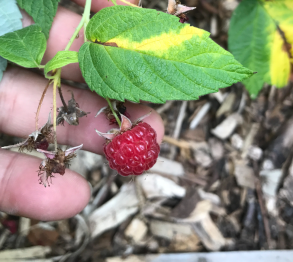 Then I ran into this yesterday. A single, lone raspberry. We only have a dozen or so raspberry plants tucked away in a corner of the garden behind the garage. I love raspberries but I’m not supposed to eat them because of the seeds. Still, it’s interesting how none of the berries ever seem to make it into the house. They seem to mysteriously vanish before they get in the door. Funny how that happens, isn’t it?
 Getting out of the garden and into the countryside, some people around here are wondering what in the world this stuff is. Fields of this have been popping up around here for the last couple of years now. It sort of looks like badly stunted corn, no more than three or four feet tall. It isn’t corn, though, it’s sorghum, or milo, and it’s being grown for Kaytee, the bird seed company. Their headquarters is in Chilton, about six miles from here. When I was a kid it used to be fairly common. It was grown as cattle feed or to make syrup. Looks like they have a pretty good crop of it this year.
 Let’s see, anything else? Oh, almost forgot. I hit 500 miles on the bike last week. When I turned up with a new bicycle on the back of the truck everyone was thinking yeah, right, he’ll ride it once or twice and it’ll end up hanging on the wall gathering dust until he drops dead and then we’ll have to sell the damned thing at the estate sale. If I keep up my current pace and the weather cooperates I should hit 1,000 before winter shuts things down.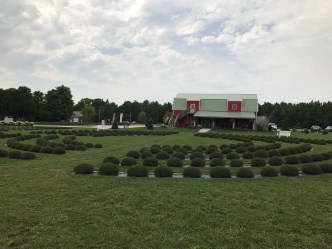
 the background and try not to inhale and let them enjoy themselves.
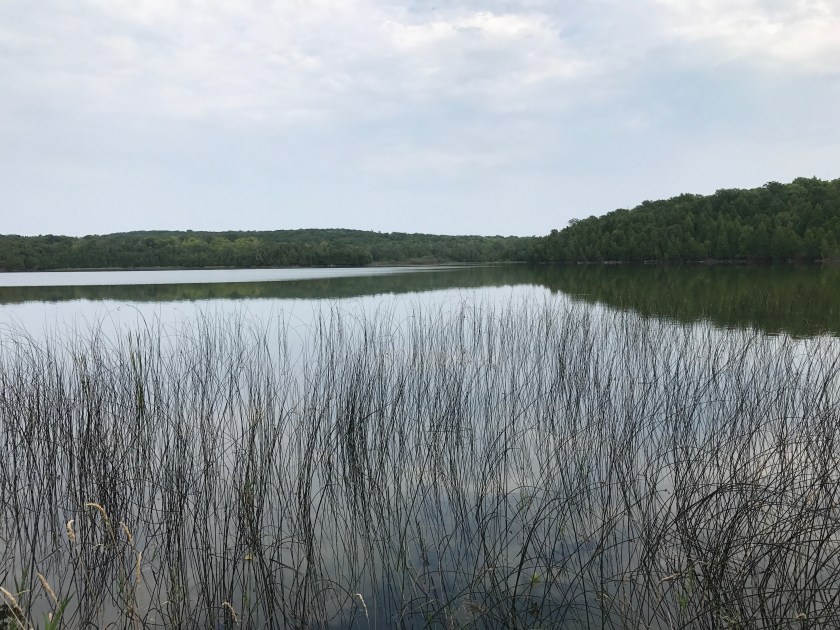 One of my favorite spots up there is this little lake. It’s well off the beaten track, hard to find, and as a result no one goes there and it’s still unspoiled. And quite! It’s astonishingly quiet. Absolutely no noise at all. No cars, no ATVs, no jet skis, and because it’s well off the flight paths, not even any planes overhead. It’s probably one of the last really quiet spots left in the state, where you can sit for an hour and hear nothing except the frogs, crickets and birds.


 Ooo, coffee — that delightful, delicious beverage that both pleasures the taste buds and enlivens the brain, oh I feel so sorry for those of you who drink tea. (Come on, you tea drinkers know what you’re drinking is lawn sweepings soaked in tepid water, right?)
 There is a lot of fighting these days over the definition of the term “milk” when it comes to products being sold to consumers, specifically over the use of the term in describing drinks made with various nuts and beans. I.e. “soy milk” and “almond milk” and that kind of thing.

 grouchyfarmer