If you live in the midwest in the US you don’t need me to tell you that the weather hasn’t been very good. Unusually cold temperatures and seemingly non-stop rain has been hitting large parts of the midwest. Corn and soybeans were, for the most part, planted late or even not at all. Ohio seems to have been hit the worst. Looks like almost 25% of the Ohio corn crop isn’t going to be planted at all. The situation with soybeans isn’t quite as bad, but the numbers there aren’t looking very good either.
The exact numbers are uncertain because a lot of farmers and people in the ag industry are being openly, even brutally skeptical of the data coming out of USDA. There are claims USDA is including acreage that has been planted but is under water and will never grow, acreage that has been planted with cover crops instead of corn because it’s already too late to plant, etc.

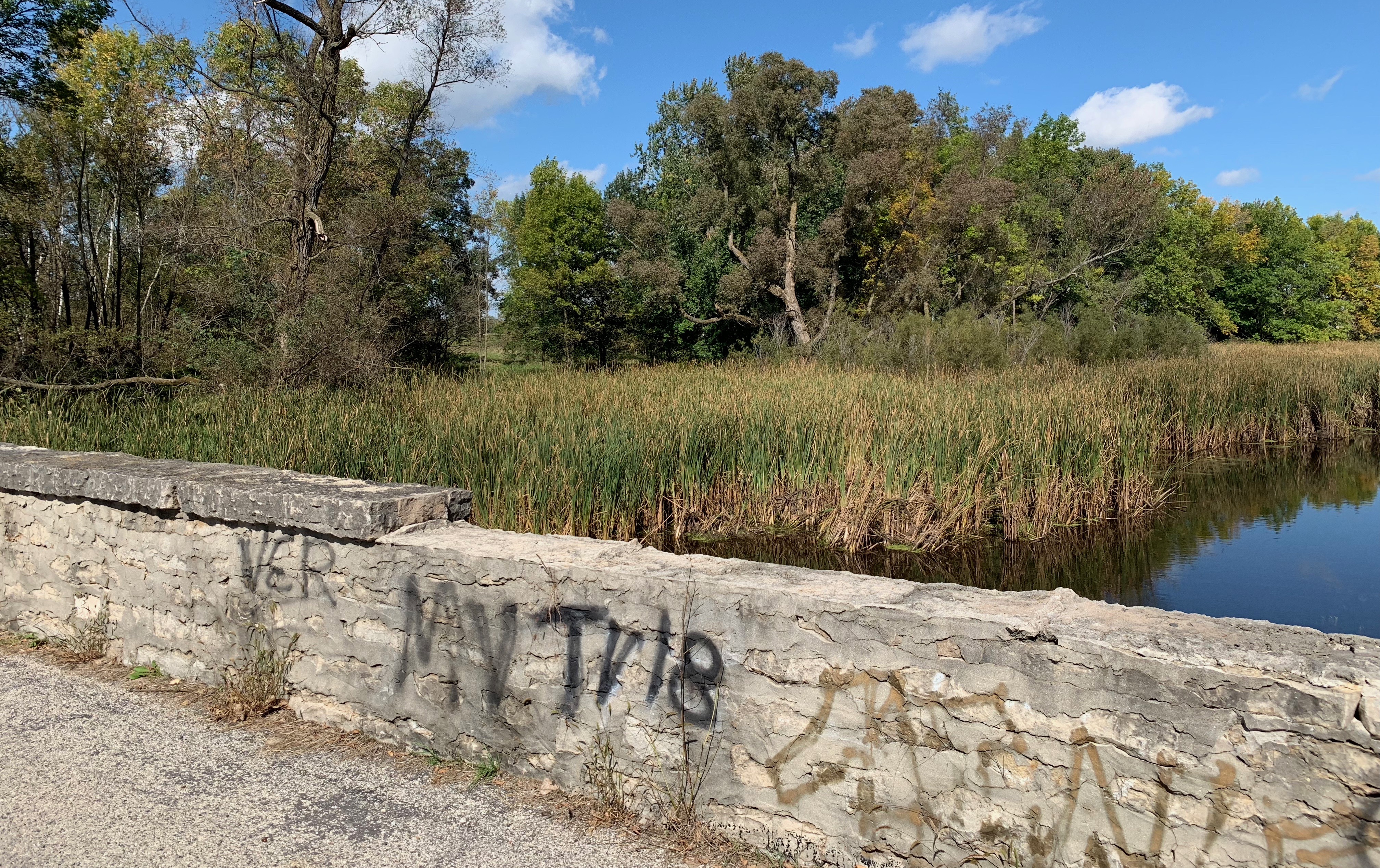
I can’t confirm or deny any of those suspicions. All I know is that when I ride around the countryside I’m seeing a hell of a lot of fields that look like the picture there on the left; lots of mud, lots of standing water, and lots and lots of weeds. It is too late to do anything with fields like that except to try to plant a cover crop to keep down the weeds and prevent erosion. You aren’t going to get any kind of economically viable crop planted in this area, this late in the season.
What about hemp, you ask?
Well, okay, you didn’t ask, but I’ve had a couple of people ask me about what the situation is with hemp. It is now legal to plant, harvest and process hemp here in Wisconsin, and despite the fact that a lot of people have been hyping the hell out of it and claiming that it is going to be the savior of agriculture, well, hemp, so far at least, has been pretty much a total bust for those few farmers who’ve tried it. Raising hemp for grain was a total loss last year from what I heard. Because of wet fall it was almost impossible to harvest the stuff. And what they did get harvested was hit by mold because of the damp weather so they couldn’t sell it at all.

Raising it to produce CBD oil didn’t work out too well either for a lot of farmers. One farmer I heard about did successfully get his crop in, but trying to actually sell it was a different story. It seems no one actually wants large amounts of the stuff. Or none that he could find, anyway. None of the CBD oil producers he’s dealing with seem to want more than a few pounds of it at a time, and you can’t make money that way. His problem is marketing, of course. It sounds like he jumped into production before he was even sure if he could sell the stuff.
Hemp isn’t going to be “the savior” of agriculture. It is, at best, going to be just another crop that some will have success with. And all of the hype about CBD oil seems to be mostly that, hype, with few actual facts to back up any of the claims. There seems to be some indications it can help with epilepsy and discomfort from arthritis, but that’s about it.
Antenna Stuff
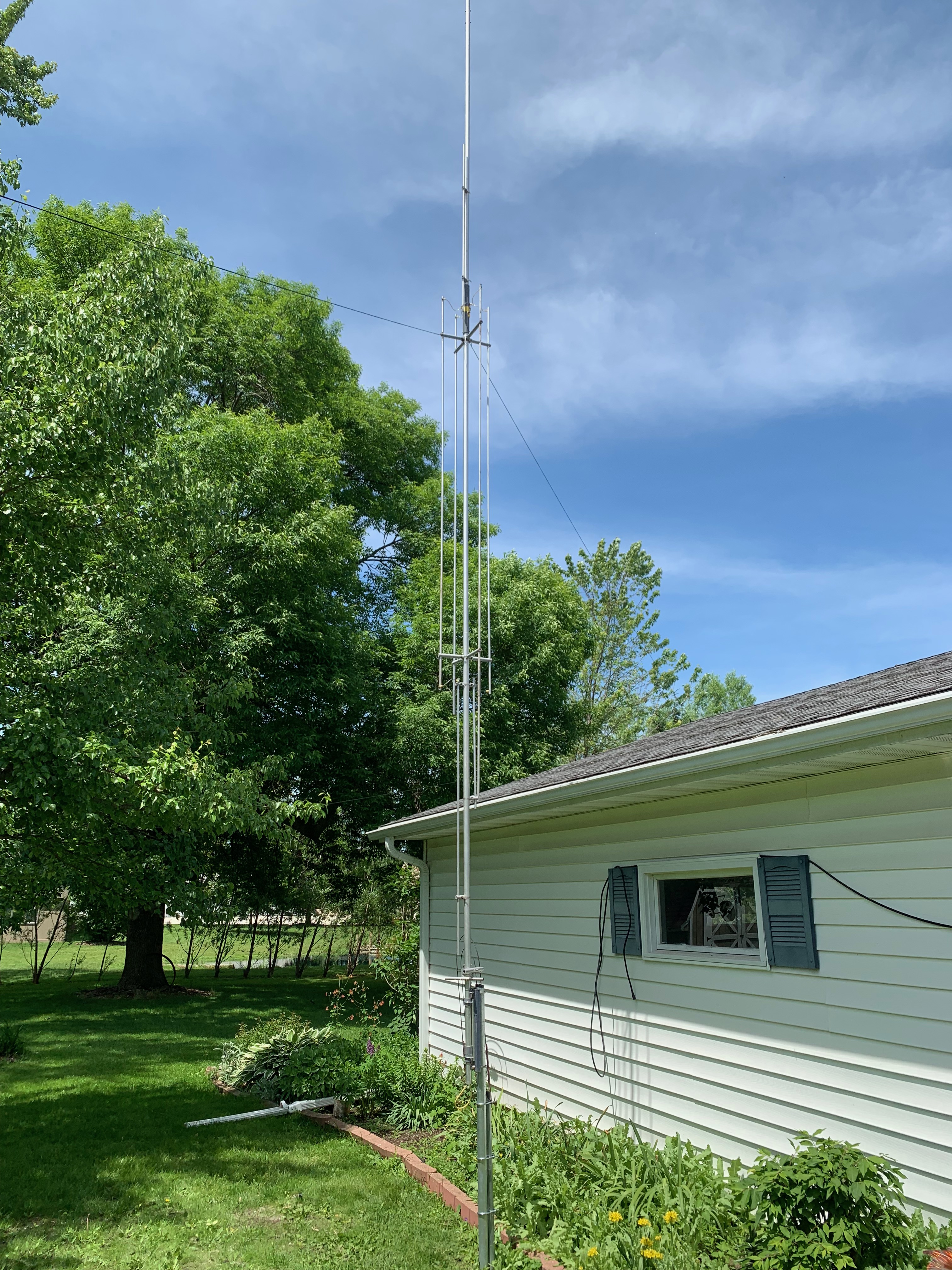
Strange things are growing in my backyard behind the garage. No, that’s not some kind of weird sunflower, that’s a GAP Titan DX vertical antenna which has been laying around for years now. Eldest son and I finally got the dopey thing put up over the weekend. That thing has been laying around for, oh, lord, has it really been three or four years? Sheesh… Talk about procrastination…
It replaces the Comet 250 vertical that was back there since 2013. The Comet – people like to complain about it but to be perfectly fair it wasn’t a horrible antenna. It is exactly what they claim it is, a multi-band vertical that doesn’t need radials or a counterpoise, that works from 80 to 10 meters without an antenna tuner, and can handle up to 250 watts. It is unobtrusive, the neighbors probably won’t complain about it, and under the right conditions it will even work as an antenna. Sort of. Not a very good antenna, true, but it will work.
The Titan has a pretty good reputation. It too is an all-band vertical, but you can see that it isn’t exactly simple, with all kinds of stubs and wires and stuff coming off it. But it is much, much more efficient than the Comet. And I can feed this one up to 1,500 watts if I want to without damaging it, where the Comet, well, I heard reports that if you tried to put more than 100 watts into the Comet you’d melt down the coils. Anyway, I still have work to do on this one. I need to get the counterpoise installed, need to get some connectors on it, need to tune the stubs. Hopefully it won’t take me another four years to get it hooked up!
It’s up high enough so it won’t interfere with the flowerbeds behind the garage. The counterpoise will take up a bit of space so I imagine MrsGF will not like that, but I’m hoping to get her to upgrade to a general class license now that she’s retired and if she does she’ll get as much use out of that antenna as I will.
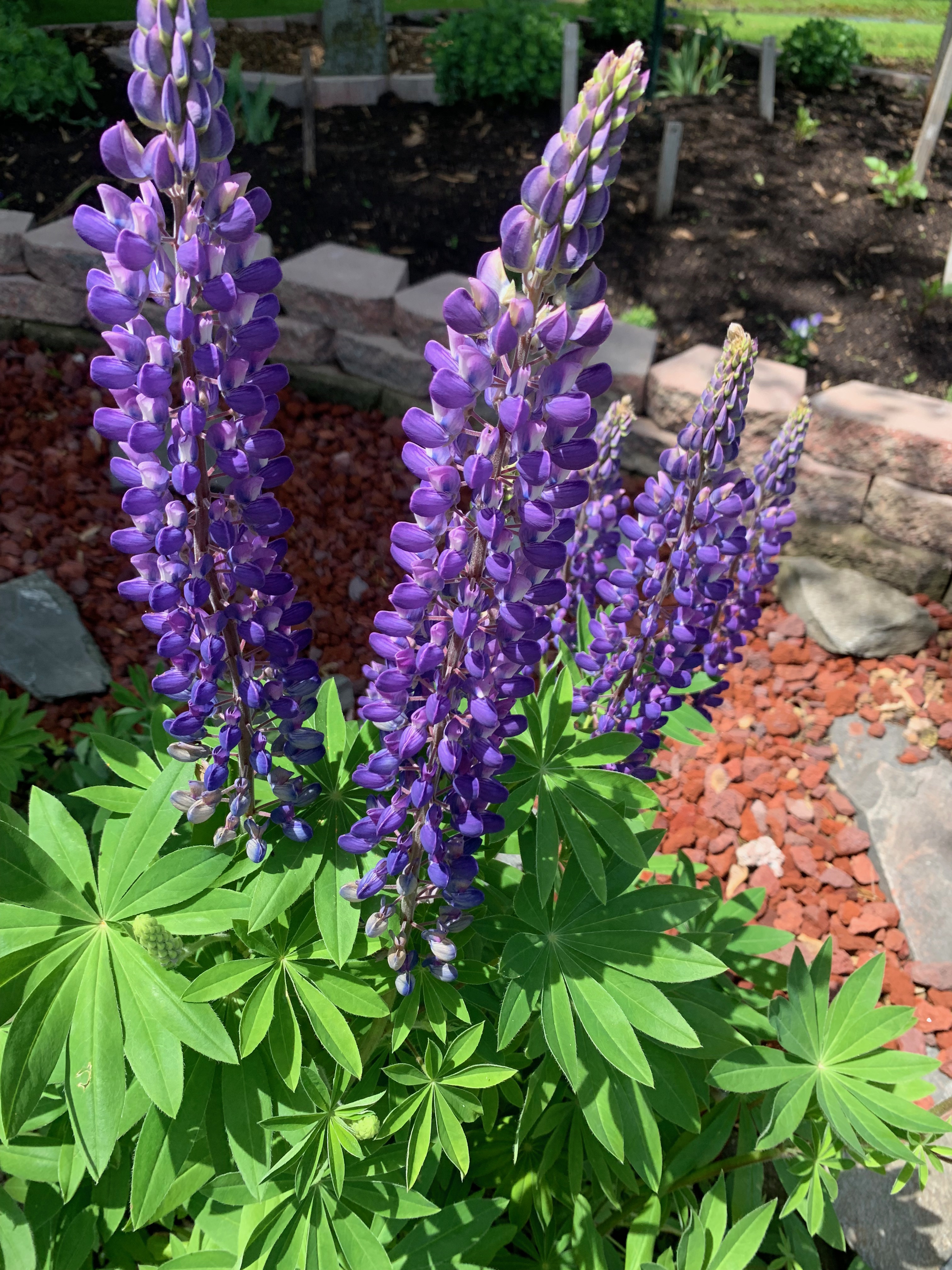
Speaking of flowers, (well, okay, I wasn’t speaking of flowers but what the heck) the lupins have just gone nuts this year. They’re everywhere. It looks like someone bombed the entire backyard with seed. We didn’t plant any of these, they just came up by themselves. Not that I’m complaining. Those flowers are spectacular.
Let’s see, what else? Oh, yeah…
Stuff On The Air
Amateur radio operators can be a bit, well, odd, shall we say? (Personally I suspect it’s solder fumes.) Some of them seem to be obsessed with lugging their equipment out of the safe environment of their basements where spouses have exiled them and into the great outdoors with the intent of doing “Things On The Air”. They do SOTA (summits on the air), IOTA (islands on the air), POTA (parks on the air) WPOTA (Walmart parking lots on the air), and, well, the list goes on and on.
I’ve decided to join the ranks of these intrepid and brave explorers going to exotic places and sticking still more letters in front of “OTA”, risking life and limb outside of the safety of my normal operating location. Yes, I’ve started FPOTA! Front Porches On The Air! Ooo, the excitement! Ah, the thrills!

Well, okay, I’m being silly here. (But to be honest I’m getting really tired of these “OTA” things and people running around “activating” parking lots and hills and parks and bridges and I don’t know what all else.) Still, we had a very rare nice day so I set up the mag loop and the 818 out on the front porch with a cup of coffee, a copy of “The Bathroom Reader” and and contacted, well, no one, to be honest. Chris over at Off Grid Ham tells me he’s been having similar results and not to feel too bad about it. Propagation on the HF bands pretty much sucks because we’re at the bottom of the solar cycle.
By the way, if you’re at all interested in solar power, batteries, solar controllers, and alternative ways of keeping your radios running, battery charging systems, etc, Off Grid Ham is the place to start.
The Great QRP Saga Continues
If you’ve been reading this nonsense for the last couple of weeks you know about my efforts to put together a portable QRP (low power) radio setup that’s small enough I can throw it into the back of the car and take with me when I go fishing and stuff so I can do PTOCCOTA (Picnic Tables Of Calumet County On The Air). Okay, I’m being silly, but I have long wanted to have a nice QRP set up that I could take along with me to play amateur radio while out enjoying the glorious environment of Wisconsin’s great outdoors and it’s swarms of blood sucking, disease carrying mosquitoes and ticks.
I’m mostly interested in digital modes of communications like PSK, FT8 and JS8 because despite the fact my hobby is communications technology, I don’t like to actually, well, talk to people. Yeah, I know. Weird, isn’t it?
So as you may recall, the ancient Toshiba laptop I was going to use decided it was time to go to that great recycling center in the sky. So I’ve been scrounging around for a cheap (emphasis on cheap because I already got way too much money invested in this project already) replacement and came up with this:

It’s a refurbed Lenovo that I picked up for $300 and, frankly, it’s ridiculously nice. I mean this thing looks and feels literally like brand new. There isn’t a single scratch or smudge or physical defect anywhere on it. Has a core i5 processor, 8 gig RAM, 500 gig SSD drive, DVD drive, 4 USB ports and seems entirely too nice to lug around out in the field. I have FLDIGI, JS8Call and FT8 software installed on it already. And I think I have the right cables to hook everything up to the SignaLink and the 818. So this weekend I’ll be taking over the dining room table for a few hours and see if I can actually get all this to work together.
I am not looking forward to that because, well, it’s embarrassing. I’ve been working with computers since 1979, both hardware and software. I’ve been fiddling with radio for even longer even though I didn’t get my amateur radio license until 2013. I was an electronics technician. I repaired laser scanners, set up computer networks, worked with ridiculously complex point of sale systems. So I ought to know this stuff, right? But whenever it comes to trying to hook a computer to a transceiver it quickly turns into an extremely frustrating experience. It never, ever works the first time. Or the second. Or the third. Or the fourth… Well, you get the idea.
I spent days trying to get Ham Radio Deluxe to work with first my Kenwood TS-2000 and then later with the Kenwood TS-990 and a RigBlaster Advantage interface. It was so frustrating that at times I was ready to just give up and then, for no apparent reason, the damned thing would just start working, with the same settings and cabling that didn’t work the day before… Arrgghhhh! The last time I had to rejigger stuff was when I got the new gaming PC and was trying to hook that up. Same settings, same cables, same everything, and, of course, it wouldn’t work right. Ham Radio Deluxe worked just fine and dandy until I wanted to transmit. Then it would key the transmitter but nothing actually transmitted… I struggled with that problem for way, way to long. And then it just started working for no apparent reason… I still don’t know what the hell happened there.
Anyway, enough of that. I’ve been boring you long enough with this stuff. Hopefully come Monday or Tuesday I’ll be able to report that I’ve got the 818 working flawlessly with the ThinkPad and I’m making contacts all over the place.
I doubt it, though.


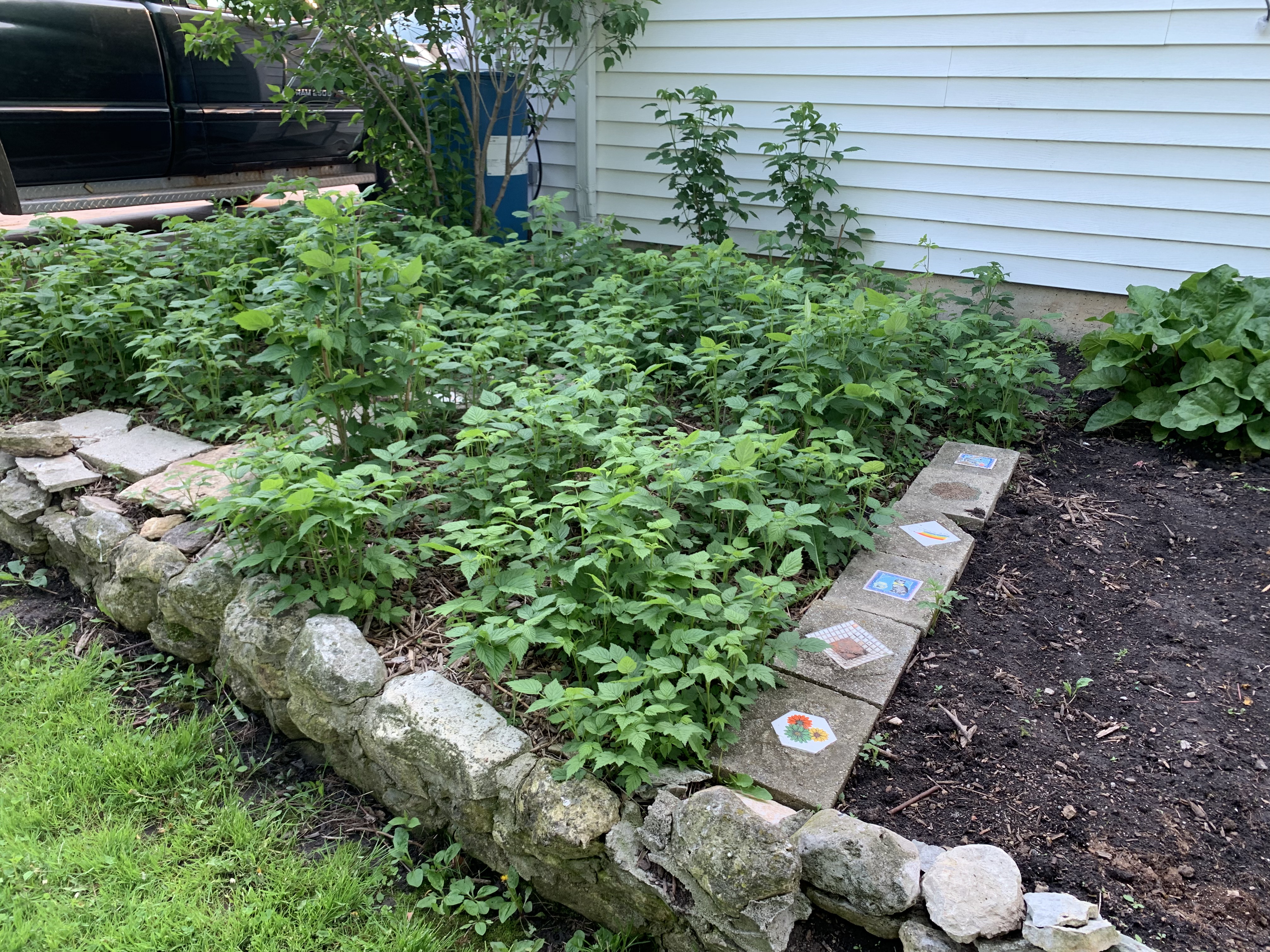


 And while it seems we’re finally getting a dry spell, it was raining almost every day for the first two weeks of October. There is still water standing everywhere. Down by the old stone bridge where the river is usually almost completely dry this time of year the water is 4-6 feet deep and running fast, and it’s well over it’s banks in some places. But at least the farmers have been able to get out and get their soybeans off around here.
 The sedum — what amazing plants those are. This time of year the color is absolutely astonishing, running from a brownish red to a deep, rich burgundy. And if you get out right after sunrise in the morning and see the flowers covered with frost crystals, wow, they look absolutely magical.
 I’d be willing to bet there are a lot of people over at Bayer who are wishing that they’d never thought of the idea of buying Monsanto. Before Bayer completed its purchase of the company, it was already involved in a lawsuit in California claiming that RoundUp ™ caused the plaintiff’s (a school groundskeeper) cancer. The company lost and was hit with a $289 million dollar judgement against it. Bayer is trying desperately to get the judgement voided, claiming that there is little or no evidence to prove the product causes cancer and a lot of evidence proving it doesn’t.
 Speaking of MrsGF, over the weekend she braved the mosquitoes to start cleaning up the gardens. She got a lot accomplished but we still have a lot left to do. All of the tomato plants were yanked out, finally. The squash were disappointing. We got a couple of nice butternut squash, but that’s about all. Hardly worth the effort of planting them, really. Not sure what happened there. We had a great crop of them last year. The acorn squash never really developed at all. All we had were a few very immature squash that ended up in the compost pile.
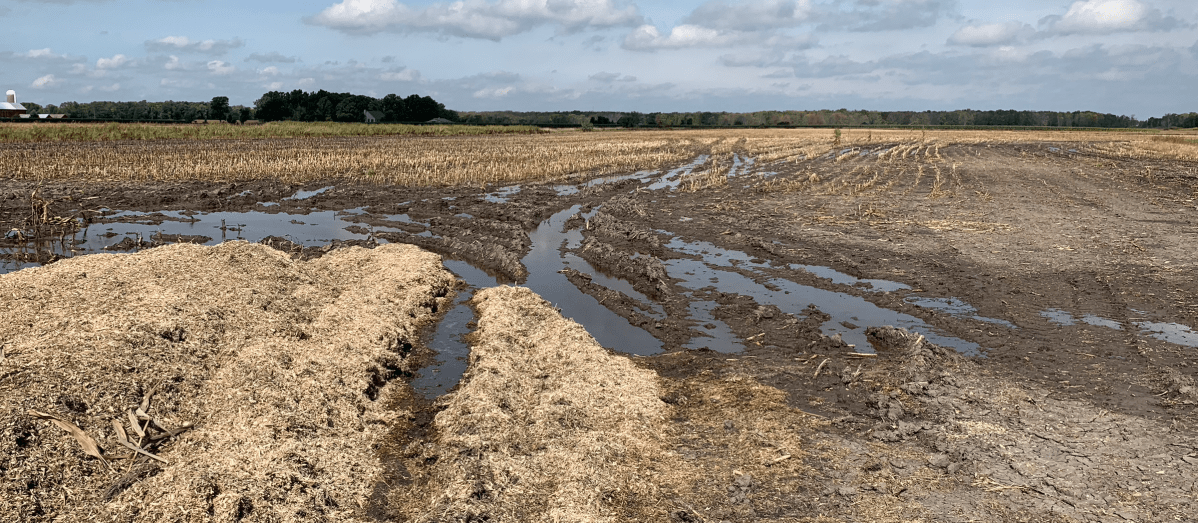
 There was some damage down along my favorite riding trail from the storms too. Some pretty good sized trees dropped right across the trail near the wooden bridge. The agency in charge of maintaining the trail works with some local people who harvest the wood from fallen trees, so hopefully this will be taken care of in the next week or so and the trail will be open again.
 We weren’t entirely unscathed, though. Our poor pear tree suffered major damage one night when two of the main branches came down. I’m going to wait until the pears are picked before I go up there to see how bad it really is. We’re hoping that the tree can recover from this, but I don’t know. It’s hard to tell right now how badly it was damaged because the foliage is so thick.
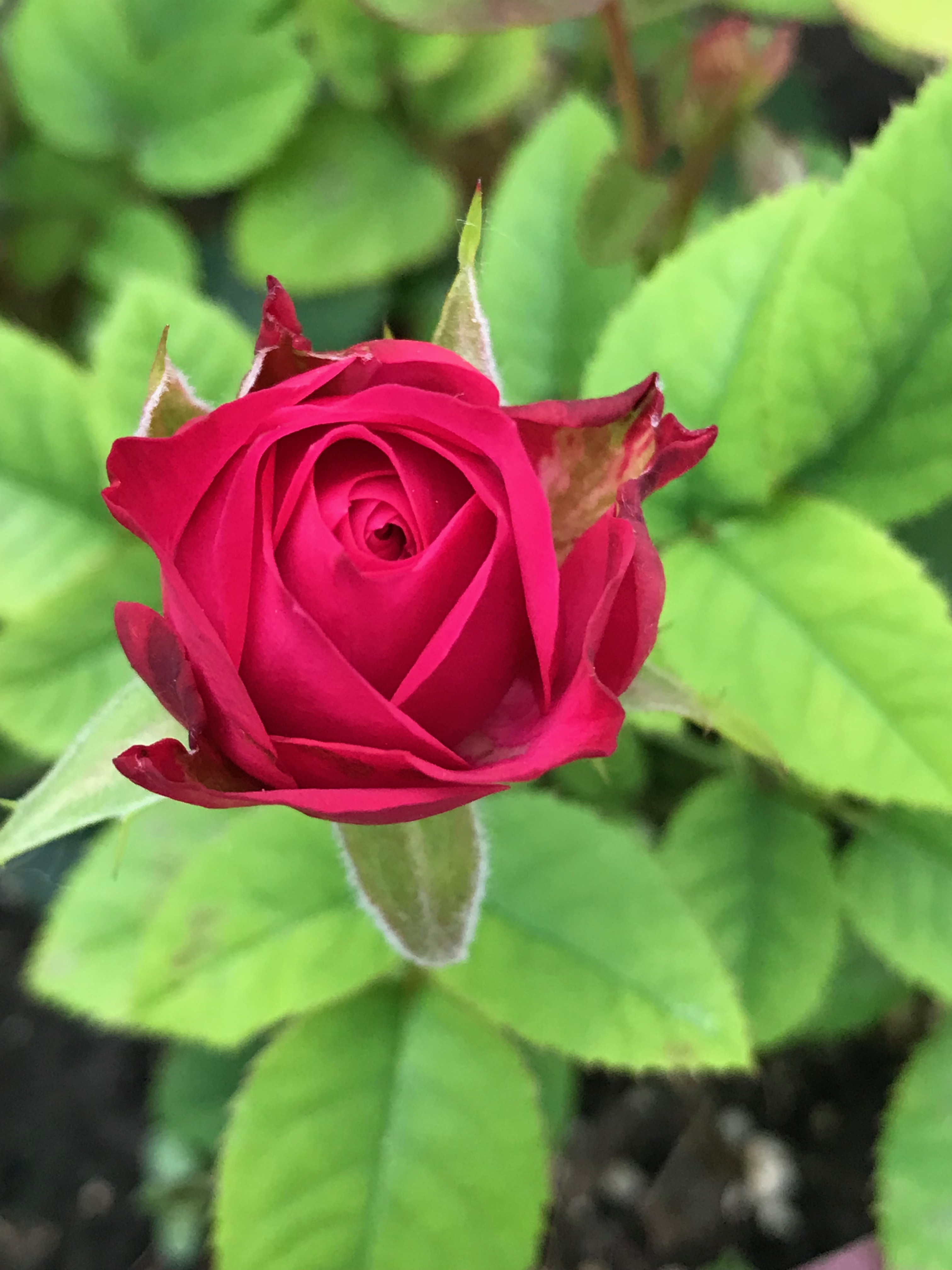
 The bees have certainly been enjoying themselves. We’re seeing them all over the place. Just about every flower at the house is covered in bees, mostly bumble bees and native bees, which is really nice to see.



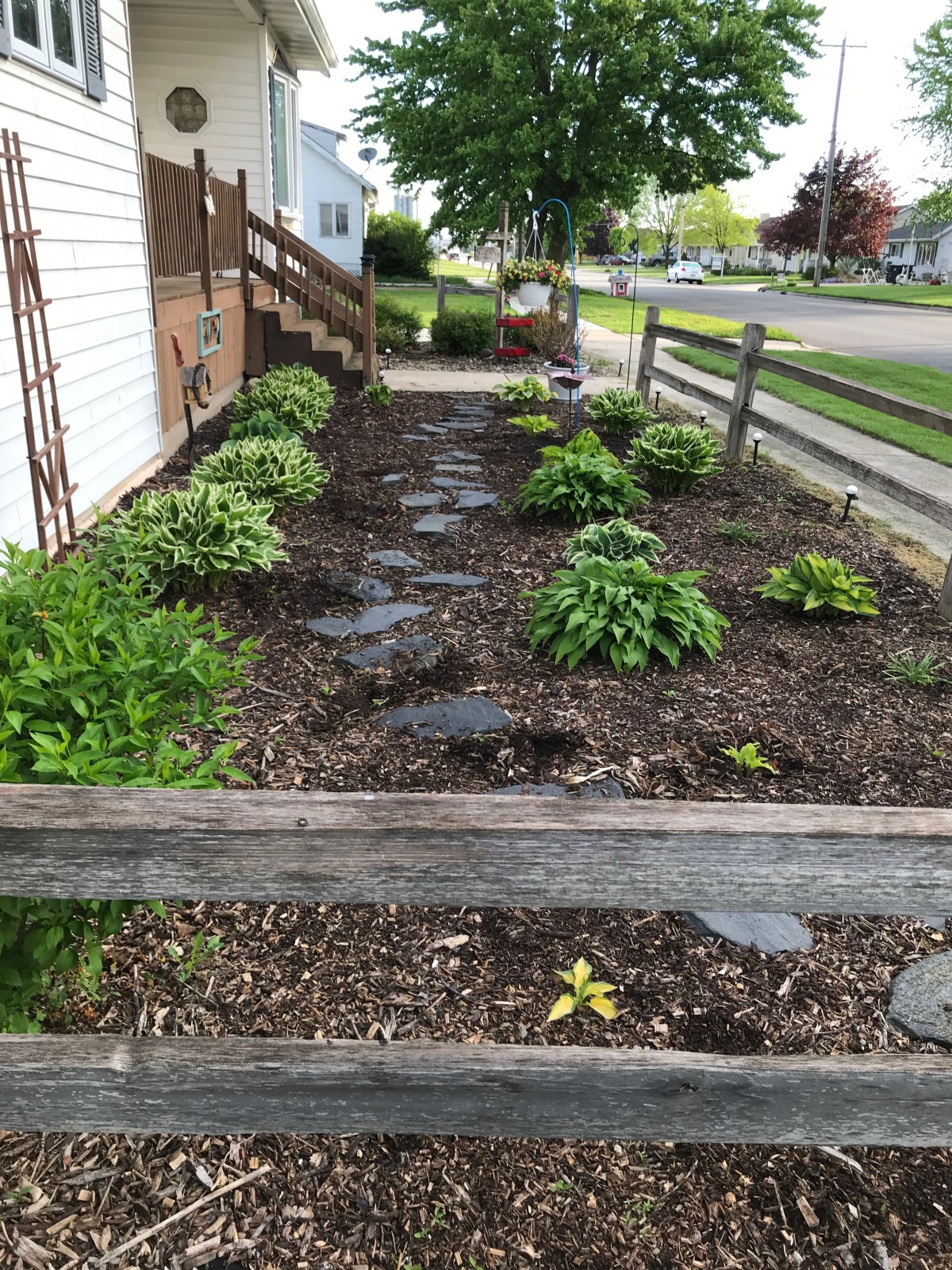
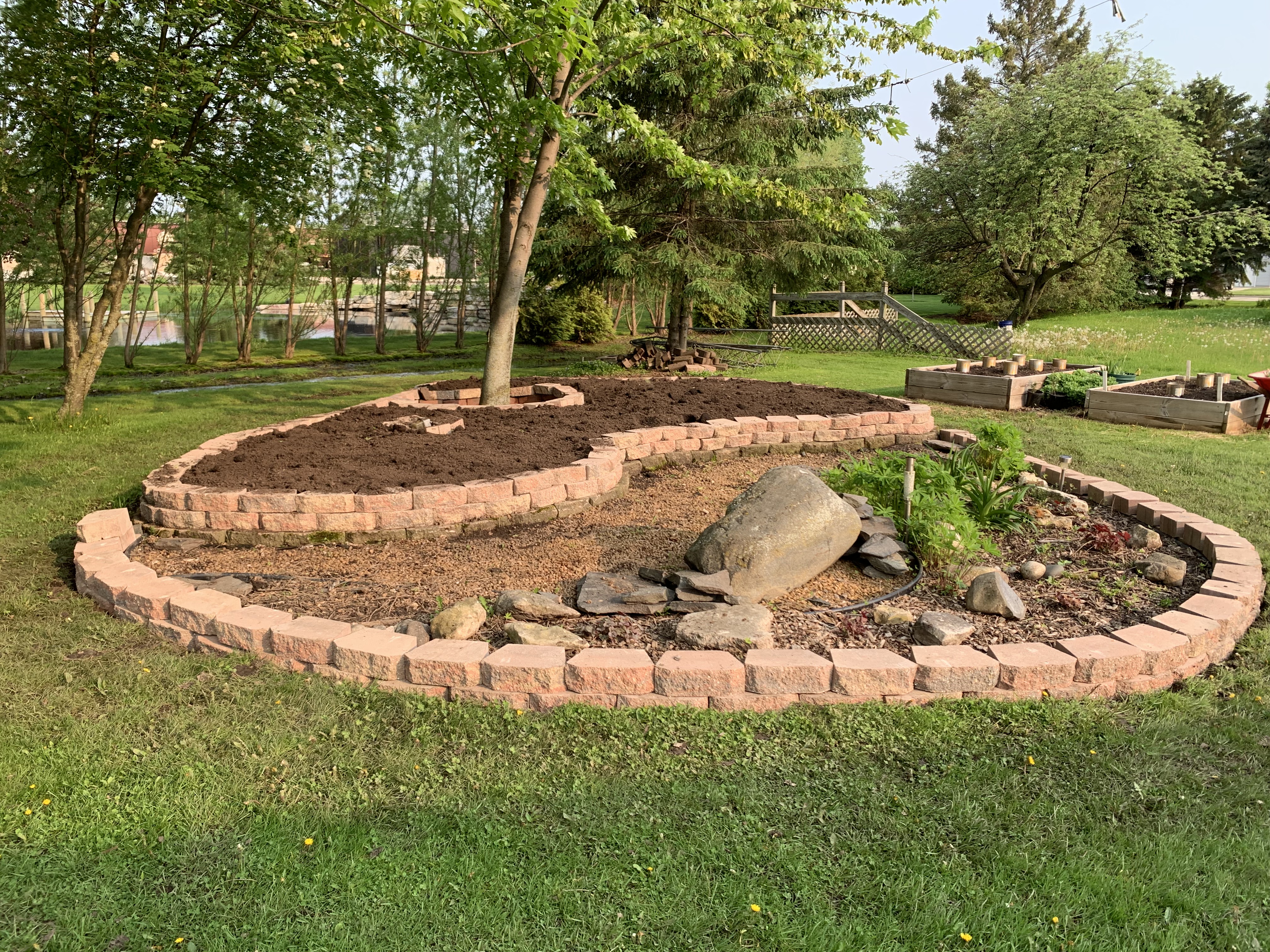
 The corner garden here has been completely redone. In the past it was mostly herbs and decorative plants, but this year we more than doubled it in size, hauled in a tons of compost (well, my aching back claimed it was tons) and it’s being switched to mostly vegetables this year. MrsGF put in something like 20+ pepper plants of varying types (can you tell we like peppers?) plus two blueberry bushes and a couple of rows of beans down along the front. The soil in there is so utterly horrible that I did something I very rarely do, I raked in some commercial fertilizer as well. We’ll see what happens. It will either be wildly successful or everything will die off.
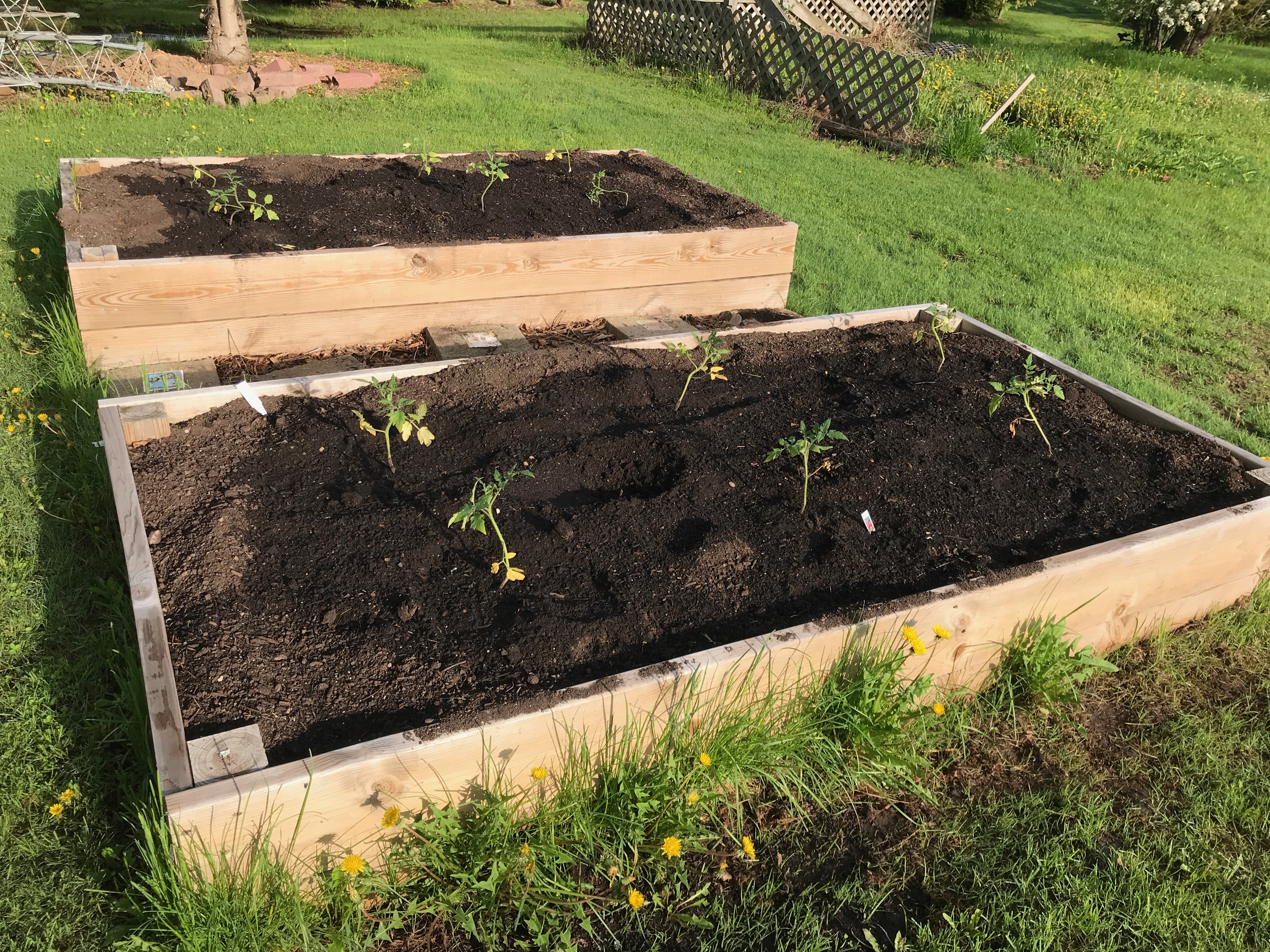 We were not going to make the same mistake we did last year by crowding too many plants into the two raised beds. It’s very tempting when putting in seedlings to crowd them in because it seems like there is so much wasted space, and forgetting just how big those plants get when they’re mature. We only put 6 plants in each of the beds this year and I hope that will help to eliminate some of the issues we had last year. While we avoided the dreaded blossom end rot last year, we did have some fungus problems because the plants were so crowded together.
 And then when I was walking around the yard yesterday I nearly stepped on this guy. Yes, we have snakes in Wisconsin. You wouldn’t think they could survive our winters up here, but several species do quite well. Heck, until the 1950s or 60s we still had timber rattlers around here. This little guy… Little? Ha, he was a good two and a half feet long. He scared the heck out of me although I’m sure nearly being stepped on while he was sunning himself in the grass scared him more.
 After the fiasco of wrecking the fold down mount for the GAP antenna, I put the crappy old Comet 250 vertical back up, hooked up the coax, went inside, checked to make sure everything looked OK, turned on the transceiver and — and immediately made about 6 different contacts all over North America with the thing on 40, 30 and 20 meters, running about 40 watts of power, less than it takes to run a modern lightbulb.
