The Great Hosta Experiment

Screen Shot 2017-09-24 at 6.28.17 AM.png

I love hostas. I have one whole garden in front of the house that’s almost all hostas, and have several others tucked away in odd corners. They come in all different sizes and leaf shapes, with foliage colors that range from yellow to dark blue-green, even variegated. They range in size from small, compact plants to bloody huge. Once they came into flower this year I was sitting on the front porch watching humming birds coming in to feed on them. They generally tolerate low light conditions well. They’re a great plant.

They get a bit pricey, though. Depending on where you buy them, the variety, the size of the plant, etc, you can spend anywhere from $8 for a common variety on a late season sale, up to $40 or even more for some varieties at some of the more trendy (i.e. expensive) nurseries.

I’d like to add about ten more plants to the front hosta garden to fill in holes, plus I’d like to put in another bed of hostas surrounding the old tree in the back yard to make it easier to mow the lawn back there. I’d probably be looking at a couple of hundred bucks in plants if I have to buy them.

IMG_0716So we’re going to try growing them from seed ourselves. Once the seed pods started to dry on the plants, we snipped them off and kept them in a dry place until the pods did this:

IMG_0718Once the pods split open like that after they’ve dried, it’s simple to get the actual seeds out. Just use a toothpick or similar pointed object to slip the seeds out of the dried pod into a container.

About twenty minutes of seed shucking resulted in a whole jar full (well, okay, it’s a tiny, tiny jar) of hosta seed for future experiments and hopefully a hole host of hostas (note the clever use of alliteration as your author pretends he knows what he’s doing).

IMG_0719
Don’t sneeze while you’re doing this. The seeds are very small, about the size of fly wings, and about the same shape, too, come to think of it. One sneeze and you’ll have hosta seed all over the house.

Hmm, wonder if I can grow hostas in pots in the windows during the winter? Now that could be fun. Maybe I’ll try that too. Now if I can talk MrsGF into letting me tear out the walls in the living room and replace them with floor to ceiling glass….

Screen Shot 2017-09-24 at 6.20.35 AMStill, it gives me something to do with all those dopey little empty pimento jars we have sitting around for some reason. Where do those even come from, anyway? I don’t remember ever even buying pimentos. I think people are breaking into the house and leaving empty jars here.


Strange Weather

IMG_0711
It may look like early fall, but it doesn’t feel like it. Temperatures are running into the mid to high 80s

While Wisconsin is known for it’s occasionally odd weather, this past year has been a bit much. Tomorrow is supposed to be the first day of autumn, but you sure can’t tell from the weather. Yesterday’s high here was 84, today’s high was 87, and it could push into the 90s with heat indexes approaching 100 by tomorrow and Saturday.

We take a perverse pride in our weather extremes. This is a state where it can be below zero one day, and in the 60s just 24 hours later. We rather like that. Gives us something to talk about because, when it comes down it, we’re rather boring people up here and we get kind of sick of talking about the Packers all the time.

IMG_0708
We got lucky. Storm damage was mostly limited to blown over plants and a lot of tree branches down.

We had nasty storms roll through here last night, too. I braved the heavy rain and wind to get outside with my wind meter and I was seeing gusts of up to 62 MPH. Nothing compared to what those poor people who’ve gotten hit by the hurricanes have had to endure, true. But for us this is pretty extreme. Especially at this time of year.

Then we got nailed by the rain. Here at the house we got 4 1/2 inches of rain in just two hours. It was very spotty, though. A short distance away they got almost nothing.

IMG_0707And the poor pear tree… Well, so much for the pears this year. We had a small yield to begin with. The storm seems to have stripped every single fruit off the poor tree. Nothing can really be salvaged, either. When they hit the ground they hit hard, and the fruit is generally ruined, smashed, burst open, and immediately the insects move in. So all we’re going to get this year are the couple of dozen we picked already. Seems like such a waste, but there isn’t anything to be done about it.

IMG_0709

That Organic Food You’re Buying May Not Be. Oh, and a Cat Picture.

Screen Shot 2017-09-20 at 5.36.34 AM

With demand for organics growing every year, the US can’t produce enough to meet the demand, and hasn’t been able to for some time. At least not at a price that US consumers are willing to pay. So we rely on imports from other countries to fill the gap. Imports of organic produce, cattle feed and other organic products has been increasing every year for a long time now.  We imported about $1.2 billion worth of organic products last year, and that number is going to keep growing.

That brings up the question of how you know that a product labeled as organic, produced 7,000 miles away, is really organic? You can’t know, of course. You have to rely on government agencies to do the proper inspections, certifications and tracking to make sure the stuff you are buying is really what the seller claims it is.

And apparently USDA and its Agricultural Marketing Service, isn’t doing a very good job of doing any of that according to USDA’s own internal audits. A story originating at Bloomberg reports that USDA’s internal audits indicate that the AMS couldn’t prove that cargo labeled “organic” coming into the US were actually organic. It couldn’t even properly track whether or not the product came from an actual certified organic source.

To quote the report, “The lack of controls at U.S. ports of entry increases the risk that non-organic products may be imported as organic into the United States”.

The problem isn’t just with a potential failure to grow the product according to organic standards, it’s shipping as well. A lot of products, especially bulk shipments of grains, beans, etc, are routinely fumigated by storage facility operators and shipping companies to reduce the formation of mold, prevent rodent infestations, etc, which, of course, violates organic regulations.

So the agency responsible for making sure that organic products coming into the US actually came from certified organic sources, and weren’t fumigated or treated with non-organic substances along the way, pretty much can’t do it’s job.

Kind of depressing, so here’s a picture of one of the cats staring at me while I’m writing this, wondering why I’m not playing with her.

Screen Shot 2017-09-20 at 6.42.05 AM

The End Is Coming! Yes, Again! Non-famous Blogger Eaten By Shark! Exclamation Points Made Illegal by Obama in Secret UN Deal!

Screen Shot 2017-09-19 at 6.43.18 AMThe world is coming to an end again. This time it’s going to end on Sept. 23 when a great whopping planet called Nibiru is going to smack us.

What? You didn’t know? Oh, dear. Well, if you have plans for anything after Sept 22 you might want to reconsider.

We know this because a “christian numerologist”, whatever the heck that is, has figured it out from a Bible verse that says– well, it says absolutely nothing about planets hitting us or anything else, really. That, along with lots and lots of made up numbers, tells him that we’re going to get smacked by a giant planet called Nibiru on the 23rd. And for whatever reason some tabloid media outlets have picked up on it and have plastered it all over the place.

There is no planet “Nibiru”, of course. Nor is a planet going to hit us any time soon. If there was we’d have seen it coming by now. In fact, we’d have seen it coming years ago. And there’s no point in claiming there is some kind of conspiracy by NASA and astronomers to keep the info secret because there are tens of thousands of amateur astronomers like me out here, and we’d have spotted it ages ago and would have gleefully been plastering our images of it all over the place. We love things like planets getting hammered by really big rocks and comets, stars blowing up. solar systems being eaten by black holes, galaxies colliding and stuff like that. So if there was a planet about to smack the Earth, we’d have been all over that.

This is about the fifth or sixth “end of the world” that we’ve had in the last couple of decades that I can remember. There was the Y2K nonsense, of course. Then we were going to get hit by a comet. Then the LHC was going to generate a black hole that would swallow the Earth… Oh, brother…

Why do we human beings have this fascination with the world coming to an end? You’d think we’d have enough other problems to worry about rather than let yet another scam artist or person who needs professional help who spouts this nonsense to influence our lives. Yet we do it over and over again.

I am especially fascinated with all of these so-called Christians claiming they can predict the end of the world when Jesus himself said that we can’t predict it. He came right out and said that when the end happens, we’ll never see it coming.

So ignore that little voice in the back of your head that’s saying but what if he’s really right? maybe I should cash in my 401K and have one last party. The 23rd will come. No planet is going to hit us.

And you jackasses in the media? Just stop it, all right? Just stop giving free publicity to the loonies, nut cases, conspiracy theorists, anti-vaxers and the people who think you get ebola from wind turbines. When you run across that kind of stuff, just chuckle and go on past.

Oh, and while I got you media scam artists here, stop with the shark crap already? We’re sick of sharks, all right? More people are killed by cows than sharks. Seriously. More people are killed by their own cuddly dogs than sharks. And did you hear about that woman who was eaten by her own cats? Why wasn’t that plastered all over your stupid tabloids? Of course not, because it wasn’t a shark. If a shark had been involved you’d have been all over that one. But no, a few bucks slipped to you in the middle of a parking lot by the cat lobby and poof, you make it all go away, don’t you? Sharks are cuddly, lovely animals who respond positively to affection. Like my shark Leroy. See? Aww, isn’t that cute? He wants his nose robbed. Here Leroy… No. No, Leroy, my arm is not a chew toy, Leroy. Now stop that right now, Leroy… No. Let go… EEAAGGEEHHHHAAAA!!!!!


Catching Up

IMG_0702The pears have just started to ripen, something we always look forward to. Alas, it hasn’t been a good year for pears. Normally we end up filling five gallon buckets with the things and giving them away to anyone we can talk into taking them, but this year we’re going to be lucky if we get more than a few dozen. The weather this spring when it was putting out flowers was not very good. We were getting cold days, lots of rain, and not a single bee in sight. I think it was the lack of pollinators that caused the drastic cutback in production this year.

That’s not necessarily a bad thing, though. When that tree is in full production we have far, far more pears than we can deal with. We give away all that we can, eat what we can, and, alas, the rest end up as compost.

This particular type of pear doesn’t hold up well for canning or freezing. They are best eaten fresh, just after they turn ripe. And dear lord, they’re good. Sweet as candy, juicy, with a lush, melt in your mouth texture. The ones in the basket are still too green to eat but they’ll start to turn yellow in a few days.

One problem we have is trying to pick them before they fall. Wait a just a bit too long, and they’ll hit the ground and because of the soft texture they turn to mush from the fall. So you have to try to pick them just before they turn.

Now I love peppers, but I prefer the milder ones. Poblano peppers are probably my favorite. Just a touch of warmth to them, with a rich, slightly smokey flavor. I’m fond of jalapeno  peppers as well, but that’s about the upper limit of my tolerance for heat.

IMG_0703So how we ended up with these guys, I have no idea. The little red ones… Dear lord, they’re hot! When they were green they were tolerable and had a fairly good flavor, but now? Just cutting one in half sends out fumes that make the eyes water, and those little yellow ones are almost as bad. MrsGF, it seems, didn’t label the seedlings with great accuracy last spring, if at all, so we had no idea what we were going to get until they started to produce fruit.

The yellow ones are even worse. Just cutting one up makes my eyes start to water and my nose burn. I cut one of the yellows up last night and talked EldestSon and YoungestSon into trying them, after I took a bite myself to prove they weren’t all that bad. Apparently my tolerance for hot peppers has increased over the years because they both thought they were pretty bad. Not to the point where you’d run to the fridge for the milk, but darn close.

Addendum: I just found out that the yellow one is apparently a golden habanero pepper with a heat rating of up to 350,000 scovilles. Wow… Jalapeno is only about 5,000 scovilles. Yeah, that’s a bit hot.

I need to make sure we only put in poblano and sweet bell next year, and maybe one or two jalapeno.

MrsGF pointed out that it seems that the only veggies that grow really, really well here is the stuff we don’t really like, like the super hot peppers, eggplant and the like, while the stuff we do like a lot, gets eaten by bugs or doesn’t grow well. That’s an exaggeration of course, but some years it does seem that way.

IMG_0689We’re very fortunate in that the town has an outstanding composting program that it’s been running for years now. We’re even more luck in that we’re just a couple of blocks away from the compost site. The guys have been busy sifting the newest batch of compost and it’s ready to go. After cleaning out the garden spaces I’ll be making regular runs down here with my little trailer to take advantage of it.

IMG_0686Last weekend I proved to myself that I’m still a 6 year old at heart because seeing this thing in the parking lot at the grocery store made me grin like an idiot. Yes, the Weinermobile. Oscar Meyer has been running these for a lot of years, but this is the first time I’ve ever seen one of them close up.

I should point out I’m not a big fan of Oscar Meyer products. And the free hotdog I snagged reminded me why. A pale pink tube that tasted mainly of salt and artificial smoke flavorings and one of the most unappetizing colors I’ve ever had the misfortune to see.

IMG_0697Then we woke up to the sound of our street being reduced to gravel. Literally. Big road grinder moving slowly back and forth in front of the house grinding the pavement and everything else in it’s path into dust as they prep for repaving a section of the street. Loud? Oh dear… Sounded and felt like a 747 was landing in the backyard. They’ve been prepping for this for weeks now, replacing sections of curb and gutter and driveway aprons.

IMG_0699We’re hoping they get this done soon. Right now the road in front of the house is pretty much nothing but dust. We get a lot of big trucks through here and there is a patina of dust over everything. It’s getting more than a little annoying.

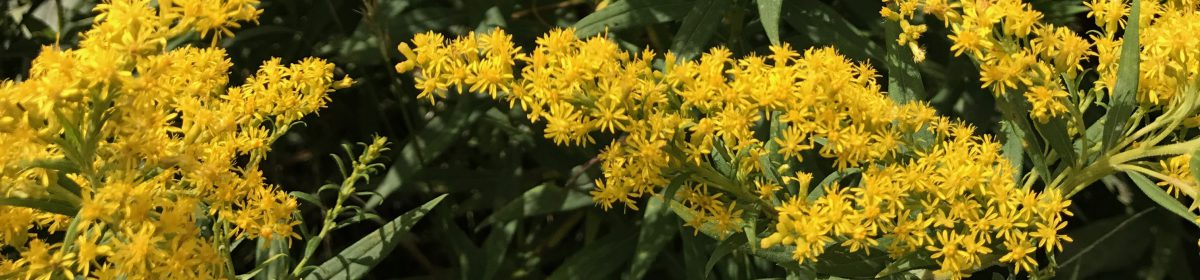
Let’s end this with some roadside flowers. Clumps of these have popped up along the backroads around here all over now and they make a brilliant display when you stumble over them.

IMG_0692

The great nutrient collapse

The atmosphere is literally changing the food we eat, for the worse. And almost nobody is paying attention. Source: The great nutrient collapse

I don’t lead off these epistles with links to outside sources very often, but this one at Politico, of all places, is a wee bit scary and it’s something that effects all of us because it’s about our food.

So here’s the background: We’ve known for some time that the nutrient density in the plants we eat has dwindled over the last century. Concentrations of minerals, vitamins, etc. in plants has been shrinking. Our produce, on average, now has fewer nutrients per kilo of plant material than it had when the measurements first began. It’s been assumed that there were two reasons why.

First, our farming techniques have changed drastically over the last hundred years. We’ve moved to “industrial” farming, which relies on heavy applications of artificial fertilizers, pesticides and herbicides. By dramatically altering the environment the plants grow in, we’ve also alters the chemical composition of the plants.

Second, over the centuries we’ve bred plants to grow faster, produce more fruit or grain, and to produce fruits that last longer after picking and which are tough enough to tolerate rough harvesting and shipping conditions. When selecting plants for these traits, we’ve often ignored things like the nutrient content of the plant and flavor. So we’ve ended up with plants that produce fruit that can be stored longer, is easier to harvest, etc. but which is lower in nutrients and flavor.

But that isn’t all that’s been going on, it seems. Apparently increasing CO2 concentrations in the atmosphere seem to have played a significant role in decreasing the nutrient levels in plants.

Maybe… The thing is, this is difficult to test for. The testing requires extensive, difficult to accomplish, and rather expensive experiments, and while there are scientists who would like to do the testing, it has been difficult to get funding to actually do it.

As of right now I don’t think the science is actually settled. The preliminary testing that has been done tends to support the belief that increased atmospheric CO2 levels can indeed result in lower nutrition levels in the plants. But there is still a lot we don’t know. We also don’t know how serious of a problem this may be. A  lot more testing and experiments need to be done to answer all of the questions that need answers.

Changes. Enjoy the Flowers While We Can

It’s that time of year again. The days are getting noticeably shorter, temperatures are getting cooler. The leaves on the trees are beginning to change color. I’ve said before that I like winter, I love the fall. But I’m rather reluctant to let go of summer and embrace the change of season this year.

IMG_0678We still have brilliant flowers growing outside, but knowing that it’s only a matter of a few weeks before they begin to fade is kind of sad.

And the weather, at least this week, doesn’t have much of an autumnal flavor. After days of daytime temps not much more than the mid-fifties and night time temperatures down in the forties, it hasn’t been exactly summery out.

But yesterday it hit the high seventies, and for the next few days the highs are supposed to be in the low 80s. So we’re going to enjoy it while we can.

IMG_0679The gardens here are doing reasonably well for this time of year. Still lots and lots of flowers, the squash are amazing. This is the first year we grew squash and it’s been more successful than we could have hoped. It looks like we’re going to have a couple of dozen acorn and butternut squash from those few plants.

Alas, the same can’t be said for the tomatoes and peppers that were in the raised beds. Last year the raised beds were amazing. This year… The tomatoes; we know what happened with them. They picked up a fungus because of the wet weather we had all spring and well into summer. And we planted them too close together so there was poor air circulation. That combined to take out the tomatoes early this year. We got enough to make some soup and sauce, but less than a third of the production we should have had.

IMG_0680Not sure what happened with the peppers. I suspect some kind of insect damage plus the wet weather was too much for them. The sweet bells in that bed didn’t even flower. The banana peppers and hot peppers did have some yield, but not as much as they should have had. The peppers we planted in other locations did just fine.

Something in the soil? Don’t know. I may end up digging out all of the soil in both of the raised beds and replacing it this fall just to see what happens. They’re only 8X4 so it wouldn’t be a huge operation to do it. We’ll see.

This week I’ll probably get started doing the usual fall cleanup, starting with the tomatoes and the peppers that haven’t been producing. No point in keeping either of those. The tomatoes, well, they’re all pretty much dead anyway, and it’s pretty obvious that except for the banana peppers we aren’t going to get anything from the IMG_0681others, so there’s no point in leaving them there and we might as well haul them down to the compost pile.

One thing I’ve noticed all season long is a lack of bees. Until recently, I hadn’t seen a single honey bee around. A few bumble bees, but that’s it. That’s probably why the pear tree hasn’t produced the way it usually does. When it was in flower there were almost no bees at all around here. Probably also why the cucumber production has been so poor. The plants are doing well and flowering beautifully, but very little fruit.

One good sign is that yesterday the sedum were loaded with honey bees. Dozens of them were zooming down on the sedum flowers. A bit late, but still nice to see.

IMG_0626.jpg


PSA: no matter what, Equifax may tell you you’ve been impacted by the hack | TechCrunch

Those hoping to find out if their Social Security number and other identifying info was stolen, along with a potential 143 million other American’s data won’t find answers from Equifax. In what…

Source: PSA: no matter what, Equifax may tell you you’ve been impacted by the hack | TechCrunch

According to TechCrunch the responses being given at the site when you enter your information to see if your data was stolen seem to have no basis in fact. People are reporting that they have entered their data several times and have received different responses, others have entered random numbers and letters and been told they were “impacted”… Right now it looks like you can’t even be sure your data was or was not stolen in this breach if you go to the equifax site to check.

Brrr. And Stuff

Screen Shot 2017-09-09 at 7.29.39 AMWith early morning temperatures hovering in the mid 40s around here, the dawn bike rides have pretty much come to an end for the season. I have to put it off until close to mid day when the temps get up to around 60 or so. This upcoming week is supposed to be warmer, but I have to face the fact that the bike season is going to be over in the very near future and it’s going to be back to walking and jogging to try to get exercise, so I’d better check out the treadmill and make sure it’s in good shape. A lot of streets here in town don’t have sidewalks at all, so if you’re a walker/runner you’re either forced out onto the slush and salt covered streets and risking cracking your head open when you slide on the ice, or you look for indoor alternatives.

IMG_0053Despite the cold mornings, it’s still amazingly beautiful out there. I’m determined to enjoy it while I can because it isn’t going to be long before it looks like this over there on the right.

Don’t get me wrong. I’m one of those weird people who actually likes winter. But even I have to admit that as I get older my tolerance for cold has diminished.

I keep telling myself every winter that I really need to get outside with the camera because snowscapes and winter scenes can be amazingly beautiful. But then there’s the whole thing with the feet turning into blocks of ice, fingers going numb, the camera’s focus freezing up and all that.

Equifax debacle – By this time you’ll have heard about the Equifax data theft incident where apparently everyone’s SS number, name, address, date of birth and other identifying information was stolen. Basically if you’ve ever had a credit card, applied for a loan, etc., your data was in the system and it got stolen. Mine did, my kids’ data, my wife’s… Pretty much everyone I know who’s checked was hit.

So if you’re wondering if you’re one of us, you almost certainly are. I won’t give you the web address to go to check at Equifax. That info is available all over. Just make sure you go to the right one and not some phishing site. You can be sure that in the coming days the scammers will be trying to take advantage of the situation with phony credit monitoring services and other BS. So be careful out there.

If you’ve been hit, what do you do? Do you sign up for the one year of free monitoring the company is offering? How much good it will do is questionable, but it might give an early alert if something starts to happen. The thing is, the company is only offering you one year of free monitoring, but that data that was stolen is going to be out there forever. Just because it wasn’t used in one year doesn’t mean it won’t be used next year, or the year after.

You should seriously consider freezing your credit entirely. Yes, you can do that. If nothing else, that should prevent scammers from using your identity to open up new lines of credit, take out loans in your name, etc. You have to do it with all three credit bureaus, and there are fees involved. That depends on the state you live in.

I’m going to do something I don’t normally do very often, recommend someplace to go to for advice and information. That’s Clark Howard’s website .  Clark Howard’s website will give you information on what to do, how to monitor your credit for fraud, and how to freeze your credit.

I’ve heard of several incidents where the Equifax site is giving conflicting information about whether or not a person has been hit by this. One person checked on the Equifax site and was told it “appeared” they were not. She checked again a few hours later, and was then told she was. She went through the process again a short time later, and was told again that she wasn’t. In any case, Equifax isn’t giving any firm answer. There are a lot of “might”, “maybe”, “apparently” and other weasel words being used with no actual confirmation.

There are a whole lot of questions that need to be answered over this. Like how did this happen? Why wasn’t this data heavily encrypted so even if it was stolen it would be useless? And why did two or more corporate officers sell their stock in the company after the breech was discovered but before the data theft was made public?

I can’t leave you all depressed and worried, so here’s a flower to cheer you up.

IMG_0683.jpg


Let’s Talk About Cow Sh#t!

Screen Shot 2017-08-09 at 6.46.38 AM
Manure spreaders only looked this good for about 30 seconds after they were delivered to the farm.

What sparked this piece is that the DNR here in the state is being sued by a couple of different dairy organizations over the new rules it and the state legislature instituted to try to deal with the massive problem of pollution caused by runoff from the manure generated by the CAFOs (concentrated animal feeding operations, or mega-farms as they’re generically called).

Manure disposal is a huge problem here in Wisconsin and in other states where there are any kind of large scale cattle operations. Forty or fifty years ago when farms here in the state were still relatively small, it wasn’t a big deal. But now, when we have farms with 3,000, 5,000 or even more cattle concentrated on a single farm, confined to a small area, it has become problem which is literally toxic. Just one of these farms generates as much sewage as a small city. And dealing with that much manure safely is not easy.

And we’ve learned that the hard way. Private wells all over the state are contaminated by the runoff. Some have been hit hard. Kewaunee County has at least 30% of it’s private wells contaminated. Some estimates I’ve read put that number as high as 45%. Some organizations and schools have been giving out bottled water to local families with contaminated wells. We have massive “dead zones” in the Bay of Green Bay where fish can’t live any more because of problems associated with runoff from farm fields. We have toxic algae blooms in lakes. We have… Well, you get the idea.

Screen Shot 2017-08-09 at 6.43.38 AMOnce upon a time we dealt with cow manure like this. The cows grazed out in the field, they’d drop a pile here and there, and move on and nature dealt with it. Insects laid eggs in it, animals foraging for food scattered it about looking for the insects, rain would gradually wash it away, and over the course of many days the pile would gradually erode away, absorbed into the soil where the nutrients would be taken up by the surrounding plants.

But you can’t graze 5,000 cows. And since a single mega-farm can produce as much Screen Shot 2017-08-09 at 6.49.37 AMsewage as a city, disposing of manure becomes a serious problem and you end up with this kind of thing over there on the right; massive manure pumping operations dumping tens of thousands of gallons of liquified manure across fields all over the countryside.

Screen Shot 2017-08-09 at 6.45.24 AMOr imagine you live in the country and you wake up one morning and find huge tanker trucks full to the brim with reeking sludge, leaking all over the road, parked right across from your house like my friend did a couple of years ago. They woke up that morning to the sound of heavy trucks, went outside, and found this going on right in front of their house.

Each one of those trucks has about 8,000 gallons of manure in them. And they were rolling in like that all day long, dumping the stuff into a portable holding tank set up in the field while massive pumps pushed it down hoses to the tractors in the field that were spraying it. The stink was so bad they and everyone else within a quarter mile had to evacuate their homes.

There are existing rules and laws controlling the disposal of manure, but by and large those are pushed to the limits, exceeded, even blatantly ignored.

I have to admit that the situation has gotten better, at least around here. But that’s because I wasn’t kidding about people having to evacuate their homes during one of these big pumping operations. Threats of lawsuits and warnings from local governments to take action forced the worst of this nonsense to be curtailed, but it still gets pretty bad around here sometimes.

It wasn’t until about 40% of the drinking water wells were contaminated in some parts of the state like Kewaunee County that the DNR was forced to act, and then only after the situation had gotten so bad that communities were starting to give out bottled water. The DNR announced stricter regulations and enforcement, with backing from the state legislature, and it looked like they might be finally getting a handle on this.

But no. Now the lawsuits have started. At least two ag business associations have filed suit against the state claiming the DNR doesn’t have the legal authority authority to make the new rules. And because the state legislature severely curtailed the authority of the agency over the past few years, they are quite possibly right. Without intervention by the state legislature, the DNR probably doesn’t really have the legal authority to put the new regulations in place.