I’m a huge fan of Wisconsin Public Radio. I’ve been listening to it since, well, almost my whole life, really. I first learned about it in grade back in the early 1960s when the nuns would occasionally put on some educational program for us to listen to. It is one of the finest news, information, music and entertainment services out there, and there really isn’t anything else like it left on radio any longer. WPR has been on the air 100 years now. It is widely considered to be the first broadcast radio service in the country.
Their pledge drive is coming up next week. A lot of people are under the impression that WPR and other public radio services are funded by taxes. While they get some money from the taxpayers, most of their funding comes from grants, corporate donations, and donations from people like you and me.
This is the second year I’ll be doing a challenge grant on one of WPR’s shows as part of the 9XM leadership circle. This year it’s the Kathleen Dunn show at 1 PM on May 2. If you call in around that time and pledge to make a donation, I’ll match it up to maximum limit. So if you listen to WPR and want to make a contribution, tune in between 1 and 2 PM on May 2 and take advantage of the challenge grant.
Wet is what describes the weather here. Wet and cold. We had almost 24 hours of rain and everything is completely saturated around here. The gauge indicated we had about 2 inches. And the temperatures plunged as well. High temp yesterday was around 45 degrees, a good 20 degrees colder than the day before. If anyone thought winter was over, this will disprove that. Up in the Bayfield area they actually had to cancel schools the other day because of ice and snow.
Jazz – Last Sunday I worked for the high school jazz band’s spring concert. The students did a great job but the turnout was disappointing. I don’t think we had more than 50 – 60 people showed up for it, even though it’s a free concert. Most of the parents showed up, but that was about it. I suppose the scheduling was part of the problem. Because of scheduling conflicts they could only do it at 4 in the afternoon which is a fairly awkward time for a lot of people.
My job at these events is basically to keep things running smoothly and deal with emergencies if they turn up. But they aren’t making it easy. I found out last weekend that they pulled the control computer that operates the HVAC systems at the high school. Now if I have to make changes to the heating/cooling settings, I have to make a 20 minute trip to the downtown building to get on the computer there, then drive back to the high school…
I imagine it saves them money. They probably have to pay a license fee for that software at the high school, plus the cost of the equipment itself, but come on, really? If something goes wrong, I have to drive 20 minutes one way to read the diagnostics, drive 20 minutes back to the HS to fix the hardware problem, then drive 20 minutes back to downtown to check the diagnostics again and reset the systems, then drive 20 minutes back to the high school…
Oh brother… This is not going to work out well for them, I can see that. If we have a HVAC problem at the high school during a special event and I can’t get it fixed quickly because I have to run downtown just to get at the control systems, there are going to be a lot of very angry people at the event. Last year I got a panic phone call on graduation day that the temperature in the gym was 97 degrees and climbing. If I hadn’t had the control computer at the high school itself at the time and would have had to run back and forth between the two buildings just to do diagnostics, I wouldn’t have gotten the problem fixed until after graduation had been over. Hmph….
MrsGF works with the state’s various food service operations, including monitoring food purchases, and she tells me that the state’s prime food vendor has put out a warning that it may not be able to fulfill orders for lettuce because of adverse weather in California. Those poor buggers out in California — first a years long drought, then they get so deluged with rain that they can’t get their crops planted on time… They just can’t seem to get a break. She’s put out warnings to the state’s food service operations that they’re going to need to change menus, switch to different types of greens, etc. until the situation is resolved. Kale and cabbage haven’t been hit quite as hard, but they’re seeing some serious shortages for various types of lettuce. Apparently it’s hitting the consumer market hard as well and prices are going up fast at the retail level. The Chicago Trib had a story about it just the other day here. (warning: may be paywalled) I was just at the local grocery store this morning and noticed iceberg lettuce is now around $2.50 a head, a dollar a head more than what it was what it was a couple of weeks ago, and they’ve put a limit of 2 heads per customer on purchases. Romain lettuce has also shot up in price. Pre-cut salad mixes containing lettuce have also gone up in price.
If you’re really desperate for leafy greens, fresh spinach looks like a bargain, going for about one third of the cost of lettuce at our local store. It also tastes better and is significantly better nutritionally than iceberg lettuce.
Over Supply
The biggest problem with agriculture right now seems to be over supply. There’s just too much corn, soybeans and milk being produced. Here in the US I’ve heard of co-ops, large farmers and grain dealers renting abandoned airport runways to pile up corn because they don’t have anyplace to put the stuff. Corn prices on the futures market are sitting at around 3.63 right now, and haven’t moved more than twenty cents up or down for months. And with the US looking at a seriously huge corn harvest in 2017, barring some kind of disaster, about the only direction that price is going to go is down.
Low soybean prices have made farmers in Brazil hang on to their crop, storing it rather than selling it in the hopes of higher prices. But now the corn harvest is going to start in June, and with the bins full of beans, there’s no place to store the corn. The Ukraine is predicting a huge increase in corn production to further destabilize things.
And as for the milk market, oh brother… The market is so glutted right now, especially in the US, that they don’t know what to do with the stuff. I’ve heard of processors pouring milk down the drain because they can’t deal with all of it.
The ag industry is going to have to get a grip on the problems with over production or the whole system is going to come crashing down around our ears.
This is just another indication that we really need change the way we deal with weed problems. We can’t just keep trying to come up with ever more toxic chemicals to kill off weeds and GM modified crops. That scheme will always result in weeds eventually developing resistance to the herbicides and the cycle starting all over again.
Climate Change
It’s interesting to note that while we have an administration that continues to deny climate change, everyone else seems to have just accepted it and is trying to deal with it. Even Wal-Mart, which isn’t exactly known as a bastion of liberal policies, is trying to deal with the situation and is putting pressure on its suppliers to do likewise. While the politicians bluster and bluff and bloviate and grasp at straws to try placate whoever writes them the biggest check that week, out in the real world a lot of major companies have realized that if anything positive is going to get done, they’re going to have to do it themselves. Even some of the oil companies have started to admit that something has to be done.
GIPSA Rules Delayed
I don’t blame you in the slightest if you don’t know what the GIPSA rules are. If you raise poultry or pigs for one of the big meat packers, you know all about this and are quite possibly pulling your hair out. But almost no one outside of the business does.
The rules were intended to protect farmers who contract to raise meat animals for a meat packing company from abusive and discriminatory practices. “because the processors own the birds, the feed, and other inputs, they can unfairly disadvantage or preference one grower over another as a way of forcing the growers to do things against their will or shut down dissent.” is how critics put the behavior of the processing companies in one article. The basic idea is that the rules would have given farmers who raise animals on a contract basis some minimal rights without having to jump through a lot of hurdles that are basically impossible to jump. The rules were changed by court interpretations about ten years ago so farmers now have to prove that a company’s actions harmed not just them, but the entire market, before they can try to take any kind of legal action against the processing company. As one representative for farmers put it: “We can’t overstate the level of fear and intimidation felt by poultry growers that contact us or our partner organizations,” says Harvie. “If they choose to speak up, they risk everything—their contract, their land, their homes.” You can read that whole story here.
The administration has delayed the implementation of the rules and right now it looks like they will be eventually be abandoned entirely and the meat packing companies are already celebrating a victory.
Vomitoxin
A nasty name for a nasty mycotoxin. Vomitoxin is nasty stuff and it seems to be getting more common in US corn. It is a toxin caused by mold in corn, and generally hasn’t been much of an issue in the US, but it seems to be getting worse, especially because of wet conditions during last year’s corn harvest. The toxin makes corn unfit for consumption, even as animal feed.
It isn’t even suitable for use for ethanol, because the ethanol makers depend on dried distillers grain (DDG) to make a profit. DDG is what’s left over after the ethanol making process. It’s a fairly high protein cattle feed. The ethanol making process concentrates the mycotoxin, making the resulting DDG even more toxic than the corn originally was.
Wisconsin Public Radio’s pledge drive is coming up May 2 – 5. I’m a big fan of WPR and it’s news, entertainment and music programming, and if you listen to WPR I am going to encourage you to kick in a few bucks to help keep the service going. Contrary to what you may have heard, the majority of WPR funding comes not from the taxpayers, but from sponsors, foundations, and people like you and me who are willing to throw them some money to help them keep going.
In an effort to help convince people contribute, certain individuals, foundations and companies do something called a challenge grant during the drive. For every dollar a contributor pledges during a specific time slot, the challenge grant will contribute a dollar. So anyone who pledges during that time essentially doubles their contribution. I’m doing a challenge grant again this year, this time during the Kathleen Dunn Show. So if you listen to WPR and want to support the service, this is a good time to do it. Not only will you be supporting an excellent radio service, I’ll double your money up to a certain limit.
When, exactly? Not sure yet. They’re still doing scheduling and planning but they’re going to let me know when the challenge will take place and if there’s any interest here I’ll pass the info along when I get it.
This is my new toy, a Raspberry Pi 3. If you want to experiment with building evil robotic minions to help you to take over the world, this is a good place to start. It has a 64 bit, quad core ARM A53 processor running at 1.2 GHZ, a gig of RAM, 4 USB ports, an HDMI port, LAN port, WiFi, reasonably good graphics and sound, and runs a version of LINUX. It can connect to the outside world to enable the computer to hook up to sensors, relays and controllers to make evil robots to allow you to take over the world, control devices, record data from sensors and all sorts of fun things.
And it costs a whopping $35. Less than what it would cost me to get a good meal at that fancy restaurant a couple of blocks from here. Hell, less than what just a bottle of wine would cost over there.
Now this, on the other hand… Well, not on the other hand because you couldn’t pick it up with one hand, but you get the idea. This is the first computer I ever owned. It is a Ohio Scientific C2-8P, and if you’ve never heard of it, I don’t blame you. Ohio Scientific is just one of many, many computer makers that tried to get into the home and small business market back in the late 1970s through the mid 1980s, and failed. It did better than a lot of them did, but eventually it failed, along with Atari, Commodore, Apricot, Coleco, Exidy, Franklin, Panasonic, Radio Shack/Tandy, Sinclair, Texas Instruments… Well, the list goes on and on.
Mine wasn’t even as good as the one in the photo over there. Mine was an early version that didn’t have the fancy paint and logo on the front. And it was nasty. It was about the size of a microwave oven, packed solid with circuit boards the size of a sheet of paper, each of those stuffed with chips of various types, all hooked together with miles of ribbon cables and wiring.
Mine was kind of odd. Kind of? Ha! It was seriously odd. I’d never seen anything like it before or since. I suspect it was an experimental unit that had been heavily modified. According to the photocopied documentation I got with it, it could support three different processors, a 6502, 6800 or 8080. Or maybe a Z80. Don’t remember. It was a long time ago. They were selected via a rotary switch on the back???? Really? Seriously? I never knew for sure. There was only one CPU board in it when I got it. There was a big rotary switch on the back but it wasn’t wired to anything. I think they had some kind of scheme where the switch would select one of 3 CPU boards connected to the backplane, but since there was only one CPU board and the switching system wasn’t connected I have no idea what the hell they were trying to do.
Why 3 different CPUs? I suspect they intended to use it as some kind of development and/or testing system for different types peripherals. The documentation I had was originally typewritten, with hand written notes in the margins, and then had been photocopied. It was interesting, that’s for sure. Large parts of the machine were wire wrapped and hand soldered so someone had been in there fiddling around. A lot.
It came with a whopping 4K of RAM. I spent hours hand soldering chips to the memory board to bring it up to 8K. The company I bought it from found an extra 8K RAM board for it and gave that to me. It was, of course, unpopulated, so I spent many more hours hand soldering RAM chips to the extra board.
Data storage was on a cassette tape. It read/wrote data to a cassette tape at a whopping 300 baud using the Kansas City Standard (if you know what that is, you really, really need to get out more and get a life). That’s 300 bits per second… Oooo, the excitement! To load the editor/assembler program so I could program in assembly language took 20 minutes. Video was black and white, text only, going to an old Panasonic B&W TV set that I had to re-wire to handle the video input from the computer. The company I bought it from offered to give me a “real deal” on the matching 8 inch floppy drive system for it. I passed because I could have bought a pretty good car for what they wanted for the thing.
What did it all cost? By the time I got it up and working (sort of) I probably had well over a grand invested in the thing.
In a way it was completely worthless, that computer. I never actually did anything genuinely useful with it. But on the other hand, if you count the intangibles it was worth every penny because I taught myself programming in BASIC and assembly language on that beastie. I learned how to solder IC chips to circuit boards. I learned how to hunt down failed components (capacitors failed all over the place on that thing for some reason). I learned why storing data on cassette tape is very, very nasty. Trying to get that thing running and keeping it running taught me more about the technology than all the computer science classes I took in college.
And I learned how to make my own Faraday cage because it put out so much RFI it screwed up every TV and AM radio in the area when I turned it on and had build one around it just so I could use it.
Now, where was I? How did I get off on this? Sheesh, I was going to talk about changes in technology, make pithy remarks about how almost no one back then foresaw how computer technology would evolve, morph into what it is today where computers are literally everywhere, in every aspect of our lives.
Instead I end up doing this ramble down memory lane babbling about a relatively minor player in the early computer market… Sigh.
I haven’t heard much about the meat scandal going on in Brazil on the main stream media but it’s been all over the ag press since the story first broke. According to reports, Brazil’s meat exporting companies have been involved in bribery scheme where government inspectors and auditors were bribed to permit the companies to ignore sanitary regulations and inspections, falsify medical records and certificates, and ignore tampering with products to disguise problems with the meat. It’s also alleged the producers used ascorbic acid and other chemicals to disguise rotten meat, injected water into meat to inflate the weights. It’s just nasty. The whole story sounds like something straight out of “The Jungle” by Upton Sinclair.
There are now reports of large numbers of arrests as the government tries to do damage control. Brazil is the largest exporter of beef and poultry in the world, and the scandal has decimated the industry. Many countries instituted outright bans on importing Brazilian meat and meat products or instituted much stricter inspection protocols. Things are slowly starting to get back to normal, but the Brazilian meat industry really took a hit on this one and it could take some time for it to recover.
The really scary part about this is that meat processing companies had allegedly been bribing the country’s federal meat inspectors for years before this was discovered.
Does No One Remember?
Does no one remember what things were like before the EPA came along and environmental laws were finally brought on-line? It seems not, judging from the stuff I’ve been hearing coming out of the “new” EPA and the new administration. If you read the laundry list of things the new administration is planning on doing when it comes to the environment, it seems none of them do.
And what’s up with this fixation on coal that this administration has? Pruitt just put on a staged event with coal miners in full gear standing around him to try to spin how the gutting of environmental regulations is going to somehow create massive “economic growth”. All things considered, coal is a very, very minor cog in the energy machine. For many years coal has been becoming increasingly irrelevant in the energy world, and not just for environmental reasons. It’s expensive, dangerous, dirty, inefficient, produces huge amounts of waste material when burned, it’s hard and dangerous to mine, and the coal industry doesn’t really employ all that many people.
When I remember what it was like back in the 1960s, and think that we might be going back to those days of cities being entombed in clouds of toxic smog, rivers that were so polluted they actually caught on fire, where if you fell into a river you’d probably die from poisoning before you drowned, and all just so a few politicians can pose for pictures with a handful of miners from an industry that was starting to fail even before they were born, it makes me wonder what the hell is going on.’
Rather than spending all this time, energy and government money propping up the coal industry allegedly to “protect” the jobs of a few thousand miners as the politicians claim they are doing, wouldn’t it make more sense to invest those resources in training the miners for other types of work, giving different types of businesses incentives to move into those areas, etc?
Canadian Dairy Fights Back
The Canadian dairy industry is pushing back against claims that it and the Canadian government are at fault in Grassland cutting off 75 dairy farms here in the state. As I pointed out previously, the story being pushed out by the company about why it abruptly cut off 75 farms, forcing them to scramble to try to find new processors to buy their milk, seems to be a bit disingenuous. Especially when Grassland is claiming it had to cut off those farms because it can’t sell the milk while the company itself is seeking permits to build it’s own 5,000 cow dairy farm.
The Canadians are pointing out that the real culprit is the US’s overproduction of milk. And they’re right. The market for dairy products is utterly saturated. Despite an increased demand for butter, the US domestic market has been flat for years, with some sectors, such as consumption of liquid milk, actually declining despite heavy marketing and various gimmicks. And while demand is shrinking, prices falling, the diary industry responds by drastically increasing production?
Even one of the farmers dropped by Grassland agrees as is noted in the story linked above.
One of the biggest problems with the whole dairy industry in the US is government intervention in the market. Political manipulation of the market has resulted in a maze of rules, regulations, laws, marketing schemes, surplus buys and I don’t know what all else, that has left us with a marketing system that is convoluted, irrational, and so outdated that parts of it go back 75 or even a hundred years.
I mentioned previously that a short time ago Grassland Dairy Products here in Wisconsin, which makes mostly butter, sent out letters to 75 dairy farmers telling them that as of May 1 Grassland would no longer be buying their milk. This left those farmers in a terrible situation. They now have no place to sell their milk. And the way the market is right now, finding a new processor to sell to is almost impossible.
In it’s press releases and comments to the media Grassland blames Canada. Canada, according to Grassland, changed their dairy import policies almost literally overnight, making it impossible for Grassland to continue to sell almost a million pounds a day of ultra-filtered milk, used in cheese making, to Canada. According to some of the information that came from the company, they received only two days notice before the change was implemented. The company had no choice but to cut back on the amount of milk it purchases. Grassland claims that it cut off those farmers that the company felt would have the best chance of finding a new market for their milk elsewhere.
But some people started to do some digging, and as is often the case, what’s been coming out in the press releases and statements from the company seems to have some problems. I ran into an op-ed piece over at Wisconsin Agriculturist that points out numerous problems with the whole story as it’s being presented by Grassland, and if true, there is a lot more going on here. You can read it here.
First of all, allegedly Grassland was not blind sided by this as they seem to be claiming. This didn’t happen overnight as the press releases seem to claim. This has been in the works by Canada for a long time. Grassland allegedly knew about this back in November already, and may have known as much as two years ago according to the editorial piece. Governor Walker actually wrote a column about it back in November.
Then there is the issue of which farms they cut off. The company claims it picked farms that it believed would best be able to find markets for their milk. But almost all of the farms being cut off are the ones that are the farthest away from the company’s processing facility in Clark County. Cutting off the farms that are the farthest away from their processing center would save the company a small fortune on shipping costs.
There there is this little tidbit: At the same time the company is cutting off 75 dairy farms, it is trying to get the permits to build it’s own 5,000 cow company owned mega-farm.
There’s no doubt that the company lost significant sales of product to Canada, but there seems to be a lot more going on here than just a trade squabble with Canada.
As of this morning the ag futures markets are listing corn at 3.67 a bushel, soybeans at 9.46, and wheat at 4.33. But as if often the case, out in the real world, at the farm level, the situation is far different. If you’re a farmer trying to sell, you don’t get the futures prices, you get farm gate prices, what a buyer will actually pay to a farmer. And that is often much, much less than what that commodity is trading for on the floor of the Chicago exchange and other commodities markets.
Out in the real world, farmers are looking at farm gate prices for corn of as little as 2.90 and wheat around 3.15. Those prices are well under the cost of production for most farmers. US farmers are looking at a fourth straight year of increasing costs, declining income, and increasing debt.
The problem is we’re growing too much food.
Sounds ridiculous, doesn’t it? Especially when we’re hearing about mass starvation in some parts of Africa and other parts of the world. But the problem isn’t a lack of production. We’re producing more than enough to keep everyone fed. The starvation is due not to a lack of food, but to government corruption, incompetence and war, not to any kind of shortage of food.
Overproduction has become a very serious problem. Most of the grain producing nations are looking at massive surpluses of product. Storage facilities are packed tight. In Kansas they’re actually renting runways at decommissioned military airbases and parking lots to pile the stuff up because there’s no place to go with it.
Meanwhile countries like China and Russia are trying to dump old stock in storage in order to make room for new production, resulting in prices being driven down even farther.
And there seems to be no end in sight. USDA is estimating that corn, wheat and soybean production in the US alone could be the biggest ever since they started keeping records.
An icon of my youth is, I’ve been told, going to be torn down in Manitowoc, the old Penny’s building.
This is one case where I heartily approve of the decision if does indeed happen. As you can see the building looks like it’s ready to fall down all by itself. The two upper floors have been abandoned for years, windows broken out, covered up with plywood. The main floor was remodeled, if you can call it that, into small shops that now house, well, basically they’re junk shops except for a small art studio and resale shops that sell rummage sale items, a few antiques, on a consignment basis.
Saturday I was talking with a shop keeper downtown who used to rent space there and she told me that while it was cheap, she got out years ago because she was afraid the building was going to fall down around her ears. She told me that there were plans in the works to tear it down and replace it with a parking structure. We went in to look around and I can understand why she got out of the place. It’s pretty bad in there.
Going to Manitowoc’s downtown, the old shopping district, is a kind of bittersweet experience for me because I find it nostalgic, sad, exciting, interesting and hopeful all at the same time.
When I was a wee lad we did some of our shopping there in the downtown. At the time it looked like this. I found this image on-line somewhere.
Downtown was the hub of the city, where everyone went to shop. Penny’s was there, as was Sears. Woolworths had a store there, the old “five and dime” store. Kresge’s, another 5&10 store was down there as well. The elegant and upscale Schutte Bros. department store with it’s pneumatic cash tube system. Dozens of smaller shops all running down 8th street and going down the side streets. It was a thriving, bustling place. Just over the bridge was the Boston Store, and Sears.
The old Kresge’s building is still there. It now holds a rather nice coffee shop that seems to be doing well. The corner shop has been a succession of different little stores mostly trying to sell tourist trinkets.
Sears is long gone. Kresge’s closed down. The Boston Store closed. Schutte’s closed, and eventually the other shops, the jewelry stores, tailors, shoe stores, all of them closed or went bankrupt as shopping patterns changed.
The old Boston store property. The area with the trees on the far right is the site of the old Sears building.
The elegant and upscale Schutte Bros. store is in a sad state. It looks like this now.
It’s been standing empty for I don’t know how long now. There have been attempts to do something with it. A half dozen different restaurants have tried to make a go of it on the main floor, but none of them have worked well, and it’s been empty now for years, slowly deteriorating.
Somehow this old building has managed to remain almost as elegant and beautiful as it was when it was first built probably almost a hundred years ago.
If memory is correct, and there’s a good chance it isn’t, this building originally belonged to the International Order of Odd Fellows, a fraternal organization that was popular back in, oh, the early 1900s. They spared little expense in the design and construction, and thanks to owners who cherish these old buildings, they’ve restored it and kept it in pretty good condition, and it’s one of the finer buildings downtown now.
Another fixture of downtown, the huge old malting/beer facility right on the lakeshore, is going to be hanging on, too.
It had been owned by few different beer companies, the latest being Budwiser. Budwiser moved out of the facility a few years ago and we were afraid it would fall derelict like so many others. But it was purchased by Briess Malting of Chilton, a major producer of malted grains for the brewing industry that’s been in business for over a hundred years now.
The old imposing bank downtown is still there too, looking just as impressive and intimidating as it did when it was first put up.
I don’t think it’s a bank anymore. Someone told me they think city offices are in there now.
The old Mirro Aluminum building is finally coming down at last. After being abandoned by it’s new owners when Mirro Aluminum was bought out and shut down, it sat empty for ages, gradually falling apart.
Not my photo, found this online
After years of the city squabbling with various owners, various schemes for getting rid of it, the city itself finally had to take over the property to get it demolished.
Time to catch up again, so let’s get on with this, shall we?
Lots of stuff has been going on in the farming world, some of it unpleasant.
Canadian Milk Export Headaches
Grassland, a large milk processor, sent notices to 75 dairy farmers here in the state that the company will no longer accept their milk as of May 1, leaving the farmers scrambling to try to find someone, anyone, to buy the milk they’re producing. Over the last couple of
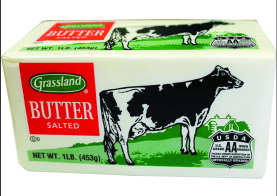
Ooo, butter… Yummy yummy butter
weeks Canada has rejiggered its milk classification/pricing system which has effectively prevented Grassland from exporting up to 1 million pounds of milk a day to Canada, and apparently with only 2 days notice. Grassland had no choice but to notify the farmers that they could no longer buy their milk because the company has no way to sell it now. A lot of people in the US dairy industry are claiming that Canada’s actions are nothing but a way to try to curtail the imports of US dairy products and are actually illegal under international trade law. Where are those farmers going to go with their milk? I have no idea. This is a bad time of year to try to find a milk processing company because we’re about to enter into what’s known as the “spring flush”, when dairy cows normally begin to produce even more milk, so there’s going to be a glut of milk coming on the market as it is and few processors are looking for more.
Corn Finances are Wonky
A recent survey by the Farm Journal indicates that the average cost of raising a bushel of corn for most farmers is about $3.69 per bushel. Corn briefly flirted with the 3.70 range for a while, but mostly it’s been in the 3.50 – 3.65 range for months and months now. It makes one wonder why anyone bothers to raise corn in the first place. Granted, some have lower costs than that and do make a bit of money off the crop, but still.
Sometimes the farming business reminds me of the old joke about the two guys from Milwaukee who decided to go into the fruit business. They bought a truck, ran down to Georgia and bought a load of peaches for $1 a pound, and came back to Milwaukee to sell them at $1 a pound. When they realized they hadn’t made any money on the deal and were trying to figure out why, one of them looks at the other and says “I know! We need to get a bigger truck.”
Some days I feel like the entire agricultural system is being run by those two…
Chickpeas
I love chickpeas, or garbanzo beans as they’re sometimes called. I use them in salads, soups, but they’re mostly known for their use in hummus and in middle eastern cooking. A member of the legume family, they’re tasty, very nutritious and high in protein and, well, they’re just yummy and very useful in most types of cooking.
Chickpea planting in the US has more than doubled since 2013. We’re only planting about a half million acres, almost insignificant when compared to corn and soy acres, but interest in the chickpea has been climbing steadily. They’re being grown mostly in the north western states. Farmers are always looking for an alternative to low profit crops like corn and wheat, and right now chickpeas look pretty good, profit wise. They aren’t that easy to grow, though, mostly because they’re susceptible to disease. But the prices have gone up about 23% over the last year, and with consumption and interest increasing, and farmers looking to try to find some way to make a profit, I won’t be surprised if acres planted keeps on growing significantly.
Butter Butter Everywhere
Butter consumption in the US is at 50 year record high, and there seems to be no end in sight. Butter price is one of the few bright spots in the dairy industry right now, with the price creeping up despite a decrease in butter exports and an increasing stockpile sitting in warehouses. Wholesale prices for butter were pushing $2.23 at one point and have only declined a few cents since then, despite increases in milk production.
Butter has become a marketing tool for a lot of food companies. A lot of restaurants, even the fast food ones, are switching out margarine in favor of butter, and a lot of companies that make processed foods are now hyping that they’re using real butter instead of margarine or vegetable oils.
Why this increase in demand for butter? Part of the reason is that dairy products are no longer linked to increases in cholesterol levels. Over the last five or eight years new studies indicated that contrary to previous beliefs, moderate consumption of fats from dairy products seems to have little or no effect on cholesterol levels. And there have even been some studies that indicate moderate consumption of full-fat dairy products may even have some health benefits.
Another thing that’s been driving an increase in butter consumption is that it’s been found that hydrogenated vegetable oils, long the primary ingredient in most margarines, are utterly horrible for you, health wise, causing significant increases in risk of heart disease and other problems.
But despite all of that, we’re still producing way too much milk. In many areas of the country there isn’t even the plant capacity to handle all of the milk being produced. There are reports of milk being dumped or being used for animal feeds in some states. With the ‘spring flush’ now arriving, a lot of milk processing plants are at full capacity already. It’s going to be interesting to see what happens to milk prices over the next month or two.
Amateur Radio Stuff
If you’re interested in agriculture and don’t give a fig about AR, you can stop reading now if you like.
QRZ
Just got the notice that my subscription to QRZ.com is about to expire. QRZ is known as being the place to go if you’re looking for information about a particular call sign, want to buy or sell radio equipment or if you’re a grouchy old fart who likes to complain a lot, hang out in the forums and, well, complain a lot. Most people just use it as a way to easily look up information about an amateur radio operator. If you have the person’s call sign, you can find names, addresses and other information about them on QRZ’s database. You don’t absolutely need to be a paid subscriber, but it’s helpful. It gets rid of the annoying advertising, gives you access to things the freeloaders don’t see, that kind of thing. You get your own web page, email, log book and other goodies. It’s not an essential service by any means, but it is indeed handy to have.
Just stay out of the forums unless you have a thick skin.
Terminology
The other day someone I was talking to remarked that I never, ever use the terms “ham” or “elmer”. And they are right, I don’t. While the term “ham” when used to refer to an
A ham. Not an amateur radio operator
amateur radio operator has been in common use for probably a hundred years, that doesn’t mean I have to like it. I have no real desire to be referred to by a term that means “cured pig meat” to 99% of the population of the country. Am I being ridiculous? Pedantic? Of course I am. Don’t care.
I also loathe the term “elmer” when used to describe describe someone who assists a newcomer to amateur radio learn about the technology.
Now, before you go off the deep end and launch into a rant down in the comments section about the tradition behind the term “elmer”, I understand that “elmer” refers to a very nice fellow who once helped newcomers to the hobby learn about it. I’m sure he was a very nice person. He was an utterly delightful and nice fellow I’m sure.
But I don’t care. There is already a perfectly
An Elmer. Not a mentor.
good term for that: mentoring. And to be perfectly frank, the term “elmer” is not exactly complimentary outside of the amateur radio community. It refers to the character Elmer Fudd from the old Bugs Bunny cartoons. An “elmer” for a large percentage of the population is a person who resembles Elmer Fudd, someone who is a bumbling, idiotic fool. It is not a complimentary term.
Use both terms if you wish. I don’t care. I won’t object or even comment. But as far as I’m concerned, a mentor is a mentor, not an “elmer”. An amateur radio operator is an amateur radio operator, not processed pig meat.


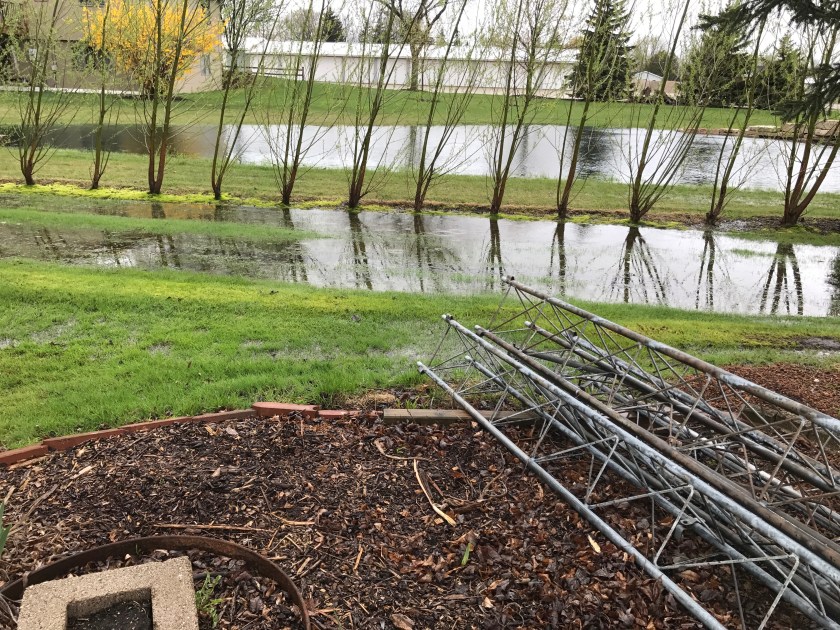 and everything is completely saturated around here. The gauge indicated we had about 2 inches. And the temperatures plunged as well. High temp yesterday was around 45 degrees, a good 20 degrees colder than the day before. If anyone thought winter was over, this will disprove that. Up in the Bayfield area they actually had to cancel schools the other day because of ice and snow.
 I don’t think we had more than 50 – 60 people showed up for it, even though it’s a free concert. Most of the parents showed up, but that was about it. I suppose the scheduling was part of the problem. Because of scheduling conflicts they could only do it at 4 in the afternoon which is a fairly awkward time for a lot of people.
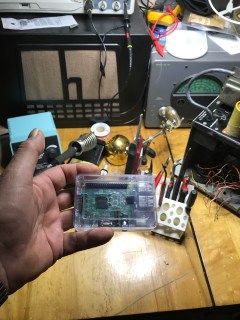 This is my new toy, a Raspberry Pi 3. If you want to experiment with building evil robotic minions to help you to take over the world, this is a good place to start. It has a 64 bit, quad core ARM A53 processor running at 1.2 GHZ, a gig of RAM, 4 USB ports, an HDMI port, LAN port, WiFi, reasonably good graphics and sound, and runs a version of LINUX. It can connect to the outside world to enable the computer to hook up to sensors, relays and controllers to make evil robots to allow you to take over the world, control devices, record data from sensors and all sorts of fun things.
 never heard of it, I don’t blame you. Ohio Scientific is just one of many, many computer makers that tried to get into the home and small business market back in the late 1970s through the mid 1980s, and failed. It did better than a lot of them did, but eventually it failed, along with Atari, Commodore, Apricot, Coleco, Exidy, Franklin, Panasonic, Radio Shack/Tandy, Sinclair, Texas Instruments… Well, the list goes on and on.
 Downtown was the hub of the city, where everyone went to shop. Penny’s was there, as was Sears. Woolworths had a store there, the old “five and dime” store. Kresge’s, another 5&10 store was down there as well. The elegant and upscale Schutte Bros. department store with it’s pneumatic cash tube system. Dozens of smaller shops all running down 8th street and going down the side streets. It was a thriving, bustling place. Just over the bridge was the Boston Store, and Sears.



 It had been owned by few different beer companies, the latest being Budwiser. Budwiser moved out of the facility a few years ago and we were afraid it would fall derelict like so many others. But it was purchased by Briess Malting of Chilton, a major producer of malted grains for the brewing industry that’s been in business for over a hundred years now.