So I get up about 3:45 this morning, something that, alas, is not unusual for me these days, then go back to bed and…. Oh shit, here we go… SVT, or supra ventricular tachycardia, a situation where electrical signals to the heart get out of whack and the heart starts beating at around 190 and… well it’s not pleasant. I’ve had this going on for about 10 or 12 years now and it’s — annoying.
Wake up my poor wife and she has to drag my sorry old butt down to the ER where most of them remembered me from the last time this happened about a year ago. SVT won’t kill you, generally speaking, unless it goes on for a long time, but you can faint, get weak, and if it goes on for too long it can cause heart damage so it is not a good thing.
Sometimes it will convert back to normal rhythm by itself, but for me generally not. They usually have to give me a drug called adenosine which is just nasty. It basically kills you. Sort of. Or at least it feels that way. They defibbed me once and being shocked was preferable to getting adenosine, really.
This time it converted on its own, amazingly. The nurse was trying to put in an IV and missed and this horrible burning went up my arm, I half sat up, gasped, and bang, it converted to normal. So that was something anyway.
It’s weird, though… this seems to happen every spring for some reason. Last year it was in Feb. The year before that in May…
What’s the most irritating about it is the symptoms of this starting feel exactly like a gas bubble is moving through my abdomen, which, when you get to be my age, is something that happens a lot. So every time I have indigestion or gas or or something like that I go into panic mode because I think the SVT is starting again…
As in I wish I could. I occasionally suffer from insomnia and it’s been pretty bad the last few days. I’m not sure why. Which is why I’m writing this at two in the morning instead of being asleep. I know, I’ll try looking at photos of, oh, blossoming apple trees. That will put me to sleep!
Ah, well, apparently not. Didn’t work. Still it’s a really pretty tree.
Spring!
Spring is coming! I hope. Getting so tired of cold, wet weather, and especially the lack of sun. So I’m going to drop in some photos of spring and summer flowers in an attempt to lure spring a bit closer.
Agriculture Secretary Hearings
The senate ag committee hearings and questioning of the administration’s nominee
Sunny Flower, not Sonny Perdue
Sonny Perdue finally took place on March 23. Unlike the hearings for most of the administration’s nominees, this one was relatively short, cordial and even pleasant for the most part. Mr. Perdue is perhaps the least controversial nominee put forward by the administration. He is also unusual in that he actually seems to know something about the agency he would be running.
Brazil Beef Scandal
The government of Brazil arrested 38 people involved in an alleged scam where inspectors were bribed to permit rotten and tainted beef to be passed for sale at a beef exporters JBS
Wouldn’t you rather look at chive flowers than diseased beef? I know I would.
and BRF. Several countries have instituted temporary bans against beef imports from Brazil. Here in the US some government officials are calling for a ban as well but there is none as yet. USDA says it is stepping up inspection of meat coming from the country. But USDA also certified Brazil’s inspection system as being as good as that here in the US, so who knows…
Addendum: Since the US was forced to repeal the Country Of Origin Labeling law (known as COOL) US consumers no longer have any idea where their food comes from. But there is nothing to prevent beef processors, wholesalers, etc. from doing it voluntarily.
Memphis sits on the Mississippi river but gets it’s water from wells that draw from the
I wish I could remember where I took this picture
Memphis Sand Aquifer that stretches under Arkansas, Mississippi and Tennessee. And like most aquifers, water is being pulled out of the ground far faster that it is being replaced.
Back in 2005 Mississippi demanded that Memphis pay for the water it was withdrawing from the aquifer, claiming that the city was actually sucking up Mississippi water. The state is demanding over $600 million from the city.
This has been dragged through the courts ever since, with Mississippi losing at every level. But now the state of Tennessee has been dragged into the case as well giving it new life, and it’s going to the Supreme Court.
This case has the potential of setting off a hornet’s nest of problems if the SC rules in favor of Mississippi. It could cause major legal problems wherever large aquifers are used for water supplies and could even extend into international disputes. it will be interesting to see how this one plays out.
Apparently this company has developed a type of canola that contains relatively large amounts of an oil with omega-3 that is similar to that produced in fish. The GM seed has been produced by adding in genes from microalgae which make omega-3 oils. The claim is that this microalgae is the source of the omega-3 oils that are found in fish. About 2.5 acres of this canola is supposed to produce s much omega-3 equivalent as 10,000 kilos of fish.
The new canola (rapeseed) is still in testing and hasn’t yet received approval from USDA or from other canola growing countries. But everyone is excited about it because this could go a long way to fill the ever increasing demand for omega-3. In the US alone omega-3 supplements are a billion dollar business and people by the millions gobble down the capsules. Food processors are adding it to a wide variety of foods like yogurt, cereals, juice, even cookies for heaven’s sake. So it is hoped that a product like this may help to reduce overfishing that has driven some of the most popular types of fish in the oceans to near extinction.
But there are problems. And everyone seems to have been completely ignoring them. And the biggest problem seems to be that no one seems to be really sure that omega-3 actually works. Even worse, there are some indications that taking omega-3 might actually be detrimental for the health of some people.
The Journal of the National Cancer Institute published a report a year or so ago that indicated that linked eating a lot of oily fish or taking fish oil supplements to a 50% increase in the risk of prostate cancer in men, and a 70% increased risk for aggressive prostate cancer.
Taking omega-3 supplements is supposed to improve heart health, of course. But studies are indicating it doesn’t do that, either. A study published in 2013 in the New England Journal of Medicine showed that taking omega-3 supplements did nothing to reduce heart attack, stroke or death from heart disease.
Why all this confusion and conflicting information? Because how food and it’s components affect the body is an extremely complex subject and often still largely a mystery. Using supplements for anything other than to treat an actual deficiency is generally something you should do only with caution and great reluctance.
Eating a diet that has fish in it is considerably different from gulping down a handful of omega-3 pills because no one seems to be able to prove beyond a doubt that omega-3 is the only thing at work when there is an improvement in health. It’s more likely you need everything in that fish, all of the vitamins, minerals and other substances that are in the fish itself, not just a single component of that fish.
Even though we have hundreds of companies trying to sell you fish oil and omega-3 supplements, adding it to other foods as a marketing gimmick, there are a lot of studies out there that indicate that taking fish oil and omega-3 supplements to reduce heart problems doesn’t work any better than taking a placebo. Like this one. Or this one. Or… Well, you get the idea so why go on.
Everything we do has consequences, things that happen as a result of our actions. Some of those things are planned and are desirable. Some are unintended and can be undesirable or even catastrophic. And as many business owners, farmers and others can tell you, the current climate of antagonism towards immigrants, both legal and non-legal, is already having consequences that are starting to ripple through the country both socially and economically.
I’m not going to talk about the social consequences of what is going on now, there are already people who are doing that far more eloquently than I could. Instead I want to talk about the economic consequences of what is happening now and what will happen if the current administration continues down its present path.
Like it or not, large sectors of the economy are dependent on immigrant labor. The hotel/motel industry, food service, including restaurants and institutional food service, the tourist industry, child care, elder care, custodial and janitorial services, agriculture, all of these industries and more are dependent to one extent or another on immigrant labor. In Wisconsin, state wide about 50% of all agricultural employees are immigrants, mostly from Mexico or Central America. In some parts of the state that number is closer to 80% or even more. And because of this, the crackdown has already started to effect the ag business here in Wisconsin and around the country. (If you want to read about how serious the situation is, jump over to a Wisconsin Public Radio article here.)
Since this blog is (occasionally) farming related, let me stick with the agricultural sector and leave the effects of all of this on other industries to those more qualified to discuss them.
Trying to find people to work on farms and in agriculture in general has always been difficult. The days of being able to hire high school kids to help with the milking or baling hay or whatever are long gone for a variety of reasons. And let’s face it, even back then it wasn’t easy to find farm help. As is generally the case, these so-called ‘golden ages’ when everything was find and dandy before XXXX (insert your favorite conspiracy theory here) got involved and ruined everything, well, those golden ages never existed in the first place. The fact of the matter is that finding reliable help on a farm has always been difficult, and over the years it’s only gotten worse.
Right now about 50% of all workers employed on dairy farms are immigrants. Here in Wisconsin that number is even higher. Around here and in a lot of counties in the state that number is closer to 80%. I know of farms where almost all of their employees are immigrants.
There is an argument that these immigrants are taking jobs that would otherwise have been filled by citizens. But where are these citizens? Even when unemployment was at it’s height during the recession, farmers told me that they never got job applications from local people. None. Even when unemployment was pushing double digits, the only applicants they got were immigrants.
(The fact that us ‘real Americans’ feel that farm work is so demeaning, so degrading, so — so nasty, that we don’t want to work on a farm even as a last resort, is more than a little troubling, and one of these days I might look into that farther, but for now I’ll skip over that and stick to the topic at hand.)
The situation now is even worse when it comes to finding employees. Now the unemployment rate is down to around 3.9% or even less in some parts of the state. Employers at all levels of the economy are having trouble finding employees. And as for agricultural labor, it’s almost impossible to find new employees at all. The idea that there are hundreds and hundreds of ‘real Americans’ waiting in line for these jobs is false. They aren’t. They never were.
While the get tough rhetoric of the current administration makes for good PR in certain political sectors, out here in the real world it’s a different story. Without immigrant labor, the dairy industry here in Wisconsin and in other states, indeed the whole agricultural sector, would collapse. You can’t produce milk without labor. You can’t harvest food without labor. You can’t… Well, you get the idea. Without immigrant labor thousands of farms would have to shut down, food prices would skyrocket, and the whole economy would be disrupted.
So be careful what you wish for. There are often unintended consequences.
I was going to talk about farming less often here but there’s been so much going on and it’s hard to do that. So let’s see what’s going on, shall we?
Bird Flu – We haven’t been hearing much about bird flu since 2015, but it hasn’t gone away just because it’s fallen off the news media’s radar. There have been some serious
I don’t have a photo of a bird flu, so how about a cat instead?
outbreaks in China, including at least 84 human deaths from one form of the virus. China either already has or is in the process of shutting down live bird markets and putting other rules in place to try to curb the spread. In France the government was forced to slaughter all of the ducks in an entire region, and it’s popping up in the US now. An outbreak of a very nasty strain of the virus was found in Tennessee. A mild version of the virus was found at a turkey operation here in Wisconsin. And as a result a lot of people are very nervous indeed.
What about a vaccine? Well, vaccines are out there for some, but not all versions of the virus. Flu virus evolves very rapidly, which is why it’s necessary for us to get vaccinated every year, and even then the vaccine may not do much good. A year or so ago they estimated that the vaccine that was distributed for human use was only about 30% effective because the type of flu sweeping the country was different from the one the vaccine was developed for.
Even worse, a lot of farmers raising birds are reluctant to vaccinate their birds because the tests that are required on poultry being exported to other countries will flag vaccinated birds as having virus because vaccination gives the bird the same antibodies as if it had the actual disease. So it’s complicated.
Labor – Trying to find reliable, intelligent farm labor has always been difficult, and it’s become especially bad since, oh, the 1970s or so. The days of being able to hire a couple of high school students to stack bales, pick rocks or milk cows are long gone for a variety of reasons, some legal, some economic, some social. Even though wages and benefits have risen to the point where they are often competitive with the manufacturing sector (starting wages at some of the farms around here are higher than they are at most of the local manufacturing companies) it’s still almost impossible to find employees unless the farm is willing to employ immigrant labor, usually from Mexico and Central America. Something like 80% of the farm jobs here in Wisconsin are now held by immigrant laborers, either legal or undocumented. While it is illegal for a US employer to hire undocumented workers, the penalties for doing so are often little more than a slap on the wrist. So when a worker presents a slightly dodgy looking set of papers to prove he or she is in the country legally, well, let’s just say it’s really easy to overlook problems with the paperwork when your choice is to either hire that person, or go out of business because you can’t get people to do the work. Besides, with modern technology it’s possible to crank out very official looking documents that can fool almost anyone except the experts.
So in today’s political climate, a lot of farmers are very, very nervous about the real possibility that they are going to get up one morning and find that most of their employees are gone and they can’t replace them.
If one adheres to the ideas of the far right, then the belief is that these immigrants are taking away jobs from “real Americans”, and the reason unemployment is so high and people aren’t making money is because the immigrants are somehow stealing our jobs…
But wait a minute. Right now Wisconsin’s unemployment rate is under 4%. Almost every time I turn on the radio I hear businesses claiming they can’t find employees. Now granted a lot of the people who are employed are under-employed, that is they are working at jobs below their qualifications, at pay rates less than they really would like to have. Many, far too many, are the working poor who, despite working one or two or even three jobs, are just barely hanging on by the skin of their teeth. But the claim that we have huge numbers of “real Americans” unemployed because of immigrant labor is not really true.
And most of the jobs the immigrants are “stealing” are jobs those “real Americans” don’t want to do in the first place: like shoveling manure out of calf pens, cleaning toilets, scrubbing floors, the backbreaking work of picking fruit or vegetables…
Uncertainty – Right now one of the biggest worries in agribusiness isn’t climate, isn’t flooding, isn’t weed or insect infestation, isn’t drought, it’s politics. Everyone in any kind of business associated with agriculture right now is nervous about the new administration and for very good reasons. Between threatening to institute huge tariffs on imports that would decimate the markets and cause massive retaliation by trading partners, to immigration policies that would cut off badly needed labor, to renegotiating long standing trade agreements that would open the country up to restrictions on our exports, the current administration has done little or nothing to curb the nervousness in the ag sector. The commodities markets have been churning, prices refuse to stabilize making planning difficult. No one knows what the FDA or USDA is going to be like under the new administration. Some farm operators I’ve talked to are terrified they’re going to wake up one morning and find their entire labor force has fled out of fear of the immigration authorities. One fellow I talked to said even people who are here legally are leaving because they’re hearing rumors that anyone who looks or sounds even vaguely “un-American” is going to be rounded up and deported or put in concentration camps somewhere.
Scandal – Everybody loves a good scandal, so let’s wrap this up with a nasty and expensive scandal going on in the University of Wisconsin system at the Oshkosh campus.
Apparently former UW-O chancellor Richard Wells and vice chancellor Sonnleitner, both now retired, are accused of funneling university funds to the private UWO-Foundation, a separate nonprofit that supports UWO projects through fundraising and other activities. Under state law the university is not permitted to support a private organization like the foundation in any way.
But it is alleged that Wells and Sonnleitner gave university money to the foundation and issued “memorandums of understanding” in which the university promised to cover the foundations debts in order to help the foundation procede with several multi-million dollar building projects that included two biomass digester systems, one on a private farm, a new hotel, a conference center and a sports complex. In addition it’s alleged that Sonnleitner gave money amounting to well over a quarter of a million, and signed a $700,000 a year lease agreement with the foundation to use one of the digesters.
In all it seems to have cost UWO around $11 – $12 million.
The head of the foundation has been fired, the foundations accountant was put on “administrative leave”, and everyone is wondering how the hell this happened in the first place and how they’re going to keep it from happening again Investigations by the DOJ and law enforcement are going on, lawsuits are already in the works, and the whole thing is a massive mess.
What’s that got to do with agriculture? I said this post was going to be about agriculture, didn’t I? Well, the digester, of course.
One of the projects was a massive biodigester system built on a farm in Rosendale not too far from Oshkosh that was backed by the foundation. The system cost $10 million. Manure digesters use bacteria to produce methane which is then burned in generators to produce electricity. The idea is that it reduces pollution from spreading manure (it doesn’t), it produces methane (which it does, although not very well and methane has some serious problems in the first place) which is then burned to produce electricity which, apparently, none of the utilities actually want because they don’t want to pay more than a token amount for it. For reasons I won’t go into right now, manure digesters are a “solution” to a problem which doesn’t actually solve anything and which creates a whole new set of problems.
I’m not exactly sure why the foundation got involved in this project in the first place, but it’s in it up to its neck. As of June the foundation still owed almost $7 million on the thing. The university itself dumped over $4 million into the project via illegal funds transfers to the foundation. And while some of the money was repaid, the foundation still owes the university almost one and a half million.
If you’ve followed my blogs for any length of time you’ve probably heard me making disparaging remarks about the so called “Internet of Things”, this idea that one day everything will be networked to everything else, and oh, the fun we’ll have!
Your refrigerator will order your food when it gets low. Your cupboard will order food when you get low on staples. Your toilet will monitor your health and report the data to your doctor. Your bed will monitor your sleep habits. You can turn the lights on and off in your house with your phone. You’ll be able to control the heat and cooling in your home from your cell phone. Your counter top will nag you “Are you sure you really need that cookie? Hmm? Mr. Scale tells me you’ve put on a few pounds…”
Now if you are one of the people who think this is the best thing ever, I have a question for you: Have you actually stopped to think about any of this nonsense?
Let’s have a little chat about the IOT, shall we? Let’s start with this little tidbit:
Now, if you clickety click that link, you’ll find that the Bundeswhatever, a German regulatory agency, banned a children’s doll, declaring it to be little more than a concealed surveillance device because, well, because it pretty much is. Designed to interact with children, it uses an internet connection to monitor everything being said around it, sending it off to some server somewhere. It has little or no security, you don’t know where the information being gathered is being sent or what is being done with it. But you can be sure that someone, somewhere, is probably making money off it by selling the data.
And in case you think this is an isolated incident, it isn’t. Similar complaints have been made about an interactive Barbie doll. Security investigators found that it was a simple matter to use the doll to steal WiFi passwords, login information, files from computers linked to the home network… Fortunately the company that made the software was good about fixing the problems. But legally nothing is being done about what the company actually does with the data because here in the US our government’s policy is that privacy is a wonderful thing, but if someone can make money off violating your privacy so that money can to be used to buy politicians, well, where’s the harm in that, right?
Vizio was just fined $2.2 million for “smart” televisions that were spying on people. The company had installed tracking software in its televisions that tracked everything the owners watched, without telling the buyers of the sets it was doing it. There was a case a few years ago where an internet connected toy in the UK was serving up sexually explicit ads on the toy.
Now consider devices that are even smarter than that, that collect data about your eating habits, what you’re buying at the store, your physical health. There are dozens, hundreds of companies that would love to get their hands on that data to directly market things to you, that would benefit from knowing what your health is like, etc.
Even if the device isn’t actively spying on you, they can be troublesome. If we’ve learned anything about the Internet over the years it’s that it is not a safe place to play in. If a device can possibly be hacked, it will. If not for profit, than just for the sheer pleasure of vandalizing something.
You come home from work and find your garage door open and the garage cleaned out of anything of value because someone hacked your cell phone enabled garage door opener. Your house was emptied too because someone hacked your IOT enabled security system. Oh, and to make things even more fun, they hacked your heating controls and turned your furnace off in January and your house is frozen, the water pipes burst. And just to rub it in, your IOT enabled lights are flashing obscene messages in morse code.
I know this is getting a bit on the long side, but let me babble on here for a while longer before I wrap this up.
Now I readily admit that some of this technology is genuinely useful, especially for someone who is disabled or otherwise challenged. But a lot of it, even most of it, just isn’t. I don’t need to have an app on my cell phone to run my furnace. I have a device hanging on the wall that is connected to nothing but the furnace itself that does it for me. If I want to turn the AC on before I get home from work I can use a non-connected programmable timer that costs less and isn’t hackable.
The same is true of most of this stuff. I don’t need it, you don’t need it. Oh, it may be convenient, but is the convenience of being able to unlock your door with a cell phone worth the security risk? Not really.
It’s all marketing. Most of the convenience, security and safety issues being promoted by the developers of IOT technologies is illusory. The fake fears, the phony convenience, all standard marketing techniques to try to convince you that you really, really need this stuff.
If you can’t be bothered to follow the link to the Wikipedia entry on the case, here’s a run down. A school in Pennsylvania loaded the laptops of all of it’s students with spyware that was capable of monitoring everything the students did for “security” reasons.
Including surreptitiously turning on the cameras in the laptops and recording videos and still images of everything. Including the students in their own homes, in their own rooms, in their own beds. They found over 700 still images that had been captured of one single student, even of him in bed sleeping and changing clothes. And those images were given to other employees of the school district. Since the cameras were active in the bedrooms and homes of other children who had the computers, one can assume that videos and images of them changing clothes, in the nude, etc were also captured. The school turned out to be doing this not just to students, but to teachers as well.
Please have patience with me while I talk about agriculture and property taxes for a moment so I can explain why this is important for farmers and environmentalists. Talking about things like taxes and government policies tends to make my eyes glaze over and I find myself with a sudden desire to take a long nap. But if you aren’t a farmer you may not know why this move by Nebraska is important for farmers. Wisconsin already did something like this years ago, and I think it’s the right thing to do.
Property taxes are based on the value of your property, of course. If your house, for example, is valued at, oh, $100,000, you pay property taxes based on that value. If it’s valued at $200,000, your property taxes are going to be significantly higher.
It’s the same with farmland. Under law here in Wisconsin the property is supposed to be assessed for purposes of property taxes at fair market value. (That law had to be instituted because some local jurisdictions were playing fast and loose with property evaluations in order to jack up the tax money they were getting. Before that law was put in place, I knew one poor bugger who had a mobile home that was worth about $10,000 get a tax assessment for $64,000. Seriously. I saw the documents myself.)
The question now is what exactly is “fair market value”? Is it the value of the property as it currently exists, what it is being used for at the moment, or the potential value of the property if it were sold for some other purpose.
That distinction is important, because what was happening in Wisconsin and a lot of other states is that local jurisdictions were assessing property not at it the value of the property as it currently existed, but what the property could be worth if it were sold for some other purpose.
The result was that if you had a farm on the outskirts of a town or city, you were pretty much screwed. Local governments were assessing the farms not on their value as farms, but their value as if they were commercial or residential property.
To illustrate what I mean, let’s look at an example. Farmland in this area is currently going for around – well, let’s round it off to $7,000 an acre to keep the math simple. So if you have a small, 100 acre farm, it’s worth about $700,000.
Meanwhile, land being used for, oh, let’s say a fairly upscale housing development in a nearby town, is going for about $20,000 per 1/4 acre lot, or about $80,000 an acre. Over time the town grows, and now you find that your farm is on the outskirts of the town. And as a result of that, the local government is now assessing your farm not for what it is worth as a farm, but for what it would be worth if it were sold for a housing development. You are now being forced to pay property taxes not on a farm worth $700,000, but property worth $8 million. Your property taxes just went up more than ten times what they’d been before.
While that’s a bit extreme, it isn’t exaggerated by much. I knew farmers who were seeing their property tax bills shooting up into the astronomical range because the jurisdiction they were in decided to evaluate their property not for what it was, but for what it could be. Their taxes were going up five, eight times what they’d been before when their property was evaluated at commercial or residential rates rather than agricultural.
There was some very heated debates over this, of course. The towns (and the developers) claiming that the new value was fair because that was what the property was actually worth if it were sold off to some developer, and the farmers on the other side saying no it isn’t because that’s not what it’s being used for… It was nasty.
I don’t think anyone ever actually proved that the governmental jurisdictions, seeking ever more tax money, along with developers smelling profits, abused the system by ratcheting up the taxes on farms specifically to force farmers to sell at bargain basement prices to a developer, but it was pretty much an open secret that this was exactly what was going on. At the time the laws curbing this were under consideration dozens of farmers appeared before the legislature claiming that this was exactly what was going on. Developers would find a nice farm in a good location near a town, smell the heady scent of money, convince the local government that it would be to it’s advantage to annex the farm into the town, evaluate the farm as commercial or residential property rather than farmland, and the farmer would be forced to sell at cut throat prices to the developer or go bankrupt from the taxes… It was nasty.
And for those concerned with urban sprawl it was nasty as well. This kind of thing was driving the construction of huge housing developments on the outskirts of cities and towns with McMansions sitting on quarter acre “estates”, endless cookie cutter boxes, hastily constructed, looking exactly alike…
Wisconsin did finally change the property assessment laws, but local jurisdictions and developers are still griping about it and occasionally manage to bribe convince some legislator to try to introduce a measure to “reform” the system, turn back the clock and let local jurisdictions snap up all that yummy, yummy tax money by assessing farmland at utterly absurd valuations.
The change didn’t halt urban sprawl, but it did help to slow it down a tiny bit. Maybe. Depends on who you talk to, really. Certainly it helped a lot of farmers whose property is adjacent to towns and cities.
Despite the name of this blog, it isn’t really about farming. I guess it’s more like a journal where I write about things I find interesting, curious, infuriating, irritating, fun. But I often return to talking about farming because it was such a big part of my life for so long. But this one is about farming for a change.
What does that have to do with changes? A lot. I was reading an article about new ag technologies, automated and robotic systems to replace human labor. This has been going on for some time, of course. Robotics and automation have taken over product assembly, car manufacturing and a whole host of other industries. Ag has been slower to adopt robotics because it requires above average intelligence, dexterity, strength and gentleness and a lot of other qualities that are difficult to do with robotics. Until now. New advances in software, AI systems, new engineering, new materials and a lot of other technologies have sprung up that are making fundamental changes in how we grow food over the next couple of decades.
Neat, I thought. But then I thought further and realized that this has been going on my entire life. The pace of change has accelerated, true, but when I look at what farming was like when I was a kid and what it’s like today, it’s actually a bit mind boggling.
When I was a kid we still had a crank style phone. We didn’t get a dial phone until I was in second grade. Electricity service went out so often we still had old kerosene lanterns laying around ready to use just in case. A lot of the equipment we used looked like some kind of steampunk nightmare, to be honest.
We still had a few farmers in the area who were harvesting grain with grain binders, shocking it, and running it through threshing machines, for heaven’s sake. In case you’ve never seen one, here’s a photo of a grain binder from an antique farm equipment show I took some years ago. And yes, that thing over there that looks like it was cobbled together out of bits of old string, wire and old barn boards, is an actual commercially made machine. It was pulled by horses (that’s why there’s a seat on it). It cut the grain off with a sickle bar, put it in a bunch, tied the bunch with twine, then dumped it on the field. Workers would come along, stand the bundles on end with the grain heads up so it would dry. Then it would be loaded onto wagons and taken to a threshing machine.
And in case you’ve never seen a threshing machine, here’s one. Well, it’s sort of a threshing machine. This is actually a special machine designed specifically for threshing or hulling clover seed, not wheat or oats, but the principle is the same. Workers would throw the bundles onto the elevator over on the left where it would run through threshing bars, fans, screens, etc. to be separated from the stalks and hulls. The hopefully clean seed would come out one pipe to be bagged, the straw would blow out onto a pile. The whole thing was originally powered by a massive steam traction engine via that long belt you see extending out the left side of the photo. Steam engines were replaced in the 1920s or so by gasoline powered tractors, but the threshing machines themselves remained in use well into the 1950s in some parts of the state. There were still a couple of farmers in the area who were using this setup when I was a kid. These things hung on because as long as you could get inexpensive labor it was cheaper to keep using it than buying a combine.
Then there were tractors. Take a look at this beast, for example. Believe it or not, when I was a kid we actually had one of these beasts, this exact same model. And we didn’t have it for some collection, this monstrosity was an actual working tractor at the time. The only thing we used it for was running the blowers to blow grain or forage into the barns or silos, but it was still a working tractor on the farm. And dear lord we hated that thing. Trying to start that beast… Oh, my. It started by manually cranking it with that big lever you see just below the radiator. That connected to the crankshaft to turn the engine over. And if you didn’t know what you were doing when you tried cranking it, it would gleefully break your arm. Seriously. It would if you didn’t know what you were doing.
Lest you think we were weird or something, the rest of our tractors looked like this.
A modern (at the time) Oliver 1655 and a 1950s era Oliver 77. (That 77 actually belongs to my eldest son.) So why did we hang onto that old monstrosity? It was cheap power. You could buy them for little more than scrap metal price.
Almost all of the changes that have gone on in agriculture have occurred for one reason: money. They did something that improved the profits of the farm in one way or another. The old threshing machines hung on as long as they did because for some of the tiny farms around at the time it made more sense to keep running them long after they should have gone to the scrapyard than to drop thousands of dollars on a modern combine. Same with the old McCormick tractor. It was cheap power, good enough to run a forage blower, but for nothing else. As soon as it was no longer economical to hang onto the thing, it got dumped. We ended up buying another 1650 to replace it.
Just in my lifetime we’ve gone from grain binders and threshing machines, to GPS guided computerized combines. Harvesting crops by hand to a facility in New Hampshire that raises lettuce that is never touched by a human during its entire life. From planting to harvesting and packaging, everything is done by automated systems or robots.
Changes… Sometimes I look at the world around me and think I’m living in a science fiction novel.
The problem with a non-commercial, privately funded blog like this, one that is as unfocused and rambling as this one is, is that there are no deadlines, no sense of urgency to get something written and posted. Don’t feel like writing? Fine. Don’t. No worries…
But it also means I tend to procrastinate terribly. This poor blog has sometimes sat here for weeks, maybe even a month or more, with nothing new appearing. And the only thing urging me to write something are feelings of guilt. Especially when the annual bill for keeping this thing up and running turned up in my email the other day. That’s always a shock. (Wait, what? How much am I paying for this thing? Why did I opt for the ‘business platinum’ package in the first place? Sheesh…)
The thing is, I hate deadlines. Decades ago I was a writer and editor for small market (very small) computer magazines and I came to loathe deadlines. But they were a fact of life. There were notes taped all over my computer with various dates and times, “drop dead” dates that had to be met or the magazine wouldn’t get to the printer in time, writers I had to call to find out where the article they’d promised was, last minute rewrites, getting the new ad from that software company and finding out it’s .25 inches taller than last month’s and having to scramble to try to cut two lines from an already dense technical article to try to make room…
No, I do not like deadlines. But they are sometimes necessary. Maybe I should set deadlines for this thing…
Dear mother of milk of magnesia, no. No no no no…
Political Posts
With the entire country having apparently gone stark, raving mad, I must admit that the temptation to join what seems to be about four hundred million self-appointed political experts and launch into lengthy and impassioned political rants is indeed lurking in the back of my head.
But, well, why? What good would it do to join the ranks of the outraged and turn this into yet another toxic and ultimately useless political blog? None, of course. All it would do is ratchet up my blood pressure, irritate you, attract trolls and other undesirables, and, in the long run, do absolutely no good at all.
A Political Post
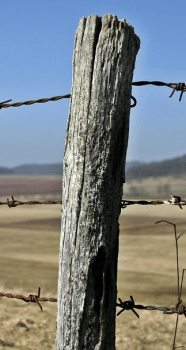
If you want political posts, here’s one for you. It’s a post. It’s political. Well, I think it’s political. I questioned this post very carefully and from various comments I suspect it’s an ardent supporter of the Bull Moose party. But it’s answers were very confusing. Mostly it was complaining about birds pooping on it.
Oh, wait, it’s not in the Bull Moose party, it was complaining about a bull moose that was using it to scratch its butt last week…
To be blunt, I am not going to turn this into a political rant. I hereby declare this to be a political free zone.
Maybe.
Tumblr
Ah, Tumblr, the blogging service I love to hate. Or hate to love. Or hate to hate. Or something like that.
Do you mind if, for a moment, I use strong language? No? Thanks
Tumblr is really pissing me off.
There, I said it. I’ve been reduced to expressing my irritation with vulgarity.
It seems like I’ve been on Tumblr since the end of the last ice age. I think I’m up to over 6,000 posts over there or something equally ridiculous. But it’s become so irritating…
I’ve had 30 new followers of the Tumblr blog over the last week. Of those, 21 were hard core porn blogs, almost certainly part of the infamous “pornbot” system operating on Tumblr. Eight were blatant advertising scams, filled with post after post of links leading to commercial advertising sites.
And one actual real person.
Seriously, only one was an actual real person.
And then there’s the advertising. Dear lord… I run ad blockers, security software, firewalls, etc. so when I’m on Tumblr about 99.9% of that crap is blocked before I can see it. But every once in a while I’ll have the blockers turned off for some reason and, oh, dear lord, it’s horrible. It’s like every scam, fraud and fly by night outfit in the world is advertising over there now. Ads for ambulance chasing “legal services”, ads for fraudulent “alternative” health products, ads for dietary supplements that claim to cure everything from bad breath to cancer…
Then there are the bots… A lot of us are convinced that the ten gazillion users Tumblr claims it has are a wee bit exaggerated. In actual fact there are only about 300 accounts by actual real people and all of the others are pornbots and spambots.
Some of us suspect that’s how Tumblr makes money, the bots serving up advertising to other bots, which in turn serve up ads to still more fake accounts, with Tumblr’s counters ticking them all off and counting them as legitimate hits when in actual fact it’s just an unending circle jerk of bots botting other bots…
And I’ve just run out of things to say
I suppose at this point I should come up with some pithy, insightful, thought provoking comment that would make you all nod and go “oh my I wish I’d thought of that” to wrap this all up. Sorry. Can’t think of one.
One trend in agriculture has been making me nervous for some time now, and that is how large quantities of farmland are being concentrated in the hands of fewer and fewer people.
This has been going on for some time, of course. When I was a kid the road we lived on was dotted with small farms of various sizes ranging about 80 acres to 150 acres or so. Ours was actually one of the larger ones when I was a kid, with 140 acres and about 120 under cultivation. If memory serves me correctly, there were ten or twelve farms just on that one stretch of road when I was a kid. Today the houses and even many of the barns are still standing, but they aren’t farms any more, they’re residences. The actual farmland is now owned by one of three huge farming operations.
Whether or not this is a “good thing” is open to debate. But there is one trend that I think is definitely not a good thing, and that is that large amounts of farmland is being snapped up by investment companies.
Corporations like Farmland Partners (which doesn’t actually do any farming) and a lot of others, located both in the US and in other countries, are buying up farmland wherever they can find it and then renting it back to real farmers. For, of course, a profit
One can understand their point of view. People have to eat, after all. Therefore there is always going to be demand for land on which to grow crops. If a farmer can’t afford to buy land, he or she has to get it from somewhere, so they’re forced to rent it from a land owner. To an investor this seems like a fairly safe type of investment, especially with the stock markets being as volatile as they are.
But for farmers, for agriculture in general, this practice is disturbing in more than one way and is potentially damaging for consumers, farmers and agribusiness in general.
These companies do no farming, grow no crops, harvest no grain, raise no cattle. They do nothing to improve the quality of the land they own. They exist for only one reason, to rent land back to real farmers for the maximum amount of money they can squeeze out of them. They contribute nothing to agriculture. I dislike the term ‘parasite’, but, well… Isn’t that what you call an entity which does nothing but syphon off the resources of others and provides no benefit to those it feeds off of?
So far these companies have had little adverse effect on agriculture. Up until now they have been picking off the ‘low hanging fruit’, so to speak, snapping up deals here and there, in widely scattered areas. But as they acquire more, as more farmland is taken out of the control of farmers and placed in the hands of a few companies that care only for making profit… Well, the potential for abuse is obvious.
This kind of thing is legal. I certainly can understand the attraction people may have for this kind of an investment. With the stock market going through endless series of boom/bust cycles over the last few decades, a fairly stable investment like farmland is certainly attractive.
But what kind of effect is this going to have on agriculture as ever increasing amounts of land are being held in perpetuity by companies whose only goal is to squeeze as much profit out of farmers as possible?

 few days. I’m not sure why. Which is why I’m writing this at two in the morning instead of being asleep. I know, I’ll try looking at photos of, oh, blossoming apple trees. That will put me to sleep!


 ignoring them. And the biggest problem seems to be that no one seems to be really sure that omega-3 actually works. Even worse, there are some indications that taking omega-3 might actually be detrimental for the health of some people.
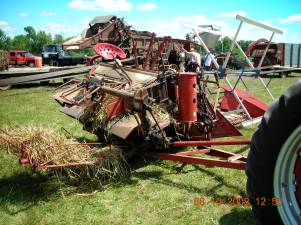 shocking it, and running it through threshing machines, for heaven’s sake. In case you’ve never seen one, here’s a photo of a grain binder from an antique farm equipment show I took some years ago. And yes, that thing over there that looks like it was cobbled together out of bits of old string, wire and old barn boards, is an actual commercially made machine. It was pulled by horses (that’s why there’s a seat on it). It cut the grain off with a sickle bar, put it in a bunch, tied the bunch with twine, then dumped it on the field. Workers would come along, stand the bundles on end with the grain heads up so it would dry. Then it would be loaded onto wagons and taken to a threshing machine.
 threshing machine. This is actually a special machine designed specifically for threshing or hulling clover seed, not wheat or oats, but the principle is the same. Workers would throw the bundles onto the elevator over on the left where it would run through threshing bars, fans, screens, etc. to be separated from the stalks and hulls. The hopefully clean seed would come out one pipe to be bagged, the straw would blow out onto a pile. The whole thing was originally powered by a massive steam traction engine via that long belt you see extending out the left side of the photo. Steam engines were replaced in the 1920s or so by gasoline powered tractors, but the threshing machines themselves remained in use well into the 1950s in some parts of the state. There were still a couple of farmers in the area who were using this setup when I was a kid. These things hung on because as long as you could get inexpensive labor it was cheaper to keep using it than buying a combine.
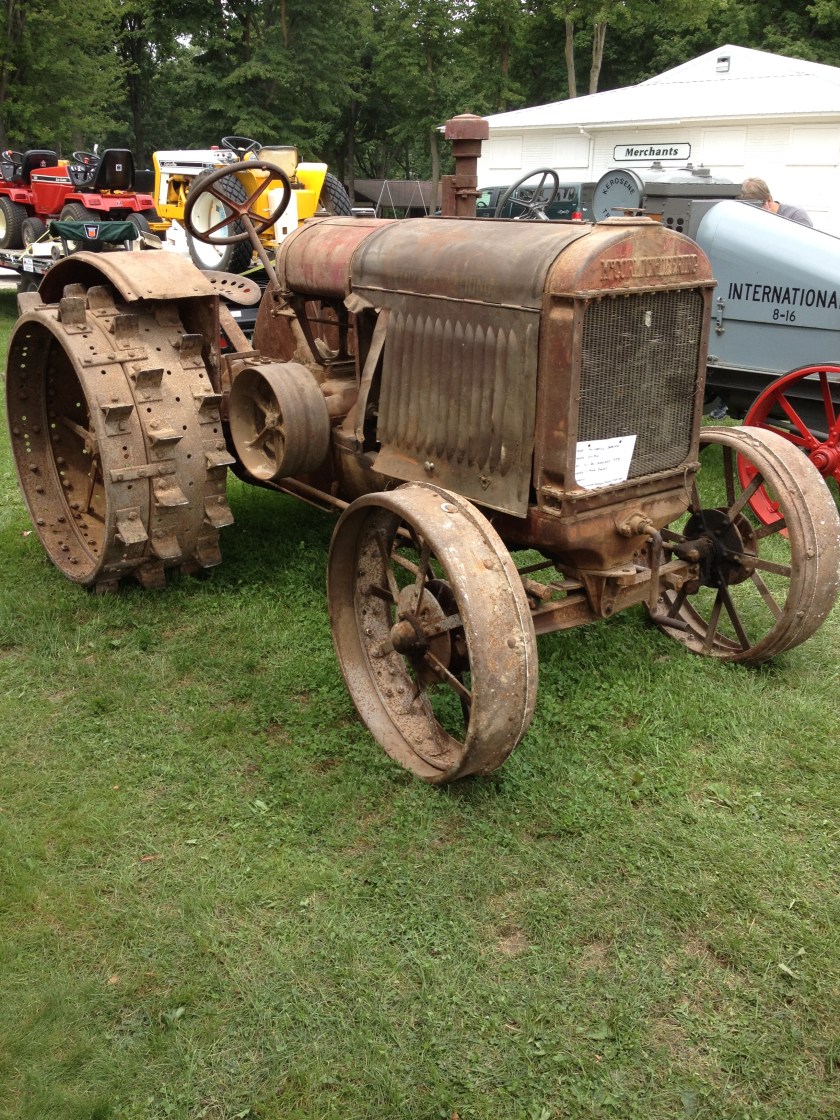 was a kid we actually had one of these beasts, this exact same model. And we didn’t have it for some collection, this monstrosity was an actual working tractor at the time. The only thing we used it for was running the blowers to blow grain or forage into the barns or silos, but it was still a working tractor on the farm. And dear lord we hated that thing. Trying to start that beast… Oh, my. It started by manually cranking it with that big lever you see just below the radiator. That connected to the crankshaft to turn the engine over. And if you didn’t know what you were doing when you tried cranking it, it would gleefully break your arm. Seriously. It would if you didn’t know what you were doing.

 One trend in agriculture has been making me nervous for some time now, and that is how large quantities of farmland are being concentrated in the hands of fewer and fewer people.
