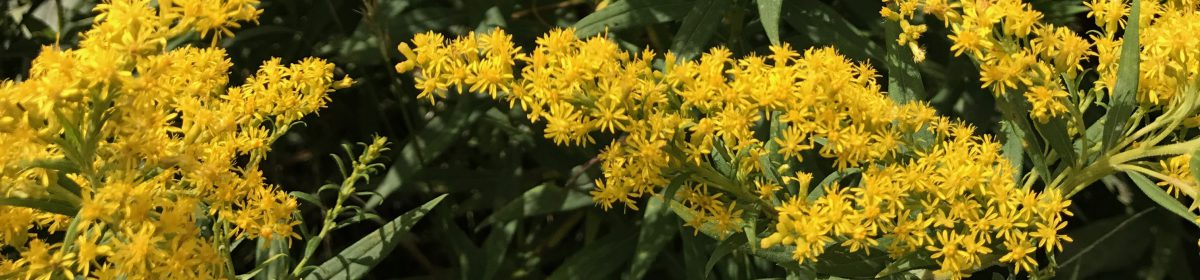
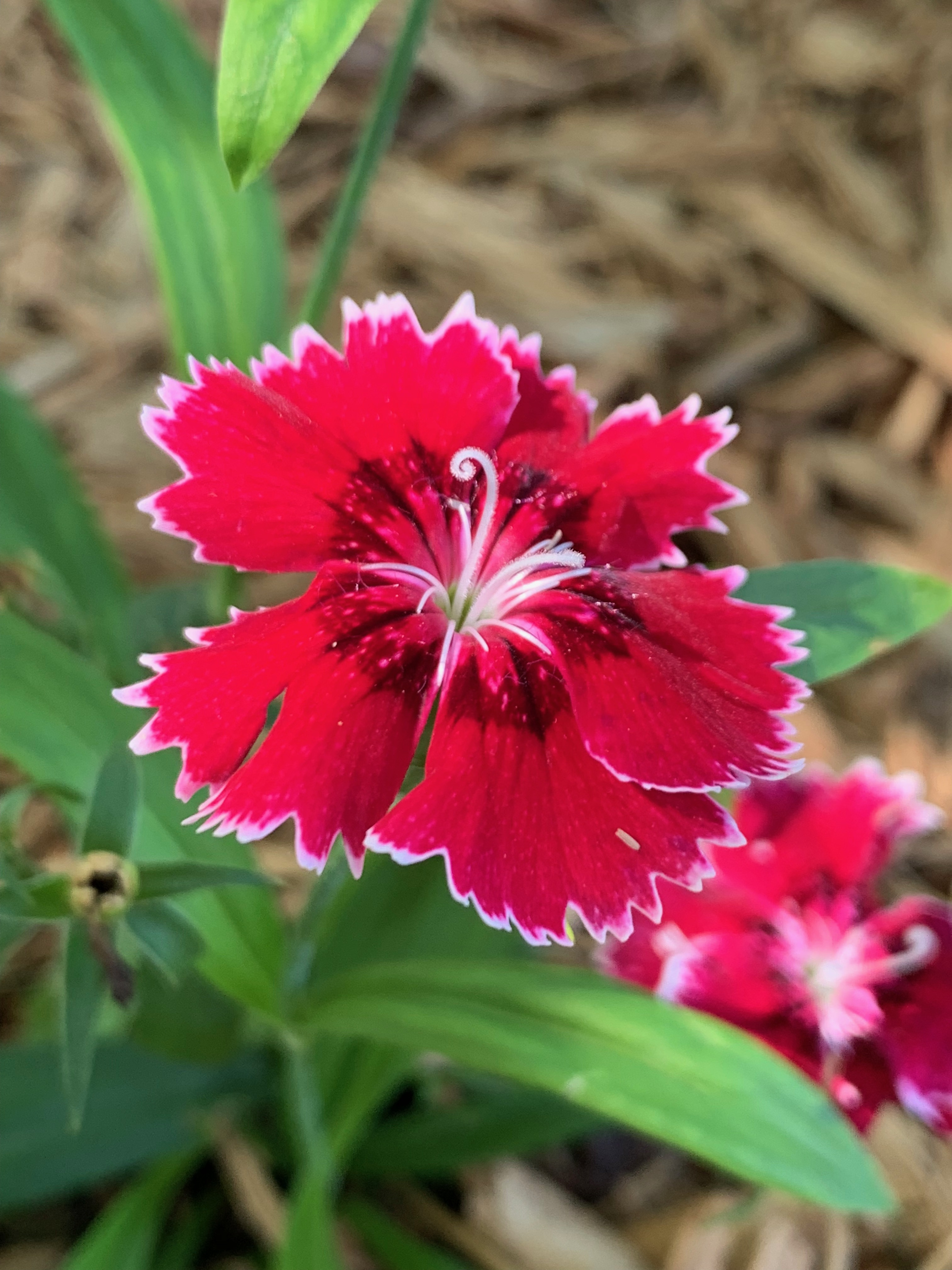
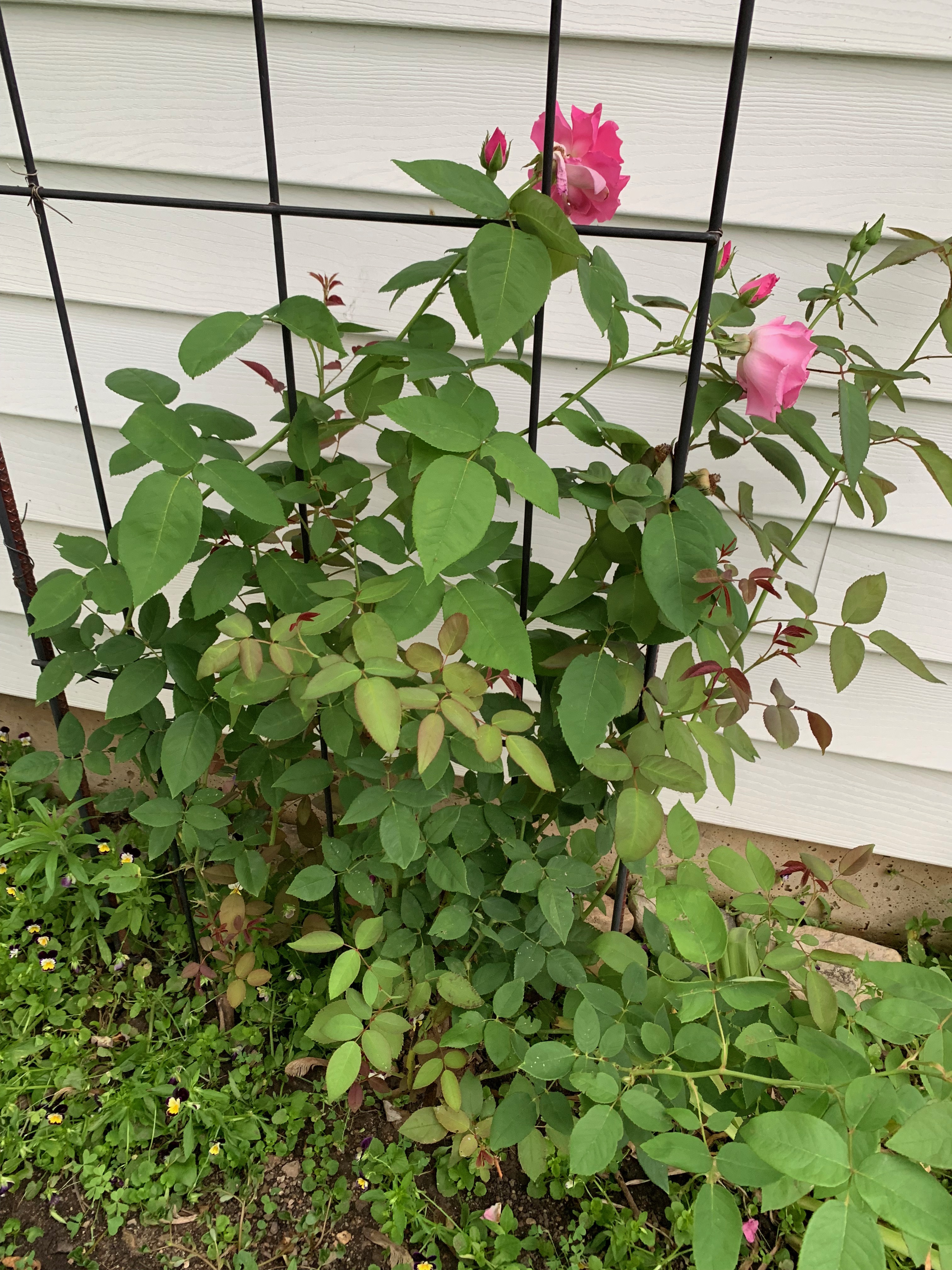
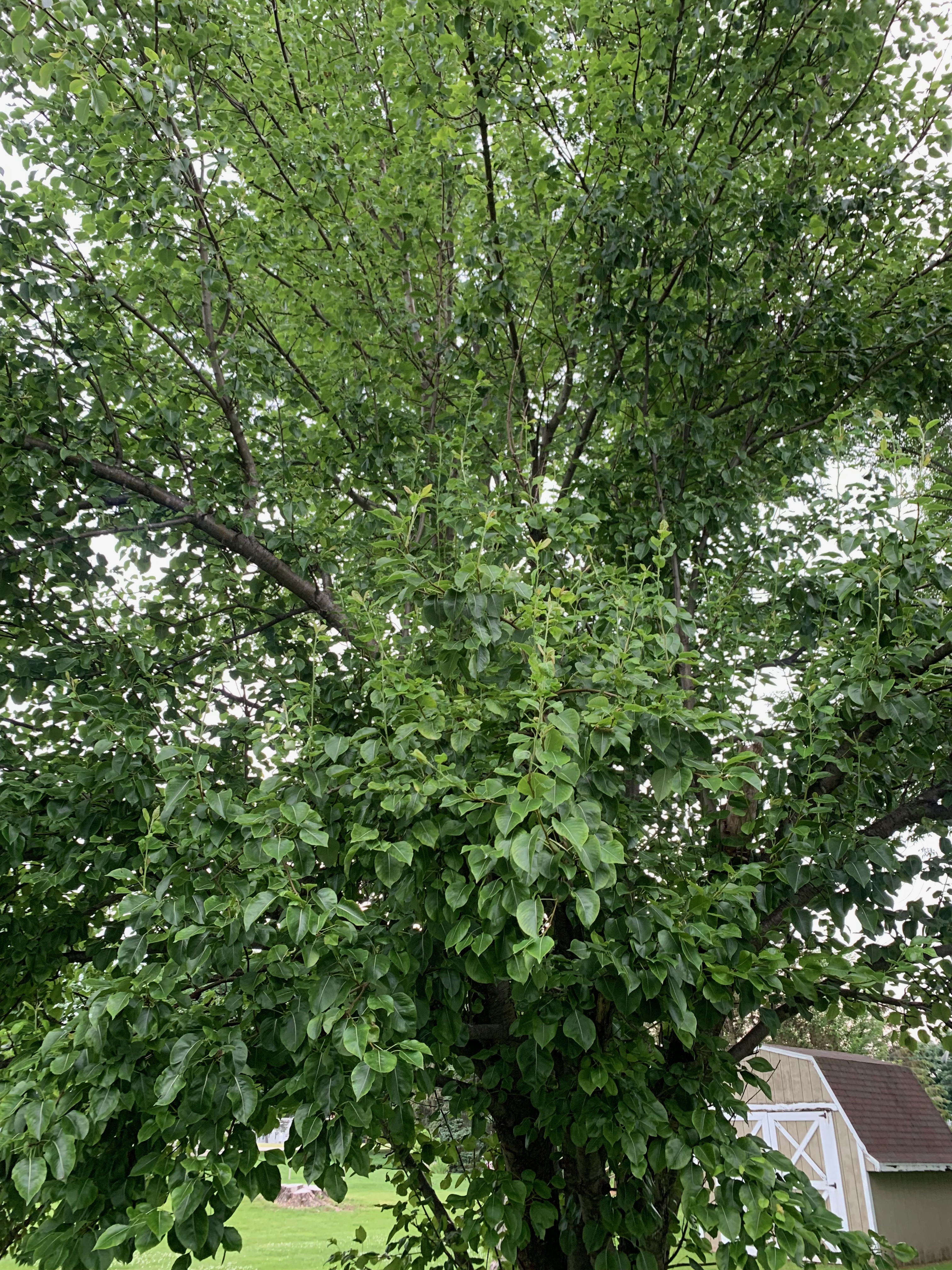
If you want photos of the storm damage, go look on news sites in this area. There are enough of those out there already. The gardens made it through the storms with little or no damage, somehow, so I can still take photos like this.
Northeast Wisconsin got absolutely hammered by severe storms, some of the strongest we’ve ever seen around here. The training I’ve had for SkyWarn taught me how to estimate wind speed fairly accurately, and I guessed we had wind gusts of up to 75 MPH here, and the NWS reports later confirmed that. It was scary here for a while. We were lucky, though. The worst of it seems to have skipped around this area. Other areas, especially just to the north and west of us got hit hard. There were three tornadoes. NWS reported winds of up to 120 MPH in Wrightstown, about 10 miles north of here. Outagame, Brown and Winnebago counties all are reporting very serious damage. Thousands of people are still without power around us, and the utilities are saying conditions in those areas are so bad from downed trees, broken power poles, etc. that it could be days before everyone has their power restored.
The only good thing about it is that the cold front that triggered the storms has finally brought relief from the extended streak of heat and humidity we were going through. My thermometer here recorded high temps well up into the 90s, with humidity of 95% or higher. The highest temp we hit was 97 according to the recorder. The heat index was well up in the 100s. I’m going to hate to see what our electric bill looks like. Our air conditioner was running full blast for days struggling to keep the temperatures in the house down to a reasonable level. I’m very surprised it’s managed to keep going at all.
While the extreme temperatures haven’t been good for people, the plants around here seem to have been loving it. Everything is lush and green and growing like crazy. Unfortunately we also seem to have a bumper crop of mosquitoes this year as well because of all the rain we’ve gotten. So here are some pictures of what’s growing around here.
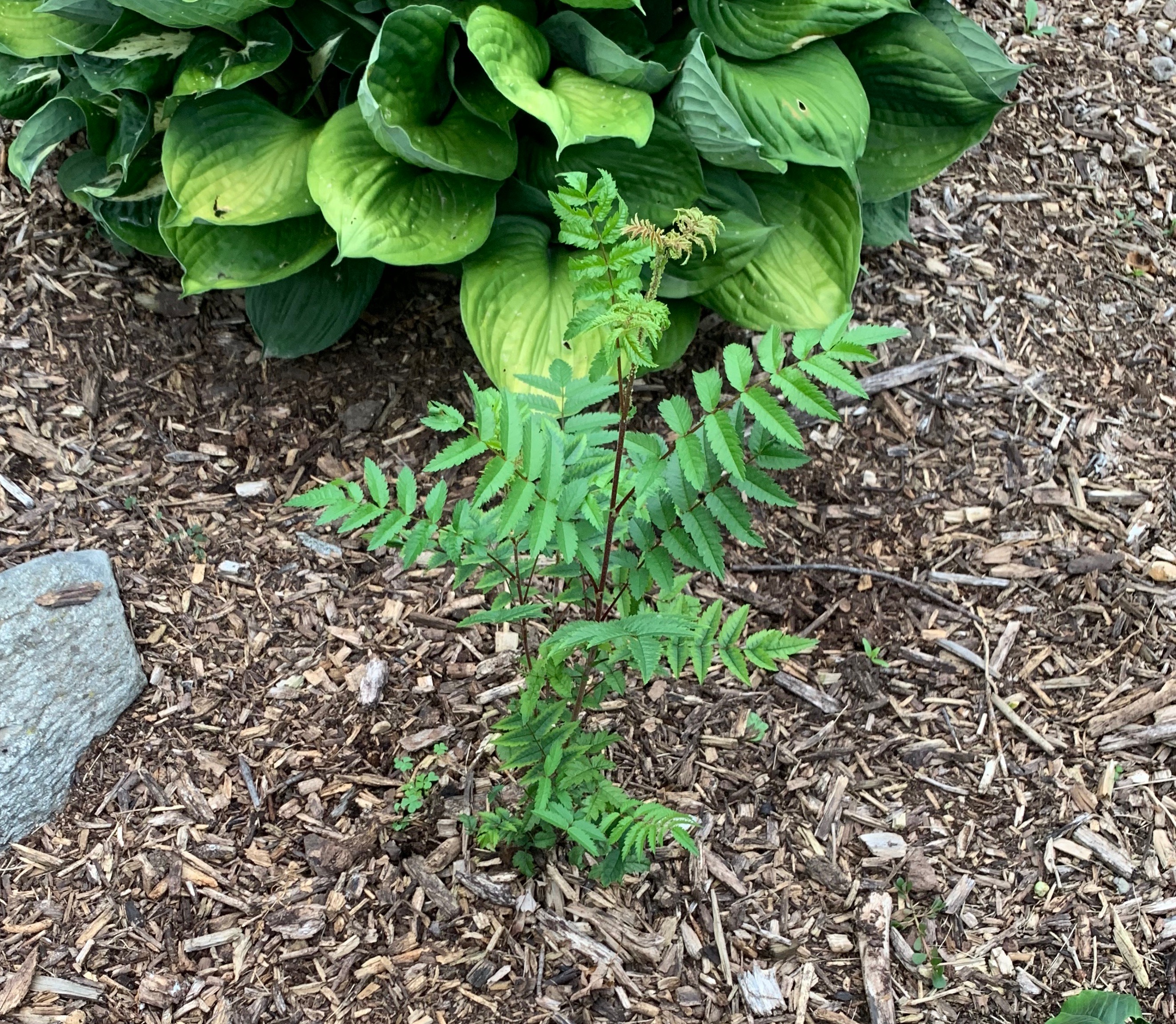
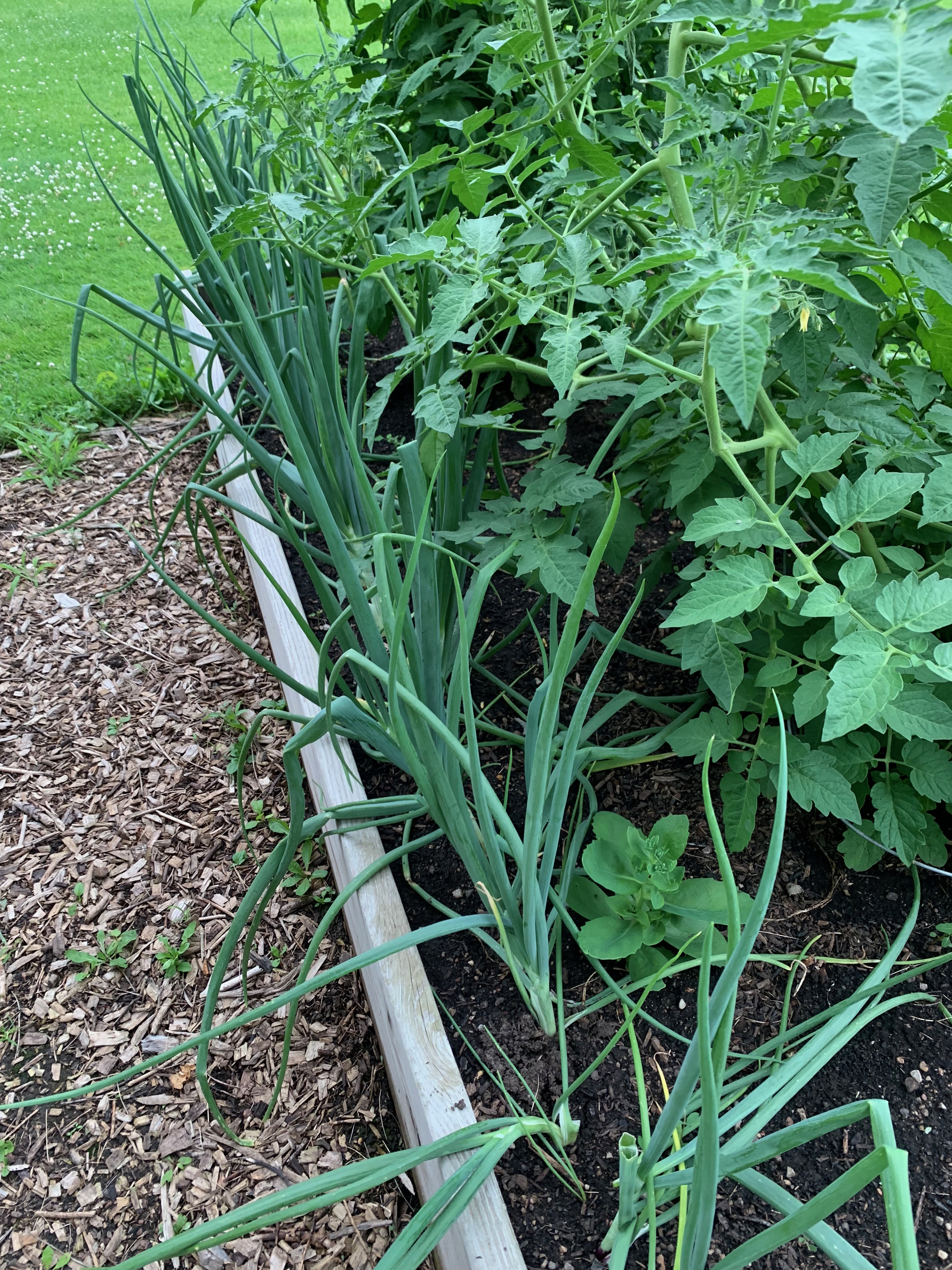
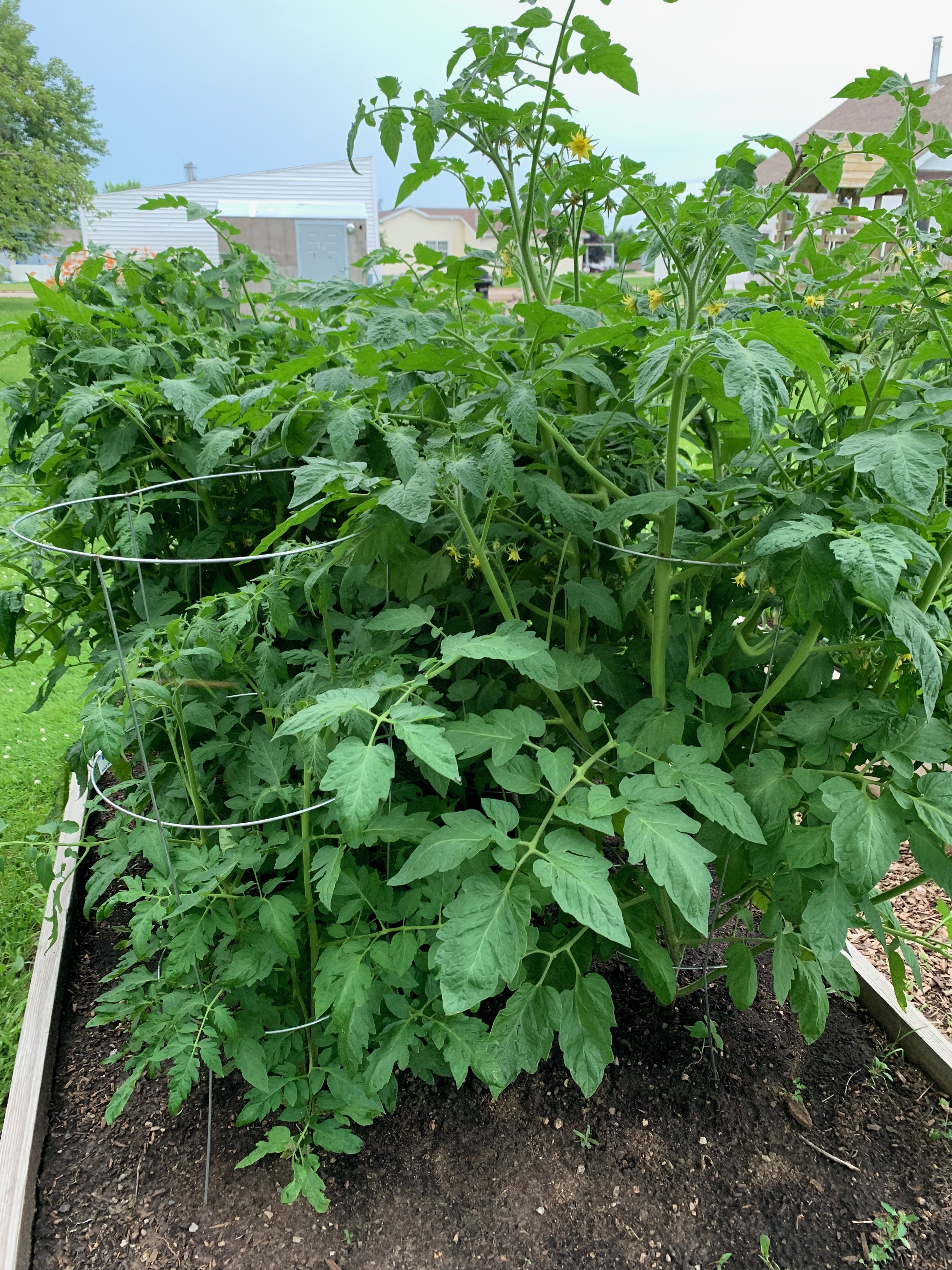
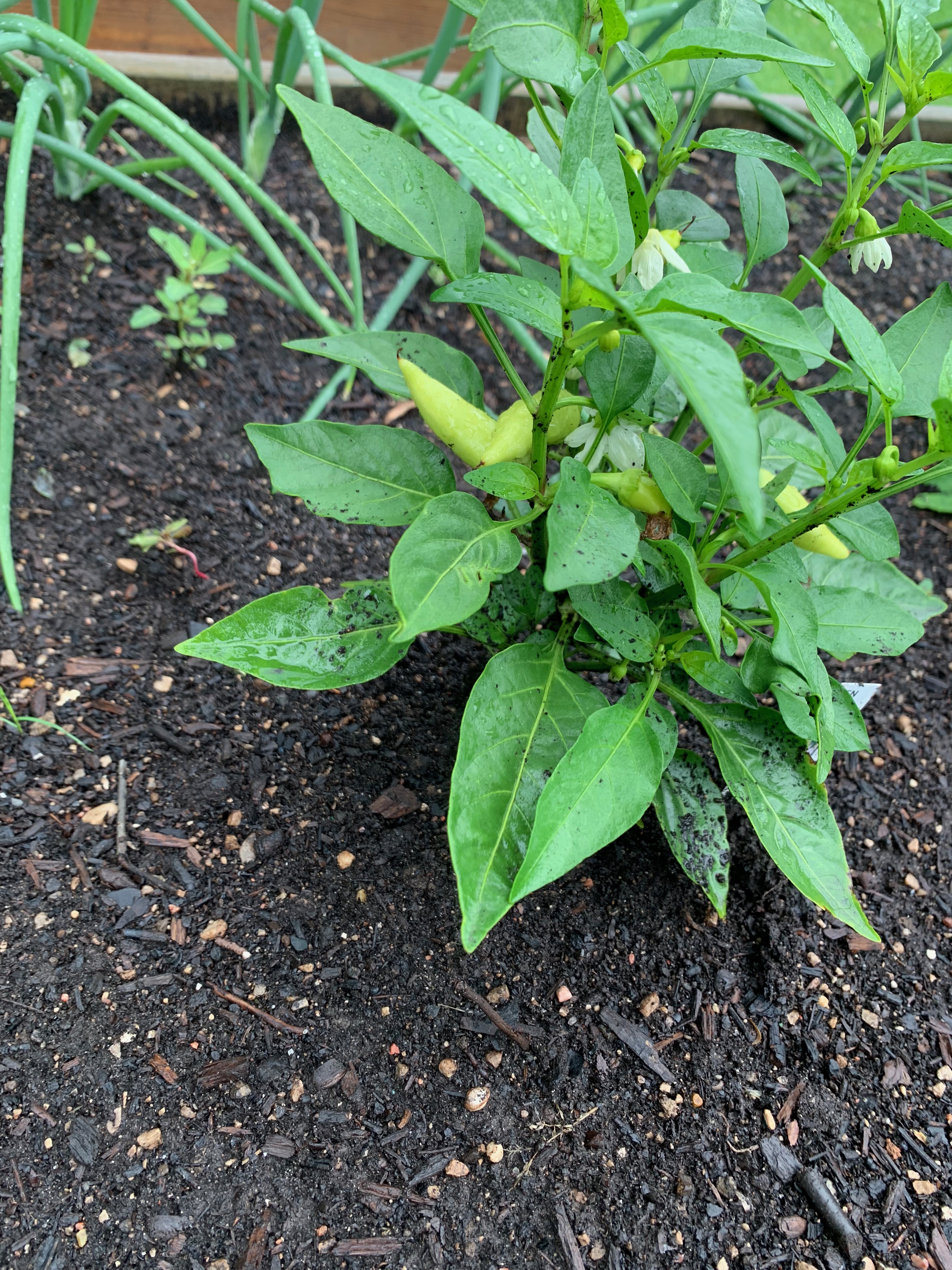
The sunflowers are just barely starting to come into bloom. This is the first one that’s popped out.this is a new one for us. MrsGF put this climbing rose in at the start of the season and it’s decided that it really likes it here. It’s tripled in size and and has been flowering almost continuously for the last three weeks.Ah, our poor pear tree. It looks more lush and wild than it really is because you’re seeing the canopy of the tree immediately behind it as well. It’s reasonably healthy, but almost no pears at all this year. I’ve counted less than a dozen young pears on the entire tree, and I’m surprised we have those. When it was in flower it was extremely cold and wet, and there were no bees around at all, so it didn’t get pollinated. MrsGF and I are both enormously fond of mountain ash trees (they’re actually not an ash, they’re part of the rose family, so the emerald ash borer doesn’t attack them). We have one in the backyard and we see seedlings popping up all the time, so we transplanted one into a corner of the hosta bed where it seemed to fit in, and it likes it there. The photo doesn’t do it justice. It’s really been thriving there. It’s more than doubled in size in the last month or so.We tucked onions into the edges of the raised beds around the tomatoes this year as an experiment and it’s worked way better than we ever hoped. They’re absolutely beautiful. It’s a mixed variety of red, yellow and white onions, and they’re all doing well. Bulbs are about 2 inches thick and they taste amazing.This is one of two jalapeno plants we have in pots on the front porch. They’re an experiment. It’s a new variety I found that claimed it had all the flavor of a jalapeno but without the heat. Now I love jalapeno peppers, but sometimes the heat gets a bit much for me. I’ve had mixed results growing them in the past, with a wide variation in the amount of heat they produce, even in fruit from the same plant. These have lived up to their billing. All the bright, crisp flavor but with very little heat. Just enough to remind me it’s a jalapeno. I dice ’em up and throw them in omelets, mac and cheese, anywhere I want to turn something bland into something a bit more interesting. I’ve been picking these little guys on a regular basis for the last, oh, two or three weeks. Even MrsGF has been using them. Definitely a success. I’ll probably be putting about 4 of these plants in next year. That should be enough to freeze to supply us through the winter. The tomatoes have been going crazy. We planted way too many of them last year so we still have shelves full of canned tomatoes in the basement, so we only put in half as many plants as last year, and now that seems it may have been too many. They’re in full flower right now, and if they produce as prolifically as it seems right now, I don’t know what we’ll do with all of them. But that’s a good thing. I’d rather have too many. We can always give them away to friends and family if we can’t deal with all of them. We’ve managed to avoid blossom end rot once we switched to using the raised beds, but there were some signs last year we might be heading for a problem, so we’ve been using a calcium supplement to try to fend that off.Wax beans and bell peppers in the background. The wax beans are amazing. We’ve been picking those for about a week now. They’re young and tender and delicious. We aren’t sure what happened to the green beans we planted. Something ate them off, leaving only the stems, almost as soon as they emerged, but left the wax beans alone. This area is fenced to keep the rabbits out so it wasn’t them. We aren’t sure what got them, and why they left the wax beans alone. Well, at least they left us those.The raspberries are behind the garage where they get shade all morning and part sun all afternoon, and they really seem to like that. They’ve taken over that entire end of the garden and they’re loaded with fruit. I’m not supposed to eat raspberries or anything with small seeds, but I have to admit that I watch those plants like a hawk when they’re starting to fruit and it’s very rare that a berry escapes me and makes it into the house.
The hostas loved the cool, wet spring. They’re wonderfully lush this year.
Despite all the water we’ve been getting the gardens have been doing pretty good. We’re still a bit behind schedule because of the cool weather we had up until now, but the gardens at the house are definitely doing better than what the farmers around here have been experiencing.
When we bought this place some twenty or so years ago the front of the house was a mess. The space between the front of the house and the sidewalk was a nasty little border type flower bed mulched with small stones, sort of curved and indented, with some of the worst grass I’d ever seen between that and the sidewalk. It was a maintenance nightmare. The plants up there were some of the worst you could possibly select for a border, and because of the stones it was impossible to properly weed or do anything to improve the horrible soil.
We finally got fed up, went in with the tractor and ripped everything out, scooped up the stones with the front end loader and hauled them to a friend’s farm where he used them for fill, and we put in the cedar rail fence and the hostas. No bushes to trim any more, the fence has weathered to look like it’s been there for generations, and the only maintenance is to go in with a hoe and knock the few weeds growing in the mulch down once in a while. There are a couple of spots where I want a bit better coverage so I might throw in a few more hostas.
The tomatoes are looking pretty good. We put in a lot less of them than last year because we were nearly overwhelmed by them last year. We still have enough canned tomatoes to last us probably through 2019, although all of the soup and pasta sauce got used up.
With fewer tomatoes we had some extra room in the raised beds so we put onions in along the edge and they’re doing beautifully. We tried raising them in a different spot but they never got enough light and didn’t do well. They’re looking fantastic in this new location. They’re big enough now that I can run outside and pull a couple whenever I need onions for anything. I love green onions so they may never reach maturity, but that’s okay.
Every year I have to put in something different, this year it’s this, something that the label says is a “hot salsa pepper”. And that is literally all it says. I don’t know what variety or anything else about it. It is starting to produce pretty little yellow peppers, so that’s something. I picked one yesterday and tried it and it is most definitely not hot. Not by any standards. I’m not one of those people who loves peppers that make your face turn red and your eyes bug out and necessitate a trip to the ER because they’re so bad, but I do like a pepper that bites back at least a little. Jalapenos are about the limit of what I can handle for heat. But these, well, there’s just nothing there at all. Hopefully they’ll get better as they mature.
Speaking of jalapenos, I got another experiment going in pots on the front steps, a “mild” jalapenos. The two plants are doing quite well, both are in flower now and one is starting to develop fruits. The blurb on the tag was “all of the flavor without the heat”. I’ve tried variations of peppers like this before that claimed they still had flavor without heat, and they were disappointing. Usually when they breed out the heat, they also breed out the flavor, alas. But we’ll see what happens with these. They certainly are looking healthy.
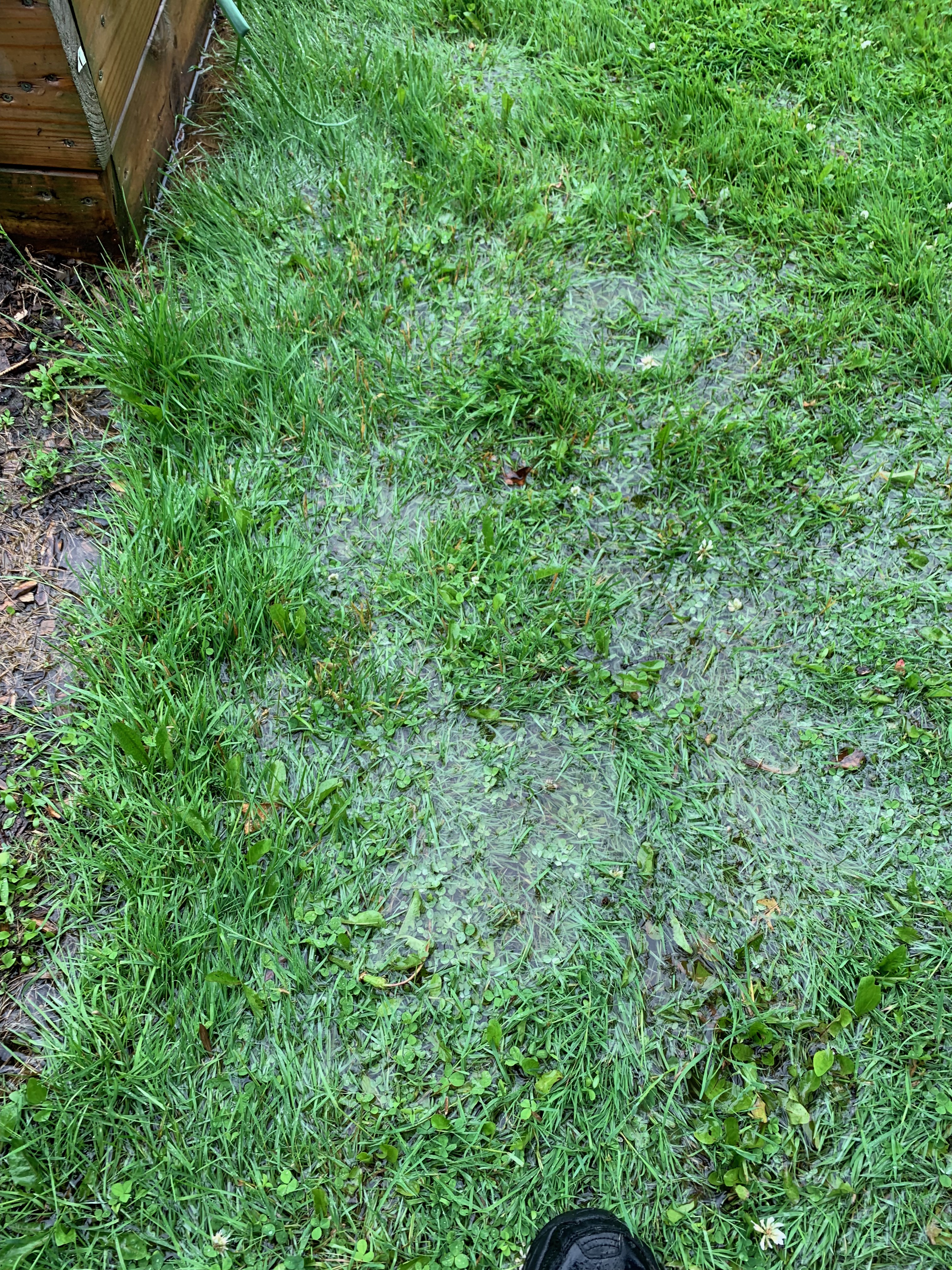
And then, of course, there’s the water. Oh brother… The ground is still so saturated that you can audibly hear it squishing when you walk through the grass. And the whole area back by the raised vegetable beds still had standing water under the grass as you can see in that photo. If we didn’t have the raised beds nothing would be growing back there this year. I don’t think we’ve gone more than three days in a row without significant rainfall since April.
Let’s wrap this up with this one:
I end up with dozens of photos of that lily every year because I love the color, the shape of the flowers, and just about everything about that plant. It certainly didn’t disappoint this year.
(Impossible Burger) The company uses this as a marketing photo, but I’ll be honest, if a restaurant served me something that looked like this I would walk out. That is one of the most disgusting things I’ve ever seen.
Someone asked me what I think of fake meat, specifically the “Impossible Burger” ™ and “Beyond Burger” ™ and let’s say I’m underwhelmed and a bit confused. Now I have nothing against vegetarianism. I approve of it, in fact. People eat too much meat and animal fat. There really is no doubt about that. So for health reasons alone eating more plants and less meat is definitely good. And when you add in ethical considerations about the treatment of animals, well, there are valid reasons for trying to nudge people to eat more plants.
But is trying to develop a fake meat the way to do it? No. There are a lot of problems with these fake meats. The claims that it is healthier are, frankly, doubtful and not based on any real data. The claim it is more environmentally friendly than raising animals is doubtful as well because making this stuff is incredibly complicated and energy intensive. Everything in it, and I mean everything, is highly processed, and chemically and/or mechanically modified. These products are also more expensive than real meat. And they’re fairly high in sodium, with about 400 milligrams per serving.
As for the health claims, we are discovering that eating highly processed foods of any kind, even stuff that supposedly is good for us, is detrimental to our health. We’re finding that if a food product is modified in ways you can’t do yourself in your kitchen with ordinary cooking techniques, and requires a factory or laboratory to make the stuff, it probably isn’t all that good for you. There are now studies that indicate that people who eat diets high in processed foods don’t live as long and suffer increased health problems.
And have you seen what’s actually in these “healthy” and “natural” meat substitutes? Let’s take a peek, shall we? Here’s what’s in the “Impossible Burger” (The other product has an ingredients list that is virtually identical, but substitutes pea protein for the soy):
Now I don’t know about you, but with the possible exception of the two oils, there is nothing on that list that I actually want to put in my mouth. While everything in that list up there is technically a “food product”, all of it has been mechanically and chemically processed so heavily that it isn’t even recognizable any more. (And I will refrain from bringing up the professor from U.C. Davis who pointed out that the list of ingredients in these things is identical to the ingredients in some brands of, well, dog food. Nope, won’t bring that up. That would be a cheap shot and I wouldn’t stoop to that. Oh, wait, I just did, didn’t I. Oh, dear, I am disappointed in myself.) Yes, it’s safe to eat. Maybe. But there is more to a healthy food than just not killing you when you eat it. This stuff would have almost no nutritional value at all if they weren’t adding back in all of the vitamins that were destroyed during the processing.
So do I have a point here or am I just venting (I was beginning to wonder that myself, to be honest)? Yes, I do. This whole fake meat thing is just silly. It isn’t going to convert anyone to vegetarianism. At best it might get someone to substitute this stuff for real hamburger once in a great while, but certainly not on a regular basis. Normally this would be nothing but a novelty product that a small number of people might be interested in. But because of a savvy marketing campaign that’s bombarded the media with claims about it’s alleged health and environmental benefits, none of which have actually been proved, it’s managed to sweep through the media and appear everywhere.
What about the alleged environmental benefits? I grant you that the cattle industry has a huge, adverse environmental impact. But would switching to this stuff change that? Fertilizer, fuel for tractors, increased pesticide and herbicide use, fuel for trucking the various ingredients around, sometimes for huge distances. I should point out that there are really only two sources for industrial quantities of vitamins these days, India and China, so some of these ingredients are being shipped literally all the way around the world. The energy used to run the factories… Frankly, I think that when everything is added up without cherry picking the data the way the promoters of this stuff have been doing, the actual environmental impact of this product isn’t going to be much less than actual cattle.
There is really only one clear advantage to this and that is an ethical one. A switch to these products would mean it would no longer be necessary to raise millions of cows for no other reason than to kill them for food. But then getting people to eat more plants and less meat in any case would do that. And the question is, how many people are actually going to switch to this stuff? Almost certainly not enough to make any kind of real difference
And then there is the fact that despite all of the hype you’ve been hearing, it still doesn’t taste like or have the texture of meat. In blind taste testings, 100% of the people who compared these two products to actual meat, could immediately tell the difference between this stuff and real hamburger.
So let’s sum this up.
1. It doesn’t taste like meat. Sorry, but it doesn’t. Yes I know all the media outlets are raving about this stuff claiming it “tastes just like hamburger!”. But no, not if 100% of the people who did the blind taste testings could tell the difference. Have I ever tried to eat one of these things? No. And I won’t, either, not after seeing that list of ingredients.
2. It isn’t “natural” by any stretch of the imagination. It’s made from materials so highly processed that it isn’t even recognizable as being “food” once the factories and labs that make it are done with it.
3. It’s expensive. I haven’t seen the stuff for sale in grocery stores, but I’ve seen it at restaurants, and hamburgers made with the stuff are costing anywhere from $3 to $7 more than burgers made with regular hamburger.
4. It’s fairly high in sodium. It has 400 milligrams of sodium per serving, and that’s before people add more salt and condiments to it to make it taste better. That’s about as much as a McDonald’s hamburger.
5. It’s —
Oh, hell, let’s just stop this. I’ve already spent way more time on this than I really wanted to, so let me wrap this up.
If you want to eat more plants and less meat, good for you. You’ll feel better, you’ll look better, and there’s a good chance you’ll live longer. But this stuff? It is “vegetarian” only by a technicality. It is one of the most highly processed and artificial so-called “food products” I’ve ever seen. From a nutritional point of view you’d be just as well off eating a handful of sawdust and a vitamin pill.
This is, frankly, a product that has no rational reason for existing. Well, except one, to try to separate you from your money.
Perhaps a few days ago you heard a rather loud “thud” that echoed all across the farm belt. That was the sound of every corn farmer’s jaw in the U.S. hitting the floor at the same time as they read the estimated corn planted acres just released by the USDA. If you’ve been reading this blog, you know we’ve been having weather problems here in the corn belt. Rain, and lots of it, has meant big delays in getting crops in the ground, and a lot of fields are standing empty because the farmers couldn’t plant at all.
So when the USDA report of acres planted came out and USDA claimed 91.7 million acres of corn was planted this spring 3% more than last year, a lot of farmers looked out the window at fields that were either still seas of mud, unplanted, or planted with cover crops that aren’t going to pay their bills, there was a collective “WTF???” uttered across the entire corn belt as we all wondered what the hell USDA is smoking.
There was so much disbelief and outright anger over the estimate that USDA had to start backpedaling almost immediately and admit that there might be “a problem” with some of their data, and start looking for excuses to explain how their estimates are almost 10 million acres higher than what the best estimates have been from other sources. Typically, they did what they do best, shifted the blame to the farmers themselves, stating that their data isn’t based on the actual number of acres farmers planted, but it was based on what farmers said they might plant at the start of the season…
Anyway, USDA now says they’re going to take a do-over and resurvey the entire midwest to see if they can get better numbers, but that isn’t going to be done until August, we’re told, by which time, well, it isn’t going to matter much anyway so in reality the resurvey is really going to be little more than a waste of time and money.
I haven’t seen so much anger and outrage in the ag community in a long time. Normally the comments sections at AgWeb are, well, empty, really. If someone does make a comment it’s relatively thoughtful and calm. But now? The comments on this story were livid. How could USDA screw up the numbers so badly? We’re talking close to a ten million acre discrepancy here according to some sources.
USDA’s reputation was already on somewhat shakey ground before this happened. The agency already had a reputation of providing crop and yield estimates that weren’t accurate. That was generally attributed to sheer incompetence and not outright fraud.
But it wasn’t just the crop numbers that seemed a bit off. Other things were going on at USDA as well have made the agency look, well, more than a little shady. It’s made decisions that have favored the big ag monopolies and multinational corporations at the expense of the farmers the agency is supposed to protect. It’s seemed way too cosy with certain big ag business companies. And a lot of the people at USDA who are supposed to be helping and protecting farmers have come straight from the offices of the very companies USDA is supposed to be regulating.
After this report was released, a lot of farmers now think the fix is in, and that USDA is actively manipulating the data for the financial benefit of big commodities brokers, financial institutions, and the big ag companies. Just read the comments following some of these stories and you’ll see that even the farmers who don’t believe USDA has sold itself out lock, stock and barrel, think there is something going on over there.
is finally completely finished! We got all of the plantings done and finished up mulching it the other day. Still want to rearrange those slate pavers as stepping stones going through the crushed lava rock. And those dopey lupins. I don’t know about those. I don’t like them there. I think they detract from the effect I wanted. And the things are ridiculously invasive. But MrsGF likes ’em. The two bird houses were made by eldest son a few years ago. We just put the things out there and we’d hardly had the posts in and we had birds moving into the already.
It’s still ridiculously wet around here. We just got another two inches of rain the other day. To give you an idea of how wet it is around here this is my backyard not far from the new raised bed in the first photo. You can see I’m standing in about an inch and a half of water.
The ground is so saturated with water that even this morning, more than 24 hours after the rain finished, even the high ground in the yard squishes when I walk across it.
Out in the countryside it’s just as bad. The corn is up, barely. At least where the farmers could get it in the ground. This time of year it should be, oh, eight, twelve inches tall, the old “knee high by the 4th of July” saying is reasonably accurate. Almost none of the stuff I’ve seen is more than about four inches at the most.
On the good side, Mr. Spiny, our rescue cactus, is having a grand time tucked away under the eaves of the house. I started to try counting the number of new pads and gave up after I hit 20. We’ve had this guy for what, must be four years or more now after we rescued him from the town compost pile and it’s been thriving ever since.
And my favorite red lily is in full bloom! This is probably my favorite of all the plants we have out in the garden. I think the color on it is simply spectacular.
Lame attempt at a panoramic photo of the wood bridge on the trail a week or so ago.
If you’re wondering if I’m still doing the bicycle thing or if I’ve turned even more lazy than I usually am, yes, I’m still at it. I try getting out every day. I admit that’s been a challenge with the weather the way it has been. I’ve been reluctant to go very far out of town because of the way the rain seems to pop up out of nowhere some days. Because of that I’ve only been out on the trail a few times so far this year. Hopefully we’ll get a change in this weather pattern in the near future.
Let’s see, what else… I haven’t had time to play with radio very much so I still don’t have the new Yaesu up and running with digital. The “new” Lenovo laptop I picked up for $300 that it’s going to be hooked to looks like a real gem so far. It isn’t blindingly fast, but it’s certainly got way more horsepower than it will ever need for the application it’s going to be used for.
We don’t have any other major projects in mind for the gardens and landscaping this season. The next project is to finally tackle moving all my radio and computer equipment down into the basement. I’ve been putting that one off way, way too long already and I really need to get working on that.
Now, unless you’ve been living under a rock and have cut off all contact with the outside world (something I admit is tempting these days), you’ve probably heard that teenagers are growing horns because of cell phones. An article about an alleged “scientific” study appeared in the Washington Post (warning, may be paywalled) and… Oh dear lord.
Look, I’m not a biologist or a doctor or a nurse or any kind of health care professional, but even I can detect the heady aroma of pure bull shit when I smell it, and this story positively reeks. Didn’t anyone at WaPo do any actual fact checking on this before they published it? If they had they would have realized that this whole story from beginning to end is, well, [sniff, sniff…] Smell that? Yeah, that’s what you smell, all right, BS.
First, what they saw in the x-rays aren’t “horns”. They aren’t even remotely, in any way, related to horns. At the base of your skull is a small bump called the external occipital protuberance. A fancy name for the place where muscles and ligaments attach to the back of your head so you can move it. It’s supposed to be there. And that extra growth of bone the article calls a “horn” is just a common, ordinary bone spur caused by overuse or stress on that attachment point.
Second, and perhaps the most important, they don’t hurt you. Millions, and I mean millions of people have these things and don’t even know they’re there. In the story the author of the study claims that these things were rare until fairly recently. That isn’t true. They are very, very common. Chances are good that you have one right now, especially if you’re getting a bit older. At least 25% of people over the age of 60 or so have them. They have no symptoms, don’t cause any problems, don’t do anything in 99.9% of the people who have ’em. They show up on skull and neck x-rays all the time and doctors ignore them because they almost never cause people problems.
Third, there is no real proof supporting the claim that young people are developing these things at a significantly higher rate. The study’s authors claim this is true, but that is based on examining only 1,200 specially selected x-rays of chiropractic patients. We have no idea how or why these x-rays were chosen. They claim the x-rays were selected from patients who had experienced no pain, but if they had no neck pain, why were there x-rays of their necks in the first place? As far as I’ve been able to tell, the authors have refused to give any real details about how and why these x-rays were selected according to the people who have been trying to find out more information, and when questioned simply refer people back to the inadequate information in the original study.
Fourth, the claim that these bones spurs are related to using cellphones and other hand held devices isn’t supported by any actual data either. Yes, tilting one’s head forward to look down at a cell phone puts added strain on the neck, and one might think that this would stress that area and could cause the development of bone spurs, but that’s not how actual science works. In actual science you have to prove your ideas with actual data, not just make a logical guess. Sometimes “logic” is wrong. For years it was claimed that drinking coffee was a cancer risk because coffee drinkers seemed to have a higher than normal incidence of cancer. Until someone came along and noticed that those studies were done at at time when huge numbers of people also used tobacco products, and a lot of coffee drinkers were smokers. The increased risk of cancer was, of course, caused by tobacco use, not coffee. So while it seems possible that there might be an increase in bone spurs at this location could be caused by the use of hand held devices, you can’t actually prove that by looking at only 1,200 specially selected x-rays that were selected for reasons the authors won’t tell us. These people might have had other physical issues that could have caused the spurs, might have engaged in activities that caused them. A lot of sports cause stress on the neck that could cause the spurs. We cannot associate cell phone use with an increase in spurs unless other possible causes are eliminated.
Fifth, and finally, we come to the author of the study, one Davad Shahar, a chiropractor, a field which has its own share of problems to begin with that I’m not going to get into right now. But what I will point out is that this Shahar bills himself as “Dr. Posture” and sells, guess what, devices he claims improve one’s posture…
So to sum it all up: These things aren’t “horns”, they’re simple bone spurs. Hundreds of millions of people develop these things. Doctors have known about these things for decades and ignored them because they almost never cause people problems. The claim that there is a dramatic increase in these among young people is backed up by data that is highly questionable. The study also was found to make claims that are contradicted by data published in the study itself. And the lead author of the study sells devices he claims can correct the problems his “study” claims to have discovered.
Sigh… I might have expected a story like this to turn up someplace like the Daily Mail or one of the supermarket tabloids, but the Washington Post? Don’t they have any editors who actually edit, or fact checkers that actually check facts? Ten minutes of research should have been enough to kill this story.
Anyway, sorry for the rant. I just get so frustrated some days I have to vent.
If you live in the midwest in the US you don’t need me to tell you that the weather hasn’t been very good. Unusually cold temperatures and seemingly non-stop rain has been hitting large parts of the midwest. Corn and soybeans were, for the most part, planted late or even not at all. Ohio seems to have been hit the worst. Looks like almost 25% of the Ohio corn crop isn’t going to be planted at all. The situation with soybeans isn’t quite as bad, but the numbers there aren’t looking very good either.
The exact numbers are uncertain because a lot of farmers and people in the ag industry are being openly, even brutally skeptical of the data coming out of USDA. There are claims USDA is including acreage that has been planted but is under water and will never grow, acreage that has been planted with cover crops instead of corn because it’s already too late to plant, etc.
I can’t confirm or deny any of those suspicions. All I know is that when I ride around the countryside I’m seeing a hell of a lot of fields that look like the picture there on the left; lots of mud, lots of standing water, and lots and lots of weeds. It is too late to do anything with fields like that except to try to plant a cover crop to keep down the weeds and prevent erosion. You aren’t going to get any kind of economically viable crop planted in this area, this late in the season.
What about hemp, you ask?
Well, okay, you didn’t ask, but I’ve had a couple of people ask me about what the situation is with hemp. It is now legal to plant, harvest and process hemp here in Wisconsin, and despite the fact that a lot of people have been hyping the hell out of it and claiming that it is going to be the savior of agriculture, well, hemp, so far at least, has been pretty much a total bust for those few farmers who’ve tried it. Raising hemp for grain was a total loss last year from what I heard. Because of wet fall it was almost impossible to harvest the stuff. And what they did get harvested was hit by mold because of the damp weather so they couldn’t sell it at all.
Instead of depressing stuff, how about some pretty flowers instead? This is alyssum growing in my backyard. Wonderful stuff. Beautiful tiny, tiny flowers that produce some of the most amazing scent imaginable. I love this little plant. Those flowers are very small, about the size of a match head.
Raising it to produce CBD oil didn’t work out too well either for a lot of farmers. One farmer I heard about did successfully get his crop in, but trying to actually sell it was a different story. It seems no one actually wants large amounts of the stuff. Or none that he could find, anyway. None of the CBD oil producers he’s dealing with seem to want more than a few pounds of it at a time, and you can’t make money that way. His problem is marketing, of course. It sounds like he jumped into production before he was even sure if he could sell the stuff.
Hemp isn’t going to be “the savior” of agriculture. It is, at best, going to be just another crop that some will have success with. And all of the hype about CBD oil seems to be mostly that, hype, with few actual facts to back up any of the claims. There seems to be some indications it can help with epilepsy and discomfort from arthritis, but that’s about it.
Antenna Stuff
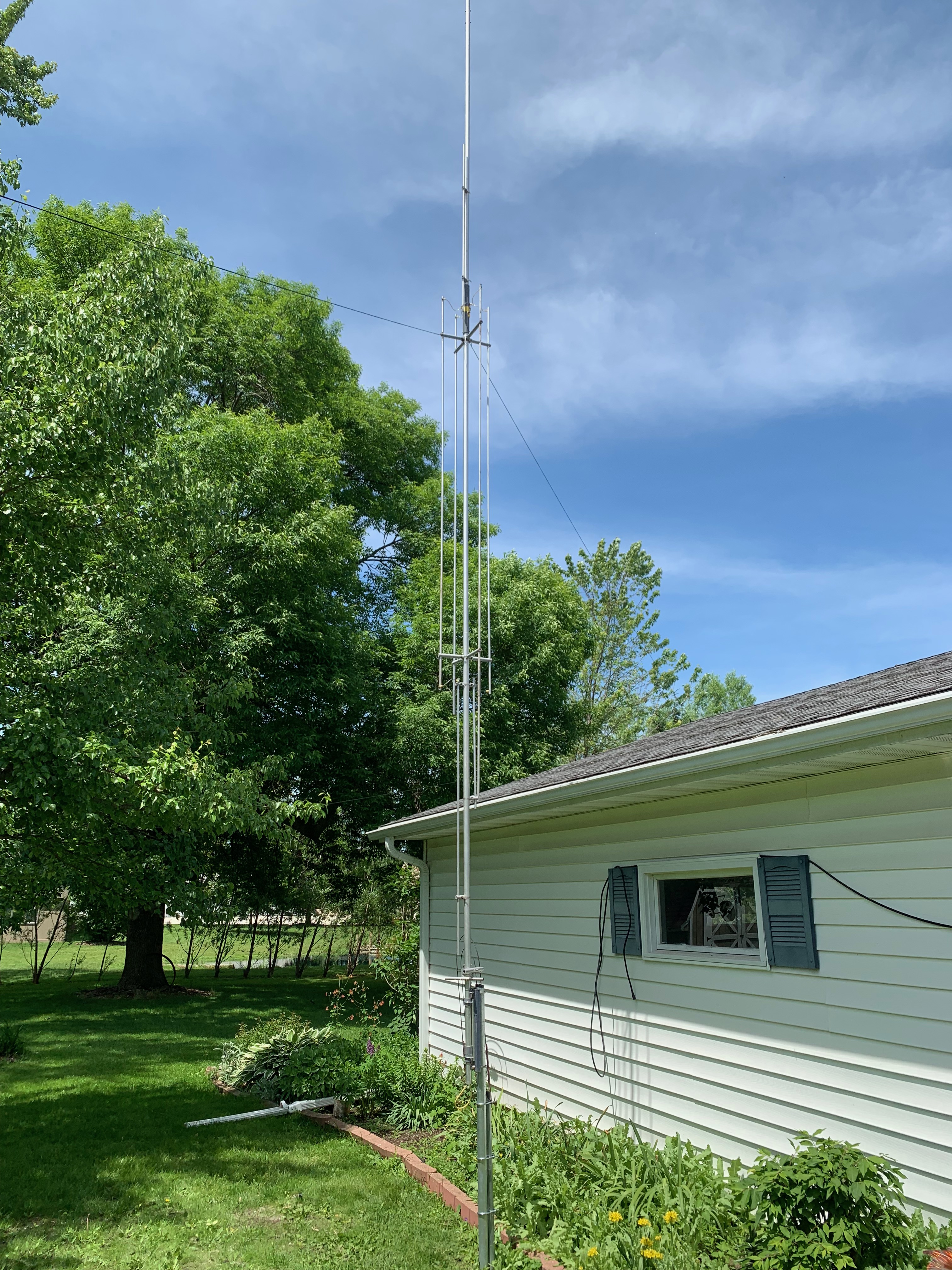
Strange things are growing in my backyard behind the garage. No, that’s not some kind of weird sunflower, that’s a GAP Titan DX vertical antenna which has been laying around for years now. Eldest son and I finally got the dopey thing put up over the weekend. That thing has been laying around for, oh, lord, has it really been three or four years? Sheesh… Talk about procrastination…
It replaces the Comet 250 vertical that was back there since 2013. The Comet – people like to complain about it but to be perfectly fair it wasn’t a horrible antenna. It is exactly what they claim it is, a multi-band vertical that doesn’t need radials or a counterpoise, that works from 80 to 10 meters without an antenna tuner, and can handle up to 250 watts. It is unobtrusive, the neighbors probably won’t complain about it, and under the right conditions it will even work as an antenna. Sort of. Not a very good antenna, true, but it will work.
The Titan has a pretty good reputation. It too is an all-band vertical, but you can see that it isn’t exactly simple, with all kinds of stubs and wires and stuff coming off it. But it is much, much more efficient than the Comet. And I can feed this one up to 1,500 watts if I want to without damaging it, where the Comet, well, I heard reports that if you tried to put more than 100 watts into the Comet you’d melt down the coils. Anyway, I still have work to do on this one. I need to get the counterpoise installed, need to get some connectors on it, need to tune the stubs. Hopefully it won’t take me another four years to get it hooked up!
It’s up high enough so it won’t interfere with the flowerbeds behind the garage. The counterpoise will take up a bit of space so I imagine MrsGF will not like that, but I’m hoping to get her to upgrade to a general class license now that she’s retired and if she does she’ll get as much use out of that antenna as I will.
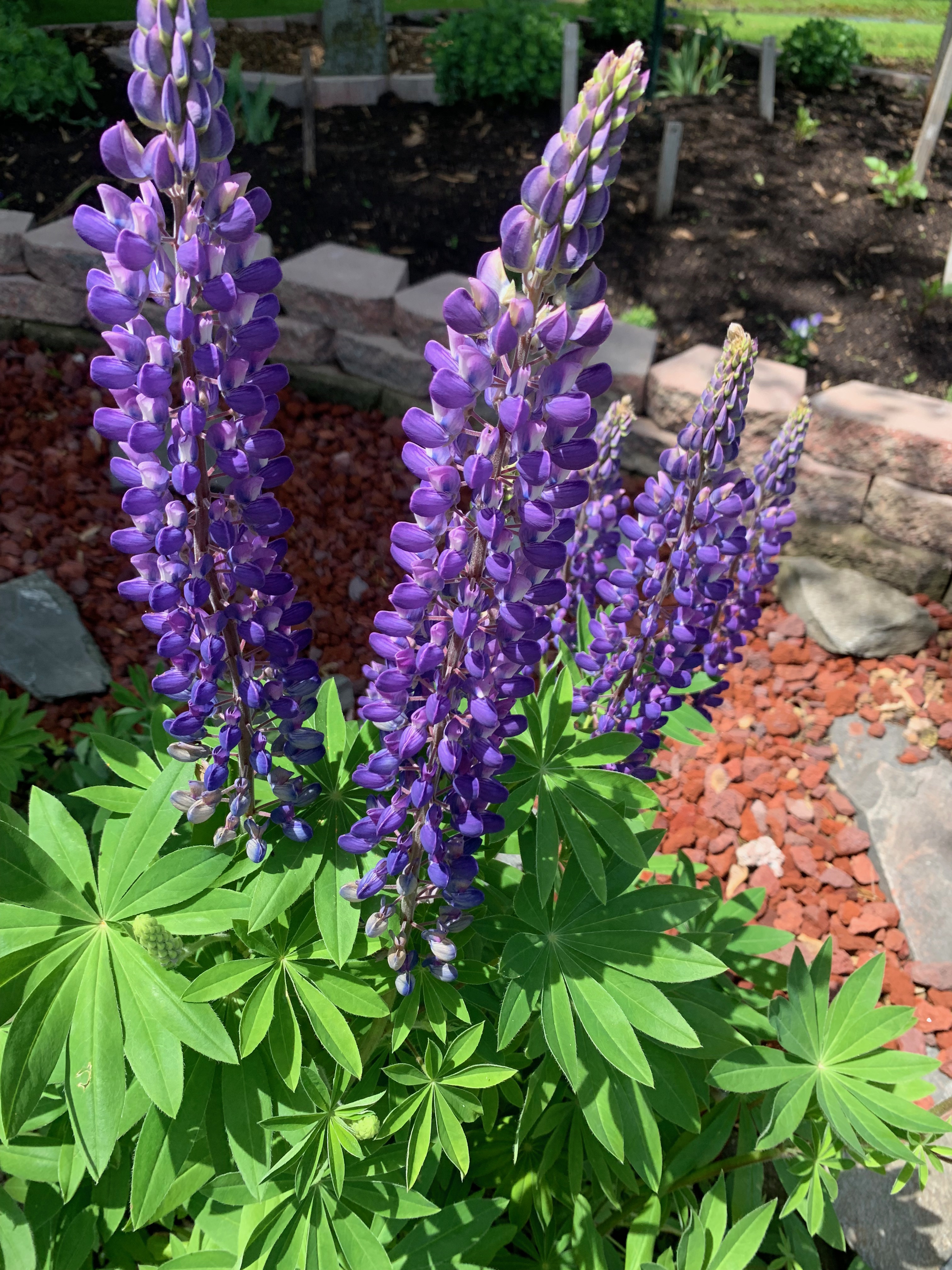
Speaking of flowers, (well, okay, I wasn’t speaking of flowers but what the heck) the lupins have just gone nuts this year. They’re everywhere. It looks like someone bombed the entire backyard with seed. We didn’t plant any of these, they just came up by themselves. Not that I’m complaining. Those flowers are spectacular.
Let’s see, what else? Oh, yeah…
Stuff On The Air
Amateur radio operators can be a bit, well, odd, shall we say? (Personally I suspect it’s solder fumes.) Some of them seem to be obsessed with lugging their equipment out of the safe environment of their basements where spouses have exiled them and into the great outdoors with the intent of doing “Things On The Air”. They do SOTA (summits on the air), IOTA (islands on the air), POTA (parks on the air) WPOTA (Walmart parking lots on the air), and, well, the list goes on and on.
I’ve decided to join the ranks of these intrepid and brave explorers going to exotic places and sticking still more letters in front of “OTA”, risking life and limb outside of the safety of my normal operating location. Yes, I’ve started FPOTA! Front Porches On The Air! Ooo, the excitement! Ah, the thrills!
The plant there is important. It adds about 0.001 dB to the gain of the antenna.
Well, okay, I’m being silly here. (But to be honest I’m getting really tired of these “OTA” things and people running around “activating” parking lots and hills and parks and bridges and I don’t know what all else.) Still, we had a very rare nice day so I set up the mag loop and the 818 out on the front porch with a cup of coffee, a copy of “The Bathroom Reader” and and contacted, well, no one, to be honest. Chris over at Off Grid Ham tells me he’s been having similar results and not to feel too bad about it. Propagation on the HF bands pretty much sucks because we’re at the bottom of the solar cycle.
By the way, if you’re at all interested in solar power, batteries, solar controllers, and alternative ways of keeping your radios running, battery charging systems, etc, Off Grid Ham is the place to start.
The Great QRP Saga Continues
If you’ve been reading this nonsense for the last couple of weeks you know about my efforts to put together a portable QRP (low power) radio setup that’s small enough I can throw it into the back of the car and take with me when I go fishing and stuff so I can do PTOCCOTA (Picnic Tables Of Calumet County On The Air). Okay, I’m being silly, but I have long wanted to have a nice QRP set up that I could take along with me to play amateur radio while out enjoying the glorious environment of Wisconsin’s great outdoors and it’s swarms of blood sucking, disease carrying mosquitoes and ticks.
I’m mostly interested in digital modes of communications like PSK, FT8 and JS8 because despite the fact my hobby is communications technology, I don’t like to actually, well, talk to people. Yeah, I know. Weird, isn’t it?
So as you may recall, the ancient Toshiba laptop I was going to use decided it was time to go to that great recycling center in the sky. So I’ve been scrounging around for a cheap (emphasis on cheap because I already got way too much money invested in this project already) replacement and came up with this:
It’s a refurbed Lenovo that I picked up for $300 and, frankly, it’s ridiculously nice. I mean this thing looks and feels literally like brand new. There isn’t a single scratch or smudge or physical defect anywhere on it. Has a core i5 processor, 8 gig RAM, 500 gig SSD drive, DVD drive, 4 USB ports and seems entirely too nice to lug around out in the field. I have FLDIGI, JS8Call and FT8 software installed on it already. And I think I have the right cables to hook everything up to the SignaLink and the 818. So this weekend I’ll be taking over the dining room table for a few hours and see if I can actually get all this to work together.
I am not looking forward to that because, well, it’s embarrassing. I’ve been working with computers since 1979, both hardware and software. I’ve been fiddling with radio for even longer even though I didn’t get my amateur radio license until 2013. I was an electronics technician. I repaired laser scanners, set up computer networks, worked with ridiculously complex point of sale systems. So I ought to know this stuff, right? But whenever it comes to trying to hook a computer to a transceiver it quickly turns into an extremely frustrating experience. It never, ever works the first time. Or the second. Or the third. Or the fourth… Well, you get the idea.
I spent days trying to get Ham Radio Deluxe to work with first my Kenwood TS-2000 and then later with the Kenwood TS-990 and a RigBlaster Advantage interface. It was so frustrating that at times I was ready to just give up and then, for no apparent reason, the damned thing would just start working, with the same settings and cabling that didn’t work the day before… Arrgghhhh! The last time I had to rejigger stuff was when I got the new gaming PC and was trying to hook that up. Same settings, same cables, same everything, and, of course, it wouldn’t work right. Ham Radio Deluxe worked just fine and dandy until I wanted to transmit. Then it would key the transmitter but nothing actually transmitted… I struggled with that problem for way, way to long. And then it just started working for no apparent reason… I still don’t know what the hell happened there.
Anyway, enough of that. I’ve been boring you long enough with this stuff. Hopefully come Monday or Tuesday I’ll be able to report that I’ve got the 818 working flawlessly with the ThinkPad and I’m making contacts all over the place.
Yes, it’s more amateur radio stuff. Hey, I got new toys so I have to play with ’em, right? Anyway, this is not an equipment review. I don’t do those. Doing a proper equipment review requires proper test equipment, extensive knowledge, patience, and a lot of work, and I don’t have any of that stuff. Well, okay, so I do except for the patience thing. And the work thing… I have mentioned I’m one of the laziest people in the state, right? Besides, the 818 has been on the market for some time now and it’s been reviewed by people a lot better than me. Even by people who actually know what they’re doing. Which I don’t. What I do is play with stuff, mess around with it, use it, fiddle with it. I look at stuff not like a reviewer, but as someone who actually uses the equipment I talk about.
Disclaimer: I suppose I should stick this in here because it seems every other person I know these days is trying to be an “influencer” and get companies to send them free stuff and make gazillions of dollars on the youtubes and myspaces and facefarts. I don’t get paid by anyone to do these. The equipment was all purchased by myself, through regular retail channels (in this case Gigaparts). No one gives me free stuff or discounts or anything like that. I am not an “influencer” because apparently you have to be A) young, B) good looking, and C) morally and ethically compromised to be able to do that crap, and I don’t fit in with A, B or C. Although if Kenwood would want to give me a new 890 or Yaesu has an extra 101 laying around with one of those fancy $1,000 microphones, I might be willing to reconsider the whole ethics thing.
Anyway, let’s get on with this, shall we?
Of course it didn’t take me long after getting the Yaesu 818ND in my hot little hands to be overcome with the desperate need to actually play with it. So, while enduring scathing looks of disapproval from MrsGF, I temporarily took over the dining room table to fiddle with it. First with 8 AA alkaline batteries powering it and then with the included rechargeable power pack, and then the next day with an Astron power supply feeding it a more adequate amount of juice.
The 818 is definitely a fun little transceiver, and it is also definitely annoying at the same time, although I’m sure the annoyances will fade as I become more familiar with it. Well, some of them, anyway.
I did read the manual before I set it up and tried using it. Despite what I said in the last post where I implied I never read manuals, that’s not true when it comes to things as complex as transceivers because there is always the possibility of actually damaging the equipment if you do something wrong. Not that the 818 is difficult to set up and get going. Basically you just hook up an antenna, plug in the mic, use the internal battery or connect to a 12V power supply, and it’s ready to go. But if you want to actually do anything useful with it, well, read the manual first!
Speaking of the manual, it’s about average for the kind of thing that comes with amateur radio equipment these days. Which means, of course, that it isn’t really very good. Oh, all the essential details are in there. Sort of. If you managed to pass your general class license test you should be able to figure it out. Maybe.
Like most modern transceivers, the 818 is almost ridiculously complex, which means there are lots and lots of settings and functions to play with, and in order to get at any of them you have to delve into the menu system which I’m not even going to try to describe. I’ll just put it this way, if you lose the manual, you’re screwed.
I want to talk about the annoyances first. I should point out that I really, really like the little 818. It is a nifty little QRP transceiver that does everything I want it to do and more. But there are always annoyances with any piece of equipment, and this one is no exception. And all of them pertain to the user interface, so to speak, not how the radio actually works as a radio.
The most obvious and visible of the annoyances is that LCD display. Take a look at that closeup up there. If it looks a bit dim and fuzzy, that’s because it is dim and fuzzy. It is, frankly, awful. I’m sorry, but it is just utterly terrible and it shouldn’t be. I don’t know if it’s just mine or if this is true for all 818s. This is not a cheap piece of equipment. This thing sells for $650. But that LCD looks like something they swiped off a disposable $5 handheld game. In normal room lighting or in the shade or evening outside, with the backlight off, it’s almost impossible to read it at all. Even with the backlight turned on it’s difficult to read unless I’m directly in front of it at the proper viewing angle. Out in bright sunlight it isn’t bad, but still, there is simply no excuse for that on a piece of equipment this expensive.
Then there is the Squelch/RF/AF gain knob. Like a lot of knobs on transceivers these days it is a double knob. There is a sort of collar around the base of the knob that turns which is the RF gain adjustment, while the main knob is the AF gain. It’s, well, floppy is the only way I can describe it. If I put my index finger on the tip of it and move it, the end of the knob can wiggle back and about 1/16th to 1/8th of an inch. It feels cheap, like that $5 kid’s toy mentioned earlier, and this is more than a little troubling because it makes me wonder how long it’s going to last.
The collar around the base of the knob controls the RF gain and it’s damned near impossible for me to turn it. It’s positioned awkwardly. I can’t actually grasp it. I have to put the tip of my index finger on the side of it and try to push up and down to move it. More often than not I end up moving both the RF gain and the AF knob at the same time.
Interestingly enough, the SEL knob on the left side of the radio is rock solid and exhibits none of the floppiness of the AF gain knob.
Then there are the buttons. They are very small, which is understandable because this is a very small radio. But the buttons are also either recessed into the bezel or there are plastic extrusions surrounding the buttons, which makes them damned near impossible for me to push with a finger tip. I either have to try to use the edge my fingernail to push the buttons or use the eraser end of a pencil.
The only reason to recess the buttons like that is to protect them from accidentally being pressed. But exactly how would they be accidentally be pressed on this radio? You aren’t going to be operating this thing while it’s in your pocket. In fact, I can’t think of any circumstances when it would actually be in operation when there it would experience conditions that would cause a button to be accidentally pressed. If it’s in a carrying bag, sure, it might jostle around to the point where something in the bag could make contact with a button, but the radio isn’t going to be turned on and operating if you’re carrying it in a bag. So what, exactly, are they protecting the buttons from?
Like most transceivers these days, the little 818 is loaded with bells and whistles, all of which are accessed via a system of menus. The menu system is, well, all I can say is that it’s no worse than any other I’ve worked with. You’re going to want to keep a copy of the manual with the radio itself, or at least a cheat sheet with the more commonly used menu items written down. You can get a PDF file of the Yaesu 818 manual here directly from the company’s web site. Once you get to the 818 page, click on the “Files” tab and it will take you to a download page where you can get it as a .PDF in English and several other languages.
Using the 818
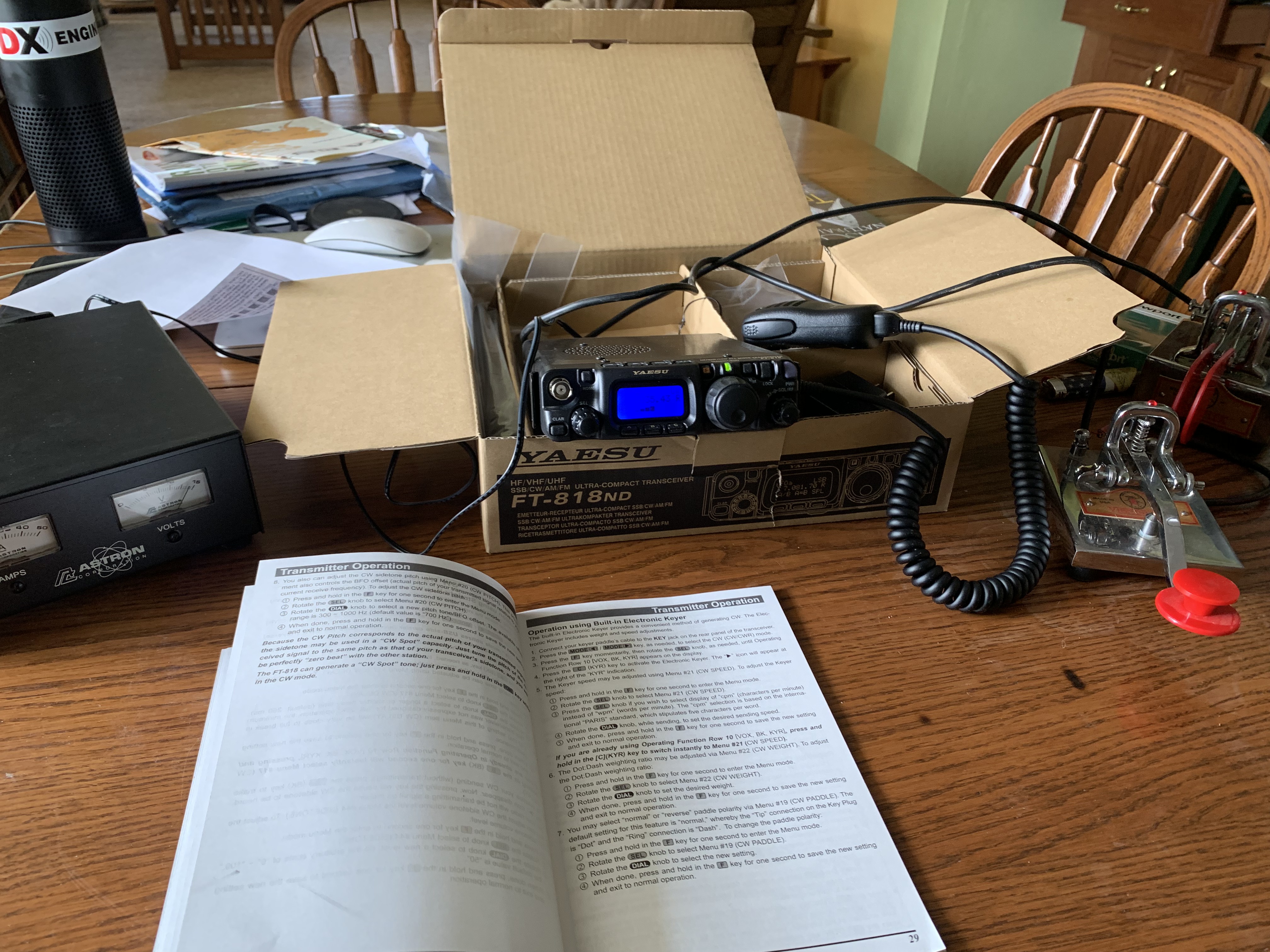
As you can see from the lead photo, I’ve had the 818 set up and running on the dining room table (while enduring some rather irritated looks from MrsGF, but then she’s an amateur radio operator as well so she understands that if I have a new piece of equipment laying around there’s no way I can keep my hands off it).
The 818 operates either from it’s internal batteries (either 8 AA alkaline batteries or the included rechargeable battery pack) or an external 13V power supply that can handle at least a 3 amp load. When operated with the internal batteries the 818’s transmit power automatically drops to 2.5 watts. You can override this in the menus, but don’t bother. If you try to transmit at 6 watts with the radio on it’s internal batteries it will just turn itself off because the batteries just don’t have enough power to handle that kind of output power.
I put in 8 AA batteries and fired it up and played around with it for a while to get familiar with the menu system, with the Alpha mag loop antenna hooked to the rear antenna connector.
Once I had the antenna tuned, I was faced with a noise level running about S8 to S9+. Now that isn’t at all surprising. I don’t exactly live in a radio quiet zone here. I have a huge cattle feed processing facility just down the street from me, a shop that does powder coating and painting for a major manufacturer of lawn equipment, and about 5 blocks away Sargento has a huge processing facility. Then add in all the electronics here in the house which includes a half dozen computers, networking gear, printers, WiFi points, etc., and, well, some days it gets pretty bad around here. Some days are better than others, it all depends on what equipment is running where. But an S8 noise level is pretty typical.
Now with my Kenwood TS-990 I can generally deal with that kind of thing thanks to some pretty sophisticated filtering. With the 818, well, not so much. I was able to pick up a few very strong CW stations and one or two SSB conversations on 20 and 40 meters, but then I had to pack it all up because it was time for dinner. (I really, really need to stop procrastinating and get the shop in the basement set up!)
Next morning I tried again, feeding the 818 with an external power supply instead of batteries, and was determined to sit down and do some serious goofing around with the little transceiver. That’s the jury rigged setup you see in the lead photo up at the top of the page. And yes, that’s a DX Engineering sticker on the Alexa thingie sitting there. Every time I order something from DXE they send a fistful of stickers and, well, I have to do something with ’em, so they’re everywhere. I tried putting one on MrsGF but she was a wee bit irritated. Tried to put one on one of the cats and she got even more irritated. So after several bandaids to cover the scratches (from the cat, not MrsGF. MrsGF just gives me one of those looks and I know it’s time to stop whatever it is I’m doing.) I only put them on inanimate objects now.
I was picking up several decent CW and SSB transmissions, well above the S7 noise level, which was encouraging. I tried replying to several CQs from other operators, and got nothing in reply. Wondering if I was putting out anything at all I put MrsGF on the 990 in the other room and, well, just about blew her ears out. Forgot to turn on the attenuator. Sigh… Still, the 818 was transmitting. I tried calling CQ on SSB for quite a while on 20 and 40 meters and got nothing.
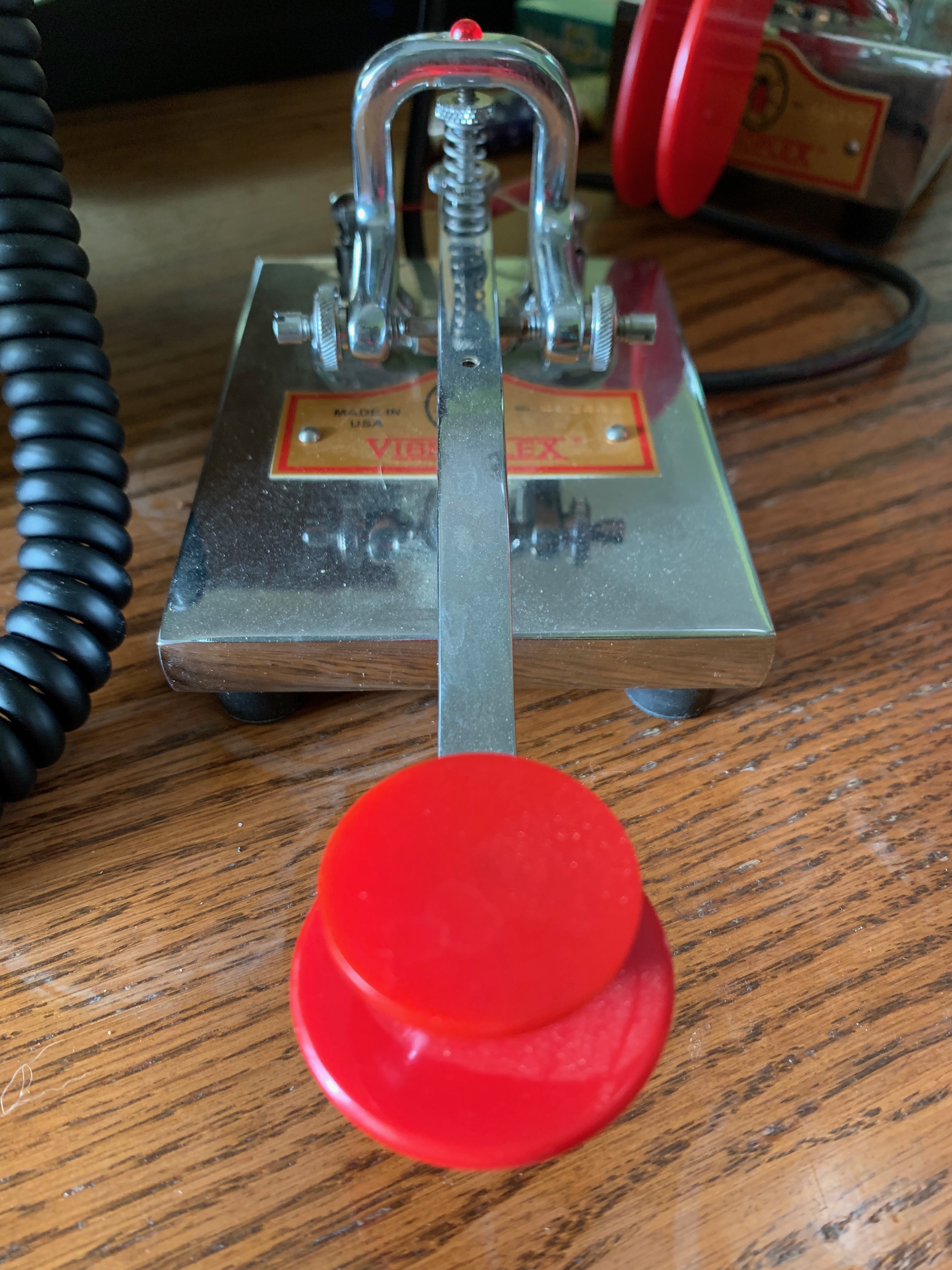
Hard to tell in the photo but the poor thing is covered with dust from disuse. Still, considering how bad I am at CW that’s probably not a bad thing.
I dragged out the CW keys and dusted them off. I mean seriously dusted them off. Oh dear, had it been that long since I used ’em? How the heck had they gotten so filthy? They were in a drawer, for heaven’s sake. And cat fur? Really? How the heck did they get covered with cat fur in a drawer? Do the cats like open up all the drawers and look for things to shed on?
Anyway, I dialed down to the frequencies where the QRP people allegedly hang out and fiddled around with CW for a while. Nothing there, either. Sigh…
Getting discouraged I went in the other room and fired up the TS-990 again on the dipole antenna in the backyard. If there’s anybody on the air who can be heard, that sucker will pick it up. And, well, nothing. Tuning from one end of 20 and 40 to the other and nothing. Well, almost nothing. Just a few signals way down in the weeds. Oh, and FT8. The FT8 portions of the bands were lighting up the waterfall like a Christmas tree. (Has everyone moved to FT8? Seems that way sometimes)
Still, the experiment did give me an excuse to clean up the straight key and iambic paddle.
So I know the 818 receives (although after about 5 minutes I really, really missed the filters and noise reduction systems on the TS-990). I know it transmits. I know the Alpha antenna works because I’ve been using it on the 990 with considerable success. It’s just that the gods of propagation have a grudge against me, I guess.
I’m still waiting for the connectors and other things I need to get the 818 on the air with digital so I can’t try FT8 yet. Oh, and I still haven’t come up with a laptop yet.
I suppose I should to a better test. Dial the 818 down to 1 watt, put MrsGF on the 990 in the next room (with the attenuator on this time) and see what kind of signal the 818 is actually putting out. But that’s going to have to wait until MrsGF lets me use the kitchen table again.
The antenna with the optional “booster loop” allowing operation on 80 & 60 meters installed, with it’s tripod and mast.
If you’ve come here looking for pictures of flowers and nature and me babbling about gardening and farming, you might want to skip this one because this entry is entirely amateur radio related. I want to talk about mag loop antennas. I’ve been fascinated with mag loop antennas since I first heard about them, and have always wanted to build or buy one to experiment with. I finally broke down and bought one from Alpha Antenna.
I’m not going to explain what a mag-loop antenna is. If you’ve read this far you either already know or you’ve already used Google to look it up. I’ll just say that these compact, efficient antennas have become extremely popular, especially in the QRP (low power) amateur radio community, and for good reason. But mag-loops do have some issues. There are always trade offs in the world of radio. First they have an extremely narrow bandwidth, making it necessary to retune the antenna if you change frequency. And second, they are generally only rated for low power transmissions. They’re usually considered to be QRP (low power) antennas. Mag loop antennas can be built that can handle impressive amounts of wattage, but there are problems that are difficult (and expensive) to deal with.
I should explain why I picked the Alpha rather than one of the other antennas on the market. The Alpha can handle more power than many other mag loops on the market, up to 100 watts on SSB, 50 watts on CW, and 25 on digital, depending on the frequency being used. This is more than what a lot of the other ones can deal with, at least in this price range. It works from 4o meters to 10 meters, and with the Booster Cable, can even work down on 80 meters. A lot of mag loops only work from 20 to 10 meters, and most have no options to extend their range down to the 80 meter band. The Alpha I bought also included the tripod, mast, and other parts necessary to fully assemble and use the antenna. Basically it is a complete antenna system. All you have to do is put it together, hook up your coax and begin using it. It was everything I really wanted in one convenient package.
You can order it directly from the company, but I bought mine off Amazon. Retail price is $500 including the main antenna, the booster cable, tripod and mast and a carrying bag. (Note: I have no connection to either Amazon nor Alpha, do not get paid by them, do not get special deals or anything else. I paid full retail price for the antenna and ordered it through normal retail channels.)
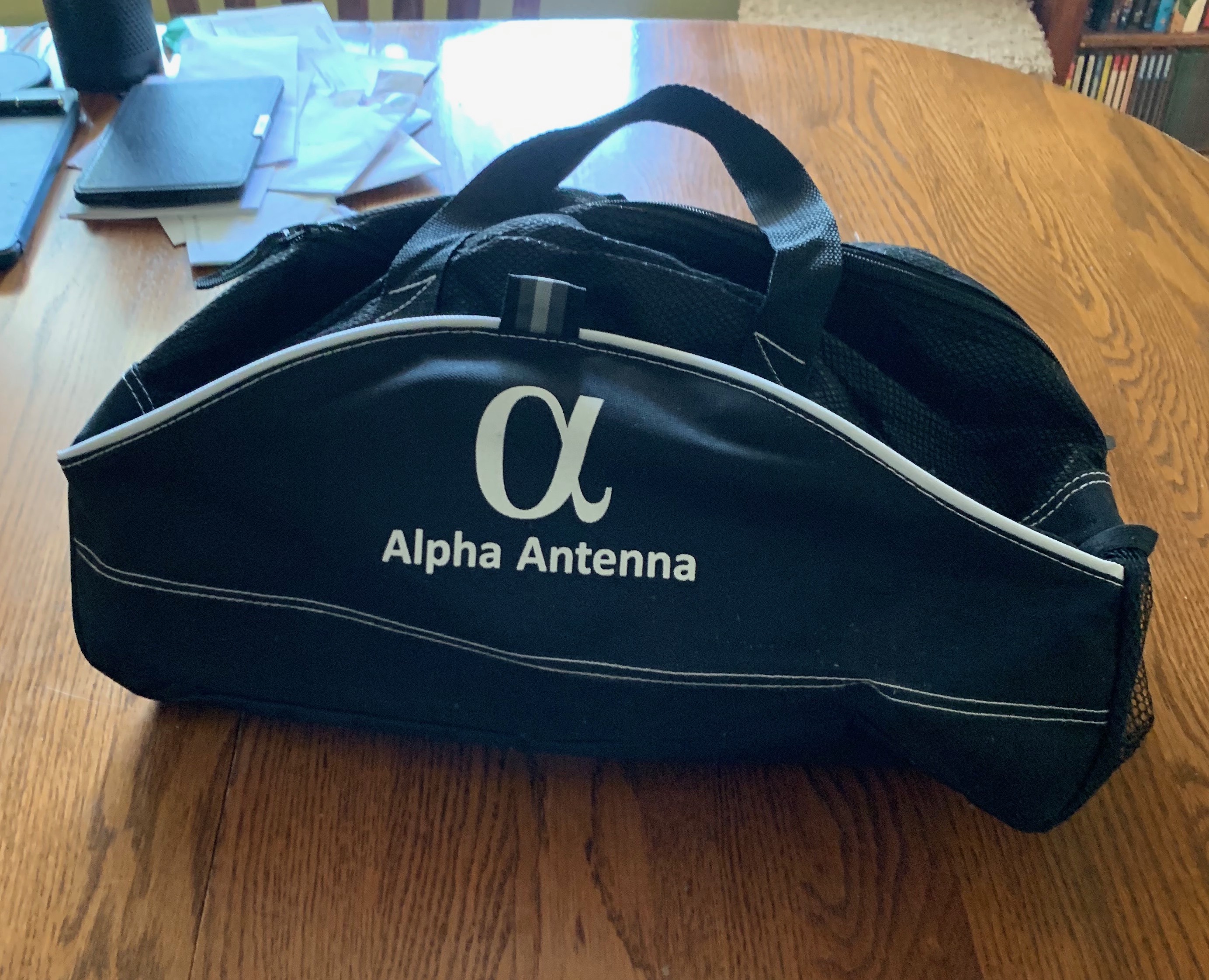
There’s enough room in the bag that it would hold just about everything I’d need, the 818, SignaLink, cables, battery, etc. plus the antenna itself.
The antenna comes in its own gym style carrying bag with the Alpha logo on it. Everything, including the tripod and short mast (basically a selfie stick, and Alpha refers to it as such), fits neatly in the bag with room left over.
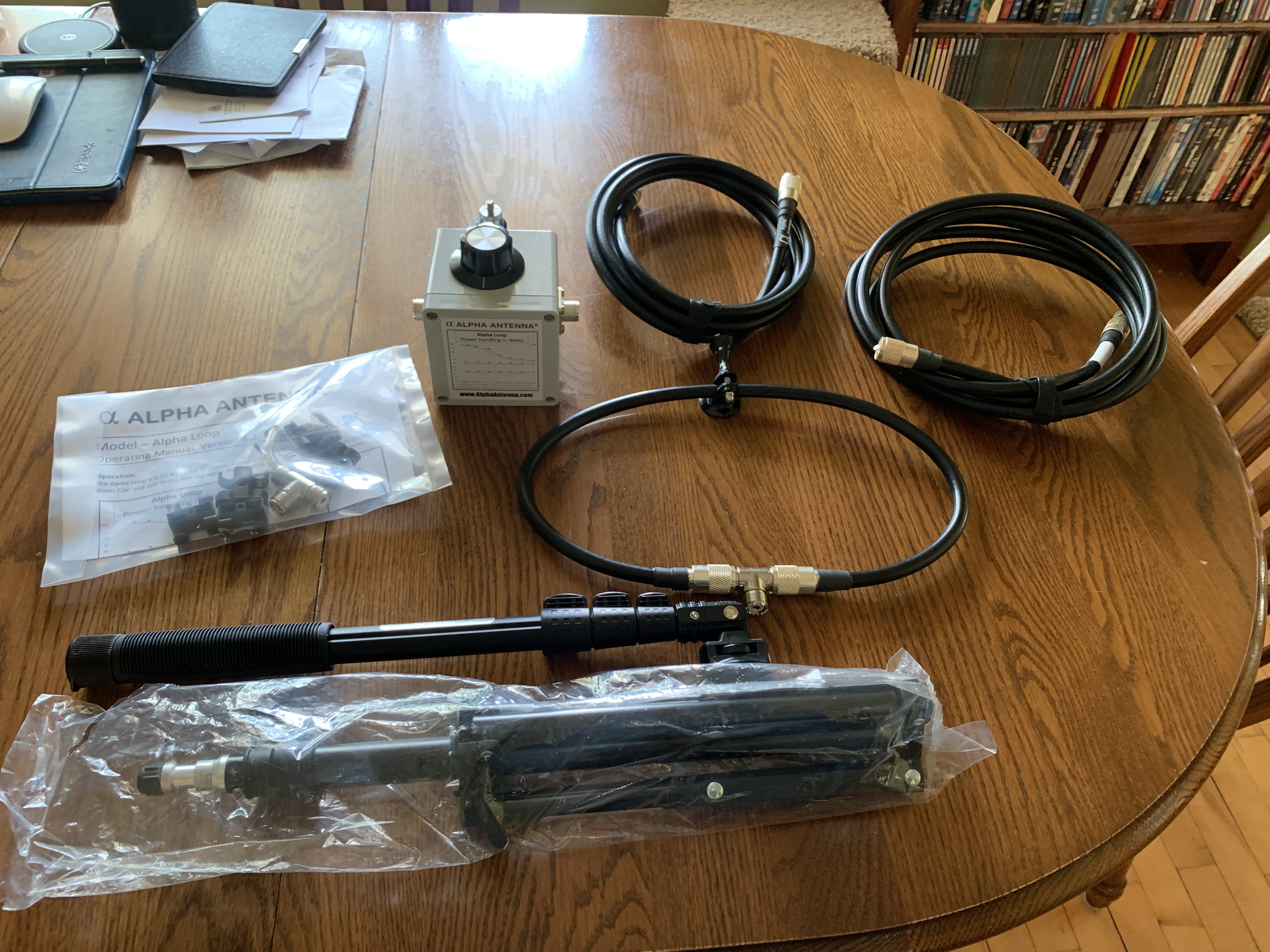
Once you unpack everything from the bag, this is what you get:
This is the entire antenna, including both the normal loop, the “booster cable” loop for 80/60 meter operations, the tuning box, the tripod and mast, and the plastic bag containing nylon clips to position the antenna, a sheet of instructions, and an extra “T” coax connector.
Note the extra “T” coax connector in the plastic bag. I had no idea why that was included, but a bit of research turned up why they tucked that in with the rest of the antenna. That’s being included because Alpha had reports of bad T connectors in the recent past. All previous owners of the antenna were sent new T connectors and they’re including spare T’s just in case.
Assembly is a piece of cake. Being a typical amateur radio operator I, of course, never looked at the instructions until after I’d put it together. (I really should stop doing that, shouldn’t I?) Even so, it took me all of about five minutes to get it fully assembled and ready to go. And, amazingly enough, I even got it right the first time. Alpha has a video up on youtube showing how to assemble it, including how to add the Booster Cable for 80 meter operations. Just click the link there to see it. It’s all very straight forward.
Note that the loop does not have to be perfectly circular to work properly. As long as it’s reasonably close, you’re good to go. Note: Yes, that is the world’s ugliest recliner back there behind the antenna. And the less said about that sofa, the better. We can’t have nice furniture because we have cats who think they own the house and its contents and we’re just there to feed them and occasionally provide them with entertainment when they’re bored.
The photo above shows it fully assembled, without the booster cable, in my dining room. The loops are all made of LMR 400 coax, which is extremely stiff and has no trouble holding any shape you want to bend it into. Use some caution when you’re coiling and uncoiling the coax. It can be awkward to work with because of how stiff it is. Note the two plastic clips holding the large loop in the proper position above the small loop. 6 of those clips are included. The other four are required for use with the Booster Cable installed. This is the antenna with the “Booster Cable” installed.
The booster cable is connected in series with the regular large loop, so you now have a double loop instead of just a single loop. All the proper connectors are already installed on the ends of the cable so you don’t need adaptors.
Without the booster cable installed it’s impossible to use the antenna on frequencies below 40 meters. And I should point out that with the booster installed it’s impossible to use the antenna on frequencies higher than 40 meters. So you can either work 80/75 to 60 meters, or you can work 40 to 10 meters, but not both.
Overall quality is quite good. The coax is genuine LMR 400 from Times Microwave. The small tripod is more than sturdy enough to handle the antenna. The mast/selfie stick is sturdy enough to handle supporting the loops. Once it’s set up the mast and tripod are very easy to adjust if necessary. The connectors on the coax and on the tuning unit look to be of good quality and appear to be silver plated. I did not open up the box to look at the variable capacitor, but others have and if you want to see what’s in there, you can find photos and videos on Youtube and other sources. It looks well made from quality materials and should provide years of reliable use.
I should point out that if you’re using it outside and there is more than a gentle breeze you’re going to have to stabilize the tripod somehow. A stiff breeze will blow it over.
The first thing I did after putting it together was hook it to my antenna analyzer to see how good of a match I could get on the frequencies I normally use.
Now most of you reading this probably know this already, but just in case I’ll mention it. You never use your transceiver’s internal antenna tuner or an external tuner, with a mag-loop antenna. You adjust the antenna for a proper match by turning the knob connected to the variable capacitor inside that little gray box. And getting a match can be very touchy sometimes depending on the antenna, the type of capacitor being used and other factors. Now I don’t have any personal experience with mag-loop antennas before getting the Alpha, but from what I’ve heard from others, tuning the Alpha is no worse than tuning any of the others, and actually a lot easier than some reports from other models.
BTW: If you do any kind of fiddling around with antennas, an antenna analyzer quickly becomes your best friend.
I don’t use 80/75 meters much, and have no plans to use it for QRP, but since I already had the booster cable installed for the photo I checked that first. I didn’t have high hopes for a decent match down there, but much to my surprise the Alpha with the booster installed indicated an SWR of a bit over 1.1:1.
I took the booster cable off and set it up the way I would normally use it and looked at the rest of the HF frequency range.
I got excellent, or at least decent, SWR all across the amateur radio bands with one exception, 12 meters. No matter what I did I couldn’t get an SWR of less than 2.5:1 on 12 meters. Considering that I’m getting matches of 1.5:1 or better, usually much better, on the other bands, I’m assuming that there’s something wrong with what I’m doing and I’ll look into it further when I get some time. It’s entirely possible that I simply missed the “sweet spot” when trying to tune the antenna because I was in a hurry to get it hooked up and on the air.
Now, the question is, of course, does the thing actually work as an antenna? The answer to that question is an emphatic yes!
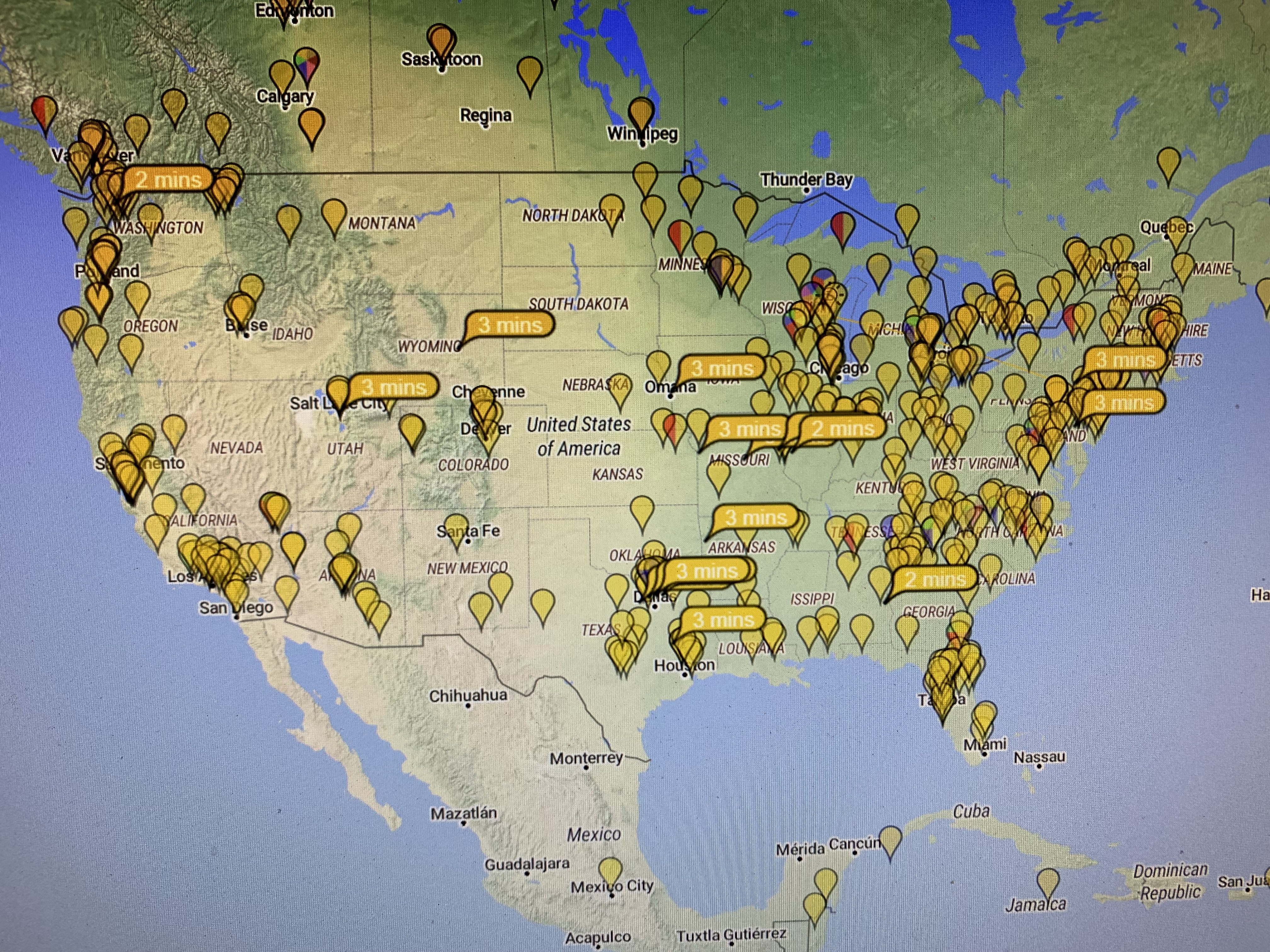
I don’t have my Yaesu 818 yet, so I tested it with my Kenwood TS-990, with the antenna standing on it’s tripod right behind me in the office where I could easily reach the knob to adjust it. Once I got a few glitches straightened out (My fault, not the antenna’s. Turned out the coax I was using had a bad connector. Once I re-soldered that all was well.), I gave it a try on 20 meters using FT8 with the 990’s power turned down to 8 watts and the SWR adjusted down to 1.4:1. And this is what popped up on PSK Reporter a short time later:
Now FT8 is a pretty efficient mode, but still… Damn. I was getting reception reports from all over the country while putting about 8 watts into an antenna sitting on the floor behind me in the office.
I moved up to 10 meters. Now 10 meters has been in the doldrums because we’re at the bottom of the solar cycle, but you never know. After adjusting things tried with the 990’s output set to 6 watts. I honestly didn’t expect to see anything pop up on PSK Reporter, but low and behold, when it cycled through, there I was, with reception reports popping up all over the place.:
Reaching Texas, Kansas and a large part of the east coast with 6 watts output using an antenna sitting in my office? Yeah, that’s not bad at all. Okay, I am officially impressed.
So far I’m very pleased with this antenna. More than pleased. In fact the few times I’ve had a chance to operate this past week or two, I’ve been using the loop exclusively when I use FT8. Getting it tuned is a bit fiddly, but as I’ve gained experience with it I’ve found I can tune it reasonably quickly and easily. (More about that in a minute.) I can’t wait to have a chance to really work with it and see what it can do out in the field. Once the Yaesu 818 gets here I’m hoping to throw together a complete portable digital system compact enough to throw into the back of the car along with my fishing gear and making some contacts out in the wild, so to speak.
Let’s talk about tuning mag-loop antennas for a moment. I mentioned before that you do not use an antenna tuner with these antennas because they have their own built in tuners, that variable capacitor. That’s how you adjust ’em to get a match. And these antennas are very, very touchy when it comes to tuning. They are very narrow bandwidth to begin with, and moving the dial a fraction of a degree can make a huge difference in the SWR.
I used an antenna analyzer at first when testing. It’s pretty easy to dial them in that way, but connecting and disconnecting an analyzer is a pain in the neck, and you don’t want to have to lug one along if you’re going portable. There is a technique to make it easier to set them up. The trick is to hook it up to your transceiver, set your transceiver to the frequency you want to use, and then listen to the receiver as you turn the dial on the antenna. (Hint: Turn that knob slowly. It is very, very easy to slip right past the sweet spot if you turn the knob too quickly.) As you get close to a match there will be a sudden increase in noise coming from your receiver. When you reach that point watch your S meter or listen to the noise level to bring that noise to a peak. Once you do that you’ll be pretty close and you can use a test transmission to dial it in for the best SWR before you being actually trying to make contacts.
Another issue with tuning is how the antenna reacts to being close to y0ur body. The mere presence of your hand near the antenna when turning the knob is enough to alter it’s characteristics in some cases. Since you have to bring your hand close to the antenna to adjust the tuner, this can mean that as soon as you take your hand away from the antenna, your SWR will change, sometimes significantly so. If that kind of thing happens, you can often compensate for it. I quickly learned to stop tuning a bit before or a bit after the ideal SWR in order to get a good match once I took my hand away when that happened. Interestingly, it doesn’t happen all the time. This is due to a phenomenon known as body capacitance or hand capacitance. The human body can act like a capacitor. The actual amount of capacitance varies depending on environmental conditions. So depending on conditions, just bringing your hand close to the antenna can cause it’s characteristics to change. Don’t worry about it. It doesn’t happen all the time, and if it does, you’ll learn to adapt.
So overall the Alpha has been a lot of fun to use. Only time will tell how it holds up, but it looks to be well made and certainly it works as advertised. I’m really very, very pleased with it so far.
Later — Look what the nice UPS driver just delivered today !!!
The 818 is here! I still have some bits and bobs to put together before I’m ready to take it out on the road. I want to do digital modes, and that means I need a laptop, and the elderly Toshiba I was planning on using looks like it is instead headed for the recycling center, so I’m going to have to scrounge up a laptop. I’ll need make or buy connector cables to hook everything up to the laptop and SignaLink. Then I’ll need a power supply of some sort. The 818 does have it’s own battery, but the SignaLink requires a power source and I’d like to have a central power source to run everything. Nothing serious but it’s going to take some time, which is in short supply right now because we’re up to our necks with landscaping and gardening projects and house updating projects and other stuff at the moment. Until I get all the bits together I need for digital operations I may try it with the Alpha on SSB and see what happens.
I’ll keep you posted as “The Great QRP Project” progresses
I thought I’d have time for all this stuff once I retired, but it turns out that between things MrsGF wants me to do, landscaping, gardening and other things going on around here, I actually have less time for playing radio than I did before I retired. How the hell did that happen?
Wow it’s been busy here. Well, at least when it hasn’t been raining, which it seems to have been doing almost the entire month of May. I’d say we’ve had maybe 5 nice days out of the last 30. The rest of the time it’s either been raining, or cold with temperatures never getting much above 55 degrees, or both at the same time. The farms around here are running weeks behind with planting. Well, so is most of the midwest. This time of year we should have just about all of the corn crop planted. Instead we have about 45% of the crop in the ground because the fields around here look like this:
We’re at the point now where if farmers can’t get the corn in the ground in the next few days they might as well not bother at all. Every day’s delay means a significant reduction in yield, and it isn’t going to be long before even the faster growing varieties won’t reach maturity before we get frost in the fall.
The commodities markets were so distracted by the trade wars going on that they didn’t notice the weather problems we’ve had, but they sure have now. Corn prices have shot up over $1 per bushel in the last week and a half, and are now sitting around $4.30 on the Chicago market.
But I wanted to talk about gardening, not farming, so let’s drop that and get on with this.
It was a hard winter here, which was easy to tell from looking at our yard, especially behind the house. The decorative plantings got especially hard hit, and the decorative area back there was an absolute mess.
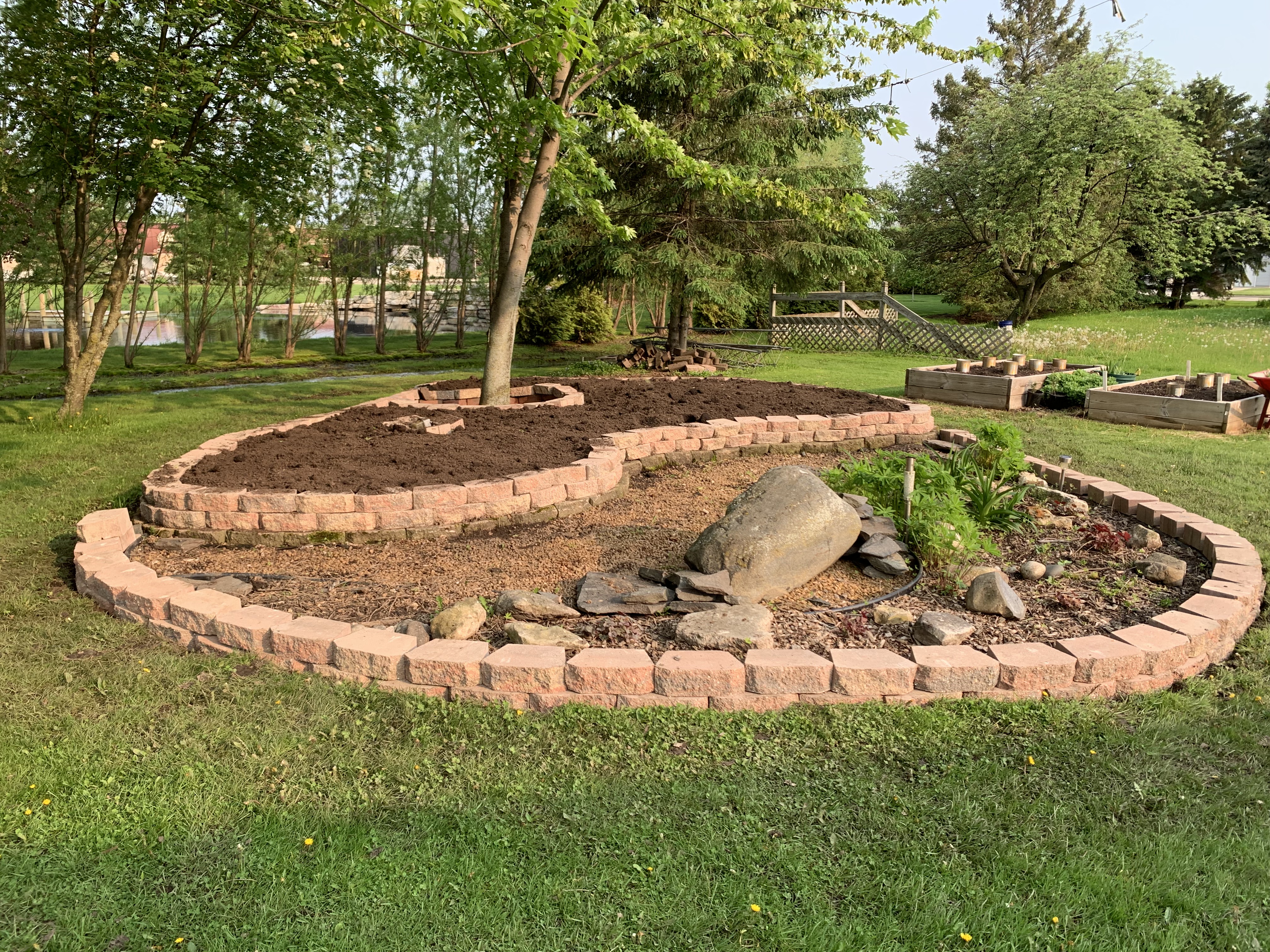
The bark mulch had disappeared, for the most part, probably floating off in the heavy rains, the rest was discolored and deteriorating badly, parts of the area had sunk in where the old koi pond had been, the irises were drowning, it was pretty bad back there. So we decided the whole thing had to be redone. So we started digging up the old plants, moving rocks, putting in something like 250 retaining wall blocks, and about a week of work, and this is what we ended up with.
Still a lot of work to do but we’re getting there. You can see the raised vegetable beds off to the right.
We still have a lot of work to do to finish it off obviously. Some of the block have to be straightened up, some things moved around, but we’re relatively pleased with the result. One problem is that boulder sitting there. I moved that sucker there when I still had the tractor because it seemed like a good idea at the time and since the tractor got sold, well that’s where it’s going to stay, so we’re stuck with it and have to work around it.
It’s still pretty messy back there and we have a lot to do. We’re debating whether or not we want to put capstones along the top of the retaining walls. We have probably several more yards of dirt to haul in to fill the planting bed, a lot of crushed rock for the area around and behind the boulder, lots of plants to transplant into there and buy, and probably a truckload or two of mulch.
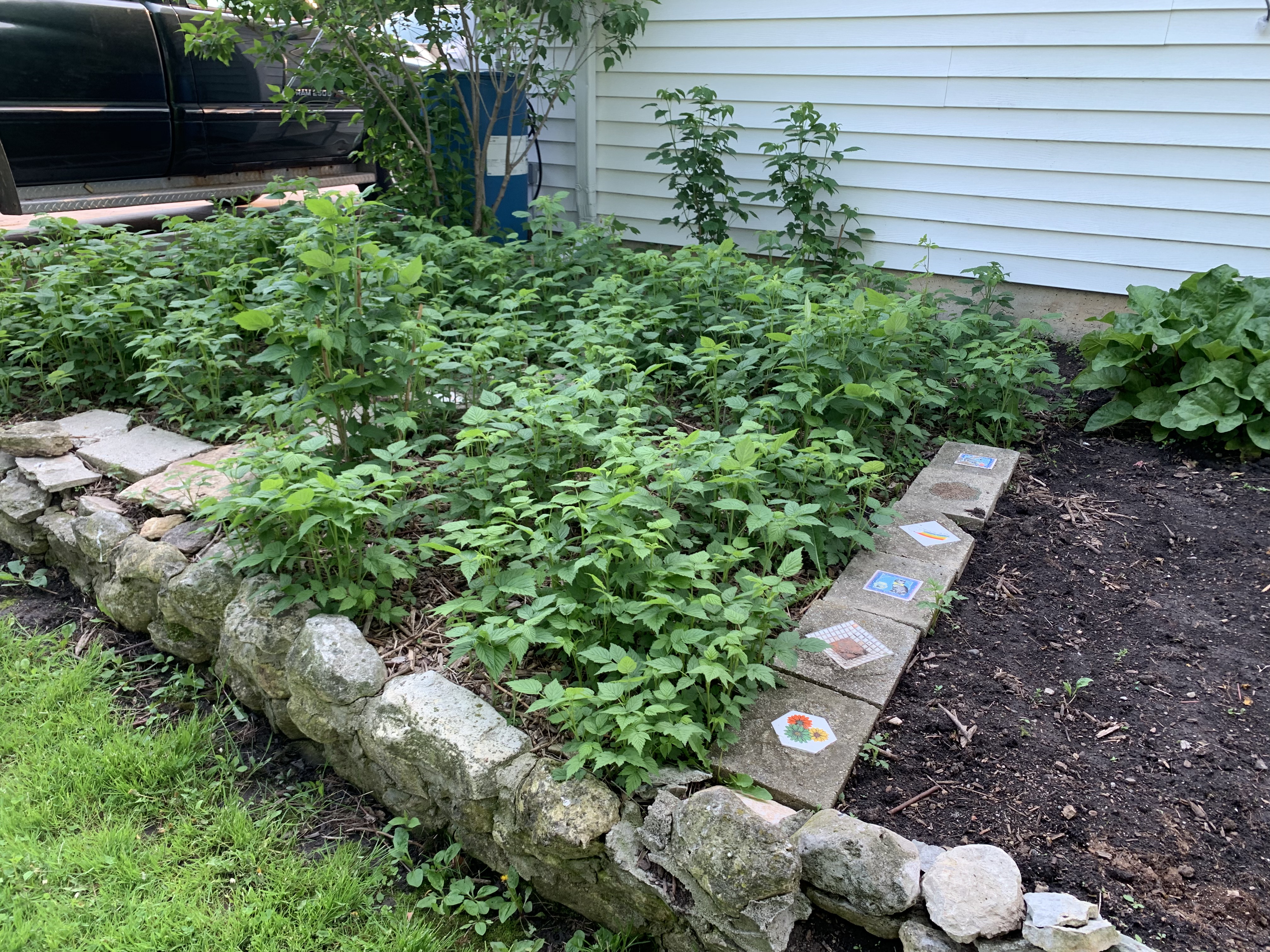
The old stone wall containing the garden at the back of the garage isn’t in good shape either any more. You can see what’s left of it here at the back of the garage. It’s just barely hanging on and needs to be replaced. But we’re pretty sick of putting in retaining walls at the moment so we’ll let this go another year and worry about it next spring. Despite the cold, wet weather you can see the raspberries are doing pretty good back there.
The 55 gallon drum you see in the background behind the lilac at the corner of the garage is our rain recovery system. There’s a piping system attached to the rain gutters that diverts water into the barrel that we use for watering plants in the dry season. Works pretty well. That’s generally enough to handle all of potted plants around the house. Not enough to deal with the vegetable gardens as well, but it helps a lot in keeping the water bill down during the summer.
We’ve cut back on the vegetable plantings this year. We had ridiculous amounts of tomatoes last year so we cut way back on that. Lots of pepper plants, though. We seem to go through a lot of those. But tomatoes? We still have quarts and quarts of canned tomatoes on the shelves from last year, although we did run out of soup and spaghetti sauce.
That opened up space in the raised beds so we put in a variety of onions this year to see how that works. I love being able to just go out in the backyard and dig up fresh onions when I need them during the summer. But the area where we were planting onions until now didn’t work very well because it was getting shaded out by the trees. The onions would start out well but would never grow very big because of the lack of light.
But then I have this going on right now —
She’s been sitting there staring at me for the last half hour waiting for her breakfast so I suppose I better feed the little goof.