Frosted Roses and GF Gets Excited

I generally get up a little before dawn and just for the heck of it I went outside not long after sunrise and found our roses covered in frost and got these photos before it melted. Just cell phone images because by the time I’d have got in the house, got out the good camera and got back out the frost would have melted. These aren’t as good as they could have been I suppose, but I like them. You should be able to click or double click on the images to see a better resolution version.

Oh, the excited part? Once you scroll down past the photos I’ll tell you about that.

There’s a lesson to be learned here for amateur photographers. You don’t need to go traveling to exotic places to get really interesting photos. Just look around in your backyard.

Now, the fun part. One thing I’ve done for years now is fiddle around with 3D printing. I’ve had a Flashforge Creator Pro 3D printer for years now, although my son has had it for some time using it to print parts for a laser engraver/cutter and other stuff.

I’m getting a new printer, the brand new Flashforge Adventurer 4 that just hit the market this fall. Flashforge came out with the Adventurer 3 shortly before this one came out and this is basically the same thing only with about twice the build capacity as the 3 version. I’m really looking forward to getting my hands on this one.

This is supposed to be a more or less ‘turnkey’ printer, just unpack it, put in the filament and start printing right out of the box. The extruder can also operate at a wider range of temperatures meaning it can use just about any type of filament on the market. I liked my old Flashforge a lot but it is definitely showing its age and its inability to work at the higher temperatures that some types of filaments require limited it to using only ABS and PLA. The print quality of this thing is supposed to be outstanding from the preliminary information I’ve dug up.

Supposedly there are some issues with things like WiFi connectivity and cloud access. Neither of which I care about in the slightest. I don’t want a printer connected to the “cloud” in the first place and my preferred method of getting files to the printer is via a flash drive, not over the network.

Anyway, this puppy is supposed to be here within the next seven to ten days so keep an eye out for that in the future.

Is This The Future?

Photo by Carbon Robotics

This is the Autonomous LaserWeeder from Carbon Robotics. And this could be a real game changer for agriculture. This is an AI operated, self driving weeding machine equipped with powerful computers, cameras and high power lasers. Using GPS and it’s own cameras and inertial guidance systems, this thing will travel the fields by itself at about 1 – 2 acres per hour, using its lasers to blast anything that isn’t the crop you’re trying to grow. It will run about 20 hours on a tank of fuel.

No labor costs, no chemicals, no weeds.

And this is not a prototype. This piece of equipment is in operation now, working in carrot and onion fields, and according to the company it saves farmers up to 80% or more of the costs normally associated with manual weeding, cultivating and herbicides. They are already testing it on other row crops and it works just as well on them as it does with carrots and onions.

Could we be looking at a future where we’d no longer be drenching crops with toxic chemicals? Maybe.

There are some problems. Aren’t there always?

First is cost. I wasn’t able to actually pin down a price on these things even though they claim they are in actual use right now. I scrounged around for a considerable amount of time and couldn’t come up with a definite purchase price for one of these things. But I imagine they are most definitely not cheap. (Well nothing is cheap when it comes to ag equipment. You can easily drop a half million bucks on a decent sized tractor these days.) Farmers of all types operate on razor thin profit margins. Just a few cents per pound increase in costs can be enough to put a farm out of business. But considering that right now human labor of any type is damned near impossible to find and the costs of herbicides are skyrocketing, if you can find them at all (we’re having a glyphosate shortage right now) even an expensive machine like this could be economically viable, especially if you can get a premium price for your produce by marketing it as herbicide free.

Second problem is size. These things are the size of an SUV, but even so they are tiny by modern agricultural equipment standards. And they are slow. They only cover about an acre or a little more every hour. A single large corn or soybean grower plants thousands of acres every year. Collectively we grow tens of millions of acres of corn, soybeans and other crops. These things, in their current form at least, could never deal with that much acreage. A typical soybean or corn grower would have to have dozens of these things running 24/7. Could the technology be scaled up to work with large ‘industrial’ growers? Maybe? We don’t know yet. I’m sure they’re going to try.

But that being said, this could be a real game changer for vegetable growers. I really hope this turns out to be a viable method for dealing with weeds.

The Why the Heck did I Take that Picture Department

Ever go through your old photos and sit and stare at one and ask yourself “Why the heck did I take that photo?” I was going through some old files and came across these… Well, I was going to start deleting them but then I remembered that even though the photos are ridiculous there are stories attached to some of them.

I know where and when this one was taken, Jamestown, NY. But why?? Why did I want a photo of the ice arena? Don’t get me wrong. I love Jamestown. It’s a really nice city located in a beautiful part of New York, the people were amazing, friendly and helpful, and it has some great restaurants. MrsGF, our oldest son and I spent an incredibly fun evening in an Italian restaurant late one evening a block or so from our hotel. We were the last ones there and when the owner found out we’d come there all the way from Wisconsin he came out with a couple of bottles of wine and we sat talking and drinking and telling stories until way too late.

But why the heck did I take this picture? No idea. But because it reminds me of that crazy night at that little Italian restaurant it’s a keeper.

You probably don’t know anything at all about the Hotel Marsh. I certainly don’t, except that it’s in Van Wert, Ohio. But apparently a couple of days before I was in Jamestown I was in Van Wert, Ohio, and I took a photo of a hotel. Why? I have no idea. But I do remember a bit about Van Wert and about a rather curious restaurant called Baily Eats (I think that’s how it’s spelled). It was a very curious, very old fashioned place, right across the street from the city offices where I had some of the best pork, dumplings and sauerkraut I’ve ever had.

This is a junkyard just outside of Owatonna, Minnesota. Owatonna, if I remember right. And, well, why in the world did I take this photo? I have no particular fondness for junk yards. And as junkyards go this one isn’t very interesting. This was the very first trip I took on the BMW when I’d first bought it. I ended up going through Minnesota, through South Dakota and into Wyoming and Montana on a two week trip by myself.

The backs of people’s heads? I remember being on that boat. It was an island tour of some sort someone talked me into going on and I vaguely remember being bored for the the entire three hours the tour took. Bored enough that I apparently resorted to taking photos of the backs of people’s heads? I actually have several like this. But it’s from a trip I took with one of the boys up to the Apostle Islands so I’ll probably keep it.

A tree. Ooo, how exciting. Not just a tree, but two trees. One big, one small. And a bush off there to the left! Where the heck was this? Why did I take the photo? Why didn’t I delete it? I honestly have no idea where this is or why I took the photo.

I do remember this. This is a small town in Kentucky. It was a pleasant little place. We’d stopped at a cafe for breakfast on Saturday and sat there listening to a bunch of old guys at the table next to us talking about buying burial plots for their wives. Seriously. There were about 5 guys, all in their 70s or maybe even in their 80s, and the topic of conversation was where they were going to bury their wives when they died. MrsGF and I didn’t know if we should start laughing or run away as fast as we could. MrsGF came to the conclusion that they were “performance artists” or something like that, hired by the cafe to give the tourists something to talk about.

But of all the stuff I could have photographed in that town, why did I take this picture? There isn’t even anything that identifies the town. It could be any of a thousand different small towns I’ve been through.

Okay, I’m bored now, although not as bored as you are. Time for me to go do something useful. Like maybe pet the cat

Using Free Wood, and What’s Coming Up. And Happy Cat Video?

Slab wood cut from a walnut log during the process of milling it into boards.

Once you start woodturning you rather quickly find out that if you buy wood from commercial sources to feed your woodturning addiction that the cost for wood from those sources is really expensive. A standardized woodturning blank from commercial sources generally is about 6″ to 8″ square, and about 2″ to 3″ thick. Cost of a typical blank can run from $10 or so at the low end up to $75 or even more depending on the species of wood. And as the size gets larger, the price goes up dramatically.

But there is a lot of free wood out there if you can be bothered to go look for it. Like that piece in the photo up there.

Now I have to admit that I completely forgot had this stuff laying around until MrsGF and I found these slabs laying around in the garage when we were cleaning it out this fall. A friend of a friend had cut down some black walnut trees on his property years ago and had them milled into lumber by a portable sawmill. When cutting logs into lumber you end up with these slabs where the bark was sliced off and generally there isn’t much you can do with them except turn them into mulch or firewood. But this was black walnut, which is ridiculously expensive, really nice, and some of the slabs were thick enough in places that I thought I could use them for something so I snagged some of them and stuck them in the garage and immediately forgot about them for something like six years until we stumbled across them a month or so ago.

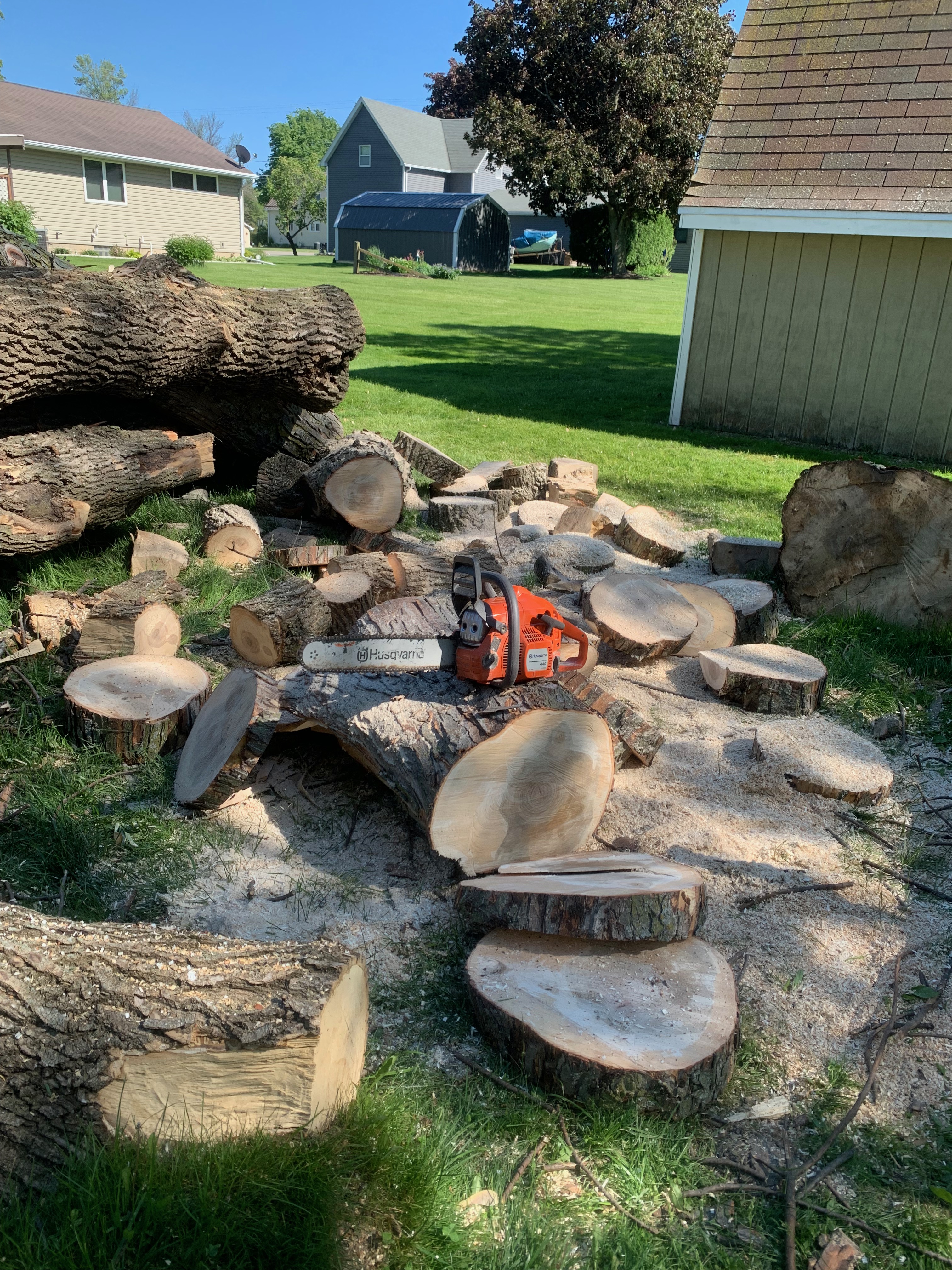
We now have the time and ambition to finally get around to doing something with this stuff. At least one of the slabs is thick enough, wide enough and long enough to perhaps turn into a garden bench. But a lot of it didn’t look too promising until I thought hey, can I make bowls out of some of this stuff. So I cut it up into manageable sizes with the chainsaw, carried some of it down into the shop and started to experiment with the stuff and the first experiment turned out looking like this.

That, by the way, is a Sjobergs workbench. I definitely do not recommend them. But I bought into the hype and despite the insane cost bought one of the things and almost immediately started regretting it. It isn’t that well made, is ridiculously light weight, the materials aren’t that good, there is pretty much nothing about that bench that justifies the price.

Not bad for a piece of free wood, I thought.

If you look around you can find free wood just about everywhere. On any given day I can drive around the towns around here and find people trimming or cutting down trees, and most of that wood is going to end up either being chipped for mulch or composted. Most people won’t mind at all if you ask nicely to take a few bits of it.

Wood shows up all the time at my town’s compost site from people who’ve cut down or trimmed trees. They are only supposed to be dropping off easily chipped brush down there, but a lot of people can’t seem to be able to read the signs and we regularly end up with large branches and even tree trunks being dumped down there. You might have seen me down there with my little battery chain saw whacking off bits and pieces that might be useful, along with the locals who burn wood for heat.

And don’t forget Craig’s List! Start scrolling through the “Free” section of the listings and you’ll find dozens of people just begging someone, anyone, to come get the remains of trees they had to cut down.

If you do get your hands on some of this free wood, some caution is called for, however. There can be some issues with this stuff you need to be aware of.

The first is infestations of bugs. You never know what might be living in that wood. I would never store free wood inside the house or even in the garage unless I was sure it was free from things like carpenter ants, beetles, etc. Anything questionable ends up being burned in the fireplace out in the backyard while MrsGF and I sit around it with a beverage or two.

Rot is something you’ll have to deal with too. Now there are ways you can deal with rotted wood so you can still get something useful out of it by soaking it in types of epoxy resin and preservatives and all that. Frankly, don’t bother. Yes, you can do it but it isn’t worth the effort in my opinion. You need things like a vacuum tank, special wood preservatives and other equipment… Ain’t worth it. Chuck it into the firepit and move on to a solid piece of wood.

Nails, screws, wire and other nasties buried in the wood is also something you need to watch out for. People have this nasty habit of attaching things to living trees. They nail ornaments to them, screw signs to them, hang birdhouses to them, etc. and leave the hardware in the wood. Hitting a nail, screw or other bit of metal embedded in a piece of wood with a saw or gouge is not fun. It isn’t easy to find the stuff either because the tree can grow around the object and completely enclose it. Always inspect any piece of wood carefully before you start sawing it up or putting it on the lathe. Metal detectors specifically designed to find nails and the like in wood have come down in price quite dramatically in the last couple of decades. It might not be a bad idea to pick one up.

If you don’t mind glueing up your own blanks from bits and pieces of boards (You can get some really nice looking turning blanks from odds and ends glued together.) there is a lot of free stuff like that out there. Again, check Craig’s List free section and other sources like that. You’ll find odds and ends of lumber people had left over from remodeling and construction projects and things like that. Even some old furniture made from solid wood will end up sitting out on the curb that can be disassembled and used to glue up something useful.

Pallets – the damned things are everywhere, and nobody seems to want them. Should you consider old pallets as a source for turning wood? Personally I wouldn’t use them for a variety of reasons. The wood is generally very thin, rough cut so it would have to be planed before it could be glued up into a blank. They’re a pain in the ass to take apart and get all the nails and staples out of. Tearing apart a pallet to try to get wood to glue up into a turning blank seems like an awful lot of work for very little reward. And, frankly, you don’t know where the hell that thing has been and what it has been exposed to. For all you know that pallet had some toxic chemicals spilled all over it before it ended up in the “free wood” bin or out on the curb where you found it.

The last issue you need to deal with is the fact that a lot of this stuff is cut directly from living trees that were just cut down, so it is very, very wet and you need to be able to deal with that. Now I know a lot of turners who like working with wet wood and have developed ways of dealing with it, and if you’re one of those, that’s fantastic. But if you’re like me and you prefer to work with wood that is already dried, you need to be prepared to store this stuff for a long, long time before it’s going to be dried down to a usable moisture level, or you need to be able to dry it yourself. The walnut slabs I’m working with right now sat in a dry environment (my garage) for about 5 or 6 years so they’re down to about 10% – 15% moisture which I consider to be reasonably low enough for me to work with them without a lot of issues. But a lot of this stuff is going to be dripping wet when you get it. So you’re going to need to either store it in a protected area for a considerable amount of time for it to dry naturally, or you’re going to have to dry it yourself. There are plans out there on the internet for making your own drying boxes to accelerate the process and some of them even work reasonably well.

What’s Coming Up

Oh, oh… He’s got something cooking in the pot. Now we’re in trouble.

I’m working on the 2nd part of the intro to resin thing I’ve been doing. Yes, really I am. I haven’t forgotten about it. The project that I’ve been cooking up to accompany the 2nd part is curing in the pressure pot even as I write this and should be coming out tomorrow. I’ve got videos and everything for this one.

Well, I hope I’ll have videos. I’m still not sure if I’m using that dopey camera right. Anyway that will be coming up sometime in the next couple of weeks if all goes well.

I got in a new parting tool from a company called Woodpeckers that I’m waiting to try out. I’ve tried a variety of different parting tools since I got into this and I haven’t really liked any of them very much. The cheap carbide ones that seem to be made by the millions by some outfit in China and sold under a variety of different brand names not only don’t work very well and wear out quickly, they are just -just nasty all the way around. The one I use most often is an old fashioned steel one from Sorby which works but needs to be sharpened a lot.

Oh, and Happy Cat! I almost forgot about her… Let’s see I got that video somewhere…

Short Stuff

Stuff too short for an entire article all shoveled into one post. I also complain about stuff. Well, okay, so I complain about stuff a lot but it’s worse than usual because I’ve been up since about 4 AM because I’m trying to get off the allergy medication and it isn’t going well so I’m even more grouchy than usual And because I’m tired and grouchy there are probably a lot of typos and other problems with this but the heck with it, I’m going to hit the “publish” button and be done with it.

We got frost at last the other day. According to the electronic temperature recording thingie hanging on the wall it got down to 27F and most of the lawns around here were covered in white when I got up the other morning. Then a few days later it got even colder and even the cars were covered with frost.


What’s in a name? There are rumors Facebook may be changing its name in the future. But if you have a huge, stinking pile of s**t laying around in your backyard, calling it a “rose” doesn’t change the fact that it is still a huge, stinking pile of s**t.


Can you say “reducetarianism” boys and girls? This is a term I’ve seen being tossed around in the food industry media recently and apparently this is a real thing. These are people who kinda, sorta feel bad about eating animals, but not bad enough to actually stop eating them. Maybe? But enough to at least cut back a little? Maybe?

Look, if you have moral objections to eating animals, good for you. I think you have a valid point. If you believe eating meat and animal products is bad for your health, also good for you because there is a lot of research out there that says you’re probably right. But if you have legitimate health concerns or moral objections and all you do is just cut back a little? Seriously? No. Sorry. That’s like one of those celebrities who lives in a 10 bedroom mansion with a swimming pool and private helicopter who buys a Prius and then claims they’re saving the environment.


National “Whatever” Day… While I’m on the subject of people just making sh*t up can we just stop already with this “It’s National (insert word of your choice here) Day” nonsense? Marketers took over this whole “National Whatever Day” nonsense long ago and have made it not only utterly irrelevant but more than a wee bit stupid. Everything has a “National XXX Day” now. There’s probably a “National Slather Yourself With Cheese And Call Yourself A Sandwich” day for all I know. Just stop it. It isn’t silly and fun any more, it’s annoying.

By the way, I am not against silliness. I strongly approve of silliness and do my part to add a bit of silliness to people’s day. Like riding around town on a bicycle with a squeaky duck wearing a propeller hat glued to my handlebars.


About that bowl… Somebody asked me what ever happened to that bowl I was working on in that test video I made the other day. It was a really beautiful piece of wood and I had high hopes for it but, well, sometimes things go wrong. Like this.

Holy cow, WTF happened?

After I did that video I got caught up in a few other things that absolutely had to get done so it sat on the lathe for a couple of days and when I came back that’s what it looked like. Lots and lots of nasty cracks. Not just surface cracks, either. They run almost all the way through the piece of wood. I’m a bit upset about that. That was a beautiful piece of wood and I paid more than $40 for that block. Why did it crack? I have no idea. It shouldn’t have. Usually you get cracks like this when a piece of wet wood dries down to fast. But my moisture meter said it was down to about 10% so that shouldn’t have been the problem.

Anyway, here I am with a badly cracked $40 piece of wood… MrsGF and I stood there and looked at it for a while trying to figure out what to do with it. If it was just one or two cracks I’d just stabilize them with CA glue and keep working. But it isn’t. It’s cracked like that all the way around and the cracks run almost all the way through the piece. MrsGF finally suggested I just let it sit for a while until it stabilizes and then see if I can salvage anything from it. Sigh…


Amateur Radio Stuff… Pretty much nothing has been going on there for a variety of reasons. A while back my primary computer got taken out by lightning, which was the one I used for logging, controlling the radios, doing digital communications, etc. So I also lost all of the software, my contact logs, all of that stuff.

My computer/electronics/ham radio room down in the basement was an absolute mess so I decided to take the opportunity to reorganize everything and deal with the rat’s nest of wiring that had accumulated behind the equipment. And then I got involved in more important things like cleaning up the gardens, dealing with a leaking water heater… Well, you get the idea. Anyway, I’ve only just gotten started on trying to get all of that put back together. And now I’m trying to remember how everything was connected because, of course, I didn’t keep notes on anything. Sigh

My much repaired OCFD antenna broke again a few months ago and I left it down because we were going to have the tree in the backyard taken down. But that didn’t happen, so I need to get the replacement for that strung up before the snow flies


Amaryllis … We had this dopey amaryllis laying around for something like 5 years now. After it bloomed the first year MrsGF kept the thing because she’d heard you can get them to blossom again. BTo be honest I thought the thing was dead or dying because it would make a half hearted attempt to send up a green shoot, then die back. But for whatever reason this year we got this…

I don’t know how she does it, MrsGF. The woman can take a shriveled up old piece of root, throw it near some dried out patch of worthless dirt, and a few weeks later end up with thriving plants.


The Joy of Allergies… Well, here I am, it’s 4:30 AM and I’ve been up for half an hour thanks to my allergies. Sigh… I am trying to wean myself off antihistamines. I’ve never bothered to get myself tested to see what I am actually allergic to, but I know tree pollen is in the mix, along with cats, grass pollen, and a rather lengthy list of other airborne irritants. It isn’t bad enough that I’m rendered nonfunctional or anything like that, but it is uncomfortable and annoying and I feel like I have a cold pretty much all the time. The end result is the same no matter what it is I’m allergic to – my eyes feel like they’re full of gravel, my sinuses are stuffed up and produce copious amounts of gunk that gets into my throat, especially when I lay down, so that makes me cough, especially when I try to sleep. Over the counter medications don’t do much or have nasty side effects for me. I have found one that works relatively well, and it has the added benefit of being very, very cheap. I take one in the evening before I go to bed and that helps a lot. But…

This is about the time of the year when my allergy issues tend to get better and I shouldn’t need to keep taking this stuff. But as is often the case there is something called a rebound effect. When I stop taking it, the symptoms come back worse than they were before I started taking the stuff in the first place. My sinuses start producing even more gunk which gets back into my throat making me cough, which gets even worse when I lay down so it makes it hard to sleep. Grrr.

Interestingly, when I’m traveling and get west of the Mississippi, usually about halfway through South Dakota, about, oh, Murdo or Wall, my symptoms start to go away. The first time I noticed I was in Wall, SD. I’d stayed at a motel there and woke up and felt, well, good. I mean really good. I could breathe through my nose without effort, my eyes didn’t feel like they were full of sand and I actually thought something was wrong with me for a while until I realized what was going on. On the way back by the time I got into western Minnesota all of the symptoms were starting to come back. Which is why I’ve spent so much time in SD, Wyoming and Montana. So the stuff I’m allergic to apparently doesn’t grow out there.

Anyway, if I don’t give into the temptation to go back on the stuff so I can get a good night’s sleep, it will take me three or four days before things start to improve so I’m going to be even more of a grouch than usual. So if I seem to be even more irritating than usual, that’s why. (sniff sniff cough cough)


That’s enough of this for right now. I have a lot of stuff coming up. I need to get started on Part II of the resin guide/tutorial thingie, I need to try to get my ham radio stuff put back together, software installed, etc. I found some slabs of black walnut from some trees a friend cut down years ago out in the garage that I want to do something with. I got that brand new Nikon camera and haven’t been doing much with that. I got the GoPro video camera and I haven’t done much with that, either. But the resin project will give me a chance to give that some exercise. Sometime in the future I want to talk about Chinese and Korean romantic comedies and dramas, which has become something of a fad in the US. I’d like to talk about advertising, especially advertising back in the early days of the 20th century…

Will I ever get around to doing any of that stuff? Maybe…

Last Harvest of the Season, House Moving Chaos

Autumn is one of my favorite seasons, but it is still a bit sad because it means the growing season is coming to an end. We haven’t had frost yet, but that will be coming very soon, so it was time to get one last picking from the peppers. I always thought pepper plants liked hot weather and long days, but that doesn’t seem to be the case with these. They’ve been thriving in the cooler weather and shorter days. The dopey things have been producing more now than they were during the height of the growing season.

These all ended up being diced up and frozen. I ended up with about 6 1 quart bags of diced peppers from this last batch. The plants themselves are still flowering but we’ll get freezing temperatures long before we’ll get any fruit, so I’ll be cleaning out this bed in the near future and prep it for next season so MrsGF and I will have less to do when the spring rush hits us.

Eldest Son (ES for short) and his fiance took the plunge and bought a house. They finally signed all the paperwork yesterday morning and as soon as that was done the moving chaos began. The two of them have been anxious, to put it mildly, ever since the whole process began. And now the chaos of moving began yesterday. MrsGF and I were up there, along with along with some of ESF’s (eldest son’s fiance) relatives helping to move the essentials like kitchen, bathroom and bedroom stuff so they could sleep there last night. While some of the moving was going on I was busy replacing door locks. Hopefully they didn’t lock the new keys in the house. Although it would be mildly entertaining if they did. Well, I’d think it was entertaining but I have a warped and twisted sense of humor. I imagine it would irritate them enormously.

Moving is always stressful. MrsGF and I have done more than our share of it over the years. It is never fun.

They’re both adults rapidly pushing middle age so the two of them have accumulated a lot of stuff. They’ve been packing for weeks already. But now it all has to be shoveled into numerous vehicles, shuttled over to the new place, unloaded and shoved into the new place. Plus they also have three cats, so that ought to be interesting.

Enough. It’s way past the time I’m supposed to leave to scurry up to Green Bay to help with the move. MrsGF left half an hour ago and I was supposed to be right behind her.

A New Woodturner’s Guide To Resin Part I

I’ve been doing this lathe thing for a while now and I get occasional questions about wood turning and especially about working with resin. So I thought some people might find it useful if I put together some of the things I’ve learned over the last couple of years.

I am not an expert on this stuff, but I’ve learned a lot about working with resin since I started this, especially about why things go wrong. I wish I’d run into an article like this when I first started out. It would have prevented a lot of problems, saved me a lot of money and kept me from wasting a lot of time.

This first part is going to be mostly stuff about chemistry, curing, bubbles, mixing and stuff that a lot of you probably know already and is going to be as boring as watching paint dry, but be patient because I’m aiming this at newcomers who may not know any of this stuff. Things will get more interesting in the second part when I actually make something, and I’ll cover that step by step from the initial design process to the finished product. I’m going to make it in “real time”, so to speak, writing up every step, along with photos and, hopefully, videos, as I actually do the work.

If you have any questions please feel free to ask in the comment section or at old.grouchyfarmer@gmail.com

What The Heck Is This Stuff Anyway?

The resin I’m talking about is a liquid plastic that comes in two parts, the resin itself and a hardener or catalyst which is mixed with it. After they are mixed together it is poured into a mold of some type and over a period of time a chemical reaction takes place which causes the liquid to turn into a solid material.

There is a huge variety of various powders, liquid dyes and other coloring material made specifically for use with resin so you can get just about any kind of look you need.

Once cured it is generally crystal clear, but you can add dyes, coloring agents, glitter, iridescent powders and other things to enhance its appearance. That tea light in the lead photo has emerald and gold iridescent powders mixed into it.

One of the neat things about this stuff is that with these resins you can cut and shape it with standard woodworking tools once it is cured. You can use your steel or carbide gouges, skews and other turning tools, as well as normal sandpaper. Although if you want a really high polish and high gloss finish you’re going to need use much finer sandpapers and polishing agents in the final finishing than you would with wood. But I’ll come to that later.

Time To Get Out Your Wallet

Let’s get this out of the way right off the bat. This stuff ain’t cheap. Which is why I don’t do resin projects as often as I’d like to. The material I use most often, Naked Fusion Deep Pour, is currently selling for about $160 for a one and a half gallon kit (1 gal resin, 1/2 gal hardener). That works out to about $0.83 per ounce. Other brands and types get even more expensive and can cost you as much as $1.50 per ounce.

Eighty three cents per ounce doesn’t sound like much, but projects can use up a lot of material. That little tea light in the lead photo at the top of the page isn’t very big, but there is probably about $20 worth of resin in it. I’ve done a lot of projects that used 40 – 60 ounces so I can have a lot of money sunk into a project in just resin before I even get it on the lathe. For me this is a hobby and I can afford to splurge once in a while. But if you’re planning on selling your projects or you’re on a tight budget you really need to keep costs under control. So remember quality resin is a bit expensive and a single project can use a lot of the stuff.

What to Buy? It’s All In The Chemistry

There is a bewildering variety of different resins out there from a large number of different companies and they all have different uses and different characteristics. If you buy the wrong one for your application you’re going to have a real mess on your hands. First you need to consider:

Depth of Pour

Depth of pour is one of the most important characteristics of the resin you buy. We’re concerned with the volume and overall thickness of the object being made. Resins are generally classified as thin pour and deep pour varieties. To make things more interesting the definition of what those two terms means seems to vary wildly. Always read the instructions carefully before you buy a product because what the manufacturer means by the terms “thin” and “deep” may not be what you think they mean.

Thin pour resins are designed for very thin applications, generally under an inch thick, sometimes even less. A lot of these are intended for use only as coatings on table or bar tops, or for trinkets like key fobs and small ornaments.

Deep pour resins are intended for larger objects. Almost all of the projects I do have a resin volume that is greater than 2 inches deep and wide, and a lot of them are much larger than that, so that’s what I use and probably what you’ll want as well unless you want to make small ornaments or pens.

What happens if you use the wrong type of resin? You can have a real mess on your hands. You can end up with resin that won’t cure properly, will only partly cure, be too brittle to work with, or even end up with a runaway exothermic reaction that will generate so much heat that it’ll melt your mold. So always make sure the resin you’re using is suitable for your application. Always read the instructions carefully before you buy a product.

Viscosity

Another thing you may want to consider is the resin’s viscosity, or how thick it is when it is poured. Viscosity also varies widely, ranging from rather thin, like warm table syrup, to very thick and more like the consistency of cold molasses.

There are two reasons why viscosity is important here. The first is when it comes to releasing bubbles. Generally the thinner the resin, the more easily bubbles can float to the surface. (I’ll talk about bubbles specifically a bit later.)

Holy cow that’s ugly.

The second reason is that I embed pieces of wood in the resin when I pour it, and sometimes those have complex shapes. A thinner resin is going to flow into all of the little nooks and crannies more easily preventing voids that can cause problems later. That ugly little object over there on the right was one of the first experiments I did with resin. I basically just chucked a bunch of wood scraps into a mold and filled it with resin. This one didn’t turn out too bad because I used a rather thin resin here. I did one (since consigned to the fireplace in the backyard) where I used a very thick resin and I ended up with a lot of voids because it couldn’t flow into all of the small spaces and because I didn’t provide a way for air to escape from those voids.

Cure Time

This is the amount of time it takes for the resin to turn into a solid after it is mixed with the catalyst. This can vary wildly depending on the chemistry the manufacturer uses. (Other things like ambient temperature and the volume of resin used can have an effect on the cure time as well but the most important is the chemistry of the product.)

Some products cure so quickly that the moment you get it mixed up you have to rush to get it poured into your mold and into your pressure tank (if you use one) before it begins to harden. Others can take literally days to fully cure. Which one you use is entirely up to you. Some people are impatient and want results right now. They’re going to prefer the fast curing types.

Personally I prefer the slower curing ones. The Naked Fusion resin I use can take 36 – 48 hours to fully cure. Why would I want to put up with that? First of all I’m in no hurry. I generally have a lot of other stuff going on so I’m not exactly sitting around watching the clock. The second reason I like the longer curing variety is that I believe the longer the material remains liquid the better the chance any bubbles in it will be released. Thirdly I don’t have to rush to get it mixed up, add colorings, and get it into the mold and then into the pressure tank.

Temperatures

All resins have recommended temperature ranges for storage and curing included with the instructions. Please pay attention to those because they are important. Most resins are pretty liberal when it comes to storage temperatures. As long as you store the unmixed resin in an environment that you are comfortable in, it’s probably going to be just fine. But I do have a specialty product that has to be stored above 55 F. If it gets colder than that it can start to crystalize.

Ambient temperature during the curing process is important as well. The temperature can affect how quickly or slowly the resin cures after it is mixed. Once again generally if you are in an environment where you are physically comfortable, it isn’t going to be much of an issue, but pay attention to the manufacturer’s instructions and try to adhere to the recommended temperature ranges.

Safety

Always, always read the instructions and safety warnings carefully when you work with resins. Some of these products are seriously nasty. Follow the manufacturer’s safety instructions to the letter. Some give off toxic fumes, especially during the mixing and curing process. Some can potentially generate a lot of heat during the curing process. The thing I am always concerned with when working with any kind of chemicals is the production of potentially dangerous gasses that can cause neurological damage, lung damage, etc. Some of these products may require the use of special respirators and venting and should never, ever be used inside of a home. Some are relatively benign. Before you buy any resin read the safety data carefully and make sure you understand the potential dangers and that you can deal with those dangers before you buy the product.

The stuff I work with, Naked Fusion, is one of the more benign ones. It gives off no VOCs and emits virtually no fumes. But even so I still take precautions. I always wear nitrile gloves and always wear a full face shield to protect against splashes when I’m mixing and pouring the stuff.

Dealing With Bubbles

There are times you want bubbles, like in a nice glass of beer. But you do not want bubbles in your finished resin project, especially in a project like a tealight or lamp where light shining through the resin is going to make defects glaringly obvious. I’m not concerned about bubbles on the surface the way someone making a river table would be. For most of us bubbles on the surface aren’t going to be a problem because the surface layer is going to be cut or sanded off anyway when the object is shaped on the lathe. The problem we have is bubbles embedded in the body of the resin project itself.

Liquids like water release bubbles very easily and quickly. Resin, however, is much thicker, and its specific gravity may be such that bubbles are not buoyant enough to float to the surface.

The most commonly used method to eliminate or at least dramatically reduce the amount of visible bubbles in a resin project is to put it in a pressure tank and put it under pressure and leave it there until the resin is cured.

Sidenote: Some people recommend using a vacuum tank. I do not. Putting it in a vacuum tank can cause foaming as air is drawn out of the wood that is embedded in the resin. In theory that foam comes to the top, but in actual practice it often doesn’t. So a vacuum tank can actually increase the amount of bubbles you get. Also when in a low pressure environment bubbles actually get bigger and more noticeable. Being in a vacuum tank doesn’t necessarily mean the bubbles will rise to the surface, either. That is going to depend more on the viscosity and specific gravity of the resin. From the research I’ve done putting your project in a vacuum tank can actually make bubble problems worse, not better.

So let’s talk about pressure tanks. We find pressure tanks useful because putting a resin casting under pressure while the resin is still liquid will cause the bubbles to shrink dramatically in size, and even seem to disappear entirely.
That’s my pressure tank up there. It’s from CA Technologies, is extremely well made and works quite well. But it ain’t cheap. That tank up there currently retails for about $500. There are cheaper models on the market but be cautious with the ultra cheap tanks. Some of them can be dangerous.
The usual procedure is that after you’ve poured the resin into the mold, you put the mold in your pressure tank and use an air compressor to pump it up to about 40 – 50 PSI, and then leave it under pressure until the resin has hardened.

Now you can buy pressure tanks that are designed specifically for this kind of thing, specially certified by safety organizations and all that stuff. But they are very expensive, often a lot more money than most of us would like to spend for something like this. So what most woodturners use aren’t actual pressure tanks but pressurized paint pots used for spray painting that were never intended to be used for this purpose. But they are very attractive because some of them are pretty cheap.

You can get one of these paint pots from everybody’s favorite purveyor of cheap knock off tools, Harbor Freight, as well as from some other vendors, for about $100. They won’t work as-is, they have to be modified. But the modifications aren’t difficult to do and the parts needed are easy to find and cheap. So a lot of people who work with resin use these cheap pots because the alternative is spending several hundred dollars on a piece of equipment they might only need only occasionally.

Now there are probably thousands of these cheap pots in use out there, and almost no one has issues with them. But (you knew there was a “but” coming, didn’t you?) I have seen enough reports of these cheap pots failing, sometimes catastrophically, that they scare the hell out of me. Just run some searches on Google about Harbor Freight paint pot failure and you’ll see what I mean So if you do use one of these cheap modified paint pots as a pressure tank, be very, very careful. Always keep the pressure well under the manufacturer’s maximum PSI rating. Always secure the lid properly, etc.

Enough of that, though. Let’s get on with this and move on to…

Molds

A mold is a simple thing, basically just a container to hold the liquid resin and whatever you might be embedding in it until it solidifies. I mostly use disposable plastic paint mixing containers like the one in the photo over there on the right that I buy in bulk. (Remember that tea light in the very first photo? That’s it before it was machined on the lathe.) They’re cheap, available in a wide variety of sizes, and are printed with a variety of different markings to make it easier to measure out resin quantities.

But people also use just about anything as a mold. Food containers like cottage cheese containers and similar items work well after they’ve been thoroughly cleaned. I’ve used “Cool Whip” frozen topping containers and things like that with good results. If you’re doing a large project those 5 quart plastic ice cream pails work well. There’s no need to use mold release or anything like that because if it doesn’t come out of the mold, well, the mold didn’t cost you anything in the first place so just cut it apart or even chuck the whole thing on the lathe and peel it off with a gouge.

You can make your own molds rather easily for special purposes using silicone caulk or hot glue, and sheets of plastic. Just about anything that will hold a liquid can be used as a mold. But always remember that you have to be able to get your project out of that mold, so avoid using things like glass and metal.

One word of advice: If you’re using a pressure tank, line it with a small sheet of plastic just in case your mold leaks or overflows. Trying to clean hardened resin out of one of those things is a pain in the neck. The better ones are lined with Teflon but even so it can still be hard to clean them out if there’s an accidental spill.

Mixing

Resin has to be mixed with a hardener or catalyst. You need to follow the manufacturer’s instructions exactly. If you get the proportions wrong, bad things will happen. So always read the instructions carefully and follow them exactly. A lot of resins are mixed by volume, like Naked Fusion, the stuff I use. I mix two parts resin with one part hardener. But the exact amounts may vary depending on the resin you’re using. I have one brand/type of resin that mixes at a 1:1 ratio. Supposedly some of the resins out there tell you to measure quantities by weight, not volume. That seems a bit odd to me, but whatever the manufacturer tells you to do, do it.

At some point you are probably going to want to mix some kind of coloring agent in with the resin. Again, follow the manufacturer’s instructions, if any. Sometimes the maker will not have specific instructions for mixing in coloring agents. What I do with Naked Fusion is mix the coloring, dye or whatever in with the resin, and then mix in the hardener. That’s worked quite well for me. But if your product has specific instructions, follow them.

The hardener needs to be thoroughly incorporated into the resin. If it isn’t you can get pockets of uncured resin in your project or other problems can crop up. Again, follow the manufacturer’s instructions for mixing the product. A lot of guys use those paint mixers that chuck into an electric drill. If you’re mixing up a large quantity those things can be useful. Especially if you’re working with a resin that cures rapidly. You want to mix it as fast as possible and get it into the mold before it starts to set up. But also be aware of the fact that using a power mixer like that can incorporate bubbles into the resin, which you do not want.

I use good old fashioned disposable paint stirring sticks. The resin I use cures slowly so I’m not in a rush. I’ve had good results this way. The sticks are cheap. I get ’em for about $20 for 200 of them off Amazon.

Sidenote: Those disposable paint mixing sticks also make great markers for gardening. They’re big enough that I can write on them with a Sharpie to label stuff out in the gardens.

Dyes and Coloring Materials

As I said before most resins are crystal clear when fully cured and you can turn out some really, really beautiful stuff using nothing but clear resin. This is especially true if you’re trying to emphasize the object you have embedded in the resin. But a lot of us are looking to make things that are colorful and eye catching so we resort to using various coloring agents and iridescent powders.
Personally I stick with additives that are specifically designed to be mixed into resin. There are a huge number of dyes, coloring powders, iridescent materials, glitter and I don’t know what all else made specifically for use in resin. Basically you can get just about any kind of look you want. Most of them aren’t super expensive, and you don’t need a lot of the stuff. Over there on the right is a remarkably bad photo of a decorative lamp I made. (It looked much, much better in real life. Seriously.) That resin had two different Pearl Ex powdered pigments in it, emerald green and gold. And despite how it looks in that picture it turned out quite nice.

I’ve seen people use all kinds of weird stuff to try to achieve various colors and special effects with resin. They’ve used things like various types of ground spices, inks, you name it. I saw one guy try ground up Cheetos. Seriously. Yeah, it didn’t work very good.

My advice is to stick with additives that are specifically designed to work with resin.

Working With The Stuff

Once you have your resin project cured, you can work with it as if it were a piece of wood. Sort of. Kinda. I’ll be going into that in more detail in the second part of this when I actually make a resin project and have you follow along.

First of all, safety.

Yes, here I go again with the safety warnings, but you only have one set of lungs, one face, one pair of eyes. Wearing respirators, face shields and other protective gear is inconvenient, yes, but it’s better than losing an eye, suffering from face lacerations, or ending up with lung disease. I put up a video of me working on the lathe recently and you can see dust and wood chips flying up and bouncing off my face shield. That face shield I’m wearing costs less than $30 and not only has it kept dust and chips out of my eyes, it’s kept me out of the ER a couple of times now when things have gone very, very wrong. The first thing I do when I even so much as walk into my shop is put on my respirator and that shield.

Attaching It To A Lathe

You can attach a resin object to a lathe just about any way you want, but one word of advice about the use of faceplates. You don’t want to run screws into just the resin itself. Resin doesn’t have the strength and resilience that wood has, and it can be brittle. If you attach the faceplate with the screws anchored only into the resin, the vibration of the lathe can cause the resin holding the screws in place to disintegrate. So avoid using screws driven into just resin. When I use a faceplate I either have wood embedded in the resin itself as part of the project that the screws can bite into, or a sacrificial wood disk embedded in the resin that I can later cut off during the machining process.

It is going to be a mess. A serious mess

Resin is plastic. It might be soft enough to cut with wood working tools, but that is where the similarities end. You aren’t going to end up with nice shavings. You are going to have long strings of half melted plastic coming off your tool that will stick to everything.

See what I mean? And that up there isn’t even all that bad. I took those photos when I’d just started rounding off a project. The really serious mess didn’t start until after I took those pictures.

The stuff will get everywhere, on your tools, on you, on your clothes, all over your shop, it will wind around your lathe…

Wear a hat. Seriously. Trying to get that stuff out of your hair is not fun. I also wear a high necked woodturner’s smock that fits tight around my neck to keep the stuff from going down inside of my clothes. You’re probably going to have to stop frequently to clean the stuff off of your face shield so you can see and off your lathe. The long strings will get twisted around your project so you’ll have to stop to clean that off.

Tools

You don’t need any special tools to work with resin. Just about all your normal woodturning tools, whether steel or carbide, will work with resin. Just be careful until you get used to the different ‘feel’ of working with the stuff. Your tools need to be sharp to avoid chipping.

Resin can also be brittle. Be cautious when you work with the stuff. Do not be overly aggressive. Make only light, shallow cuts at least until you get a feel for how the stuff behaves. Different resins have different machining characteristics. Some are more brittle and chip easily, others are more malleable.

Sanding

Sanding resin is a pain in the ass. Remember we’re working with plastic here, not wood. Plastic melts at relatively low temperatures and sanding causes a lot of friction which generates heat. If you try to sand resin as aggressively as you’d sand wood you’re going to end up with the plastic melting and clogging up your sandpaper. Keep the lathe speed down and don’t try to rush things.

And wear a N95 rated respirator and use some kind of dust collection and air filtration system. You do not want to inhale the dust from this stuff!

I’ve seen guys resort to wet sanding in order to avoid problems with the plastic clogging up their abrasives. That will work of course, but dear lord it’s a mess. I used to do auto body work a long, long time ago and I wet sanded a lot of cars and it is something I would rather avoid. If you use a light touch, relatively low lathe speed and are relatively cautious, you should be able to avoid having to resort to wet sanding. But if you need to get into the higher grits like up beyond 600 grit sandpaper, you might have to. If you do try wet sanding, get that cheap plastic sheeting painters use for drop clothes and cover everything within about 10 feet of your lathe, including your lathe itself. Wear a rain coat, face shield, etc. It gets seriously messy sometimes. You’ll be amazed at how far a spinning object can fling water droplets.

You might want to consider getting a tool like the one over there on the right. That’s a hand held bowl sander with a variety of different padded heads. 2 or 3 inch sanding discs attach by velcro to the head. The pad is attached to a free spinning bearing. I’ve got one of those and I’ve found it well worth the $50 it cost me. When held against an object spinning on the lathe, the head of the tool holding the sandpaper also spins around. You get an effect similar to a powered orbital sander which makes marks left by the sanding process less noticeable.

Sanding is a tedious process. The first step is to use a relatively coarse abrasive to remove any tool marks left from the initial shaping. After that first step, what you’re trying to remove aren’t took marks, but scratches left from the previous sanding. So if I sand with 80 grit first, sanding with 120 removes the marks left by the 80 grit. Then sanding with 220 removes the scratches left by the 120. Sanding with 400 removes the marks from the 220… You get the idea. Sanding is always going to leave scratches. Always. The idea is to end up using a grit that is so fine that the scratches are invisible to the human eye and to us it appears to be completely smooth.

Now with wood I almost never sand beyond 4o0 or 600 grit. With resin I generally take it to even higher grits. That’s when you might be tempted to try wet sanding because otherwise that fine sandpaper clogs up fast.

I’ve used this variety with good results on both wood and resin projects. But there are dozens on the market that work just as well.

If I want a really smooth, high gloss surface, the last thing I’ll do is use a sanding paste. This is a very, very fine abrasive suspended in a carrier of some sort similar to the texture of car polish. Well, basically that’s what it is. When I was doing autobody work the last step we did was use polishes that were actually extremely fine abrasives suspended in a paste like carrier, along with a random orbital buffer to apply it.

I do the same with lathe projects. I’ve been using Pita’s for a while now with good results but there are a lot of others that work just as well. I just rub it in with a bit of paper towel, and then buff it up with a clean, lint free rag.

Finishes

You’re going to want to put some kind of final finish on to bring the project up to a high gloss and to protect any exposed wood. I’ve used straight carnauba wax, but that gets a bit tricky for me at least. I have to be very, very careful or it gets kind of ‘streaky’ looking on resin. I’ve had good results with good old home made “OB shine juice” made with shellac, linseed oil and alcohol. Personally I’d avoid lacquer because lacquer thinner can react badly with some types of plastic.

Before you put on a final finish, though, you should apply some kind of sealer to any exposed wood. Unsealed wood can absorb whatever finish apply over time and cause splotching and dull spots.

Embedding Stuff in Resin

I stick bits of wood into resin to make stuff, and that’s probably what you want to do also or you wouldn’t be reading this. You can embed anything in resin, of course, but I’m going to stick with wood because wood and resin seem to get along with each other pretty well.

I haven’t had any problems with any of the various species of wood that I’ve embedded in resin. At least none that I’ve noticed. But all of the projects I’ve done so far have used wood that is already on the dry side, at 10% moisture or less according to my meter. I don’t know what would happen if you took a piece of wet wood straight off a tree and encased it in resin. If you want to try that you’re on your own.

(I get these weird ideas I’d like to experiment with. Like embedding a Big Mac in resin just to see what would happen to it over time.)

If you go scrounging around YouTube you’ll find people embedding all kinds of weird sh*t in resin and chucking it up on a lathe, including golf balls, roofing nails (seriously, roofing nails), various bits of food, and just about anything else they had laying around, with varying degrees of success and quite a few utterly spectacular failures and quite a few personal injuries. If you wish to continue this tradition of insanity feel free to do so, but you’re on your own there.

Dealing With Failure

Dear lord this one was ugly! The end result was so offensive that it sort of ‘accidentally’ got knocked into the “to burn” box in the shop

Stuff goes wrong. It just does. Things are going to go bad and you’re going to end up with a project that is an utter failure or, as occasionally happens to me, so ugly you sneak it out into the firepit in the backyard in the middle of the night before anyone else can see it. That’s what happened to the project over there on the left. Dear lord, the color that thing turned out to be… (Shudder) That was supposed to be a lamp but just about everything was just – just nasty when it was done.

Sometimes things just don’t work. You figure out what went wrong, correct the problems and move on. I’m a pretty good furniture maker and my house has tables, chairs, bookcases, etc. that I cranked out myself and turned out pretty darn nice. But what people don’t see is all of the mistakes, screwups, disasters and other things that happened while I was in the process of acquiring the knowledge and skills I needed. Same is true with woodturning. Things are going to go wrong.

Don’t be afraid to challenge yourself. If you don’t stretch yourself, if you don’t experiment, if you don’t try to acquire new skills, well life would be pretty darn dull, wouldn’t it? Don’t be afraid to screw up. We all do it. That’s how we learn and grow.

And if you do screw up spectacularly, well, bring the remains over to my place and we’ll consign it to the firepit in the backyard and have a coffee or a beer and I’ll tell you about all of the massive screwups I’ve had.

Let’s Wrap This Up

I’ve been babbling along here far too long already so let’s finish this part up. I hope this has been helpful. Feel free to ask questions and I’ll do my best to answer them.

They say that the best way to learn how to do something is to actually do it. So that’s what I’m going to do in the next part of this. I’m going to make a decorative lamp from resin and wood. I’ll cover the whole process from the initial design phase right through to the finished product.

I’m not sure exactly when I’ll get that posted here because I don’t even have a basic design in mind yet. Anyway, stay tuned…

GF Gets A Video Camera. Be afraid. Be very afraid…

I got a video camera, specifically a GoPro 9 that I picked up cheap. The plan is to use it to make videos for this blog. I also have video editing software. There are certain things I should not be allowed to play with and I suspect video is one of them, but we’ll see. And, drum roll please, here is the first experiment.

I uploaded it to YouTube rather than directly to the blog here for a very good reason. I only have a finite amount of storage space for this blog and videos take up a lot of bytes, so rather than suck up my limited storage space here I’ll probably dump the videos onto the Tube and just link to them if this works.

I got the camera specifically for a “Beginner’s Guide to Resin” thingie I’m working on. I also thought it might be fun to strap the thing onto the bike when I’m out riding around. If nothing else at least it would get the license plate number of the car that runs me over when I’m out biking so the wife knows who to sue. (That’s a joke, by the way. Not a very good one, I admit.)

So far I am not all that pleased with the GoPro 9. Battery life is absolutely abysmal. And the thing get hot. I mean seriously hot. That much heat being generated indicates that there are some serious issues with the basic engineering of the device. Excessive heat is a very serious problem for electronics of any type, and considering how hot this camera gets it makes me wonder how long it is going to hold up

On the good side the videos are pretty good and the video stabilization is excellent. Very little jitteriness as I move the camera around.

The editing software I’m using is Adobe Premier Rush which has some “issues”, as they say. It seems to get, oh, confused, I suppose you could call it. I had to shut it down and restart it a dozen or more times when I was editing that short video up there because it was having problems with the captions.

I Don’t Get Car Dealer Math

Really, I don’t understand car dealer math. Okay, here’s the situation:

The Vette on the day I bought it. I kind of miss it but it was time for it to go.

I wanted to talk about this before now but didn’t have a chance. Back in mid-summer my wife and I were kinda, sorta looking to replace the Corvette. Don’t get me wrong, I loved that car. But I’ve reached a point in my life where comfort, convenience and practicality is more important to me than a street legal race car with 500+ horsepower, a top speed pushing 200 mph, and an exhaust system that sets off car alarms when I drive through quiet neighborhoods. Oh, and I couldn’t drive it in the winter so it sat parked for at least 4 months of the year. So back in July we decided to finally stop putting it off and do it, trade the Vette off on something more comfortable and more useful, and that we could drive in the winter.

I wanted a Rav4. At first. My wife has a 2013 Rav and we like it a lot. It’s up to about 140,000 miles now and we’ve had absolutely zero problems with it. But… The Rav4 is no longer a nice vehicle. The ones I saw were far, far from nice. I hated the interior of the new Rav. Everything about the Rav felt, well, cheap and badly thought out, like they just glued a bunch of stuff together without any thought to ergonomics or driver convenience.

And, of course, there was the fact that we couldn’t actually drive one to see what it was like in actual use. The dealer only had one in stock, still not ready to drive, and if we even wanted to test drive it they demanded we put down a $500 deposit. Screw that nonsense.

To make a long story a bit less long, I ended up focusing on a Buick Envision Avenir at the local GM dealer in Chilton. It was really, really nice, Buick’s version of a luxury crossover vehicle. Emphasis on luxury. Fine leather everywhere, superb build quality, fit and finish was absolutely excellent. All the controls were in the right place. It had a five star safety rating. The ‘infotainment’ thingie was integrated into the dash, with a subtle curve to it to keep it aimed at the driver. It just – felt right, if you know what I mean.

So, the price they had on the Buick was pushing $50,000. According to Kelly Blue Book and other sources on the internet my Vette was worth $30,000 – $35,000 on a trade in. I figured it would be at the lower end of that because the Vette wasn’t exactly pristine. I’d walloped that car hard through the mountains in Wyoming and Montana on multiple trips, ran it over salt covered roads in the midwest, and used it to haul bags of mulch. And it showed.

So, here’s the bit I don’t get, the math. I told them to write up an offer on the Buick, trading the Vette on it. Now, real world math says that $50,000 – $35,000 = $15,000. So I was figuring I’d have to shell out about $15K on top of the Vette if I wanted the Buick. But…

Well, the salesman left me sitting in the office and went off somewhere to do something. Then he showed up again and went into the office of the owner of the dealership. I could see them in there through the office windows, looking at computers, scribbling stuff on notepads. Finally he came back and…

With taxes, fees, misc. charges, special weather proof coatings, a bumper to bumper warranty for 3 years that even covers the interior fabrics, I’d have to pay $6,000 on top of the Vette for the Buick. So apparently 50,000 – 35,000 = 6,000???

First they’d knocked about six grand off the price of the Buick for — reasons. They gave me way more for the Vette than all the sources on the internet said it was worth. There were other discounts and special deals and I don’t know what all else. They tried to explain it all to me but about five minutes into the explanation my eyes kind of glazed over and I just said never mind and wrote them a check and went home with the Buick.

Like I said, I don’t understand how car dealer math actually works. I suspect imaginary numbers are involved. And, perhaps, pixies or elves or something.

Fall Catch Up

Cleaning out the squash plants

Gads, I just realized how long it’s been since I posted anything and I am feeling a wee bit guilty. Where in the world did the time go? I was going to talk about gardening and working with resin and the new camera and a lot of other things but lots of other things always seemed more important… Anyway, let’s get on with this.

One of the things that’s been keeping us busy here is the usual autumn cleanup. The squash plants went absolutely bonkers this year. We’re enormously pleased with the production we got from the squash this year. MrsGF got some organic butternut squash seed in early spring. I think we had about 6 plants all together and conditions must have been perfect for them because we ended up with an entire wheelbarrow full of massive squash. I’ve only rarely ever seen butternuts this large before. And as for quantity, well you can see we for yourselves. I filled a wheelbarrow completely full with the things and there are about a half dozen more not in the photo up there. Quality is excellent too. They taste fantastic. MrsGF is saving the seeds from a couple of these guys for planting next spring so hopefully we’ll get the same results in the future.

We’ve scaled way back on the amount of vegetables we planted but we still had more than we could deal with. Nothing went to waste, though. Excess went to neighbors and family or we give it away at the local St. Vincent de Paul store.

I’ve been adding more compost to the raised beds to get them ready for next spring.

Cleaning up the gardens at the end of the season is a pain but it has to get done. We try to get that finished up as soon as we can because once September comes we never know what the weather is going to be like. We’re lucky enough to live just down the street from the town compost site. They do a great job of composting here and the end product is fantastic. And it’s free to town residents so you can be darn sure we take advantage of that.

Garlic planted about 2 weeks ago.

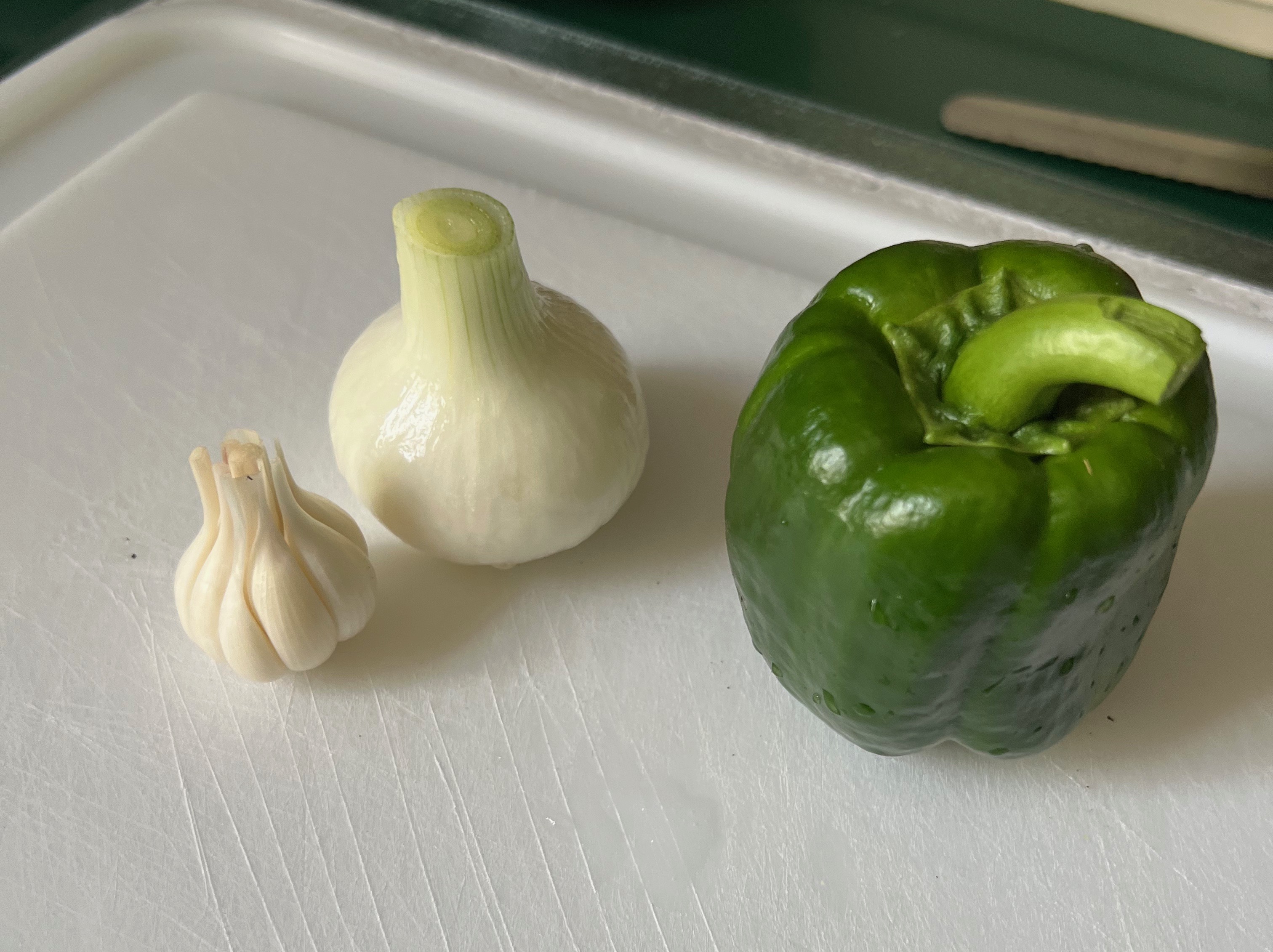
We’re experimenting with growing garlic. We use a lot of the stuff in cooking but the quality of garlic we get from the local stores isn’t very good. Usually the bulbs we find in the stores have obviously been in storage for a long, long time and has lost a lot of its flavor. We’ve tried growing garlic before and we weren’t very successful. One batch of ridiculously expensive organic garlic we planted didn’t even sprout. One batch we tried did grow, but the bulbs were disappointingly small. The stuff tasted so intense and so good though, and so much better than what we were buying that we still want to try growing our own. So half of one of the raised beds is now in garlic. Once cold weather hits the bed will get covered with mulch to protect it, then that will be removed in the spring and hopefully in mid to late summer we’ll have garlic.

The rest of this bed is going to be planted in all onions next spring.

Onions are pretty cheap so why do we grow our own? Flavor, of course. In their never ending quest to breed vegetable types that have longer storage life, are easier to harvest and which look pretty even after sitting in a cooler at the store for weeks, what plant breeders have done is also eliminate a lot of the flavor and aroma from their crops. The veggies are still good, still nutritious, but a lot of the flavor and aroma has been lost in exchange for traits commercial producers want. The same is true for onions.

That onion you buy at the store looks perfectly good, is certainly fine to eat, even healthy. But the flavor and aroma? It just isn’t there. Take a garden grown onion and a store bought onion from one of those net bags and slice each in half, and as soon as the knife slides through it you’ll be able to tell which one you grew yourself and which one you bought. Our home grown onions are pungent, rich in flavor, juicy and spicy. Store bought ones? Bleh… We never have any home grown onions last until fall. They’re usually all used up long before the end of the growing season.

And they are ridiculously easy to grow. Just snag some set onions in the spring, shove them about an inch into the ground, make sure they get enough water, and that’s about it. In a few weeks you’ll have green onions for salads or cooking, and a few weeks later they develop into utterly delicious, pungent, luscious bulbs.

Okay, I have to stop talking about food. I’m starting to get hungry!

Let’s see, what else?

Oh, they’re finally tearing down the old cheese factory here in town. This place has been an eyesore for decades. The parent company shut it down ages ago and pulled out, and it’s been left standing there and rotting away ever since and the company refused to do anything with it. It was a blight on the whole town. It sits right across the street from a beautiful town park, and on the main highway so the first thing people see when they come into town is this rotting old building. Not exactly a good impression.

After many, many years of trying to get the company to do something, anything, with this nasty mess, the town finally convinced the company to sell the thing and bought it from them. We got state and federal grants to cover almost all of the demolition and clean up costs. Once that’s done the town will put it on the market as a commercial development property and hopefully recoup the expenses involved. It’s a big parcel, almost an entire city block, and right on a main state highway, so we’re hopeful someone will come in and do something useful with it. If nothing else we’d much rather have it as greenspace than sitting there slowly rotting away.

Otherwise I have lots of stuff in the “to do” que. I got quite a few questions about working with resin from fellow woodturners, so I’m putting together a sort of beginner’s guide to using resin. I want to talk about the new camera. I might wander into a sort of game/social media experience called Second Life, a kind of virtual reality system. On the electronics side of things I might talk about how to protect yourself from lightning after losing my gaming computer during a storm a few weeks ago. I’d like to talk about, believe it or not, Chinese television and entertainment. (Yes, I watch Chinese television, heaven help me). Chinese videos are entertaining, silly, puzzling and, frankly, kind of scary.

But enough, time to wrap this up.