Catching Up

Egads, it’s been a while since I did anything here. When things get a bit busy I’m afraid the first thing to suffer is this blog. So let’s take a look at what’s been going on. It’s going to be a mixed bag this time, covering a variety of different topics. Let’s look at some agricultural stuff first.


Screen Shot 2018-02-26 at 6.04.53 AM
Approximately 3.5 million acres of crops were allegedly damaged by dicamba drift

The dicamba saga continues. Monsanto’s lawsuit against the state of Alabama over its very strict regulations concerning the use of dicamba was thrown out of court. Alabama put very stringent restrictions in place on the use of the product after thousands and thousands of acres of crops were damaged by the herbicide drifting.

The case was thrown out on a legal technicality, it seems. Apparently Alabama has a “sovereign immunity” clause in it’s constitution that prevents it from being sued for things like this. So nothing has really been settled.

There are new federal regulations in place now, new training requirements and other things, so I guess we’ll see if those will be sufficient to keep the herbicide under control.


Trade Wars — Of course that’s the big news right at the moment. With NAFTA negotiations already allegedly falling apart and threatening our economic links with Canada and Mexico, the last thing we needed was for the administration to launch a full blown trade war with, well, with just about everyone. So, of course, that’s exactly what the administration has done. The administration claims that the tariffs will have no effect on the NAFTA negotiations, which is a flat out lie. Of course it will. It already is having an effect.

The negotiations were already contentious, adversarial and often completely unrealistic, and both Canada and Mexico have made comments that they were considering pulling out of NAFTA entirely if the tone of the negotiations didn’t change. The threat of tariffs has made the situation even worse. The Canadians have become far more outspoken now, openly talking about “responsive measures”, i.e. political speak for levying such huge tariffs on US made goods that US manufacturers and agribusinesses will be unable to sell products in Canada. Mexico has been a bit less open about it, saying that the country is “considering all of its options”.

If you look past NAFTA and look at what’s happening elsewhere, the response to the administration’s tariff threats has been even more forceful, with some countries threatening reciprocal tariffs that would make US goods unmarketable. And as for China, well, if we lose China as a market, that’s pretty much going to destroy the ag economy, and decimate a lot of other businesses as well.


Weather — The weather here in Wisconsin used to be pretty reliable. We could depend on blistering hot summers and cold, snowy winters that would rival anything seen in the arctic.

Yeah, well, about that whole snow and cold thing… Although we had a period of intense cold over Christmas and New Years, it’s actually been ridiculously warm here. We had a February with temps at or above freezing more often than not, and some days when it was pushing 50 degrees. In February. In Wisconsin??? WTF? Really? After a couple of days of 45+ temps, it cooled down and we got about an inch of snow, not enough to bother shoveling because it almost immediately melted off again, and now, on March 3, we’re looking at temps back up in the high 40s and low 50s again.

I’ve been hearing rumors now that the snowmobile clubs in the area are seriously considering not bothering to lay out trails any more and may even be closing down because we haven’t had any actual snow for years now. The trails never opened this year. If they opened at all last year it was only for a few days and in limited areas.

And while we still complain about the cold (we love complaining up here in Wisconsin, it’s the state hobby, I think), and we do get some intense cold periods, all things considered it hasn’t really been all that cold either. If you look at the ice data that shows how long the lakes here are ice covered, you’ll find that the number of days, on average, that lakes are ice covered has dwindled by several weeks.

Screen Shot 2018-03-03 at 6.33.57 AMAnd if you look at the growing zone map, where I live about 20 miles south of Green Bay, well, we used to be firmly in Zone 4. We’re now in zone 5 and I keep hearing from people that a lot of years now we’re actually pushing zone 6.


Speaking of gardening — MrsGF and I are getting impatient. We’ve already been talking about expanding the garden area on the south side of the house and trying to figure out an easy way to get rid of sod.

Screen Shot 2018-03-03 at 6.21.05 AM
Bag ‘O Seeds

One of the things that’s been pushing us into impatience is that whenever we go down in the basement we walk past the famous “Bag ‘O Seeds” that eldest son gave us for Christmas. It’s hard to tell how many are in there from this photo. That pile of seed packets is about a foot deep. He literally got us one of everything that the retail chain he works for sells in their garden department.

We really need to sit down and do some planning because there is no way that we are going to be able to plant more than a fraction of the different seeds we have.

I can tell MrsGF has gotten impatient because yesterday she got some pots and some potting soil and put in some daffodil bulbs and I suspect those will end up in front of some of the windows in the house and she was wondering if it was really still too early to start some seeds for the garden.


Amateur Radio Stuff — I’m still playing with the FT8 mode and I can see how it can be addicting. I know that some people have complained that it isn’t really “communicating”. The typical FT8 exchange consists of call signs, grid square, signal strength report, and then bye-bye. FT8 is pretty much completely useless for exchanging any kind of genuinely useful communications. So what’s the point of it?

A lot of AROs are interested in things like trying to contact 100 different countries or more, contacting every state in the US, or things like that. It’s making the contact that is important to them. Actually talking to someone? Not so much. They’re chasing awards or certificates of accomplishment or competing in contests, or doing it just for the personal satisfaction of having done it. For those people, FT8 is great. I worked something like 27 different countries in just a few hours while I’ve been experimenting with it. I’ve worked countries I never thought I’d ever successfully contact. I worked a station in Japan the other day and yesterday I got the Cayman Islands.

The fun thing about FT8 is that you can do all that stuff with very modest equipment. You don’t need transceivers that cost $10,000 and huge amplifiers and ten acres of antennas. You can do this running less power than it takes to run the average light bulb and little more than a wire hanging in a tree for an antenna.

But it does have “issues”, as they say. One of the biggest problems is that it is being crippled by its own success. It’s become so wildly popular that the small parts of the radio frequency spectrum that are recommended for its use are ridiculously overcrowded.

And it’s about to get much, much worse because the wonderfully skilled and creative programmers who developed the WSJT software most people use for FT8 is bring out a “Dxpedition” version of the software that will permit as many as 500 contacts per hour and will transmit up to five signals at the same time.

Now, the developers have stated that this new system is “suitable for use only by Dxpedition stations and those attempting to work them”, and that it should not be used on the normal FT8 bands. But you can be sure there are going to be people who are going to completely ignore that. If we get a significant number of operators running the Dxpedition version of the software in the normal FT8 bands, well, the situation is going to go from merely ridiculous to utterly insane.

I saw a statistic the other day that claimed that more than half of all contacts being made now are done by FT8, and considering the amount of activity I’m seeing I suspect that’s probably correct. I wonder if this is just a fad though and if in a fairly short time FT8 will end up abandoned by everyone except the DX hunters.

Where Has PSK gone? — One of the side effects of the widespread adoption of FT8 is that it seems to have almost completely killed off the use of the PSK mode. PSK was a fairly popular mode of communication. When I first started using PSK I would find dozens of contacts and conversations going on on the PSK sub-bands. But now? I generally fire up FLDIGI a couple of times a day when I have the time and check the PSK bands and, well, I’m seeing nothing. I mean nothing. I haven’t seen a single PSK signal out there in days now. It’s almost as if every PSK user out there immediately jumped ship for the FT8 mode and hasn’t gone back. That’s a bit disappointing because PSK is a great low power, weak signal mode, and is, or can be, as automated as FT8 is. When using PSK64 and properly set up macros, making a contact can be as quick and easy as with FT8. And the big plus is that PSK can be used to actually communicate with people.

There, I think I’ve bored you long enough for this time…

 

“Milk Date Labels Contribute to Food Waste | Agweb.com” article offers potentially dangerous advice

“Ohio State Researchers: Milk Date Labels Contribute to Food Waste”

Source: Ohio State Researchers: Milk Date Labels Contribute to Food Waste | Agweb.com

Screen Shot 2018-02-20 at 5.29.01 AMSo I ran across this item this morning over at Agweb and while I agree that the dating system used on most food products is often highly misleading, there are statements in that article that I find troubling.

Generally speaking, the dates you see on most food products you buy in the grocery store are pretty much completely bogus. I certainly agree with that. Often those dates have nothing to do with the safety of the product.

Most of the time the date is about product quality. After the date on the label, the product begins to lose flavor or the texture degrades. There is nothing actually wrong with the product, it just might not taste as good as one would like. Sometimes the dates are utterly ridiculous. I was looking at dried beans for soup the other day and noticed there were “use by” dates on them and found myself wondering how in the world dried beans could go bad because they pretty much can’t. As long as they’re stored properly, don’t get wet, and the packaging is intact, those dried beans should be perfectly fine for food for years and years. I’ve even heard that a lot of those dates aren’t based on any kind of research, but are just picked out of thin air by the manufacturer.

But when it comes to dairy products, meat and other food items that require refrigeration, I become a bit more wary, and here is where I begin to disagree with the article over on Agweb. It makes this statement:

“Pasteurized milk is safe past the sell-by date unless it has been cross-contaminated. While it may not taste as good — it can go sour and have flavors that people don’t like and may make them feel nausea — but it isn’t going to make them sick.”

Now wait just a minute…  Your senses of smell and taste are your first line of defense against spoiled or contaminated food that could potentially make you ill. If your milk smells sour, has “off” smells, has an odd texture or doesn’t seem right in some way, don’t use it. Yes, it could be “safe” in that it won’t actually make you sick, but can you tell the difference between milk that has merely gone a bit sour or milk that is actually gone bad? Do you want to take the chance?

And that statement about nausea? Really? Foods that make you throw up are fine to eat? Look, if consuming a food product makes you feel nausea or makes you throw up, that food has, by definition, made you sick. Nausea is not a normal reaction to consuming food. It is a symptom that something is wrong.

So yes, the sell-by dates on most food products are pretty much bogus. But you need to use common sense. I don’t care what this guy says up there in that quote. If a food product does not smell right, looks odd, and doesn’t taste right, don’t use it. Yes, it might be “safe”, but do you want to take that chance?


Agrimoney – Commodities – Will corn prices rise in 2018 – for the first time in six years?

… or will production again exceed expectations, extending the run of price declines? In the first of a series of ag price outlooks, leading commentators give their views

Source: Agrimoney – Commodities – Will corn prices rise in 2018 – for the first time in six years?

As is common this time of year, the experts are trotting out their opinions about what’s going to happen in the upcoming year in the agriculture sector. And as for that question up there in the headline, the answer is no.

The only analyst who seems at all optimistic is McGlone from Bloomberg, and his comments are a bit, well, odd, frankly. McGlone’s comments seem to be made by someone who hasn’t read a market report recently. He thinks ethanol demand is going to hugely increase, China is going to import US ethanol at a high level, and that is going to drive prices up. And none of that is really true. There is no huge increase in demand for US ethanol from China, ethanol use in the US has flatlined. And the “robust” global demand for corn he talks about? If that “robust demand” actually existed we wouldn’t be seeing record levels of corn sitting in storage.

As for the rest of the sources quoted in the summery, none of them are very optimistic about corn prices. Rabobank seems to think corn will reach $4 or better, but it’s basing that on are, I think, some pretty sloppy speculations about decreases in corn acreage.

Most of the others don’t see corn prices going up any time soon. Unless some kind of major disruption occurs like a severe weather event like a widespread drought, corn prices aren’t going to be moving up and may even move down a bit.

I was tempted to add in a bit about the whole ethanol industry here at the end, but I think I’ll leave that for an upcoming article. I’ll leave you with this thought, though. The entire ethanol industry is going to utterly crash and burn within the next twenty years or so, so I wouldn’t invest your 401(K) funds in it if I were you.


Farm Catch Up

Well, I’m bored, I haven’t written much here of late, so let’s take a look at what’s been going on in the ag world recently.

Dicamba Issues Abound — The controversy over Monsanto’s dicamba herbicide blends and those approved under license, XtendiMax, Engenia and FeXapan, continue to have problems and generate considerable controversy, complaints and legal issues. Minnesota and other states have instituted restrictions on when, where and how the herbicides can be uses, new federal restrictions regarding training requirements and new application restrictions, etc. Other states have issued wide ranging restrictions as well.  Even Mother Jones has gotten into the act with an article about the drawbacks of the product.

The companies involved are fighting back, blaming anything and everything for the fact that over 3.5 million acres of crops were allegedly damaged by the herbicide drifting away from the application area this past year. They’ve been claiming farmers are spraying the product with the wrong equipment, failing to follow the proper application techniques, etc. They’ve even tried claiming that famers are illegally spraying non-approved types of the herbicide. In one case one of the companies involved tried to get a member of the board that regulates herbicides in one of the states involved removed from the board.

Words Are Worth MoneyThe University of Arizona did a study of how consumers react to the term “natural” on meat labels and found out pretty much exactly what you might think: that people who know what the term means were unwilling to pay more for meat labeled “natural”. In the study half of the people involved were told the legal definition of the term, and half were unaware of what the legal definition was. They found that those who did not know would pay $1.26 more for steak labeled “natural”, while those who did know wouldn’t pay more.

Under USDA definitions, all fresh meat, even hamburger, can be labeled as “natural” as long as it does not contain artificial flavors, colorings, chemical preservatives or other synthetic ingredients. So basically if you’re paying more for a package of steak or roast labeled “natural” you are being scammed.

What it boils down to is that a lot of these companies will use any  kind of marketing tricks they can to fool you into paying more for a product than you should.

Meat Tax Coming? — Methane and carbon emissions from cattle raising operations makes up almost 15% of the total production of greenhouse gases, and the production of cattle is projected to increase by 70% over the next fifty years or so. So some people are considering taxing the production and sale of meat to try to reduce the reduce greenhouse gas production from cattle. There are serious talks going on in some countries to institute tax policies similar to those used to curb tobacco in order to reduce production and consumption.

Frankly this seems a bit silly to me. The two largest producers of greenhouse gases are electric power plants and motor vehicles. The amount of methane and carbon dioxide produced by cattle hardly makes more than a blip on the charts when compared to that. So I’d think that if they were really serious about greenhouse gas reduction they’d be going after those two sources far more vigorously.

Corn Acreage Shrinking — It looks like farmers are finally beginning to cut back on the amount of corn they’re raising in response to poor prices. USDA is predicting that for the first time in years the number of acres of soybeans will equal or even surpass the number of acres of corn being planted in the US. Corn prices on the Chicago Exchange never went much over $3.75 or so at the peak, and have been sitting at the $3.50 or lower level for some time now. And, of course, the commodities price generally isn’t what the farmer gets for the corn. They often get considerably less than that. When you add in other costs like storage fees, etc. farmers are often getting a lot less than the commodities price.  A awful lot of farmers out there are just barely breaking even on corn this year.

Some people are pinning their hopes on China increasing their imports of corn. China has been drawing down it’s huge stockpiles of corn over the last year or so, and some are taking that as a sign the country will begin to import more corn. But continuing to produce corn in the hopes that China might increase imports sounds like a great way to end up bankrupt.

Screen Shot 2017-12-20 at 7.33.13 AMChicken Suits — No, not that kind of suit. The legal kind. Both California and Massachusetts are being sued over regulations they’ve instituted regarding how chickens (and other farm animals  as well in the case of Massachusetts) are raised. The regulations require chickens (and in the case of Mass. other agricultural animals as well) from which products are derived for sale in the state, must be raised according to certain minimal humane standards. The plaintiffs claim that the regulations dramatically increase the cost of eggs and that it will cost consumers hundreds of millions of dollars, and that the cost of eggs nation wide has increased as much as 5% because of it. A claim I view with considerable skepticism. Locally the retail price of eggs is at almost an all time low. They’re going for about $1.00 to $1.28 per dozen at most retail outlets around here for standard, non-organic “generic” brands, and I’ve seen them as low as $0.79 and even less.

Canola Oil Linked to Dementia

Now that’s a scary headline, isn’t it? You’ve probably seen similar headlines over the last few days as even some of the major news outlets have been talking about it. What’s especially troubling is that canola oil has been marketed as being a “healthy” oil for many years now, and it is in very wide spread use around the world. So the possibility that it is linked to something as scary as dementia is pretty serious.

What is canola in the first place? Well, in a way “canola” doesn’t really exist. It actually a variety of rapeseed. The term “rape” comes from the Latin word “rapum”, which means turnip. Rapeseed is related to turnip, rutabaga, cabbage and mustard. We’ve been using plants in this family for oil for thousands of years. It seems that rapeseed oil in the first half of the 20th century was used more as a lubricant than as a food product. Production in Canada increased enormously curing WWII.

After the war demand fell drastically and farmers began to look for other uses. Rapeseed oil was brought to the market in the mid 1950s as a food product, but it had some problems. It had a nasty green color and tasted pretty bad. Even worse, it had a high concentration of erucic acid. Animal experiments indicated that consuming large quantities of erucic acid caused heart damage.

In the 1970s Canadian researchers bred a variety of rapeseed that had far fewer objectionable qualities and far less erucic acid. The term “canola” was originally a trademark name for the new variety, made out of “Can” for Canada, and “ola” from other vegetable oils like Mazola.

Modern canola oil is considered, or was considered before this study came along, to actually be fairly healthy. But now…

How concerned should we be about this? This was just one study and more research needs to be done, but it still is something we need to be concerned about. Dementia is very scary and anything that increases the risk of getting it needs to be avoided if at all possible. To be honest, I’m not going to be buying canola oil after this. There are other oils out there with similar smoke points and nutrition profiles that can be used instead.

Food and Cooking, Pie Crust, and Way More Than You Ever Wanted To Know About Sake

I love food. A bit too much as you would see immediately if you met me in person. I also love to cook. And I’m pretty good at it. But for years now my nemesis has been the pie crust. I couldn’t turn out a decent pie crust for anything. I tried all of the tips and tricks that people and cookbooks recommended. Nothing worked. It either turned out soggy or hard as a rock, or the flavor was bad.

The problem is, of course shortening. Shortening is basically plant oils that are normally liquid at room temperature. They are heavily processed, modified chemically and altered to make them solid. And despite the push to eliminate hydrogenated vegetable oils from our food because the health problems it causes, the stuff is still in most shortenings because it’s difficult to make a shortening that is solid at room temperature without it.

Screen Shot 2017-11-06 at 7.00.25 AM
Mmmm…. yummy, yummy lard…

Once upon a time the fat used in cooking came from animal sources. The type of fat used specifically for making pastry was leaf lard, which was rendered from specific areas of pigs. It was favored because of it’s texture and because it had very little flavor of its own, and it resulted in tender, flakey pastry. There are all sorts of reasons why people switched from lard to vegetable shortening. I could write a whole series of articles just about that so I won’t get into it. But we now know that the hydrogenated vegetable oils that the advertisers have been telling us for years were so “healthy” for us, are a serious health risk and should be avoided.

IMG_0784
My home made chicken pot pie. The edge of the crust looks rough because I misjudged the size and had to “back fill” with extra dough to seal it, but wow it tasted good.

To make a long story short, I’ve given up entirely on shortening and found a pie crust that uses butter instead of shortening, a food processor to do the mixing, and wow, what a difference. I experimented on the family (come on, if you cook, you’ve used your family as test subjects too) and the results were unanimous, the butter crust was a hands down winner over shortening. The texture, flavor, appearance, the butter crust won in every single category.

Okay, so yes, it’s a lot more expensive than shortening. Butter is currently going for around $4/lb. for the generic brands around here, so that means there is about $2 of butter alone in a pie crust. But pie is a treat. It isn’t something we make more than once a month or so or during holiday seasons. A pie is supposed to be special, savory, flakey, delicious. A good pie isn’t just food, it’s part of a celebration. So I’m more than willing to spend the extra money to get the results I want.

And then there’s this new sushi restaurant we went to in Green Bay the other day, Sushi Lovers. Well, it isn’t new, it’s been around for a while now, but it’s new to me, and it was actually pretty good. And it had Hakutsuru junmai draft sake.

If someone had told me about 30 years ago that I’d be eating sushi and drinking sake and enjoying it at this point in my life, I’d have thought they were nuts. And if someone had told me that here in the land of deep fried cheese, beer and whiskey sours and sausages, that sushi restaurants would be popping up all over the place and a lot of grocery stores would be selling it in the deli section, I’d have suggested they need therapy. But that seems to be the case.

The problem is finding a good sushi restaurant. We have all manner of them around here. Some are pretty high end, where each table has it’s own individual chef who makes everything right there in front of you, to places where you sit at a counter with a water trough in front of you and pieces float past you on little boats, to the “chinese buffet” style places that seem to have moved into all of the old Hardee’s fast food joints that closed down a few years ago. And price has little to do with the actual quality of the food. Some of the cheaper places we’ve found have better sushi than some of the over the top fancy places. There are one or two up in the Fox Valley where a party of four won’t get out the door for less than $400 -$500 and the food they crank out there isn’t any better than Sushi Lovers where they charge $18 per adult for all you can eat, plus drinks.

But I really wanted to talk about sake. And like a lot of things dealing with drink, it gets complicated, so bear with me.

First of all, sake is not rice wine as many people call it. Sake is actually brewed from rice like beer, and traditional sake making is a very lengthy and labor intensive process. If you want to see what it’s like, click here for a Youtube video. Like everything else, though, making sake has become industrialized in order to reduce costs and increase quantities, but that doesn’t mean you have to spend a fortune for a bottle of traditionally made, hand crafted sake if you want good sake.

There are two different types, junmai-shu and honjozo-shu. The first is made only from rice, water, yeast and koji, which is the same mold that is used in the fermentation of miso. The second type is brewed in the same ways, but has a small amount of distilled alcohol added to it. Some people prefer the honjozo type, claiming the extra alcohol makes the sake more aromatic, while some prefer the junmai type.

Until a few years ago, junmai meant that at least 30% of the rice kernel had been polished away before the rice was used in brewing. So, you ask, why would you polish off that much of the rice? Because when brewing sake what you want is the rice starch, and most of that is concentrated in the middle of the kernel. The outer layers of the kernel has most of the minerals, fats and proteins that can introduce flavors that some people don’t like.

But the polishing requirement for junmai has gone away now, it seems. The major sake brewers convinced the government to change the definition. Junmai style sake still has only rice, water, yeast and koji, but it no longer needs to be polished to meet the legal definition, I’ve been told. Most brewers still adhere to the old 70% rules, but you have to check the bottle to make sure.

There are other terms as well that refer to how much of the rice is lost in polishing or milling. Ginjo means it’s polished to 60%, and seimaibuai and daginjo are milled to 50%, and are usually labeled junmai gingo and junmai daiginjo. (If it says honjozo instead of junmai it means some distilled alcohol has been added.)

And there is a difference in flavors. Junmai sake tends to be less aromatic and more, oh, earthy than the gingo and daginjo style, and goes better with richer, heavier food.

Oh good grief, listen to all that guff, I’m starting to sound like one of those wine snobs, aren’t I? And there is still a lot more, like whether it should be served hot or cold. And the answer to that is: well, maybe?

Traditionally sake was served hot for the same reason we serve beer ice cold here in the U.S., to disguise the fact it doesn’t taste very good. Until about 50 years ago, sake was often very woody, with heavy flavors that were often unpalatable, and heating it helped to mask this. But that has changed and the sake produced now often has very pleasant, lively tastes and aromas, and heating would destroy the flavor and fragrances that the brewers work hard to create.

Generally speaking, better quality sake should not be chilled, but should be cool, a bit below room temperature. Some of the sakagura will list on the label the temperature they feel will bring out the best of their product. But it all depends on the individual drinking it and what they like.

Now, to get back (finally!) to Hakutsuru. The company has been around since something like 1740, and they are now a major brewer in Japan. And while it’s mass produced it is still a pretty good product. It’s considered to be well balanced, a good match for a lot of different foods, with a slightly earthy aroma that isn’t overpowering. It’s one of the better sakes that is available locally.

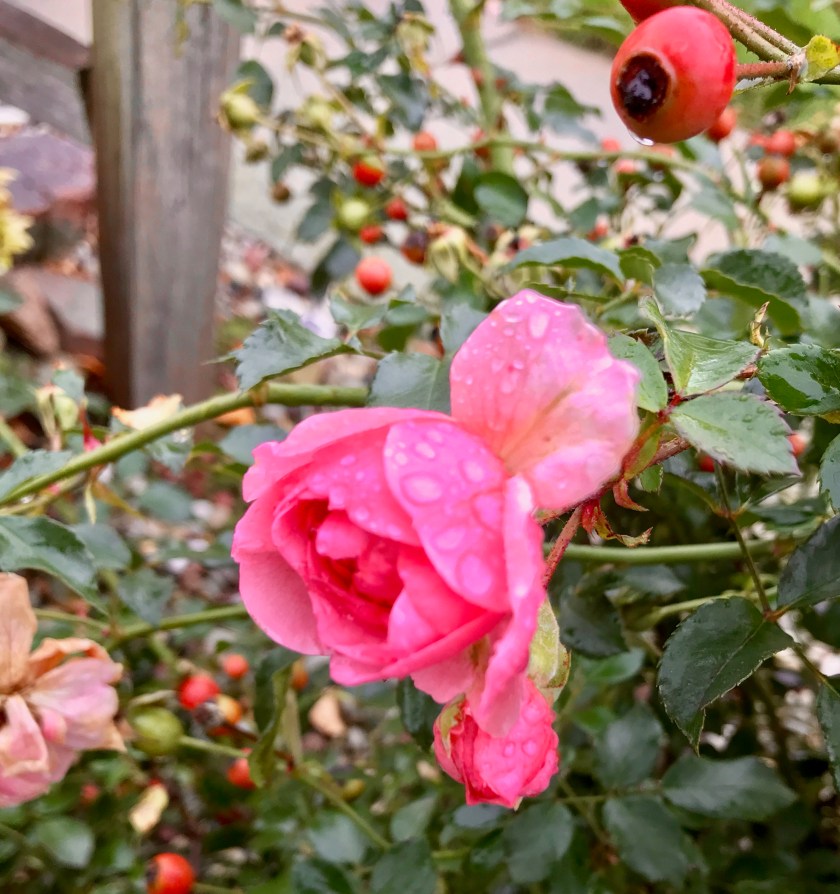
I can’t believe I’ve babbled along about this for so long. Here’s a picture of the last rose of the season to make up for boring you with all of this guff.

IMG_0788

IMG_0786

More Farm Stuff

There’s been a lot going on in the agriculture world so let’s take a look.

FDA May Remove Heart Healthy Labels on Soy Products: For years now some soy based products have been claiming that they are “heart healthy” based on a claim that using soy caused a reduction in cholesterol. But we’ve known since at least 2005 that consuming soy has little or no effect on reducing cholesterol. It looks like it only took FDA twelve years to figure that out and announce that it was going to make the 300 or so soy products that make that claim to stop using it.

Why the confusion over the issue? It’s suspected that the initial reduction in bad cholesterol that was shown wasn’t caused by soy, but by the participants in the study replacing red meat with soy products. It was the reduction in meat consumption that reduced the cholesterol, not the soy.

Food Waste and Bogus Statistics: Then I ran across this item over at AgWeb which tries to claim that there is virtually no food waste when it comes to eating meat. They claim that about 20% of fruit and vegetables get thrown away rather than eaten, but that only 3% of meat gets thrown out. Therefore, they claim, buying fruit and vegetables is far more harmful to the environment than meat production The article goes on to say that eating meat is “more satisfying” than the equivalent amount of vegetables or fruit, and that meat tastes better than plants and loading meat animals up with antibiotics is just fine and dandy because …

Oh, brother, I just can’t go on any more…  She is basically claiming that because consumers throw out only about 3% of the meat they buy, meat is somehow enormously better for the environment than fruit and vegetable production, and that producing fruit and veg is actually harmful to the environment because people throw away some of it..

I’m not even going to try to follow the mental gymnastics that she goes through to try to come to that conclusion.

But I do notice one thing, that the article completely ignores the fact that almost half of a steer is inedible. Assuming you have a 1,000 lb. steer, only about 600 pounds or less is going to be useable meat. The rest; the head, innards, bones, skin, fat, etc. is inedible. Once you add in things that are trimmed off by the consumer after purchase like fat and small bones that are discarded, etc., you quickly discover that almost half of that steer can’t be used as food.

So in one way, yes, when you get that steak home you’re going to eat almost all of it. But that’s because all of the waste has been trimmed off long before you even see it in the grocery store.

Clovis Withdraws Nomination: Sam Clovis withdrew his name from consideration for a post at USDA as undersecretary for research. The job requires a thorough understanding of agriculture, scientific research methods, and basically was intended for someone who is, if not a scientist, at least someone with a thorough understanding of farming, agriculture, and science. So what were Clovis’ qualifications? Is he a scientist? No. Is he a farmer? No. Has he ever worked in any kind of business related to agriculture?  No. He is a former talk radio host and a political science professor. Well, here is the man’s own words in response to questions from the Senate Agriculture, Nutrition and Forestry Committee’s top Democrat, Debbie Stabenow:

“Please list all graduate-level courses you have taken in natural science,” the second of 10 questions requested.

“None,” Clovis replied.

“Please list all membership and leadership roles you have held within any agricultural scientific, agricultural education, or agricultural economic organizations,” the third question read.

“None,” Clovis replied.

“Please describe any awards, designations, or academic recognition you have received specifically related to agricultural science,” the fourth question read.

“None,” Clovis replied.

Sigh…

Dicamba. Yes, Again: The apparently never ending saga about the herbicide dicamba continues. According to a report by the University of Missouri dicamba damaged 3.6 million acres of soybeans this past year. That’s a hell of a lot of beans.

The EPA has issued new labeling requirements that more strictly control how the dicamba herbicide blends from Monsanto, BASF and DuPont are used in an attempt to eliminate the problems, but the problem has been so wide spread that some states are considering issuing outright bans on the product. And a lot of people doubt that the new application restrictions and guidelines are going to do much to get a handle on the problem.

I think they’re playing with fire here. So far everyone has been focusing on the damage done to soybeans. Considering how easily this stuff seems to vaporize and drift long distances, it could very easily begin damaging large areas of ornamental plants, food crops, etc.

I’ve even been hearing conspiracy theories from some people. They’re claiming that the herbicide blends were deliberately made to drift like this to force farmers to plant Monsanto’s dicamba resistant soybeans whether they want to or not.

USDA Kills “Farmer Fair Practices Rules” (GIPSA): On Oct. 18 USDA announced it is totally dumping the FFPR, a set of rules that attempted to correct many of the abuses endured by “contract” farmers, farmers who don’t actually own the crop or animals they are growing. The famers own the land, the equipment, buildings, provide the labor, etc. but the product they are growing actually belongs to the company and is grown under a contract for a fixed price. Almost all of the chickens raised in the US are produced this way.

They may be “independent farmers”, because the big companies don’t own them, but they have only one client, and that client controls everything. They are essentially indentured servants with few if any rights. These companies are accused of price fixing, blacklisting farmers, canceling contracts on a whim, and engaging in retaliation against farmers who make waves.

The FFPR was intended to help give the famers a bit more control and flexibility to sue in cases of blatantly unfair practices.

I’m not going to get into this any deeper because it would take many, many pages to describe the whole situation. You can go do the research yourself if you’re interested. But as Chuck Grassley, a senator from Iowa said about killing the FFPR: “They’re just pandering to big corporations. They aren’t interested in the family farmer.”

Just What Is Organic Anyway?  I don’t know about you, but when I think of the term “organic” the definition definitely does not include acres of green houses containing thousands of trays of robotically tended plants under grow lights being grown by soaking the roots in a chemical nutrient solution. In other words, hydroponics.

But according to the National Organic Standards Board, it is. The NOSB has ruled that hydroponics is organic.

Look, I have nothing against hydroponics. It’s an extremely useful technology. But isn’t “organic” a lot more than just producing herbicide free food?

Farm Catch Up

I haven’t done this in a while, so let’s see what’s going on out in the farming world.

Screen Shot 2017-08-29 at 6.25.36 AMButter Tumbles In Europe:  Wholesale butter prices have plummeted by almost 10% from September in the EU, and have dropped by 20% overall from the high point. The market for butter and butterfat was the only thing that was driving improved farmgate milk prices in the EU. There was a very modest reduction in milk production, but that quickly reversed as milk prices began to improve, and from what I’ve been seeing milk production is on the rise once again.

Butter prices in the US dropped a bit, but are still pretty strong, about 20% or so higher than they were a year ago.

I’ve been hearing the price on powdered skim milk in the EU has dropped precipitously because they can’t get rid of the stuff.

Basically it looks like a return to the old boom/bust cycle. As soon as prices start to get even a tiny bit better, dairy farms begin to ramp up production, glutting the market with product, and pushing the prices back down again.

Screen Shot 2017-10-27 at 8.58.56 AMSargento Expansion: The company is expanding again locally. It’s adding another 40,000 sq. feet to it’s facility here in Hilbert after a major 70,000 sq. foot expansion just a year ago, and will be adding another 150 jobs here. Sargento is privately owned, employs about 2,000 people, and produces cheese, snacks, sauces and ingredients for the food industry. It had net sales of well over $1 billion last year. Starting wages for most jobs are going to be in the $18/hr range I’ve been told.

Screen Shot 2017-06-24 at 7.58.59 AMDicamba Battle Continues: Monsanto and it’s partner in the dicamba herbicide controversy, BASF, continue to claim that thousands of acres of crops that were damaged by dicamba drift wasn’t their fault. Arkansas alone had more than a thousand complaints of crops damaged or killed by dicamba drifting away fro the sprayed areas into fields that were often hundreds, even thousands of feet away.

This situation has been going on ever since Monsanto and it’s partner in this, BASF, brought their dicamba blend herbicides to market to use with Monsanto’s dicamba resistant soybeans. Dicamba has always had a problem with volatility and drifting, meaning the product goes into vapor form very easily and can drift far beyond the point of application. These new formulations were supposed to cure that problem, but the problem with drift seems to still be a serious issue. Ever since these products came to market there have been reports of tens of thousands of acres of crops and ornamental plantings being killed or damaged by the herbicide.

Both companies have been blaming everything but their products for the problems. Arkansas banned Monsanto’s version of the herbicide and only BASF’s was permitted for use in the state, and the reported damage is so bad some states are thinking of banning the product completely. Monsanto is currently suing Arkansas over the ban. Monsanto is also criticizing scientists who are coming forward to point out problems with the product that date back to the first tests of the dicamba blends, and claim that the company’s testing of the product was seriously flawed and failed to point out the dangers of the herbicide.

Now BASF is claiming that the damage is because farmers have been using illegal forms of dicamba, and not it’s product at all. The company claims that it only sold about half the amount herbicide that would be needed to cover the acreage that was actually sprayed.

The whole thing is a complete mess, with lawsuits either in the works or already heading for the courts, lots of finger pointing, bizarre conspiracy theories, and even one murder attributed to the issue.

Not So Great Pumpkin Controversy: If you’re the FDA, a squash is a squash is a pumpkin. Its all pretty much the same. So that orangey brown gunk you dump out of that can to make your pumpkin pie isn’t really, well, pumpkin. Pumpkin is Cucurbita pepo while what you’re mostly getting in that can is Cucurbita maxima, a different variety of squash. The problem is that real pumpkin doesn’t really work very well for a lot of the things we eat, like pie.

Personally I can’t stand the stuff, the pumpkin pie fillings and all that. I love squash. There’s nothing better than a slow roasted butternut or acorn squash with a bit of, oh, apple baked with it, a little brown sugar, some butter, a touch of salt. It is amazingly good. But pumpkin? No thanks. I’ll pass on that pumpkin pie and head straight for the mincemeat. Although come to think of it mincemeat doesn’t really have meat in it either any more, does it?

And don’t get me started on the abomination that is “pumpkin spice”.

That’s it for now. Well, actually there’s probably more but I’m getting bored and MrsGF is making deep dish apple pie and I need to go peel apples.

As always, comments are welcome or you can email me at old.grouchyfarmer@gmail.com

If I got the email address right this time.


Last Harvest

IMG_0781.jpg

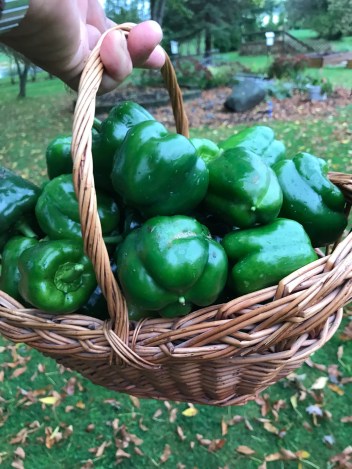
Well, this is it, the last harvest of the season. Huge basket full of bell and poblano peppers. They were predicting frost for last night, and I decided to just pick all of the peppers that were remaining in the gardens and not try to keep the plants going any longer.

Ironically, the pepper plants are doing better now than they were during the height of the growing season. They really seem to like cool, fall weather. The dopey things are still blossoming out there.

The peppers are easy to deal with. Just wash them, cut off the stems, take out the seed pods, then dice them up, stick them in containers and freeze them. No blanching or anything else is necessary.

I don’t know if it actually froze last night. It’s still dark as the inside of a cow out there even at 6:30 AM. (Why in the world do I get up this early, anyway???)  The remote thermometer says the low last night was 37, but it’s in a sheltered location near the house and out in the yard it’s often colder.

It’s really time to start prepping for winter. I need to rearrange the stuff in the garage, get the motorcycle put away so I can get the snowblower out. This semi-annual game of shuffle board is a pain in the neck, but that’s what happens when you have more stuff than storage space.

I’ve been hearing the “S” word popping up in the weather forecasts. Yes, snow. The chance of us getting any are close to zero. It looks like it’s going to be mostly in the far north of the state, but you never know.


Garden Clean Up Time

IMG_0748
One of the issues with the iPhone camera is it doesn’t give any kind of sense of perspective. That pile of vines is actually about waist high and the bed behind it is 8 feet deep and 12 feet long.

Although you sure can’t tell it from the weather (70 degrees here at 7AM) it really is autumn and we’ve been working on cleaning up the gardens periodically for a while now. The weather this morning was great, cloudy and kind of drizzly but warm and shirt sleeve comfortable, so by 7:30 I was out working on cleaning up some of the remaining beds, including the squash.

We’d put in acorn and butternut, only about 4 plants, and we were curious to see how it would work because we’d never tried to grow them before. And the location isn’t ideal, either. Tucked away behind the west end of the garage they really only get sun in the afternoon and evening, plus there’s a tree back there that does some shading.

They started out beautifully, turning into big, healthy plants sending vines everywhere and setting a lot of squash. Alas, I think a combination of the shady IMG_0747conditions plus the very damp weather we had this season kept them from producing as well as they could have. We’ve been eating squash from there for a few weeks now. Very nice stuff and very tasty. But the squash themselves were small, and then because of the damp conditions and shaded location they started to get what MrsGF thinks is powdery mildew, which together prevented them from doing as good as they should have.
The vines were almost completely withered so I cleaned everything out this morning and gathered up the remaining squash.

As an experiment I think it went pretty well, all things considered. Yes, there was a mildew problem and probably too much shade in that spot, but we still got some delicious squash out of the deal. They are so good when roasted with some brown sugar and butter.

IMG_0750The peppers — holy cow have they taken off! They struggled all summer long, those poor plants, and that was largely our fault because we crowded them too much. I did some drastic thinning, taking out more than half the plants, and almost immediately the remaining ones responded with ridiculous amounts of fruit.

We plant mostly poblano (which is my personal favorite), sweet banana peppers, and sweet bell, along with the “mystery” peppers, which turned out to be habanero which are so bloody hot no one we know will touch the things.

Interestingly enough, no one will admit they planted habaneros. MrsGF swears she didn’t raise them. I certainly didn’t put them in there. So where did they come from? Crazed hot pepper fiends sneaking around late at night and slipping them into people’s gardens?

The ones I picked this morning will get washed, diced up and frozen for use later. We generally just mix them all together, with the poblanos more intense flavor helping along the more bland sweet bells. The mix is great in fried potatoes, mac and cheese, soups, etc.

MrsGF is off this morning to her sister’s place to get “a lot” of grapes. I’m not sure how many grapes are in “a lot”. Could be anywhere from a few quarts to a 5 gallon bucket full. If there are enough of them, she’s going to make jelly out of them. The vines these come from are probably close to a century old, and they’re still producing like crazy most years.

Yes, I know, grape jelly is dirt cheap in the stores. But comparing Welch’s to the jelly that comes from these grapes is sort of like comparing Busch Light to, oh, New Glarus Staghorn Octoberfest. They are both technically beer, but the difference in quality is several orders of magnitude apart.