
Brazil Scandal
I haven’t heard much about the meat scandal going on in Brazil on the main stream media but it’s been all over the ag press since the story first broke. According to reports, Brazil’s meat exporting companies have been involved in bribery scheme where government inspectors and auditors were bribed to permit the companies to ignore sanitary regulations and inspections, falsify medical records and certificates, and ignore tampering with products to disguise problems with the meat. It’s also alleged the producers used ascorbic acid and other chemicals to disguise rotten meat, injected water into meat to inflate the weights. It’s just nasty. The whole story sounds like something straight out of “The Jungle” by Upton Sinclair.
There are now reports of large numbers of arrests as the government tries to do damage control. Brazil is the largest exporter of beef and poultry in the world, and the scandal has decimated the industry. Many countries instituted outright bans on importing Brazilian meat and meat products or instituted much stricter inspection protocols. Things are slowly starting to get back to normal, but the Brazilian meat industry really took a hit on this one and it could take some time for it to recover.
The really scary part about this is that meat processing companies had allegedly been bribing the country’s federal meat inspectors for years before this was discovered.
Does No One Remember?
Does no one remember what things were like before the EPA came along and environmental laws were finally brought on-line? It seems not, judging from the stuff I’ve been hearing coming out of the “new” EPA and the new administration. If you read the laundry list of things the new administration is planning on doing when it comes to the environment, it seems none of them do.
And what’s up with this fixation on coal that this administration has? Pruitt just put on a staged event with coal miners in full gear standing around him to try to spin how the gutting of environmental regulations is going to somehow create massive “economic growth”. All things considered, coal is a very, very minor cog in the energy machine. For many years coal has been becoming increasingly irrelevant in the energy world, and not just for environmental reasons. It’s expensive, dangerous, dirty, inefficient, produces huge amounts of waste material when burned, it’s hard and dangerous to mine, and the coal industry doesn’t really employ all that many people.
When I remember what it was like back in the 1960s, and think that we might be going back to those days of cities being entombed in clouds of toxic smog, rivers that were so polluted they actually caught on fire, where if you fell into a river you’d probably die from poisoning before you drowned, and all just so a few politicians can pose for pictures with a handful of miners from an industry that was starting to fail even before they were born, it makes me wonder what the hell is going on.’
Rather than spending all this time, energy and government money propping up the coal industry allegedly to “protect” the jobs of a few thousand miners as the politicians claim they are doing, wouldn’t it make more sense to invest those resources in training the miners for other types of work, giving different types of businesses incentives to move into those areas, etc?
Canadian Dairy Fights Back
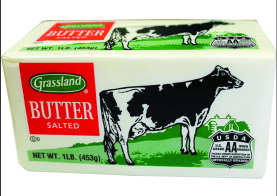
The Canadian dairy industry is pushing back against claims that it and the Canadian government are at fault in Grassland cutting off 75 dairy farms here in the state. As I pointed out previously, the story being pushed out by the company about why it abruptly cut off 75 farms, forcing them to scramble to try to find new processors to buy their milk, seems to be a bit disingenuous. Especially when Grassland is claiming it had to cut off those farms because it can’t sell the milk while the company itself is seeking permits to build it’s own 5,000 cow dairy farm.
The Canadians are pointing out that the real culprit is the US’s overproduction of milk. And they’re right. The market for dairy products is utterly saturated. Despite an increased demand for butter, the US domestic market has been flat for years, with some sectors, such as consumption of liquid milk, actually declining despite heavy marketing and various gimmicks. And while demand is shrinking, prices falling, the diary industry responds by drastically increasing production?
Even one of the farmers dropped by Grassland agrees as is noted in the story linked above.
One of the biggest problems with the whole dairy industry in the US is government intervention in the market. Political manipulation of the market has resulted in a maze of rules, regulations, laws, marketing schemes, surplus buys and I don’t know what all else, that has left us with a marketing system that is convoluted, irrational, and so outdated that parts of it go back 75 or even a hundred years.

 Downtown was the hub of the city, where everyone went to shop. Penny’s was there, as was Sears. Woolworths had a store there, the old “five and dime” store. Kresge’s, another 5&10 store was down there as well. The elegant and upscale Schutte Bros. department store with it’s pneumatic cash tube system. Dozens of smaller shops all running down 8th street and going down the side streets. It was a thriving, bustling place. Just over the bridge was the Boston Store, and Sears.



 It had been owned by few different beer companies, the latest being Budwiser. Budwiser moved out of the facility a few years ago and we were afraid it would fall derelict like so many others. But it was purchased by Briess Malting of Chilton, a major producer of malted grains for the brewing industry that’s been in business for over a hundred years now.



 few days. I’m not sure why. Which is why I’m writing this at two in the morning instead of being asleep. I know, I’ll try looking at photos of, oh, blossoming apple trees. That will put me to sleep!


 ignoring them. And the biggest problem seems to be that no one seems to be really sure that omega-3 actually works. Even worse, there are some indications that taking omega-3 might actually be detrimental for the health of some people.
 grouchyfarmer