Yep, it’s spring!

Yep, it’s spring!
I mentioned previously that a short time ago Grassland Dairy Products here in Wisconsin, which makes mostly butter, sent out letters to 75 dairy farmers telling them that as of May 1 Grassland would no longer be buying their milk. This left those farmers in a terrible situation. They now have no place to sell their milk. And the way the market is right now, finding a new processor to sell to is almost impossible.
In it’s press releases and comments to the media Grassland blames Canada. Canada, according to Grassland, changed their dairy import policies almost literally overnight, making it impossible for Grassland to continue to sell almost a million pounds a day of ultra-filtered milk, used in cheese making, to Canada. According to some of the information that came from the company, they received only two days notice before the change was implemented. The company had no choice but to cut back on the amount of milk it purchases. Grassland claims that it cut off those farmers that the company felt would have the best chance of finding a new market for their milk elsewhere.
But some people started to do some digging, and as is often the case, what’s been coming out in the press releases and statements from the company seems to have some problems. I ran into an op-ed piece over at Wisconsin Agriculturist that points out numerous problems with the whole story as it’s being presented by Grassland, and if true, there is a lot more going on here. You can read it here.
First of all, allegedly Grassland was not blind sided by this as they seem to be claiming. This didn’t happen overnight as the press releases seem to claim. This has been in the works by Canada for a long time. Grassland allegedly knew about this back in November already, and may have known as much as two years ago according to the editorial piece. Governor Walker actually wrote a column about it back in November.
Then there is the issue of which farms they cut off. The company claims it picked farms that it believed would best be able to find markets for their milk. But almost all of the farms being cut off are the ones that are the farthest away from the company’s processing facility in Clark County. Cutting off the farms that are the farthest away from their processing center would save the company a small fortune on shipping costs.
There there is this little tidbit: At the same time the company is cutting off 75 dairy farms, it is trying to get the permits to build it’s own 5,000 cow company owned mega-farm.
There’s no doubt that the company lost significant sales of product to Canada, but there seems to be a lot more going on here than just a trade squabble with Canada.
As of this morning the ag futures markets are listing corn at 3.67 a bushel, soybeans at 9.46, and wheat at 4.33. But as if often the case, out in the real world, at the farm level, the situation is far different. If you’re a farmer trying to sell, you don’t get the futures prices, you get farm gate prices, what a buyer will actually pay to a farmer. And that is often much, much less than what that commodity is trading for on the floor of the Chicago exchange and other commodities markets.
Out in the real world, farmers are looking at farm gate prices for corn of as little as 2.90 and wheat around 3.15. Those prices are well under the cost of production for most farmers. US farmers are looking at a fourth straight year of increasing costs, declining income, and increasing debt.
The problem is we’re growing too much food.
Sounds ridiculous, doesn’t it? Especially when we’re hearing about mass starvation in some parts of Africa and other parts of the world. But the problem isn’t a lack of production. We’re producing more than enough to keep everyone fed. The starvation is due not to a lack of food, but to government corruption, incompetence and war, not to any kind of shortage of food.
Overproduction has become a very serious problem. Most of the grain producing nations are looking at massive surpluses of product. Storage facilities are packed tight. In Kansas they’re actually renting runways at decommissioned military airbases and parking lots to pile the stuff up because there’s no place to go with it.
Meanwhile countries like China and Russia are trying to dump old stock in storage in order to make room for new production, resulting in prices being driven down even farther.
And there seems to be no end in sight. USDA is estimating that corn, wheat and soybean production in the US alone could be the biggest ever since they started keeping records.
It’s early spring, and that means the urge is starting to kick in again.
I never used to be much of a traveler. I was always a homebody. I hated traveling, hated the discomfort associated with it, hated staying in motels, hated having to try to find someplace to eat. I hated everything associated with traveling.
The result was that for the first 50 years of my state I’d hardly been more than a hundred miles from the place I’d been born, and I was quite content with that.
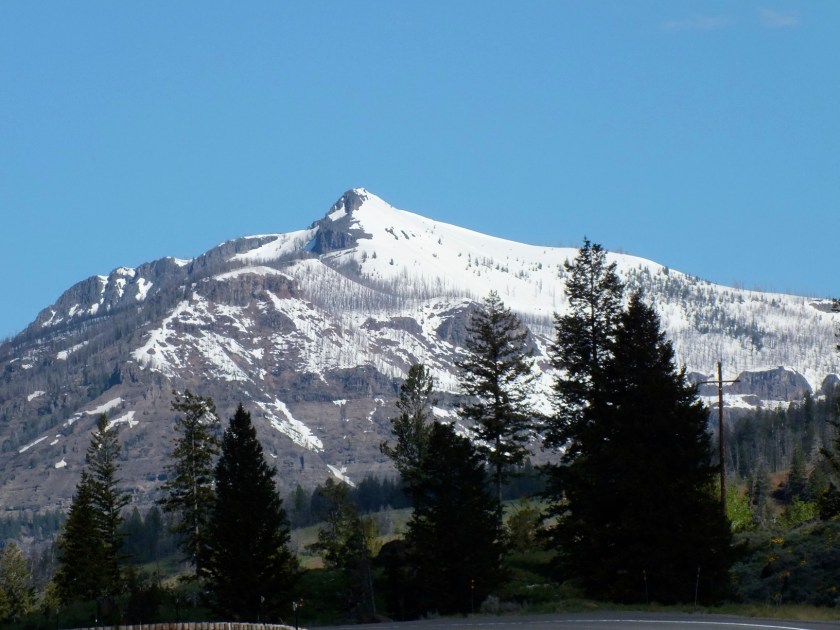
Then something, I’m not sure what, happened. That’s when the — the urges started to kick in. And suddenly the guy who hated traveling, hated being away from home, was finding himself in places like, well, like this:

Or like this…

Or this

Or these:
So what happened? How did someone who hates traveling so much end up doing exactly that? I have no idea. It’s weird, really, this urge to go wandering, traveling.
I was starting to think that I’d got it out of my system. I wasn’t going to go wandering very far from home this year. If I went anywhere at all it was going to be less than a day’s travel from the house.
But now that the weather is getting warmer, things are starting to grow again, that damned urge is coming back… Same thing happened last year. Wasn’t going to go anywhere, I told myself. Nope. At least not very far, not more than a couple of hundred miles. If that. And ended up spending over a week out in the Black Hills…
This year I’m not going anywhere though. I am going to stick close to home. It’s too expensive, too time consuming. No sir. Not going anywhere.
But then there are those damned urges. Don’t know where they come from.
Personally I blame allergies.
An icon of my youth is, I’ve been told, going to be torn down in Manitowoc, the old Penny’s building.
This is one case where I heartily approve of the decision if does indeed happen. As you can see the building looks like it’s ready to fall down all by itself. The two upper floors have been abandoned for years, windows broken out, covered up with plywood. The main floor was remodeled, if you can call it that, into small shops that now house, well, basically they’re junk shops except for a small art studio and resale shops that sell rummage sale items, a few antiques, on a consignment basis.
Saturday I was talking with a shop keeper downtown who used to rent space there and she told me that while it was cheap, she got out years ago because she was afraid the building was going to fall down around her ears. She told me that there were plans in the works to tear it down and replace it with a parking structure. We went in to look around and I can understand why she got out of the place. It’s pretty bad in there.
Going to Manitowoc’s downtown, the old shopping district, is a kind of bittersweet experience for me because I find it nostalgic, sad, exciting, interesting and hopeful all at the same time.
When I was a wee lad we did some of our shopping there in the downtown. At the time it looked like this. I found this image on-line somewhere.
Downtown was the hub of the city, where everyone went to shop. Penny’s was there, as was Sears. Woolworths had a store there, the old “five and dime” store. Kresge’s, another 5&10 store was down there as well. The elegant and upscale Schutte Bros. department store with it’s pneumatic cash tube system. Dozens of smaller shops all running down 8th street and going down the side streets. It was a thriving, bustling place. Just over the bridge was the Boston Store, and Sears.

Sears is long gone. Kresge’s closed down. The Boston Store closed. Schutte’s closed, and eventually the other shops, the jewelry stores, tailors, shoe stores, all of them closed or went bankrupt as shopping patterns changed.

The elegant and upscale Schutte Bros. store is in a sad state. It looks like this now.

It’s been standing empty for I don’t know how long now. There have been attempts to do something with it. A half dozen different restaurants have tried to make a go of it on the main floor, but none of them have worked well, and it’s been empty now for years, slowly deteriorating.
Somehow this old building has managed to remain almost as elegant and beautiful as it was when it was first built probably almost a hundred years ago.

If memory is correct, and there’s a good chance it isn’t, this building originally belonged to the International Order of Odd Fellows, a fraternal organization that was popular back in, oh, the early 1900s. They spared little expense in the design and construction, and thanks to owners who cherish these old buildings, they’ve restored it and kept it in pretty good condition, and it’s one of the finer buildings downtown now.
Another fixture of downtown, the huge old malting/beer facility right on the lakeshore, is going to be hanging on, too.
It had been owned by few different beer companies, the latest being Budwiser. Budwiser moved out of the facility a few years ago and we were afraid it would fall derelict like so many others. But it was purchased by Briess Malting of Chilton, a major producer of malted grains for the brewing industry that’s been in business for over a hundred years now.
The old imposing bank downtown is still there too, looking just as impressive and intimidating as it did when it was first put up.

I don’t think it’s a bank anymore. Someone told me they think city offices are in there now.
The old Mirro Aluminum building is finally coming down at last. After being abandoned by it’s new owners when Mirro Aluminum was bought out and shut down, it sat empty for ages, gradually falling apart.

After years of the city squabbling with various owners, various schemes for getting rid of it, the city itself finally had to take over the property to get it demolished.
So, if this works, there should be a slide show here of some photos I took at the Manitowoc quilt show yesterday.
The Manitowoc quilters put this show on every two years and going to it has become a bit of a ritual for us because these people do some absolutely amazing artwork. The photos don’t really do it justice.


I love spring with all the flowers starting to burst out.
But then there’s rhubarb. Rhubarb when it starts out is just weird looking, like some kind of alien eggs or something…

Time to catch up again, so let’s get on with this, shall we?
Lots of stuff has been going on in the farming world, some of it unpleasant.
Grassland, a large milk processor, sent notices to 75 dairy farmers here in the state that the company will no longer accept their milk as of May 1, leaving the farmers scrambling to try to find someone, anyone, to buy the milk they’re producing. Over the last couple of

weeks Canada has rejiggered its milk classification/pricing system which has effectively prevented Grassland from exporting up to 1 million pounds of milk a day to Canada, and apparently with only 2 days notice. Grassland had no choice but to notify the farmers that they could no longer buy their milk because the company has no way to sell it now. A lot of people in the US dairy industry are claiming that Canada’s actions are nothing but a way to try to curtail the imports of US dairy products and are actually illegal under international trade law. Where are those farmers going to go with their milk? I have no idea. This is a bad time of year to try to find a milk processing company because we’re about to enter into what’s known as the “spring flush”, when dairy cows normally begin to produce even more milk, so there’s going to be a glut of milk coming on the market as it is and few processors are looking for more.
A recent survey by the Farm Journal indicates that the average cost of raising a bushel of corn for most farmers is about $3.69 per bushel. Corn briefly flirted with the 3.70 range for a while, but mostly it’s been in the 3.50 – 3.65 range for months and months now. It makes one wonder why anyone bothers to raise corn in the first place. Granted, some have lower costs than that and do make a bit of money off the crop, but still.
Sometimes the farming business reminds me of the old joke about the two guys from Milwaukee who decided to go into the fruit business. They bought a truck, ran down to Georgia and bought a load of peaches for $1 a pound, and came back to Milwaukee to sell them at $1 a pound. When they realized they hadn’t made any money on the deal and were trying to figure out why, one of them looks at the other and says “I know! We need to get a bigger truck.”
Some days I feel like the entire agricultural system is being run by those two…
I love chickpeas, or garbanzo beans as they’re sometimes called. I use them in salads, soups, but they’re mostly known for their use in hummus and in middle eastern cooking. A member of the legume family, they’re tasty, very nutritious and high in protein and, well, they’re just yummy and very useful in most types of cooking.
Chickpea planting in the US has more than doubled since 2013. We’re only planting about a half million acres, almost insignificant when compared to corn and soy acres, but interest in the chickpea has been climbing steadily. They’re being grown mostly in the north western states. Farmers are always looking for an alternative to low profit crops like corn and wheat, and right now chickpeas look pretty good, profit wise. They aren’t that easy to grow, though, mostly because they’re susceptible to disease. But the prices have gone up about 23% over the last year, and with consumption and interest increasing, and farmers looking to try to find some way to make a profit, I won’t be surprised if acres planted keeps on growing significantly.
Butter consumption in the US is at 50 year record high, and there seems to be no end in sight. Butter price is one of the few bright spots in the dairy industry right now, with the price creeping up despite a decrease in butter exports and an increasing stockpile sitting in warehouses. Wholesale prices for butter were pushing $2.23 at one point and have only declined a few cents since then, despite increases in milk production.
Butter has become a marketing tool for a lot of food companies. A lot of restaurants, even the fast food ones, are switching out margarine in favor of butter, and a lot of companies that make processed foods are now hyping that they’re using real butter instead of margarine or vegetable oils.
Why this increase in demand for butter? Part of the reason is that dairy products are no longer linked to increases in cholesterol levels. Over the last five or eight years new studies indicated that contrary to previous beliefs, moderate consumption of fats from dairy products seems to have little or no effect on cholesterol levels. And there have even been some studies that indicate moderate consumption of full-fat dairy products may even have some health benefits.
Another thing that’s been driving an increase in butter consumption is that it’s been found that hydrogenated vegetable oils, long the primary ingredient in most margarines, are utterly horrible for you, health wise, causing significant increases in risk of heart disease and other problems.
But despite all of that, we’re still producing way too much milk. In many areas of the country there isn’t even the plant capacity to handle all of the milk being produced. There are reports of milk being dumped or being used for animal feeds in some states. With the ‘spring flush’ now arriving, a lot of milk processing plants are at full capacity already. It’s going to be interesting to see what happens to milk prices over the next month or two.
If you’re interested in agriculture and don’t give a fig about AR, you can stop reading now if you like.
Just got the notice that my subscription to QRZ.com is about to expire. QRZ is known as being the place to go if you’re looking for information about a particular call sign, want to buy or sell radio equipment or if you’re a grouchy old fart who likes to complain a lot, hang out in the forums and, well, complain a lot. Most people just use it as a way to easily look up information about an amateur radio operator. If you have the person’s call sign, you can find names, addresses and other information about them on QRZ’s database. You don’t absolutely need to be a paid subscriber, but it’s helpful. It gets rid of the annoying advertising, gives you access to things the freeloaders don’t see, that kind of thing. You get your own web page, email, log book and other goodies. It’s not an essential service by any means, but it is indeed handy to have.
Just stay out of the forums unless you have a thick skin.
The other day someone I was talking to remarked that I never, ever use the terms “ham” or “elmer”. And they are right, I don’t. While the term “ham” when used to refer to an

amateur radio operator has been in common use for probably a hundred years, that doesn’t mean I have to like it. I have no real desire to be referred to by a term that means “cured pig meat” to 99% of the population of the country. Am I being ridiculous? Pedantic? Of course I am. Don’t care.
I also loathe the term “elmer” when used to describe describe someone who assists a newcomer to amateur radio learn about the technology.
Now, before you go off the deep end and launch into a rant down in the comments section about the tradition behind the term “elmer”, I understand that “elmer” refers to a very nice fellow who once helped newcomers to the hobby learn about it. I’m sure he was a very nice person. He was an utterly delightful and nice fellow I’m sure.
But I don’t care. There is already a perfectly

good term for that: mentoring. And to be perfectly frank, the term “elmer” is not exactly complimentary outside of the amateur radio community. It refers to the character Elmer Fudd from the old Bugs Bunny cartoons. An “elmer” for a large percentage of the population is a person who resembles Elmer Fudd, someone who is a bumbling, idiotic fool. It is not a complimentary term.
Use both terms if you wish. I don’t care. I won’t object or even comment. But as far as I’m concerned, a mentor is a mentor, not an “elmer”. An amateur radio operator is an amateur radio operator, not processed pig meat.

Someone, we don’t really know who, exactly, decided it was time to finally do something about the monster infesting the sewers, and organized a hunt to track down and eliminate the beastie before it started to eat more than the occasional urchin and perhaps even jeopardize the tourist trade. With the Oiling Festival, a major source of tourist revenue, already in jeopardy because no one seems to know exactly when the festival is this year, together with the rather awkward moment caused by having to return the remains of the sole tourist who came to last year’s festival after he fell down a coal chute and was partly eaten by voles to the family, well, it was decided we needed to be proactive.
Alas, it did not go well.
Just finding the bloody thing was troublesome. It seems the sewer system is more maze-like than we’d thought. We also discovered that over the years various persons have been burrowing away like moles down there, digging passages off the sewers, building chambers for smuggling operations and to hide their less savory addictions from the sight of more normal citizens. Even sending urchins down the tunnels in the hopes of luring the beastie out into the open were unsuccessful.
Finally a large group of us, including myself, were the ones who were ambushed by the beastie. After a fierce and rather confusing battle in which your author was killed at least twice and set on fire once, the creature retreated down the tunnels and we gave chase. In the confusion and chaos the creature escaped, apparently vanishing into a brick wall somehow, leaving us dazed, confused, irritated, and in desperate need of a bath and large quantities of alcoholic beverages.
Many farmers know approximately what a drone might cost. Fewer know what return on that agtech investment might bring – but a new report brings fresh ROI insights.
Source: Report: Drone ROI Averages $15 Per Acre – Crops – News | Agweb.com
I’m a fan of drones as you may know and own several, and agriculture is one area where they are genuinely useful. Still it surprised me that the ROI (return on investment) on their use is as much as $15 per acre.
In agriculture they’re used for crop scouting, flying over fields to check for problems such as insect and weed problems, poor drainage, checking the condition of the crops, etc. It saves an enormous amount of time because before drones came along farmers would either have to do that themselves or pay for the co-op to do it for them. Using a drone takes a tiny fraction of the time it would take to walk the fields.
And damn, I wish we’d have had one back in the day when the heifers broke out of the pasture and got into the corn field! You ever try chasing a dozen crazed heifers running through a cornfield?
Drones suitable for this kind of thing aren’t cheap. You’re looking at starting out at around $1,700 or so and by the time you add in the cost of extra batteries which can run $75+ each, possibly portable charging systems so you can charge batteries in the field, things like that, you’re well over $2,000 and climbing. Professional quality drones with extended flight times, programmable flight plans, etc. add to the cost quickly. But you can get something like the DJI mentioned in the article or the Yuneec Typhoon that I used to have which is equivalent to it, for around $1,500.
Note: the FAA has finally straightened out all of the rules and regulations, and is now issuing licenses for commercial drone operators that does not require you to spend months of time and ten thousand dollars or more to get a airplane pilot’s license any longer. That ought to help enormously. I should point out that you do not need to get licensed if you are using the drone over your own property for your own use, only if you are going to do it on a commercial basis. But even if you’re flying over your own property you need to register your drone if it’s larger than the little indoor toys, so anything that would be useful for crop scouting etc. is going to have to be registered.