Farm Catch Up


Syngenta Loses Lawsuit

Hundreds of farmers in both class action lawsuits and individual suits, along with Archer Daniels Midland Co. and Cargill are suing Syngenta, claiming that the company misled them into believing that it’s GM corn was accepted for import by China when it wasn’t. They claim that the company cost them billions of dollars in lost sales and shipping fees and caused corn prices to plummet.

One trial just ended last week, and Syngenta lost. It was ordered to pay $217.7 million to Kansas farmers. It’s not over yet. Syngenta is going to appeal, of course, so this Kansas suit could drag on for years yet. And this is just the start. Lawsuits involving 350,000 corn growers plus ADM And Cargill have yet to go to trial. Another suit is scheduled to start in Minnesota in August for more than $600 million. Cargill’s suit is supposed to start next year, and another one is coming up in Louisiana yet this year.

Still More Dicamba News

It isn’t just Arkansas with reports of dicamba drift causing crop damage. Now Tennessee has been hit with problems as well. As of June 26 there have been 27 reports of crop damage caused by dicamba drift. Not many compared with Arkansas, but Tennessee doesn’t get its crops in the ground as early as Arkansas does so it’s still relatively early in that state. No one seems to know yet if this is a problem with the herbicide blend itself or if it is a problem with the application techniques and equipment. Monsanto, of course, is claiming that either A) no such thing is happening at all, B) the product wasn’t used in accordance with proper application techniques, or C) insert your favorite excuse here. I don’t know, maybe fairies are killing off hundreds of acres of beans.

German Grocery Invasion

The Germans are coming. Lidl, the no frills German grocery store chain, is coming to the US. They’re planning on opening 500 new stores over the next five years. They’ve opened 10 new stores in the Carolinas and Virginia. The store is similar to Aldi’s model; no frills, very limited selection of product, lots of private label products at cheap prices, no shelves, just boxes of product stacked up.

Will it survive? My best guess is that they’re going to have a rough time of it. Most of the areas where they want to put stores are already more than saturated with grocery stores, and the chain has little to distinguish it from the other no-frills outfits like Aldi and Save-a-Lot. And it’s going to have a difficult time competing against Walmart which has fairly good prices and much better selection of product.

I have two major problems whenever I go to one of these places. The first is that if you really watch what the prices are, they generally aren’t all that cheap when compared to other stores. If you average out the overall cost of all the products, except for a few loss-leader items you aren’t really saving all that much money. The second is that the quality of the store brand products often isn’t all that good.

Beef Exports to China Begin

Well, sort of. A packing company sold a whopping 40 boxes of ribeyes and other steaks to somebody in Shanghai a couple of weeks ago. And I suspect most of those were eaten by US politicians for photo ops where they were trying to take credit for China announcing it was going to start buying US beef.

There are, of course, some problems. One of the biggest being that the vast majority of beef raised commercially in the US doesn’t meet Chinese health and safety standards. China bans the use of growth promoting drugs and hormones, feed additives, antibiotics and artificial growth promoting tricks US growers use. As the Farm Bureau pointed out, “only a small proportion of commercial beef production would fit the current parameters”. Commercial growers who want to get in on the market are probably going to have to start from scratch, raising cattle from birth to meet Chinese standards. As of right now, it’s going to cost growers more to meet the stringent health and safety requirements than it’s worth for most of them.

The articles I’ve seen on this subject all seem to also ignore the fact that the primary reason China is suddenly interested in US beef is because their suppliers in Brazil are now embroiled in a massive corruption scandal that seems to involve much of the Brazilian government. The scandal included bribing inspectors, shipping out diseased and contaminated beef and I don’t know what all else. The president of Brazil has been formally charged with corruption, allegedly taking $150,000 in bribes from the huge JBS meat processing company. China, like the US and most other countries, has banned imports of beef from Brazil until they get the situation straightened out down there.

“Pink Slime” Case Finally Over?

It seems that ABC has settled out of court with BPI in the slander case BPI brought against ABC for it’s stories about so-called “pink slime”, a heavily processed, treated meat substance made from scraps and trimmings, and then injected into hamburger. BPI was suing ABC for almost $2 billion. With damages and other penalties, ABC could have been on the hook for $5.7 billion if it lost the case.

ABC is claiming the stories “accurately presented the facts and views of knowledgeable people about this product”, while BPI claims it’s product is “safe, wholesome, and nutritious”.

What bugged me the most about the whole thing wasn’t the “pink slime” itself. I’ve eaten raw eel, lutefisk and cheese that smells so bad it wouldn’t be allowed in a landfill. What bothered me about it was no one told me this stuff was in the hamburger in the first place.

Ethanol Still Doesn’t Make Sense

While this was sparked by an article about ethanol production possibly ramping up in the UK, this is more of an editorial comment, so feel free to skip this one if you like.

I’m not a fan of ethanol. It makes no sense at all. At least not the way we’re doing it. If you look at the entire production cycle of ethanol production and it’s overall effects, one could argue that producing ethanol is actually worse for the environment than producing the equivalent amount of energy in traditional fossil fuel. If you trace back all of the energy inputs into the system, the things like transportation costs, fertilizer costs, herbicide costs, the energy used to plant, grow and harvest the crops, it quickly becomes apparent that ethanol, as a “green” fuel, isn’t all that much better than gasoline. Yes, it produces less carbon and pollution when it’s burned, but that is just looking at the end product and its use, and is ignoring everything else that goes into actually making the stuff. When everything is added in, the adverse environmental effects of ethanol production and use is almost as bad as fossil fuels, and according to some studies, actually worse. Go look it up. You got Google. If you ignore the industry funded fluff and nonsense studies and look at the truly independent research, you’ll quickly find that the whole ethanol system is far from being environmentally friendly.

Then there is the economics of the whole industry. Without massive government subsidies, tax breaks, usage mandates, and other taxpayer funded subsidies, i.e. “corporate welfare”, the whole system would fall apart like the house of cards in an earthquake.

Disconnected from Reality?

That’s what I suspect a lot of “experts” are when it comes to milk prices, disconnected from reality. While various experts are claiming milk prices will be pushing $18/cwt “real soon now”, things out in the real world are considerably different. The market has actually been trending down for a while now, with prices on the commodities market falling on the futures market.

Of course the futures market isn’t what farmers actually get paid for their products. What a product trades for and what the farmer is actually paid for the physical product often have no relationship to one another. As a lot of farmers found out when Grassland told them they were going to have to find a different place to sell their milk and some got offers as low as $6/cwt from some processing facilities.

Along the Road…

More stuff along the roadside–

IMG_0431.jpg

IMG_0430.jpg

Well technically these were in a parking area in the wildlife area not actually on the road, but close enough.


IMG_0427.jpg

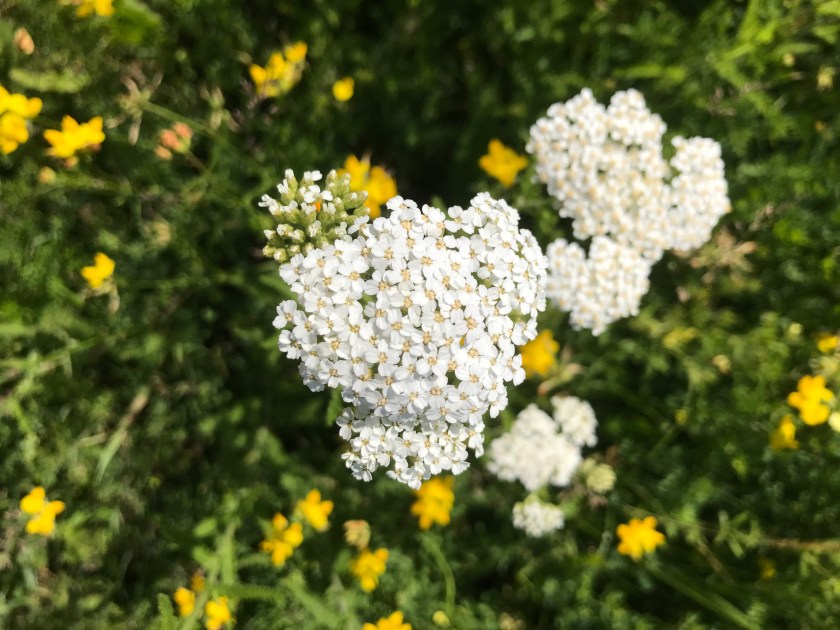
This was along the roadside. They don’t look like much until you stop and look closely at the flowers. It isn’t until then that you see how pretty they really are.

Then there was this goofball–

IMG_0435.jpg

This dopey killdeer… Not exactly a good place to lay your eggs, bird.

Dicamba – What’s The Problem?

Screen Shot 2017-06-24 at 7.58.59 AMIn the last Farm Catch Up I talked a bit about the herbicide dicamba and noted that Arkansas regulators had already banned Monsanto’s brand Xtendimax of herbicide blend that contained the product and were considering a ban on the other one that was approved for use with Monsanto’s Xtend line of seeds, Engenia. “Procedural irregularities” prevented the Arkansas State Plant Board from passing an emergency ban on June 20, but I should have waited a couple of days because on June 23 ASPB passed a 120 day emergency order banning in-crop use of dicamba.

Someone pointed out to me that a lot of my readers aren’t in the agriculture business and may not know what the whole problem is, and that it would be a good idea to give a better explanation of what’s going on and why this is so important to so many people. So here goes

Super Weeds

That’s where it all starts, of course: super weeds, the ones that have been developing resistance to glyphosate, the active ingredient in herbicides like RoundUp. Everyone knew that as soon as glyphosate and the GM crops developed to work with it were released, weeds would begin to evolve resistance to the herbicide. That’s just the way nature works. Guidelines for usage that would help to prevent this, or at least slow it down, were developed even before the products were released for general sale. But everyone knew it was just a matter of time before “super weeds” started to pop up and spread. The fact that the guidelines and safeguards were largely ignored didn’t help much, either.

So now we’re faced with glyphosate resistant weeds that are spreading all across the country. So a new magic bullet needed to be found, and they picked dicamba.

Dicamba has been around for a long time. It was first discovered back in 1942 and has been used to control brush, legumes and cacti. It was also used along fence lines and roads to control brush. Some formulations have been used for weed control on lawns, golf courses, etc. for decades as well. It was never used on crops because it was highly toxic to commercial crops.

Dicamba has some serious issues, not the least of which is it’s tendency to drift over large areas beyond the treatment area.

Monsanto decided that dicamba was an excellent solution to the problem of weeds that were resistant to glyphosate, and developed it’s Xtend soybean plant, which could tolerate both glyphosate and dicamba. It developed a new formulation containing both glyphosate and dicamba.

Monsanto developed what was supposed to be a complete system, it’s new GM soybean coupled with the new formulation of glyphosate and dicamba. The new formulation was supposed to cure the problems dicamba had with easy volatility and wide spread drifting. The company claimed that if used according to its guidelines and with the proper equipment, the issues with the herbicide would be eliminated.

Well, there was one big problem right off the bat. Monsanto started to sell the GM seed before the government had approved the use of it’s new herbicide blend. This led some farmers to dump dicamba on their fields even though the government had not yet approved any form of dicamba for use on crops. Without the special low volatility formulation and without using the proper equipment, dicamba spread widely, damaging or destroying tens of thousands of acres of non-Xtend soybeans, it is claimed. Oh, and somebody got shot and killed over it, too. A heated argument between farmers over alleged damage to crops ended up with someone getting killed.

Well, the new formulation of herbicide is now approved, and things don’t seem to be doing much better for either Monsanto or the other company that makes the new herbicide. There are reports popping up all over the place that the new herbicide, even when used exactly according to the recommendations, is drifting all over the place. In one case it’s alleged that it drifted more than a mile and a half. In Arkansas alone there have been around 250 reports of damage caused by herbicide drift.

As noted at the beginning of this, Arkansas has already instituted a ban on Monsanto’s formula, and the government is now issuing an outright ban on all dicamba use on cropland because of all the damage reports.

The whole thing is a real mess at the moment. Lots of finger pointing, lots of accusations, even conspiracy theories. I heard one farmer claim that the drift problem is deliberate. He claims that the company knew this was going to happen, wanted it to happen, because it would force farmers to buy the GM seed from the company because even if you didn’t use the new herbicide, drift from neighboring farms that did would wipe out your crop unless you used their beans.

I haven’t seen reports from other states about this situation. If I do I’ll pass them along. Right now it’s a huge mess and the only people who are going to be profiting from any of this seems to be the lawyers.

Farm Catch Up

Farming related news you might have missed, stuff I was curious about, commentary about this and that and all that kind of stuff

Amazon Wants to Buy Whole Foods

On Friday, June 16, it was announced that Amazon is looking to buy Whole Foods for almost $14 billion.

As far as WF is concerned, the company hasn’t been doing all that well. Sales have been flat or even declining and the company seems to have stagnated. Some of it’s major shareholders, particularly a hedge fund called Jana, have been putting heavy pressure on WF to sell itself off in the hopes (they say) of shaking up the company and improving sales and WF’s CEO says they only want to do because Jana would make massive profits. Both sides are correct. WF needs to be shaken up if it’s going to survive, and yes, Jana would make massive profits off the sale. If this goes through, Jana would see about a $300 million dollar profit.

Why does Amazon want an upscale grocery chain that caters to people with more money than brains? Amazon has been trying to get into the grocery business in a big way since at least 2008, and while it’s had some limited success, groceries haven’t worked all that well for the company. Buying WF would give it 430 brick and mortar grocery stores already in place along with the supporting infrastructure, access to WF’s supply chain, etc. It would also give Amazon 430 distribution points that already cater to upper middle class patrons, a very profitable class of consumer.

It will be interesting to see how this one plays out.

Cuba

Okay, why is Cuba popping up in a blog allegedly related to farming? Because we actually sell grain to Cuba, that’s why. Over the last eight months we sold 10 million bushel of corn to Cuba, and it could be a significant buyer of other agricultural products as well.

The current administration is rolling back the lifting of some of the restrictions on Cuba that the previous administration began. It is going to once again forbid travel to the country by individuals, institute new restrictions on trade, and basically try to roll things back to the way they were, despite the fact everyone knows the fifty year old Cuban embargo has done absolutely no good at all.

The thing I don’t understand about Cuba is this — Yes, Cuba is a communist country with a history of human rights abuses. But China is also a communist country with a history of human rights abuses that is, if anything, far worse than Cuba. So why do we have virtually unlimited trade and travel to and from China, but the half century old and totally ineffective embargo against Cuba is still in place?

Lead in Baby Food

A really scary story has been popping up all over the place reporting that FDA testing has found that a large percentage of baby food is contaminated by lead. About 20% of the baby food tested by the FDA over the past ten years or so had lead in it.

The amounts were generally below what the FDA claims is “safe” but you have to remember that modern thinking is that no level of lead is safe for infants and children, and FDA standards for lead are many years out of date.

Even more troubling was that lead seemed to be more common in baby food than in adult versions of the same product. Overall 14% of the adult foods had lead, while 20% of baby foods had lead. Even more strange is that 25% of adult marketed apple juice contained lead while a whopping 55% of apple juice markets for babies contained lead. Makes you wonder what the hell is going on.

Dicamba. Again.

I’ve talked about the herbicide dicamba before and all of the problems associated with it, and the lawsuits going on against Monsanto. Let me recap things: Monsanto released a new GM line of seeds called Xtend that was resistant to dicamba as well as it’s RoundUp herbicide because weeds have developed resistance to RoundUp alone. But Monsanto began selling the seed before USDA and FDA had approved the new blend of herbicide that was intended to go along with the new seed. As a result a lot of farmers illegally used non-approved forms of dicamba, causing damage to hundreds of thousands of acres of crops from dicamba drifting into areas where it wasn’t supposed to go. Dicamba is extremely volatile, evaporate easily, and can drift long distances from where it is being applied unless great care is used. Even when the correct blend of herbicide is used and applied properly, it seems it can cause problems. Arkansas has outright banned Monsanto’s Xtendimax dicamba formulation and may ban all dicamba use under emergency regulations because there have already been almost 100 complaints from 14 different counties about misuse of the chemical

There are widespread reports coming from all over Arkansas about damage to crops because of dicamba use already this year, even when the product is being used exactly according to the instructions. There are indications that even when used with the proper equipment and when following the instructions, there dicamba is drifting over large distances, in some cases as much as a mile or more.

Addendum: Arkansas regulators had a meeting on June 20 to consider a complete ban on all in crop use of dicamba. The ban failed because “Due to a procedural error, the vote to consider a ban on in-crop use of dicamba by the Arkansas State Plant Board will be re-voted on at a later time.” So while Monsanto’s formulation was banned, BASF’s version of the herbicide is still legal to use for now.

Rain and More Rain

We’ve been getting extraordinary amounts of rain here over the last few weeks. It just doesn’t seem to want to stop. And as a result a lot of fields around here look like this:

IMG_0397.jpg

Fields covered in mud, standing water, and corn starting to turn yellow from too much water. And, of course, there’s more predicted for late tonight and into tomorrow morning.

The entire state isn’t like this, though. Weather patterns have been spotty, with one area getting pounded by rain while just twenty miles away they get nothing. There was considerable damage the other day from a storm that rolled through the Appleton area, even a few suspected tornados, while here, 15 miles away, all we got was a bit of light rain.

Eating Habits Changing?

Is the “fat is evil” belief finally beginning to be laid to rest once and for all? Maybe? Consumption of butter is increasing world wide, sales of “low fat” dairy products are being replaced by “full fat” dairy products. (I put that “full fat” in quotes because it implies that the fat content of the milk is not tampered with. It is. Milk straight from the cow has a fat content that can run as high as 5 – 7% while the “whole” milk you get in the store is 3.25%.)

It isn’t just butter, either. For decades we were taught that eating fatty meat will kill us too, so the trend for many years was to trim all of the fat off of meat, to develop types of cattle and diets that resulted in very little visible fat in the meat, etc. That’s changing now as well it seems.  Sales of fattier cuts of meat, bacon, well marbled cuts of beef have all been going up.

The whole “fat free” craze that finally seems to be laid to rest didn’t do us any good and may actually have done us a lot of harm. Especially when food processors resorted to loading up their products with salt, sugar and other crap to make it edible because removing the fat also removed the flavor from a lot of products.

Animal Welfare

Tyson is launching a very extensive system to monitor the welfare of the animals it raises/processes. It claims it is bringing in a third party monitoring company that will use a variety of techniques including video, data analysis and other techniques to make sure that the animals are treated well. While I am pleased they’re doing it and I hope the other big chicken processors do the same, you and I both know that the only reason they’re doing it is because of the public pressure being put on them because of the videos and information that’s been made public by the animal rights groups that have been exposing how badly many of these animals have been treated.

Milk Prices

Just a few weeks ago I saw people predicting milk would be in the mid to high $17/cwt range, with some claiming it would hit $18+. I was skeptic about that at the time because I didn’t see anything to indicate any factors that would push the prices up that much. In fact, we have an enormous surplus of milk on our hands with milk processors actually shutting off dairy farms supplying them milk because they can’t deal with the glut of product coming in. Wisconsin, Minnesota, Pennsylvania and a couple of other states have had incidents of milk processors cutting off dairy farms, forcing them to desperately try to find someone, somewhere, to buy their milk.

Milk on the futures market has plummeted, losing $1.40/cwt in three weeks, and falling by $0.46 just this week alone. Butter fell 4 cents, cheese is down, dry milk is down…

The reason why is simple – too much milk. And production continues to increase. This is going to keep up until there is a major shake up in the industry and dairy farms start to go bankrupt. That seems to be the only thing that will stop this never ending expansion of production.

No Rush On NAFTA

A few weeks ago Sonny Perdue, the ag secretary, was claiming that the administration would re-do NAFTA in just a couple of weeks, illustrating that neither he nor the administration knows anything about how treaties, trade deals or negotiations really work. But apparently someone, somewhere, in the administration does know, and it looks like talks and negotiations will extend well into 2018, a bit more of a rational time frame. Frankly, considering how utterly inept this administration has been in its dealings with other countries, we’ll be lucky if we don’t end up with the administration giving Texas back to Mexico and selling the U.P. to Canada.

Rain, Rain and More Rain

That’s the story around my local area. We had almost three inches of rain Wednesday night. We had two and a half inches last night, when added up with the rain we’ve received over the past week or so we’ve had between 7 – 9 inches of rain over the past week. The ground is saturated, fields have standing water, corn in low lying areas is turning yellow, and anyone trying to get out in the fields around here is pretty much completely shut down if things don’t start to dry out.

My backyard is so saturated with water that the ground makes squishing noises when you walk over the grass, and in the low part of the yard near the property line we have about eight or ten frogs that have moved in. I like frogs, great little critters. But it’s them starting to think that my backyard is a swamp that’s a bit troubling…


Bikes & the Ever Popular Stuff!

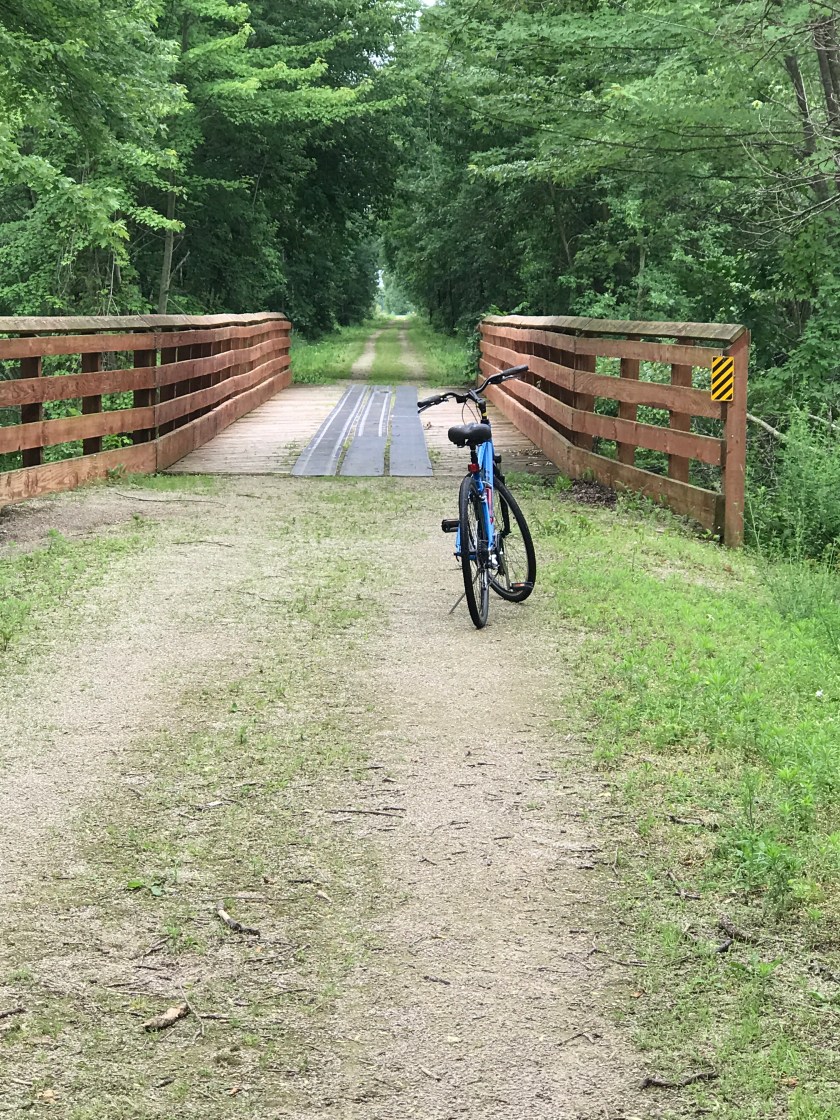
IMG_0398Even before I retired I knew I needed to seriously ramp up my level of exercise or I was going to end up looking like a blimp in very short order. At first I was just walking around town twice a day, but that got old pretty fast. So Sunday I went and got myself a bicycle and much to my family’s surprise, I actually enjoy it enormously and I’ve been doing about 10 – 15 miles a day.
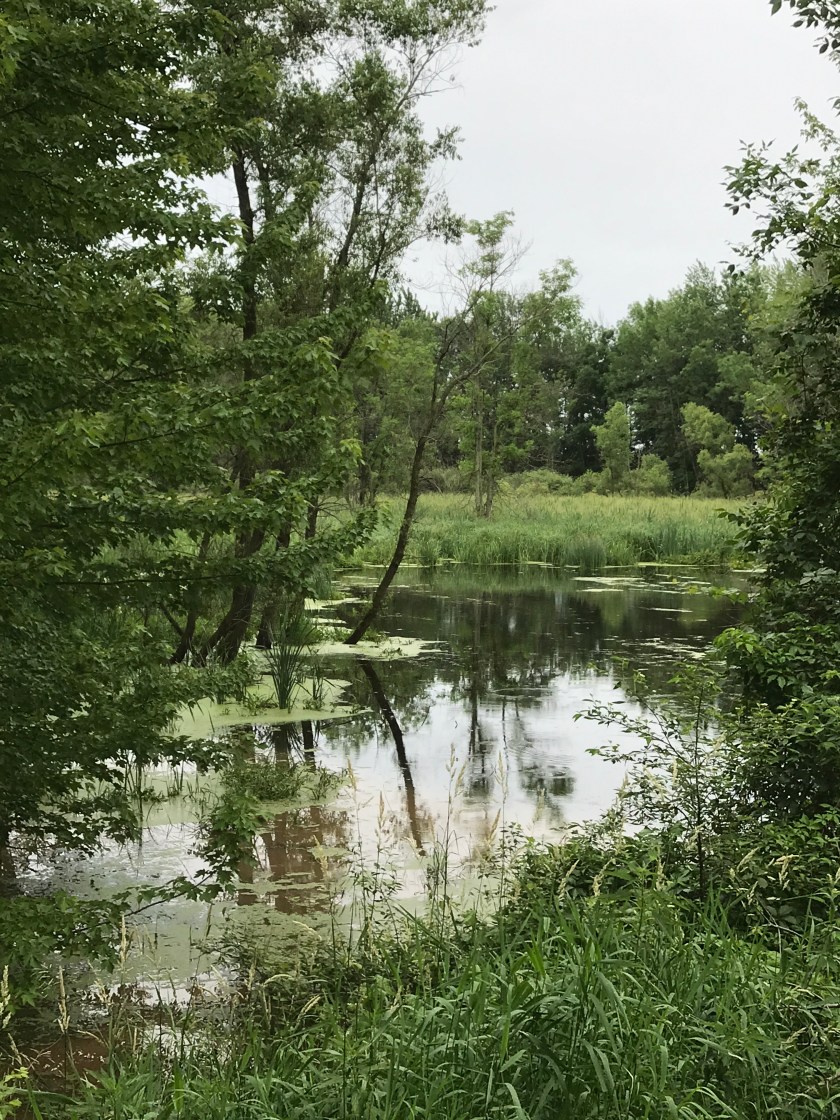
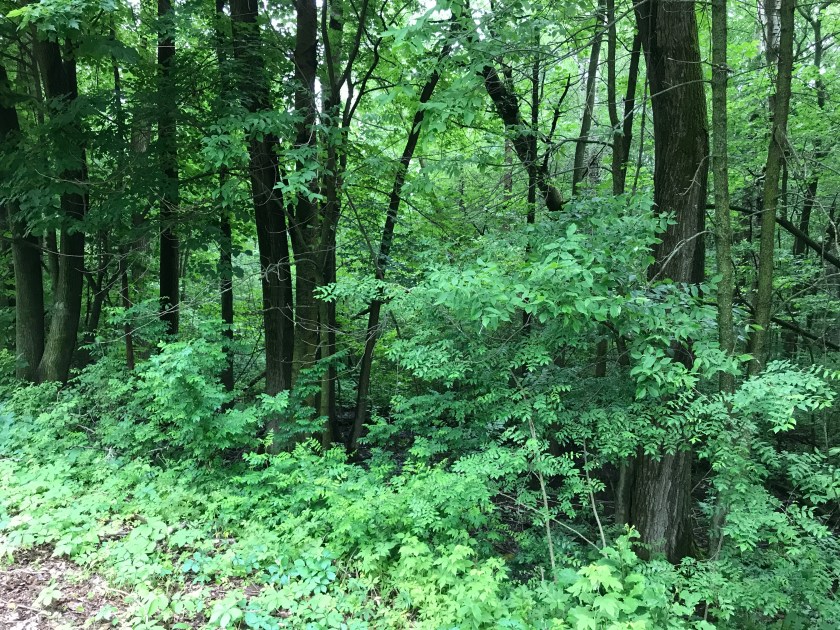
We’re fortunate enough to live in a fairly rural area with a lot of paved back roads that have very little traffic. I’ve found it’s a great way to just get out and enjoy nature because some of the roads run through undeveloped land around here. I’m not exactly a power rider because I’m having too much fun stopping and looking at birds, trees, turtles, streams, taking pictures… You get the idea. Great fun

I end up in places like, well, this:

IMG_0406

IMG_0404

Or this:

IMG_0411.JPG

Or this:

IMG_0405

What surprised me most about all of this was the smells. I can smell cedar, spruce, flowers… Along the trail I kept smelling an almost intoxicating floral scent that turned out to be this bush:

IMG_0414

The air was thick with the scent. It was amazing.

But then there’s stuff like this…

IMG_0403

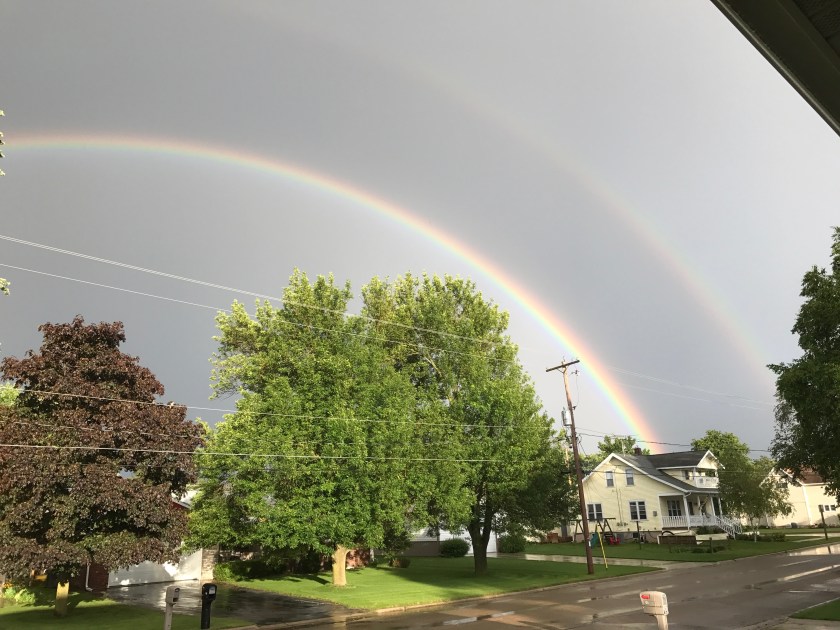
Yes, more rain. We got 2 1/2 inches overnight according to the rain gauge in the backyard, and except for an hour or two this afternoon we’ve been getting light rain most of the day.

There are bright spots, though. Like these guys.

IMG_0402

Another of the lilies is starting to bloom. The color on these guys is spectacular.


Lilies, Peppers, Water and Stuff

One of the lilies is finally coming into flower and it’s been worth the wait. I love these things and grin like an idiot whenever I walk past this plant.

IMG_0396.jpg

For some reason MrsGf went pepper crazy this year and we’ve ended up with something like 30 pepper plants of various types out in the gardens. One of the raised beds is full of them, and then they’re tucked away in odd corners all over the flower beds as well. They’re all starting to blossom now.

DSCF3740.JPG

This particular one is supposed to be a small, round, hot pepper called a cherry bomb if I remember right, although it’s hard to keep track of what’s actually planted where. There are at least 4 or 5 different types out there. Both of us really love peppers, especially fresh from the garden, but there’s no way we’re going to be able to use all of these this year. I think it’s a hint that the family wants me to make and can a big batch of pickled peppers this year. The pickled peppers were an experiment last year and turned out so good we’re down to one or two pints left. I certainly don’t mind, but damn, that’s a lot of pepper plants…

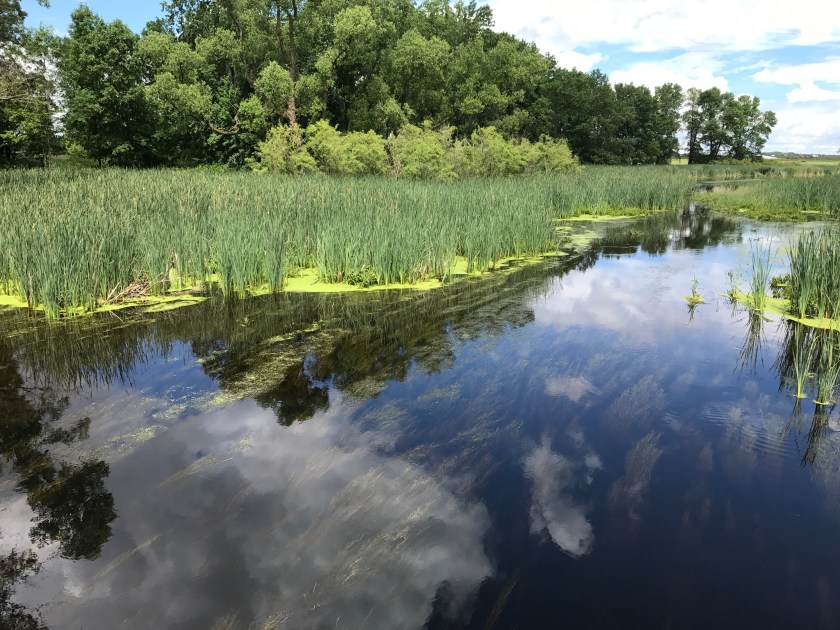
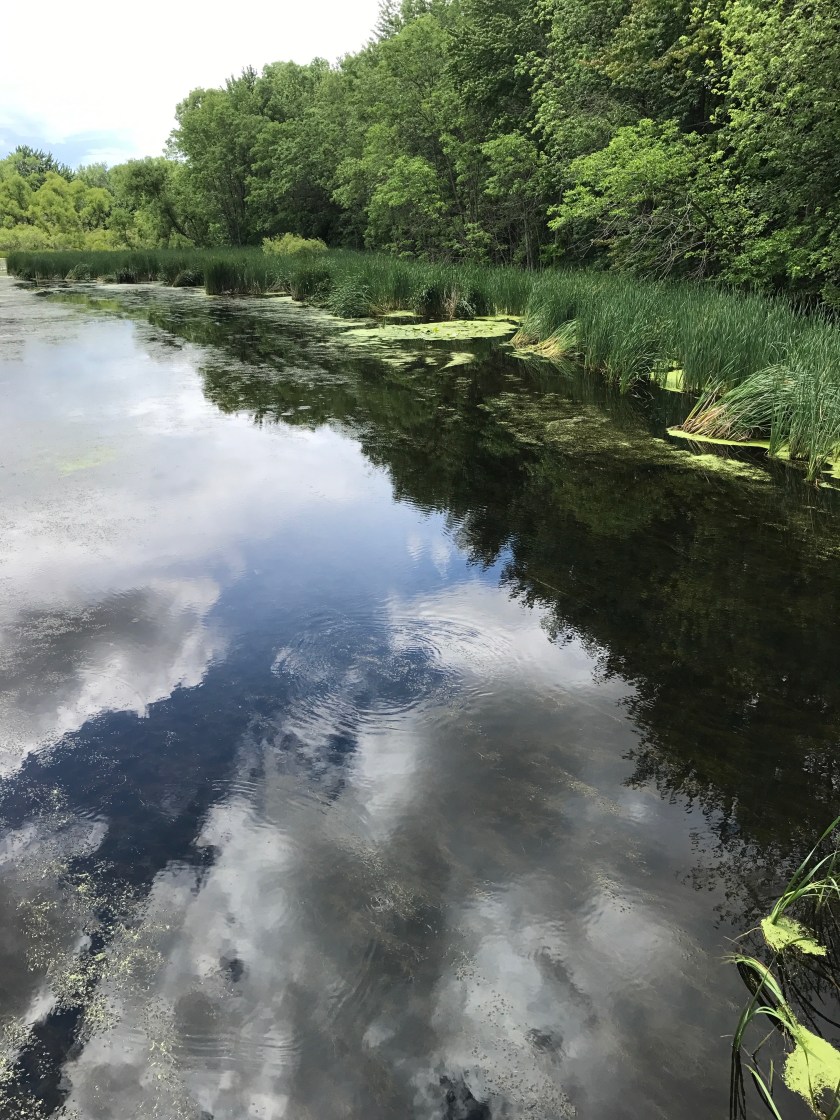
Now that I’m not working I’m going to blow up like a balloon if I don’t exercise, and walking around town day after day is pretty darn boring so I went and got myself a bicycle. Biked about five miles down to the old stone bridge outside of town.IMG_0391.jpgIMG_0393.jpgIMG_0389.jpg

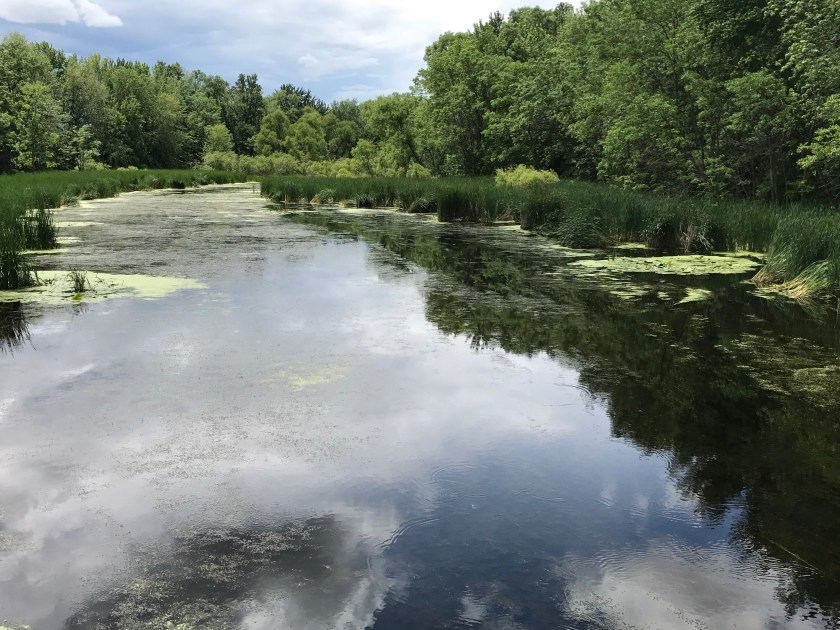
the bridge goes over a shallow, slow little river that dries up into a mud hole by mid-summer usually. I never really paid much attention to it before because usually I’m going over the bridge in a car. I realized it’s really kind of pretty down there, especially with the sky reflecting off the water.

Four thirty in the morning? Really? Ick… Why do I keep getting up this early? I have turned into one of those most obnoxious of people, a “morning person”. As soon as the sky begins to turn light in the pre-dawn, my idiotic brain has decided I need to be up. Right now. I suppose there’s nothing wrong with that, but it’s annoying because I don’t want to be up at bloody 4:30 or 5 in the morning.

The cats are delighted by this, of course. Being the utterly annoying little goofballs they are, they’re generally all sitting outside of the bedroom door by 4:30 anyway because they want their breakfast. So I’m out here, bleary eyed, still half in the dark, trying to make coffee and tripping over cats, stumbling over cats, having cats butting against my legs (it’s not a sign of affection, they’re trying to trip you, you know) and having cats yelling at me. And trying to keep things quiet so MrsGF can get an extra half hour of sleep or so.

If they’re especially bored or hungry, they will drag their food bowl all the way across the room and put it directly in front of the bedroom door so I trip over it when I come stumbling out. One of them has developed the habit of going through the house, finding every cat toy she can, and depositing it in the empty food dish. Apparently she’s under the impression that if she makes some kind of offering the cat food gods will refill her bowl?

Come to think of it, it works, doesn’t it? She puts her toys in the empty food dish and like magic I show up and refill it.