As of this morning the ag futures markets are listing corn at 3.67 a bushel, soybeans at 9.46, and wheat at 4.33. But as if often the case, out in the real world, at the farm level, the situation is far different. If you’re a farmer trying to sell, you don’t get the futures prices, you get farm gate prices, what a buyer will actually pay to a farmer. And that is often much, much less than what that commodity is trading for on the floor of the Chicago exchange and other commodities markets.
Out in the real world, farmers are looking at farm gate prices for corn of as little as 2.90 and wheat around 3.15. Those prices are well under the cost of production for most farmers. US farmers are looking at a fourth straight year of increasing costs, declining income, and increasing debt.
The problem is we’re growing too much food.
Sounds ridiculous, doesn’t it? Especially when we’re hearing about mass starvation in some parts of Africa and other parts of the world. But the problem isn’t a lack of production. We’re producing more than enough to keep everyone fed. The starvation is due not to a lack of food, but to government corruption, incompetence and war, not to any kind of shortage of food.
Overproduction has become a very serious problem. Most of the grain producing nations are looking at massive surpluses of product. Storage facilities are packed tight. In Kansas they’re actually renting runways at decommissioned military airbases and parking lots to pile the stuff up because there’s no place to go with it.
Meanwhile countries like China and Russia are trying to dump old stock in storage in order to make room for new production, resulting in prices being driven down even farther.
And there seems to be no end in sight. USDA is estimating that corn, wheat and soybean production in the US alone could be the biggest ever since they started keeping records.
Time to catch up again, so let’s get on with this, shall we?
Lots of stuff has been going on in the farming world, some of it unpleasant.
Canadian Milk Export Headaches
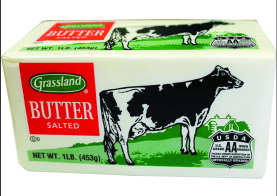
Grassland, a large milk processor, sent notices to 75 dairy farmers here in the state that the company will no longer accept their milk as of May 1, leaving the farmers scrambling to try to find someone, anyone, to buy the milk they’re producing. Over the last couple of
Ooo, butter… Yummy yummy butter
weeks Canada has rejiggered its milk classification/pricing system which has effectively prevented Grassland from exporting up to 1 million pounds of milk a day to Canada, and apparently with only 2 days notice. Grassland had no choice but to notify the farmers that they could no longer buy their milk because the company has no way to sell it now. A lot of people in the US dairy industry are claiming that Canada’s actions are nothing but a way to try to curtail the imports of US dairy products and are actually illegal under international trade law. Where are those farmers going to go with their milk? I have no idea. This is a bad time of year to try to find a milk processing company because we’re about to enter into what’s known as the “spring flush”, when dairy cows normally begin to produce even more milk, so there’s going to be a glut of milk coming on the market as it is and few processors are looking for more.
Corn Finances are Wonky
A recent survey by the Farm Journal indicates that the average cost of raising a bushel of corn for most farmers is about $3.69 per bushel. Corn briefly flirted with the 3.70 range for a while, but mostly it’s been in the 3.50 – 3.65 range for months and months now. It makes one wonder why anyone bothers to raise corn in the first place. Granted, some have lower costs than that and do make a bit of money off the crop, but still.
Sometimes the farming business reminds me of the old joke about the two guys from Milwaukee who decided to go into the fruit business. They bought a truck, ran down to Georgia and bought a load of peaches for $1 a pound, and came back to Milwaukee to sell them at $1 a pound. When they realized they hadn’t made any money on the deal and were trying to figure out why, one of them looks at the other and says “I know! We need to get a bigger truck.”
Some days I feel like the entire agricultural system is being run by those two…
Chickpeas
I love chickpeas, or garbanzo beans as they’re sometimes called. I use them in salads, soups, but they’re mostly known for their use in hummus and in middle eastern cooking. A member of the legume family, they’re tasty, very nutritious and high in protein and, well, they’re just yummy and very useful in most types of cooking.
Chickpea planting in the US has more than doubled since 2013. We’re only planting about a half million acres, almost insignificant when compared to corn and soy acres, but interest in the chickpea has been climbing steadily. They’re being grown mostly in the north western states. Farmers are always looking for an alternative to low profit crops like corn and wheat, and right now chickpeas look pretty good, profit wise. They aren’t that easy to grow, though, mostly because they’re susceptible to disease. But the prices have gone up about 23% over the last year, and with consumption and interest increasing, and farmers looking to try to find some way to make a profit, I won’t be surprised if acres planted keeps on growing significantly.
Butter Butter Everywhere
Butter consumption in the US is at 50 year record high, and there seems to be no end in sight. Butter price is one of the few bright spots in the dairy industry right now, with the price creeping up despite a decrease in butter exports and an increasing stockpile sitting in warehouses. Wholesale prices for butter were pushing $2.23 at one point and have only declined a few cents since then, despite increases in milk production.
Butter has become a marketing tool for a lot of food companies. A lot of restaurants, even the fast food ones, are switching out margarine in favor of butter, and a lot of companies that make processed foods are now hyping that they’re using real butter instead of margarine or vegetable oils.
Why this increase in demand for butter? Part of the reason is that dairy products are no longer linked to increases in cholesterol levels. Over the last five or eight years new studies indicated that contrary to previous beliefs, moderate consumption of fats from dairy products seems to have little or no effect on cholesterol levels. And there have even been some studies that indicate moderate consumption of full-fat dairy products may even have some health benefits.
Another thing that’s been driving an increase in butter consumption is that it’s been found that hydrogenated vegetable oils, long the primary ingredient in most margarines, are utterly horrible for you, health wise, causing significant increases in risk of heart disease and other problems.
But despite all of that, we’re still producing way too much milk. In many areas of the country there isn’t even the plant capacity to handle all of the milk being produced. There are reports of milk being dumped or being used for animal feeds in some states. With the ‘spring flush’ now arriving, a lot of milk processing plants are at full capacity already. It’s going to be interesting to see what happens to milk prices over the next month or two.
Amateur Radio Stuff
If you’re interested in agriculture and don’t give a fig about AR, you can stop reading now if you like.
QRZ
Just got the notice that my subscription to QRZ.com is about to expire. QRZ is known as being the place to go if you’re looking for information about a particular call sign, want to buy or sell radio equipment or if you’re a grouchy old fart who likes to complain a lot, hang out in the forums and, well, complain a lot. Most people just use it as a way to easily look up information about an amateur radio operator. If you have the person’s call sign, you can find names, addresses and other information about them on QRZ’s database. You don’t absolutely need to be a paid subscriber, but it’s helpful. It gets rid of the annoying advertising, gives you access to things the freeloaders don’t see, that kind of thing. You get your own web page, email, log book and other goodies. It’s not an essential service by any means, but it is indeed handy to have.
Just stay out of the forums unless you have a thick skin.
Terminology
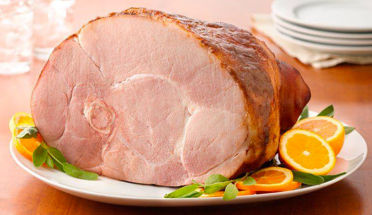
The other day someone I was talking to remarked that I never, ever use the terms “ham” or “elmer”. And they are right, I don’t. While the term “ham” when used to refer to an
A ham. Not an amateur radio operator
amateur radio operator has been in common use for probably a hundred years, that doesn’t mean I have to like it. I have no real desire to be referred to by a term that means “cured pig meat” to 99% of the population of the country. Am I being ridiculous? Pedantic? Of course I am. Don’t care.
I also loathe the term “elmer” when used to describe describe someone who assists a newcomer to amateur radio learn about the technology.
Now, before you go off the deep end and launch into a rant down in the comments section about the tradition behind the term “elmer”, I understand that “elmer” refers to a very nice fellow who once helped newcomers to the hobby learn about it. I’m sure he was a very nice person. He was an utterly delightful and nice fellow I’m sure.
But I don’t care. There is already a perfectly
An Elmer. Not a mentor.
good term for that: mentoring. And to be perfectly frank, the term “elmer” is not exactly complimentary outside of the amateur radio community. It refers to the character Elmer Fudd from the old Bugs Bunny cartoons. An “elmer” for a large percentage of the population is a person who resembles Elmer Fudd, someone who is a bumbling, idiotic fool. It is not a complimentary term.
Use both terms if you wish. I don’t care. I won’t object or even comment. But as far as I’m concerned, a mentor is a mentor, not an “elmer”. An amateur radio operator is an amateur radio operator, not processed pig meat.
Many farmers know approximately what a drone might cost. Fewer know what return on that agtech investment might bring – but a new report brings fresh ROI insights.
I’m a fan of drones as you may know and own several, and agriculture is one area where they are genuinely useful. Still it surprised me that the ROI (return on investment) on their use is as much as $15 per acre.
In agriculture they’re used for crop scouting, flying over fields to check for problems such as insect and weed problems, poor drainage, checking the condition of the crops, etc. It saves an enormous amount of time because before drones came along farmers would either have to do that themselves or pay for the co-op to do it for them. Using a drone takes a tiny fraction of the time it would take to walk the fields.
And damn, I wish we’d have had one back in the day when the heifers broke out of the pasture and got into the corn field! You ever try chasing a dozen crazed heifers running through a cornfield?
Drones suitable for this kind of thing aren’t cheap. You’re looking at starting out at around $1,700 or so and by the time you add in the cost of extra batteries which can run $75+ each, possibly portable charging systems so you can charge batteries in the field, things like that, you’re well over $2,000 and climbing. Professional quality drones with extended flight times, programmable flight plans, etc. add to the cost quickly. But you can get something like the DJI mentioned in the article or the Yuneec Typhoon that I used to have which is equivalent to it, for around $1,500.
Note: the FAA has finally straightened out all of the rules and regulations, and is now issuing licenses for commercial drone operators that does not require you to spend months of time and ten thousand dollars or more to get a airplane pilot’s license any longer. That ought to help enormously. I should point out that you do not need to get licensed if you are using the drone over your own property for your own use, only if you are going to do it on a commercial basis. But even if you’re flying over your own property you need to register your drone if it’s larger than the little indoor toys, so anything that would be useful for crop scouting etc. is going to have to be registered.
As in I wish I could. I occasionally suffer from insomnia and it’s been pretty bad the last few days. I’m not sure why. Which is why I’m writing this at two in the morning instead of being asleep. I know, I’ll try looking at photos of, oh, blossoming apple trees. That will put me to sleep!
Ah, well, apparently not. Didn’t work. Still it’s a really pretty tree.
Spring!
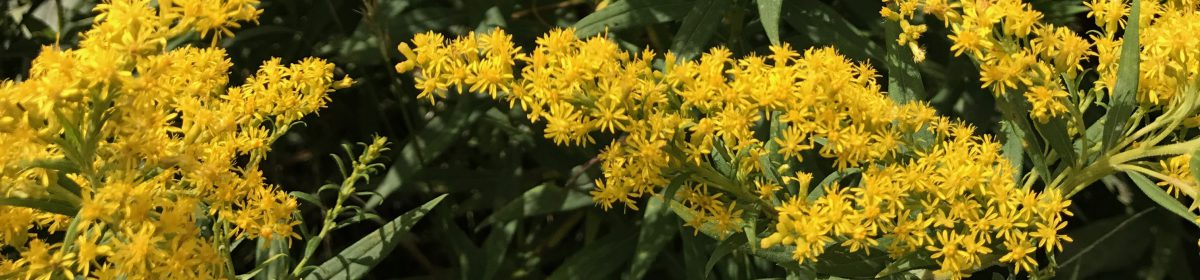
Spring is coming! I hope. Getting so tired of cold, wet weather, and especially the lack of sun. So I’m going to drop in some photos of spring and summer flowers in an attempt to lure spring a bit closer.
Agriculture Secretary Hearings
The senate ag committee hearings and questioning of the administration’s nominee
Sunny Flower, not Sonny Perdue
Sonny Perdue finally took place on March 23. Unlike the hearings for most of the administration’s nominees, this one was relatively short, cordial and even pleasant for the most part. Mr. Perdue is perhaps the least controversial nominee put forward by the administration. He is also unusual in that he actually seems to know something about the agency he would be running.
Brazil Beef Scandal
The government of Brazil arrested 38 people involved in an alleged scam where inspectors were bribed to permit rotten and tainted beef to be passed for sale at a beef exporters JBS
Wouldn’t you rather look at chive flowers than diseased beef? I know I would.
and BRF. Several countries have instituted temporary bans against beef imports from Brazil. Here in the US some government officials are calling for a ban as well but there is none as yet. USDA says it is stepping up inspection of meat coming from the country. But USDA also certified Brazil’s inspection system as being as good as that here in the US, so who knows…
Addendum: Since the US was forced to repeal the Country Of Origin Labeling law (known as COOL) US consumers no longer have any idea where their food comes from. But there is nothing to prevent beef processors, wholesalers, etc. from doing it voluntarily.
Memphis sits on the Mississippi river but gets it’s water from wells that draw from the
I wish I could remember where I took this picture
Memphis Sand Aquifer that stretches under Arkansas, Mississippi and Tennessee. And like most aquifers, water is being pulled out of the ground far faster that it is being replaced.
Back in 2005 Mississippi demanded that Memphis pay for the water it was withdrawing from the aquifer, claiming that the city was actually sucking up Mississippi water. The state is demanding over $600 million from the city.
This has been dragged through the courts ever since, with Mississippi losing at every level. But now the state of Tennessee has been dragged into the case as well giving it new life, and it’s going to the Supreme Court.
This case has the potential of setting off a hornet’s nest of problems if the SC rules in favor of Mississippi. It could cause major legal problems wherever large aquifers are used for water supplies and could even extend into international disputes. it will be interesting to see how this one plays out.
Apparently this company has developed a type of canola that contains relatively large amounts of an oil with omega-3 that is similar to that produced in fish. The GM seed has been produced by adding in genes from microalgae which make omega-3 oils. The claim is that this microalgae is the source of the omega-3 oils that are found in fish. About 2.5 acres of this canola is supposed to produce s much omega-3 equivalent as 10,000 kilos of fish.
The new canola (rapeseed) is still in testing and hasn’t yet received approval from USDA or from other canola growing countries. But everyone is excited about it because this could go a long way to fill the ever increasing demand for omega-3. In the US alone omega-3 supplements are a billion dollar business and people by the millions gobble down the capsules. Food processors are adding it to a wide variety of foods like yogurt, cereals, juice, even cookies for heaven’s sake. So it is hoped that a product like this may help to reduce overfishing that has driven some of the most popular types of fish in the oceans to near extinction.
But there are problems. And everyone seems to have been completely ignoring them. And the biggest problem seems to be that no one seems to be really sure that omega-3 actually works. Even worse, there are some indications that taking omega-3 might actually be detrimental for the health of some people.
The Journal of the National Cancer Institute published a report a year or so ago that indicated that linked eating a lot of oily fish or taking fish oil supplements to a 50% increase in the risk of prostate cancer in men, and a 70% increased risk for aggressive prostate cancer.
Taking omega-3 supplements is supposed to improve heart health, of course. But studies are indicating it doesn’t do that, either. A study published in 2013 in the New England Journal of Medicine showed that taking omega-3 supplements did nothing to reduce heart attack, stroke or death from heart disease.
Why all this confusion and conflicting information? Because how food and it’s components affect the body is an extremely complex subject and often still largely a mystery. Using supplements for anything other than to treat an actual deficiency is generally something you should do only with caution and great reluctance.
Eating a diet that has fish in it is considerably different from gulping down a handful of omega-3 pills because no one seems to be able to prove beyond a doubt that omega-3 is the only thing at work when there is an improvement in health. It’s more likely you need everything in that fish, all of the vitamins, minerals and other substances that are in the fish itself, not just a single component of that fish.
Even though we have hundreds of companies trying to sell you fish oil and omega-3 supplements, adding it to other foods as a marketing gimmick, there are a lot of studies out there that indicate that taking fish oil and omega-3 supplements to reduce heart problems doesn’t work any better than taking a placebo. Like this one. Or this one. Or… Well, you get the idea so why go on.
Everything we do has consequences, things that happen as a result of our actions. Some of those things are planned and are desirable. Some are unintended and can be undesirable or even catastrophic. And as many business owners, farmers and others can tell you, the current climate of antagonism towards immigrants, both legal and non-legal, is already having consequences that are starting to ripple through the country both socially and economically.
I’m not going to talk about the social consequences of what is going on now, there are already people who are doing that far more eloquently than I could. Instead I want to talk about the economic consequences of what is happening now and what will happen if the current administration continues down its present path.
Like it or not, large sectors of the economy are dependent on immigrant labor. The hotel/motel industry, food service, including restaurants and institutional food service, the tourist industry, child care, elder care, custodial and janitorial services, agriculture, all of these industries and more are dependent to one extent or another on immigrant labor. In Wisconsin, state wide about 50% of all agricultural employees are immigrants, mostly from Mexico or Central America. In some parts of the state that number is closer to 80% or even more. And because of this, the crackdown has already started to effect the ag business here in Wisconsin and around the country. (If you want to read about how serious the situation is, jump over to a Wisconsin Public Radio article here.)
Since this blog is (occasionally) farming related, let me stick with the agricultural sector and leave the effects of all of this on other industries to those more qualified to discuss them.
Trying to find people to work on farms and in agriculture in general has always been difficult. The days of being able to hire high school kids to help with the milking or baling hay or whatever are long gone for a variety of reasons. And let’s face it, even back then it wasn’t easy to find farm help. As is generally the case, these so-called ‘golden ages’ when everything was find and dandy before XXXX (insert your favorite conspiracy theory here) got involved and ruined everything, well, those golden ages never existed in the first place. The fact of the matter is that finding reliable help on a farm has always been difficult, and over the years it’s only gotten worse.
Right now about 50% of all workers employed on dairy farms are immigrants. Here in Wisconsin that number is even higher. Around here and in a lot of counties in the state that number is closer to 80%. I know of farms where almost all of their employees are immigrants.
There is an argument that these immigrants are taking jobs that would otherwise have been filled by citizens. But where are these citizens? Even when unemployment was at it’s height during the recession, farmers told me that they never got job applications from local people. None. Even when unemployment was pushing double digits, the only applicants they got were immigrants.
(The fact that us ‘real Americans’ feel that farm work is so demeaning, so degrading, so — so nasty, that we don’t want to work on a farm even as a last resort, is more than a little troubling, and one of these days I might look into that farther, but for now I’ll skip over that and stick to the topic at hand.)
The situation now is even worse when it comes to finding employees. Now the unemployment rate is down to around 3.9% or even less in some parts of the state. Employers at all levels of the economy are having trouble finding employees. And as for agricultural labor, it’s almost impossible to find new employees at all. The idea that there are hundreds and hundreds of ‘real Americans’ waiting in line for these jobs is false. They aren’t. They never were.
While the get tough rhetoric of the current administration makes for good PR in certain political sectors, out here in the real world it’s a different story. Without immigrant labor, the dairy industry here in Wisconsin and in other states, indeed the whole agricultural sector, would collapse. You can’t produce milk without labor. You can’t harvest food without labor. You can’t… Well, you get the idea. Without immigrant labor thousands of farms would have to shut down, food prices would skyrocket, and the whole economy would be disrupted.
So be careful what you wish for. There are often unintended consequences.
I was going to talk about farming less often here but there’s been so much going on and it’s hard to do that. So let’s see what’s going on, shall we?
Bird Flu – We haven’t been hearing much about bird flu since 2015, but it hasn’t gone away just because it’s fallen off the news media’s radar. There have been some serious
I don’t have a photo of a bird flu, so how about a cat instead?
outbreaks in China, including at least 84 human deaths from one form of the virus. China either already has or is in the process of shutting down live bird markets and putting other rules in place to try to curb the spread. In France the government was forced to slaughter all of the ducks in an entire region, and it’s popping up in the US now. An outbreak of a very nasty strain of the virus was found in Tennessee. A mild version of the virus was found at a turkey operation here in Wisconsin. And as a result a lot of people are very nervous indeed.
What about a vaccine? Well, vaccines are out there for some, but not all versions of the virus. Flu virus evolves very rapidly, which is why it’s necessary for us to get vaccinated every year, and even then the vaccine may not do much good. A year or so ago they estimated that the vaccine that was distributed for human use was only about 30% effective because the type of flu sweeping the country was different from the one the vaccine was developed for.
Even worse, a lot of farmers raising birds are reluctant to vaccinate their birds because the tests that are required on poultry being exported to other countries will flag vaccinated birds as having virus because vaccination gives the bird the same antibodies as if it had the actual disease. So it’s complicated.
Labor – Trying to find reliable, intelligent farm labor has always been difficult, and it’s become especially bad since, oh, the 1970s or so. The days of being able to hire a couple of high school students to stack bales, pick rocks or milk cows are long gone for a variety of reasons, some legal, some economic, some social. Even though wages and benefits have risen to the point where they are often competitive with the manufacturing sector (starting wages at some of the farms around here are higher than they are at most of the local manufacturing companies) it’s still almost impossible to find employees unless the farm is willing to employ immigrant labor, usually from Mexico and Central America. Something like 80% of the farm jobs here in Wisconsin are now held by immigrant laborers, either legal or undocumented. While it is illegal for a US employer to hire undocumented workers, the penalties for doing so are often little more than a slap on the wrist. So when a worker presents a slightly dodgy looking set of papers to prove he or she is in the country legally, well, let’s just say it’s really easy to overlook problems with the paperwork when your choice is to either hire that person, or go out of business because you can’t get people to do the work. Besides, with modern technology it’s possible to crank out very official looking documents that can fool almost anyone except the experts.
So in today’s political climate, a lot of farmers are very, very nervous about the real possibility that they are going to get up one morning and find that most of their employees are gone and they can’t replace them.
If one adheres to the ideas of the far right, then the belief is that these immigrants are taking away jobs from “real Americans”, and the reason unemployment is so high and people aren’t making money is because the immigrants are somehow stealing our jobs…
But wait a minute. Right now Wisconsin’s unemployment rate is under 4%. Almost every time I turn on the radio I hear businesses claiming they can’t find employees. Now granted a lot of the people who are employed are under-employed, that is they are working at jobs below their qualifications, at pay rates less than they really would like to have. Many, far too many, are the working poor who, despite working one or two or even three jobs, are just barely hanging on by the skin of their teeth. But the claim that we have huge numbers of “real Americans” unemployed because of immigrant labor is not really true.
And most of the jobs the immigrants are “stealing” are jobs those “real Americans” don’t want to do in the first place: like shoveling manure out of calf pens, cleaning toilets, scrubbing floors, the backbreaking work of picking fruit or vegetables…
Uncertainty – Right now one of the biggest worries in agribusiness isn’t climate, isn’t flooding, isn’t weed or insect infestation, isn’t drought, it’s politics. Everyone in any kind of business associated with agriculture right now is nervous about the new administration and for very good reasons. Between threatening to institute huge tariffs on imports that would decimate the markets and cause massive retaliation by trading partners, to immigration policies that would cut off badly needed labor, to renegotiating long standing trade agreements that would open the country up to restrictions on our exports, the current administration has done little or nothing to curb the nervousness in the ag sector. The commodities markets have been churning, prices refuse to stabilize making planning difficult. No one knows what the FDA or USDA is going to be like under the new administration. Some farm operators I’ve talked to are terrified they’re going to wake up one morning and find their entire labor force has fled out of fear of the immigration authorities. One fellow I talked to said even people who are here legally are leaving because they’re hearing rumors that anyone who looks or sounds even vaguely “un-American” is going to be rounded up and deported or put in concentration camps somewhere.
Scandal – Everybody loves a good scandal, so let’s wrap this up with a nasty and expensive scandal going on in the University of Wisconsin system at the Oshkosh campus.
Apparently former UW-O chancellor Richard Wells and vice chancellor Sonnleitner, both now retired, are accused of funneling university funds to the private UWO-Foundation, a separate nonprofit that supports UWO projects through fundraising and other activities. Under state law the university is not permitted to support a private organization like the foundation in any way.
But it is alleged that Wells and Sonnleitner gave university money to the foundation and issued “memorandums of understanding” in which the university promised to cover the foundations debts in order to help the foundation procede with several multi-million dollar building projects that included two biomass digester systems, one on a private farm, a new hotel, a conference center and a sports complex. In addition it’s alleged that Sonnleitner gave money amounting to well over a quarter of a million, and signed a $700,000 a year lease agreement with the foundation to use one of the digesters.
In all it seems to have cost UWO around $11 – $12 million.
The head of the foundation has been fired, the foundations accountant was put on “administrative leave”, and everyone is wondering how the hell this happened in the first place and how they’re going to keep it from happening again Investigations by the DOJ and law enforcement are going on, lawsuits are already in the works, and the whole thing is a massive mess.
What’s that got to do with agriculture? I said this post was going to be about agriculture, didn’t I? Well, the digester, of course.
One of the projects was a massive biodigester system built on a farm in Rosendale not too far from Oshkosh that was backed by the foundation. The system cost $10 million. Manure digesters use bacteria to produce methane which is then burned in generators to produce electricity. The idea is that it reduces pollution from spreading manure (it doesn’t), it produces methane (which it does, although not very well and methane has some serious problems in the first place) which is then burned to produce electricity which, apparently, none of the utilities actually want because they don’t want to pay more than a token amount for it. For reasons I won’t go into right now, manure digesters are a “solution” to a problem which doesn’t actually solve anything and which creates a whole new set of problems.
I’m not exactly sure why the foundation got involved in this project in the first place, but it’s in it up to its neck. As of June the foundation still owed almost $7 million on the thing. The university itself dumped over $4 million into the project via illegal funds transfers to the foundation. And while some of the money was repaid, the foundation still owes the university almost one and a half million.
People were starting to think that milk prices were beginning to stabilize, and that milk prices were finally starting to go up to the point where dairy farmers might not be under such financial stress from low prices.
But that might all have been little more than a house of cards. There were always a lot of problems with those hopes.
The first problem was that except for the New Zealand and Australian producers, milk production in the rest of the world had not really declined all that much, and in large parts of the world like North America, production had actually been increasing. While prices have been going up here in the US, that increase in milk price seems to have been due more to market stabilization and corrections than to anything else. There has been no significant increase in demand for dairy products to push prices up.
The second was that many seem to rely on prices at GDT as some kind of indicator of the overall health of the milk market. They shouldn’t. Global Dairy Trade is owned by Fonterra, the huge milk co-op in New Zealand. It markets it products mostly to Southeast Asia and China. And because it is owned by Fonterra, Fonterra can do whatever it likes with it. Fonterra has deliberately restricted or increased the amount of product flowing through GDT in order to manipulate the market prices in the past.
So relying on a sales organization that serves a rather narrow market, and which is wholly owned by a milk producer, and which has used that sales organization to manipulate market prices in the past… Well, do I really need to tell you that relying on sales figures at GDT as some kind of indicator of market conditions is really not a good thing to do?
Let’s talk about herbicides. It’s almost the time of year when we’ll start seeing the spraying equipment hitting the fields around here, so let’s talk about herbicides, one in particular called dicamba. And if you read the agriculture press, you’ll be seeing articles like this one that warn of the pitfalls of using this old-but-new-again herbicide: Caution Lights Ahead For Dicamba Use | Ag Professional. (And before you ask, yes, there are already dicamba resistant weeds out there and one experiment showed it took one type of weed only three generations to develop resistance to the herbicide. <read that article here>)
Now I should point out that dicamba has been around for a long time. It was developed back in the late 1950s and has been on the market ever since. It’s used to control broadleaf weeds and brush. What’s new about it is that Monsanto has developed a line of dicamba resistant crops such as soybeans which can tolerate the herbicide. With these crops being resistant to both glyphosate, the active ingredient in RoundUP, and dicamba, the hope is that this double dose of herbicide will help to control weeds that are resistant to glyphosate alone.
But there are, as always, problems.
The first of these is dicamba itself. It volatilizes easily, going into vapor, which then moves over large areas. It also is subject to drift while spraying. The droplets from the sprayers can drift over large areas as well. This combination of easy volatility and tendency to drift makes it troublesome to work with because it can spread over large areas, killing or damaging plants well outside of the area being treated. In order for dicamba to be used in the way Monsanto wanted, special blends and compounds had to be created to help prevent the easy volatility and drift of the product so it wouldn’t contaminate adjacent fields.
Monsanto decided to sell its Xtend seeds before the herbicide blend it was designed to work with was approved by the government. The result was that farmers who should have known better planted the seed, and then used dicamba blends that were not approved for use, and tens of thousands of acres (some estimates are in the hundreds of thousands of acres) of crops were damaged or killed by the drift from the herbicide. There are currently lawsuits going on against Monsanto claiming the company is responsible because it released the Xtend seed before the accompanying herbicide blend was available, and Monsanto should have known that some farmers would use dicamba illegally.
The new legal blend is now available, but even that isn’t going to solve the problem. There are a whole host of restrictions, requirements and warnings adorning the labels of the new herbicide. It can only be used with a particular type of sprayer nozzle, has to be applied no more than X inches above the weeds, has to be used at a certain point in the weeds’ life span, the wind can be no more than 10-15 MPH… The list goes on and on. All of the warnings and requirements indicate that this new “safer” blend isn’t all that much safer than the original form of dicamba was.
And in the long run dicamba is going to end up being just as useless in controlling weeds as glyphosate is becoming because as that article I linked to at the beginning points out, weeds will quickly become immune to it as well.
I keep wondering how much longer we can keep this up, concocting ever more toxic and complex blends of herbicides to try to control weeds, when we know that it is, at best, a temporary fix and that the weeds will eventually become immune to even that.
Meanwhile over in France the government has been trying to push things in the other direction, trying to get agriculture away from the ever increasing reliance on herbicides and pesticides. France <story here> has set a goal of cutting the use of pesticides of various types by 50% over the next ten years through the use of alternative methods of pest and weed control. How successful the program has been is a bit questionable, but studies have indicated that farms could significantly cut their use of pesticides and herbicides without a loss of income. But it would require some significant changes in farming practices.
Can we get away from this apparently never ending cycle of herbicide/pesticide resistance? We’re going to find out and in the not too distant future because the current situation simply cannot continue indefinitely.
So I ran across this little item over at AgWeb, the website of the Farm Journal: How Much Should You Pay for a Drone? – News | Agweb.com and it was a huge disappointment because it’s one of those so-called articles that just doesn’t really tell you anything about drones, what they can be used for, how they work, and gives you pretty much no information at all. So let’s take a look at drones, what you can do with them, how they work, look at the photographic and video capabilities of the different models, etc.
Oh, and there may even be video! Oooo! Well, there will be if I can figure out how to upload video to this thing. But let’s get on with this, shall we?
What are you going to do with the thing?– Well, that’s not my problem, now is it? I’m sure you’ve come up with some kind of excuse to give to your spouse to explain why you dropped $1,500 on a drone, and for all I know maybe you really are going to use it to scout crops or track down missing cows or inspect roofs or something like that and you aren’t at all going to use it to annoy the cats or race other drone owners or build 3D obstacle courses in the back 40. Let me give you a bit of advice, though. When it comes to just having fun, the smaller, less expensive drones are generally more fun to play with than the big ones. They’re faster, more maneuverable, and don’t do as much damage when you hit something with one. Also a lot cheaper to fix. You fly a $50 Walmart special into a tree it’s going to be a lot less financially painful than flying your $2,000 DJI camera drone into a silo or something. So if you’re just looking to play, start small and cheap.
(Oh, and if you are tempted to try to play with cats with one of these things, here’s a word of advice: DON’T. Just don’t. Seriously. Those props spin at hundreds and hundreds of RPM on even small drones. And while they don’t have a lot of mass, those props can slice, dice and otherwise do very nasty things to living tissue.)
That being said, they can be useful in agriculture and other serious applications. Agriculture because this is grouchyfarmer.com after all and I need to put some kind of farming reference in here, don’t I?
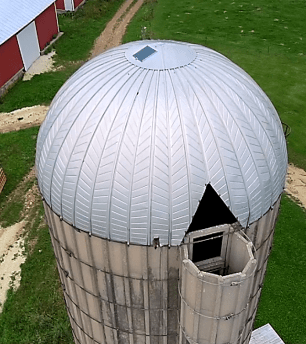
In case you were wondering, this is what the top of an old silo looks like
They are genuinely useful for inspecting roofs and a lot of roofing contractors are using them for that. They’re useful for scouting crops, finding trouble spots out in big fields. And they’re using them to try to find lost cows, and if you’ve ever had to try to find a heifer running around in a 40 acre corn field, you can understand why. They’re very useful for looking at the roofs of old silos as well. Exactly why you might want to look at the roof of an old silo is something you might wish to discuss with your therapist. But just in case you do, here’s one to get it out of your system. Ooo, exciting, isn’t it? And here you thought drones were just silly. I mean, just look at that! A silo! From above! Ooo!
Okay, now I’m just getting silly, aren’t I?
Money: So, how much is one of these puppies going to set you back? Well, it depends on what you want to do with it and how well you want to do it.
Now, if this editor put this photo in the right place, over there on the right is a Hubsan drone, one of the first video capable ones I bought, along with its controller on the left. It’s a nifty little gadget which streams video directly from the drone’s built in camera to a live video display built into the controller. It records video to a SD card that is inserted into the controller. Something like this goes in the $150 – $200 range, and it is about the bottom end of the scale for something that will give you some useful photo/video. Well, almost useful. Okay, be perfectly honest, it’s completely useless for anything serious.
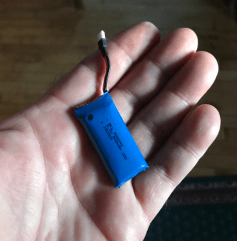
TIny battery means tiny flight time for a drone. Hubsan gets about 4-8 minutes.
Don’t get me wrong, it’s great fun to play with it, but it’s basically a toy that shouldn’t really be used except indoors. You can fly it outside, but if you do all bets are off. The range of the controller and video transmission is limited, just a couple of hundred feet at best, the video quality is, well, pretty miserable, to be honest, and flight time with the tiny batteries is about 4-6 minutes maximum. It’s also extremely unstable in even a light breeze.
Now if you’re flying around in the living room or kitchen taking photos of the dust on top of the cabinets, a 5 minute flight time is no big deal. But if you’re trying to fly around a 40 acre corn field, well, forget it.
If you’re going to do something serious with it like crop scouting, building inspection, etc. you’re going to be up in the $1,000+ range almost immediately. And even then you have to be careful, because what you see isn’t necessarily what you get. In order to keep costs down, a lot of these drones are “bare bones”, no camera, no camera mount, not even a controller. You’ll need to purchase a camera like the GoPro, and use an IOS or Android tablet or smartphone to actually operate the thing. So be careful. Before you buy one make sure you know what is actually in the box so you don’t find out the hard way that you need to drop another $500 or more just to get the thing in the air.
Video/Image Quality: Then there is the video quality on these itty bitty drones. It’s not exactly good, to be honest. Especially if you get them near the limit of their range. Let me give you an example.
The top image is a still from the video feed from the Hubsan drone. The bottom image is the same scene from approximately the same altitude and location but taken with my Yuneec drone. You may notice just a wee bit of difference between the two images if you examine them very closely.
Let’s see if I can figure out how to put video into this to give you a better example of the difference between the toys and the more professional versions.
The above is video from the Hubsan from about 150 – 200 feet in the air above my house. Oh, dear. This should have been well within the stated range of the controller, but obviously it was already at the limits of its communication range. If you can see through all of the static, you can also see the drone is bouncing around a lot, even though there was only a light breeze. It was almost impossible to keep under control and I barely avoided crashing the thing.
The video above is from about the same altitude and same location taken with the Yuneec, and under wind conditions that were actually worse than they were when the Hubsan was in the air. Again, as was the case with the still images, you may notice a bit of difference in the quality of the two videos if you examine them closely. Just a bit.
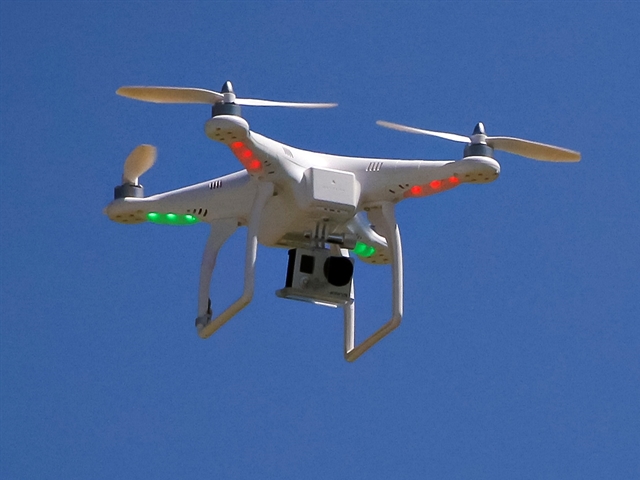
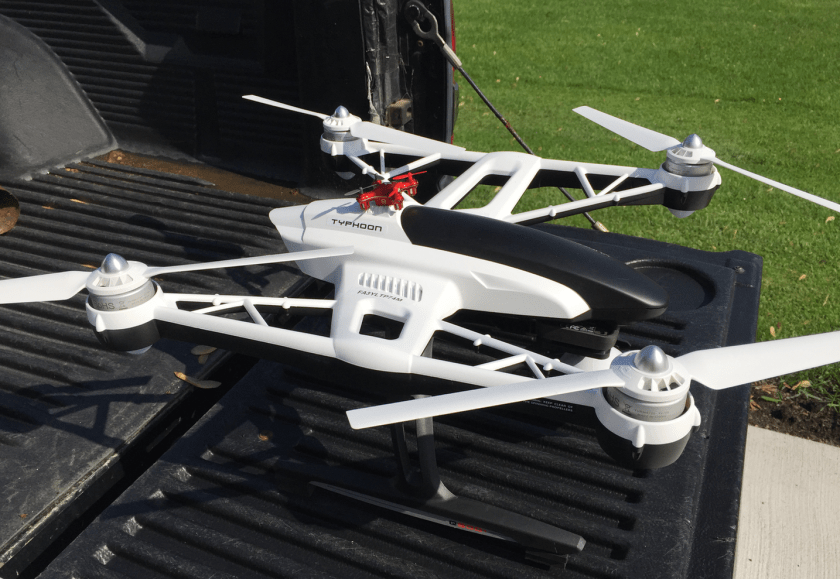
There is also a bit of a difference in size between the cheap drones and the Yuneec Typhoon I own, as you can see here.
That’s my Yuneec with a microdrone sitting on top of it to give you an example of the sizes of these things. The Hubsan that was used to take the still images and video is a bit bigger than the red microdrone shown here, but not by much.
Let me guess, you just came up with an idea to turn a big drone into a flying aircraft carrier for micro drones, didn’t you? Hey, go for it. Who am I to tell you not to do it?
Flying: Okay, so, how do you fly one of these things? Well, it turns out they are ridiculously easy to fly. They basically fly themselves. Especially the big ones. Built in gyros, motor controllers and onboard computers and GPS do all of the work for you. In fact, if it weren’t for all of that technology built into them, they’d be completely unflyable. The basic controls are generally a joystick for up, down, left, right, spin, that kind of thing.
The Yuneec, for example, will just hover wherever you put it. Park it over a specific spot 50 feet in the air, take your hands off the controls, and it will just stay there until the battery runs out, automatically maintaining it’s position and altitude. Even if a significant gust of wind comes along it will stabilize itself and return to its set position. There’s a panic switch. If you lose control of it, lose sight of it or something, press the button. It will go up to a height of 60 feet, return to it’s launch point, and land itself.
Well, if there’s nothing in the way, that is. This unit doesn’t have collision avoidance systems like some do so it can’t avoid obstacles.
The point is that just about anyone can fly one because they essentially fly themselves. The more sophisticated models allow you to plot out a flight plan on a map, and the drone will fly the route all by itself.
Still, you can get into trouble with the things. If the drone goes out of range of the controller, all bets are off. Some models will return to their launch point if they lose communications with their controllers, but a lot won’t.
Wind can be a real problem. The bigger ones are amazingly stable even in a good breeze, but I would not want to fly one if winds of more than 20 mph or so, especially anywhere near a structure or tree.
Regulations: Well, there are a lot of them. And there is still considerable confusion despite the FAA recently updating and clarifying things. If you’re just a hobbyist flying them for fun, you don’t need any special licensing or permits except for registering the drone with the FAA if it exceeds a certain size/weight category. The Hubsan shown above does not need to be registered. The Yuneec does because of it’s size and weight. If you’re flying for a business, you need a Remote Pilot Airman Certificate and have to pass a TSA background check. I won’t go into all of the rules and regulations. You can find them at the FAA’s website: https://www.faa.gov/uas/getting_started/ That will give you all of the information you need about how to stay legal.
So let’s wrap this up: Prices on these things are fluctuating all the time. You can get some real deals on even the better quality drones if you keep an eye out. I dropped about $1,500 on the Yuneec drone I’ve shown you here, but I’ve recently seen it going for under $700 because Yuneec is coming out with new and improved models. I don’t know what the used market is like, but I’m sure there is one. I’d be very cautious about buying a used one, however.
Recommendations: Ah, well, that gets a bit difficult. I’d like to recommend that if you’re interested in a camera drone you start with one of the cheap, small models before you drop a thousand bucks or more on one of the big ones. But it’s difficult to do that because they are entirely different beasts. The small, cheap drones are suitable only for flying indoors, are often twitchy to control. The slightest breeze can send them tumbling out of control. The cameras, if they have them at all, are virtually useless for any kind of decent photography or video. They are basically cheap, unstable toys. Don’t get me wrong, they are a lot of fun to play with, but that’s all they’re good for, play.
Drones like my Yuneec are much more stable, easier to fly outdoors, can handle wind better, feature gimbal mounted high def cameras that provide good video and still photos, but they are much, much more expensive than the $59.99 specials at Radio Shack or Amazon, or even the $180 Hubsan I have. So if you buy one and now decide it’s not something you want to do, well, now you’ve spent over a grand that you could have used to pay off your student loans or something, and you’re going to be mad at me because I recommended it.
Let’s say you’re thinking of doing actual serious work with it, like scouting hundreds of acres of corn or soybean fields. If you’re thinking of that kind of thing, well, even something like my Yuneec isn’t going to work all that well for you. Yes, it’s a damned good flying camera platform with a good, stable camera. But you only get about 20 minutes out of a battery so you’re going to need a lot of pre-charged batteries to scout any kind of significant acreage. You can’t pre-program a flight plan into it…
If you want to seriously do that kind of thing for a large far, you’re moving up into an entirely different and more sophisticated level of technology and, of course, an entirely different price range. For that kind of capability you’re getting out of the $1,000 – $1,500 range and getting into the $3,0000+ range and you might be better off getting one of the professional crop scouting services to come in and do it for you.
Addendum: I really need to point out that the claimed flight times for drones are often wildly optimistic. If the manufacturer claims you can get 30 minutes flight time from a fully charged battery, you can generally assume it’s going to be closer to 20 or even 15 minutes out in the real world.
The same is true for the claimed range of the controllers. As with battery life, the range of the controllers are estimates at best, and done under ideal conditions, not under the kinds of conditions you will find out in the real world.

 few days. I’m not sure why. Which is why I’m writing this at two in the morning instead of being asleep. I know, I’ll try looking at photos of, oh, blossoming apple trees. That will put me to sleep!


 ignoring them. And the biggest problem seems to be that no one seems to be really sure that omega-3 actually works. Even worse, there are some indications that taking omega-3 might actually be detrimental for the health of some people.




 grouchyfarmer