

Tumblr: Pulling the Plug At Last – I’ve had a blog over there for ages. I’ve put up with all of the nonsense they’ve pulled for far too long now. The company’s various attempts to make money off the service have done little except alienate the bloggers who made the service successful in the first place. Things have gotten much worse over the past year. Advertising is so invasive I can’t even read my dashboard without my ad blockers running full on. The service now seems to be in the process of being taken over by fake automated blogs that don’t have an actual person behind them. Most of these seem to be automated systems that “harvest”, so to speak, cute photos from Tumblr or other internet services, then offer them up on the blog, interspersed with dozens and dozens of fake posts that are links to advertising. The porn bots, the automated porn blogs that were “following” random blogs in the hopes of generating page hits were bad enough, but these new fake blogs are even worse. I’ve had about 50 new followers over there in the last couple of weeks and every single one of them has been one of these automated advertising systems.
I’ve had it with the whole mess over there. I’ll keep reading the blogs of people I follow over there, but I’m not going to be posting anything there any more.
Not sure what that means for this blog. You’ll probably see an increase in activity here. Maybe?
Amateur Radio Irritations Part One: “Contesting” or “Radio Sport” – The first time I heard someone use the term “radio sport” in amateur radio I almost fell over laughing. Until I realized they were serious. What they are trying to do is rebrand various contests as some kind of sport, and failing miserably. But I wanted to talk about contesting, didn’t I? So let’s get on with this.
Let me explain what contesting is in the amateur radio world for those of you who aren’t familiar with it. The basic idea is you have a limited amount of time, 48 hours, let us say, to contact as many other amateur radio operators as possible using a specific mode of operation; CW, SSB, digital, etc. The rules vary from one contest to another. Some are restricted to specific frequency allocations, some restricted to specific operators like the Rookie Roundup, etc. You get points for every contact, with some types of contact being points multipliers. And it’s just – well, it’s just silly. I’m sorry, but it just is.
The two print publications still catering to the amateur radio market, QST and CQ, make a Big Deal out of contesting. They claim it is wildly popular, fun, etc, etc, etc. And while it may be fun for those who enjoy that kind of thing, popular it is definitely not. One of the “big” contests was just reported on in the last QST magazine. They devoted four pages to the thing. How many participants did it actually have? About 4,500 if I remember right.
Now, there are something like three quarters of a million amateur radio operators in the US alone, so 4,500 participants world wide when there are around 750,000 operators in the US alone isn’t exactly popular by any stretch of the imagination. That’s a participation level of – what? About 0.006%?
Now don’t get me wrong. Contests are just fine and dandy if you get into that kind of thing. I can certainly see how someone might even enjoy it. But popular? I’m sorry, it just isn’t. When less than one percent of the total number of a particular group of people do an activity, it is not “popular” by any stretch of the imagination.
Amateur Radio Irritations Part Two: Own Worst Enemy – If you get on the amateur radio websites or read the letters in the magazines, there seems to be one question: Where the hell are all the new amateur radio licensees? We know they’re out there. People are getting licensed in droves. But you never hear any of them actually on the air. So where are they?
If my own experience is any indication, the biggest problem is that the amateur radio community isn’t exactly very welcoming to newcomers. I know there are many exceptions to this, but first impressions count, and when your first experiences are as difficult as mine were, well, you have to have a thick skin to deal with it.
Join a club, they tell you. Well, first of all, good luck even finding one. And if you do, chances are good you’ll have the same experience I did when I joined the Fox Valley club. I dutifully sent off my check, my email address, call sign, and all the other stuff they wanted, and heard — nothing. Absolutely nothing. Not even a confirmation they got the check. The only reason I know they got it was because it was cashed. No email reply, no information about membership, nothing. Meetings were scheduled when I was working so I couldn’t get to those. Emails to them asking about my status never got a response.
The local ARES group was more responsive and more helpful. But the only thing they care about is emergency communications, an area where amateur radio is increasingly irrelevant and unwelcome, only ARES hasn’t figured that out yet.
If you dare to get on the air, especially down on HF, watch out. The very first contact I made on 10 meters was to someone out in California who spent ten minutes telling me I was an idiot, I was doing everything wrong, that I didn’t know what the hell I was doing, all because I hadn’t been required to learn morse code. A few days later I was talking to someone down on 75 meters when someone jumped in and launched into a long rant about how people like me were ruining amateur radio, how I was an idiot, didn’t know a resistor from a capacitor, how all us new operators couldn’t repair a piece of equipment to save our lives and had to buy everything we used. We dropped down to a different frequency and let him rant. He was still at it twenty minutes later.
I’ve been told that most newcomers don’t run into that kind of nonsense, that amateur radio is generally very welcoming. I was probably just very unlucky, at the wrong place and the wrong time. Perhaps. But it only takes one or two unsavory encounters like that to make people wonder if they should be looking at a different hobby.
The Future – So, what’s going to happen here at grouchyfarmer now that my other blog on Tumblr is no more? I’m not really sure yet. There will probably be more activity here in the future. Other than that I don’t know. yet.
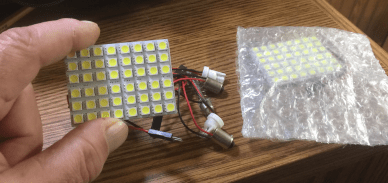 with. A while back I picked up a bunch of these LED lighting panels and I’ve been fiddling around with them and I like ’em so much I thought I’d tell you about them.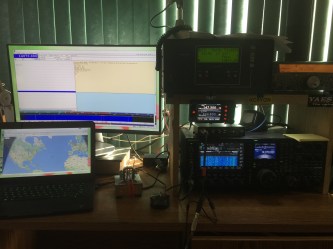


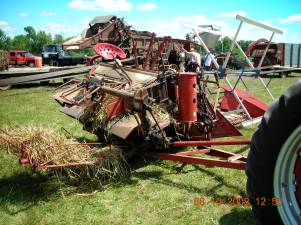 shocking it, and running it through threshing machines, for heaven’s sake. In case you’ve never seen one, here’s a photo of a grain binder from an antique farm equipment show I took some years ago. And yes, that thing over there that looks like it was cobbled together out of bits of old string, wire and old barn boards, is an actual commercially made machine. It was pulled by horses (that’s why there’s a seat on it). It cut the grain off with a sickle bar, put it in a bunch, tied the bunch with twine, then dumped it on the field. Workers would come along, stand the bundles on end with the grain heads up so it would dry. Then it would be loaded onto wagons and taken to a threshing machine.
 threshing machine. This is actually a special machine designed specifically for threshing or hulling clover seed, not wheat or oats, but the principle is the same. Workers would throw the bundles onto the elevator over on the left where it would run through threshing bars, fans, screens, etc. to be separated from the stalks and hulls. The hopefully clean seed would come out one pipe to be bagged, the straw would blow out onto a pile. The whole thing was originally powered by a massive steam traction engine via that long belt you see extending out the left side of the photo. Steam engines were replaced in the 1920s or so by gasoline powered tractors, but the threshing machines themselves remained in use well into the 1950s in some parts of the state. There were still a couple of farmers in the area who were using this setup when I was a kid. These things hung on because as long as you could get inexpensive labor it was cheaper to keep using it than buying a combine.
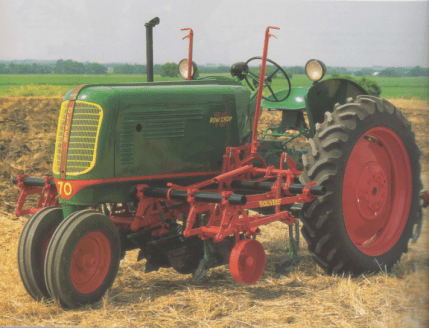
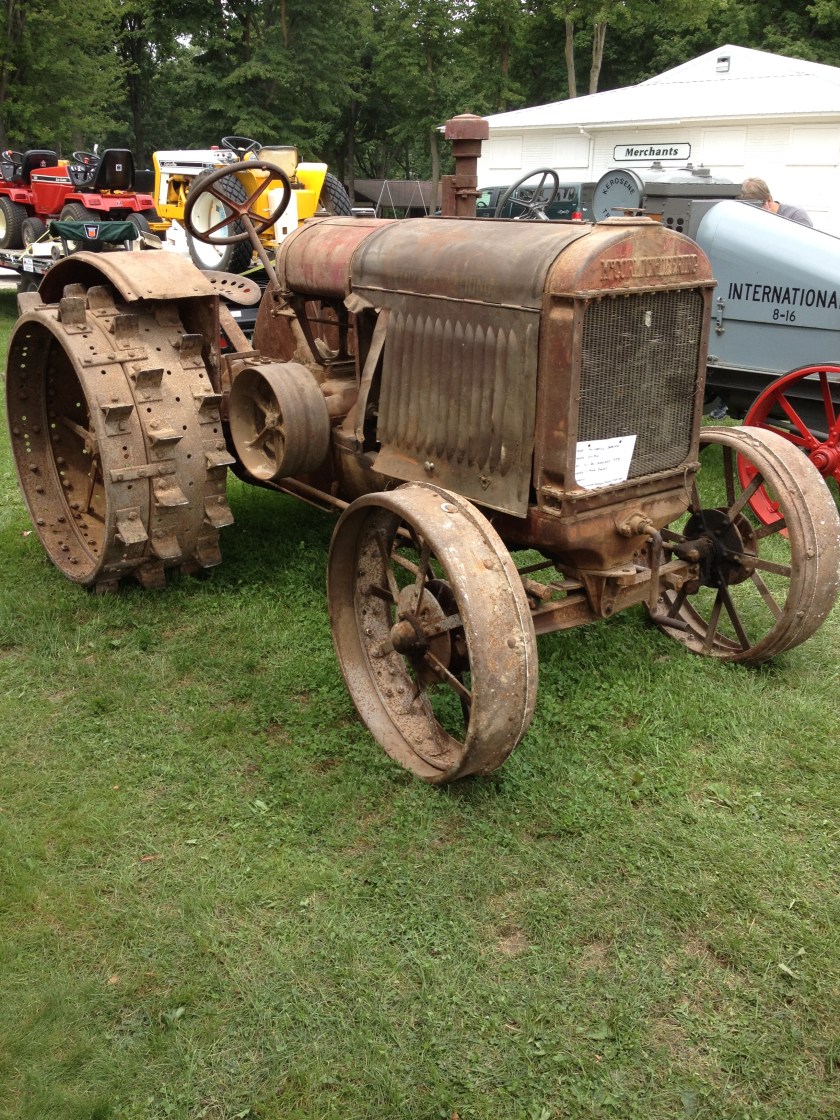 was a kid we actually had one of these beasts, this exact same model. And we didn’t have it for some collection, this monstrosity was an actual working tractor at the time. The only thing we used it for was running the blowers to blow grain or forage into the barns or silos, but it was still a working tractor on the farm. And dear lord we hated that thing. Trying to start that beast… Oh, my. It started by manually cranking it with that big lever you see just below the radiator. That connected to the crankshaft to turn the engine over. And if you didn’t know what you were doing when you tried cranking it, it would gleefully break your arm. Seriously. It would if you didn’t know what you were doing.


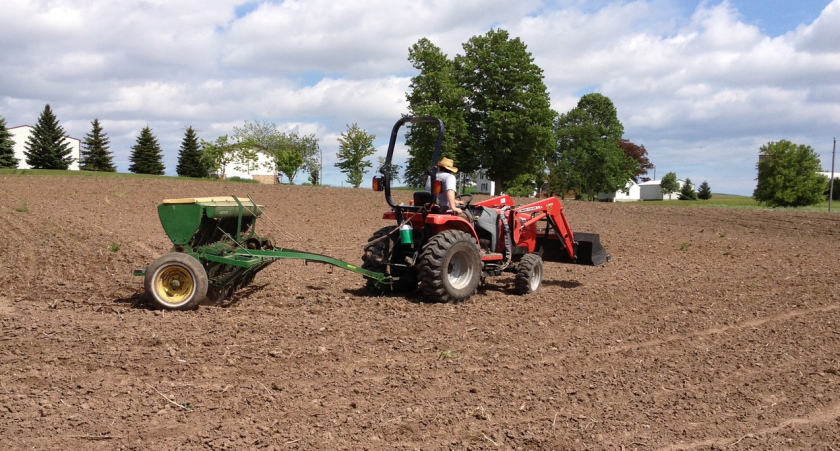 One trend in agriculture has been making me nervous for some time now, and that is how large quantities of farmland are being concentrated in the hands of fewer and fewer people.
 grouchyfarmer