Catching Up

Time to catch up again, so let’s get on with this, shall we?

Lots of stuff has been going on in the farming world, some of it unpleasant.

Canadian Milk Export Headaches

Grassland, a large milk processor, sent notices to 75 dairy farmers here in the state that the company will no longer accept their milk as of May 1, leaving the farmers scrambling to try to find someone, anyone, to buy the milk they’re producing. Over the last couple of
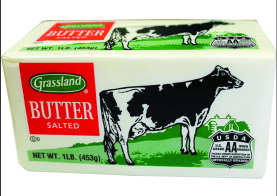
Screen Shot 2017-04-06 at 6.54.41 AM
Ooo, butter… Yummy yummy butter

weeks Canada has rejiggered its milk classification/pricing system which has effectively prevented Grassland from exporting up to 1 million pounds of milk a day to Canada, and apparently with only 2 days notice. Grassland had no choice but to notify the farmers that they could no longer buy their milk because the company has no way to sell it now. A lot of people in the US dairy industry are claiming that Canada’s actions are nothing but a way to try to curtail the imports of US dairy products and are actually illegal under international trade law. Where are those farmers going to go with their milk? I have no idea. This is a bad time of year to try to find a milk processing company because we’re about to enter into what’s known as the “spring flush”, when dairy cows normally begin to produce even more milk, so there’s going to be a glut of milk coming on the market as it is and few processors are looking for more.

Corn Finances are Wonky

A recent survey by the Farm Journal indicates that the average cost of raising a bushel of corn for most farmers is about $3.69 per bushel. Corn briefly flirted with the 3.70 range for a while, but mostly it’s been in the 3.50 – 3.65 range for months and months now. It makes one wonder why anyone bothers to raise corn in the first place. Granted, some have lower costs than that and do make a bit of money off the crop, but still.

Sometimes the farming business reminds me of the old joke about the two guys from Milwaukee who decided to go into the fruit business. They bought a truck, ran down to Georgia and bought a load of peaches for $1 a pound, and came back to Milwaukee to sell them at $1 a pound. When they realized they hadn’t made any money on the deal and were trying to figure out why, one of them looks at the other and says “I know! We need to get a bigger truck.”

Some days I feel like the entire agricultural system is being run by those two…

Chickpeas

love chickpeas, or garbanzo beans as they’re sometimes called. I use them in salads, soups, but they’re mostly known for their use in hummus and in middle eastern cooking. A member of the legume family, they’re tasty, very nutritious and high in protein and, well, they’re just yummy and very useful in most types of cooking.

Chickpea planting in the US has more than doubled since 2013. We’re only planting about a half million acres, almost insignificant when compared to corn and soy acres, but interest in the chickpea has been climbing steadily. They’re being grown mostly in the north western states. Farmers are always looking for an alternative to low profit crops like corn and wheat, and right now chickpeas look pretty good, profit wise. They aren’t that easy to grow, though, mostly because they’re susceptible to disease. But the prices have gone up about 23% over the last year, and with consumption and interest increasing, and farmers looking to try to find some way to make a profit, I won’t be surprised if acres planted keeps on growing significantly.

Butter Butter Everywhere

Butter consumption in the US is at 50 year record high, and there seems to be no end in sight. Butter price is one of the few bright spots in the dairy industry right now, with the price creeping up despite a decrease in butter exports and an increasing stockpile sitting in warehouses. Wholesale prices for butter were pushing $2.23 at one point and have only declined a few cents since then, despite increases in milk production.

Butter has become a marketing tool for a lot of food companies. A lot of restaurants, even the fast food ones, are switching out margarine in favor of butter, and a lot of companies that make processed foods are now hyping that they’re using real butter instead of margarine or vegetable oils.

Why this increase in demand for butter? Part of the reason is that dairy products are no longer linked to increases in cholesterol levels. Over the last five or eight years new studies indicated that contrary to previous beliefs, moderate consumption of fats from dairy products seems to have little or no effect on cholesterol levels. And there have even been some studies that indicate moderate consumption of full-fat dairy products may even have some health benefits.

Another thing that’s been driving an increase in butter consumption is that it’s been found that hydrogenated vegetable oils, long the primary ingredient in most margarines, are utterly horrible for you, health wise, causing significant increases in risk of heart disease and other problems.

But despite all of that, we’re still producing way too much milk. In many areas of the country there isn’t even the plant capacity to handle all of the milk being produced. There are reports of milk being dumped or being used for animal feeds in some states. With the ‘spring flush’ now arriving, a lot of milk processing plants are at full capacity already. It’s going to be interesting to see what happens to milk prices over the next month or two.


Amateur Radio Stuff

If you’re interested in agriculture and don’t give a fig about AR, you can stop reading now if you like.

QRZ

Just got the notice that my subscription to QRZ.com is about to expire. QRZ is known as being the place to go if you’re looking for information about a particular call sign, want to buy or sell radio equipment or if you’re a grouchy old fart who likes to complain a lot, hang out in the forums and, well, complain a lot. Most people just use it as a way to easily look up information about an amateur radio operator. If you have the person’s call sign, you can find names, addresses and other information about them on QRZ’s database. You don’t absolutely need to be a paid subscriber, but it’s helpful. It gets rid of the annoying advertising, gives you access to things the freeloaders don’t see, that kind of thing. You get your own web page, email, log book and other goodies. It’s not an essential service by any means, but it is indeed handy to have.

Just stay out of the forums unless you have a thick skin.

Terminology

The other day someone I was talking to remarked that I never, ever use the terms “ham” or “elmer”. And they are right, I don’t. While the term “ham” when used to refer to an
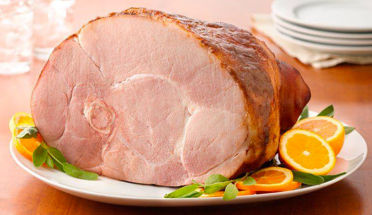
Screen Shot 2017-04-06 at 8.44.03 AM
A ham. Not an amateur radio operator

amateur radio operator has been in common use for probably a hundred years, that doesn’t mean I have to like it. I have no real desire to be referred to by a term that means “cured pig meat” to 99% of the population of the country. Am I being ridiculous? Pedantic? Of course I am. Don’t care.

I also loathe the term “elmer” when used to describe describe someone who assists a newcomer to amateur radio learn about the technology.

Now, before you go off the deep end and launch into a rant down in the comments section about the tradition behind the term “elmer”, I understand that “elmer” refers to a very nice fellow who once helped newcomers to the hobby learn about it. I’m sure he was a very nice person. He was an utterly delightful and nice fellow I’m sure.

But I don’t care. There is already a perfectly

Screen Shot 2017-04-06 at 8.46.13 AM
An Elmer. Not a mentor.

good term for that: mentoring. And to be perfectly frank, the term “elmer” is not exactly complimentary outside of the amateur radio community. It refers to the character Elmer Fudd from the old Bugs Bunny cartoons. An “elmer” for a large percentage of the population is a person who resembles Elmer Fudd, someone who is a bumbling, idiotic fool. It is not a complimentary term.

Use both terms if you wish. I don’t care. I won’t object or even comment. But as far as I’m concerned, a mentor is a mentor, not an “elmer”. An amateur radio operator is an amateur radio operator, not processed pig meat.

Fish Oil – The New Snake Oil?

So I ran across this item this morning at Agrimoney.com.

Source: Agrimoney.com | Crop farmers may become fishes’ best friends

Apparently this company has developed a type of canola that contains relatively large amounts of an oil with omega-3 that is similar to that produced in fish. The GM seed has been produced by adding in genes from microalgae which make omega-3 oils. The claim is that this microalgae is the source of the omega-3 oils that are found in fish. About 2.5 acres of this canola is supposed to produce s much omega-3 equivalent as 10,000 kilos of fish.

The new canola (rapeseed) is still in testing and hasn’t yet received approval from USDA or from other canola growing countries. But everyone is excited about it because this could go a long way to fill the ever increasing demand for omega-3. In the US alone omega-3 supplements are a billion dollar business and people by the millions gobble down the capsules. Food processors are adding it to a wide variety of foods like yogurt, cereals, juice, even cookies for heaven’s sake. So it is hoped that a product like this may help to reduce overfishing that has driven some of the most popular types of fish in the oceans to near extinction.

But there are problems. And everyone seems to have been completely Screen Shot 2017-03-23 at 7.03.24 AMignoring them. And the biggest problem seems to be that no one seems to be really sure that omega-3 actually works. Even worse, there are some indications that taking omega-3 might actually be detrimental for the health of some people.

The Journal of the National Cancer Institute published a report a year or so ago that indicated that linked eating a lot of oily fish or taking fish oil supplements to a 50% increase in the risk of prostate cancer in men, and a 70% increased risk for aggressive prostate cancer.

Taking omega-3 supplements is supposed to improve heart health, of course. But studies are indicating it doesn’t do that, either. A study published in 2013 in the New England Journal of Medicine showed that taking omega-3 supplements did nothing to reduce heart attack, stroke or death from heart disease.

Why all this confusion and conflicting information? Because how food and it’s components affect the body is an extremely complex subject and often still largely a mystery. Using supplements for anything other than to treat an actual deficiency is generally something you should do only with caution and great reluctance.

Eating a diet that has fish in it is considerably different from gulping down a handful of omega-3 pills because no one seems to be able to prove beyond a doubt that omega-3 is the only thing at work when there is an improvement in health. It’s more likely you need everything in that fish, all of the vitamins, minerals and other substances that are in the fish itself, not just a single component of that fish.

Even though we have hundreds of companies trying to sell you fish oil and omega-3 supplements, adding it to other foods as a marketing gimmick, there are a lot of studies out there that indicate that taking fish oil and omega-3 supplements to reduce heart problems doesn’t work any better than taking a placebo. Like this one. Or this one. Or… Well, you get the idea so why go on.


Crimes Against Food


Let’s talk about food, shall we? Why? Well, I’m bored, that’s why, and you’re the ones who are going to suffer for it. For your sake I hope this doesn’t last very long.

Now I’ve eaten some rather odd things in my lifetime. And just a relatively short period of time ago if you’d told me I would eat some of this stuff and actually like it, I’d have said you were as loony as, well, as most politicians. Which is pretty loony indeed.

Let’s face it, we human beings do some very strange things with our food. We aren’t

Screen Shot 2017-03-18 at 2.52.45 PM
Dear sweet mother of milk of magnesia, what the hell is it? No, don’t tell me. I don’t want to know.

satisfied with just eating stuff, no, we have to go fiddling with it and turn it into things like, well, like this over there on the right, whatever the hell that is. When I ran across that image I just sat there for about thirty seconds going “Oh my God” over and over again. What is it? Well, it’s — it’s pink. I thought it was some kind of cake at first, but then I saw that bizarre cyclops eye in the center, the olive, and what kind of cake has a cyclops olive eye in the center of it. Finally I decided I really, really didn’t want to know what it was because I will probably have nightmares about cyclops eyed long pink sausages chasing me…

Now like I said, I’ve eaten some odd things. Raw eel. Raw squid. Lutefisk. Fish cheeks. Hell, I didn’t even know fish had cheeks much less you could eat them until someone came along and made me eat something they claimed were fish cheeks. Blutwurst. (Why do disgusting things sound so much better when they’re in a language you don’t understand?) Various forms of fermented — fermented things. Many of them rather — gelatinous. And pungent. (Handy hint: If you need to wear a gas mask before you can eat something, you probably shouldn’t. Just saying)

Screen Shot 2017-03-18 at 2.31.56 PMWhat I really don’t understand is this need we have to fiddle with our food. To take perfectly good food and turn it into things like that pink abomination above. Or, well, this, this — this thing over there on the left. No, you aren’t seeing things. That’s lima beans in some kind of jello. Topped with olives.
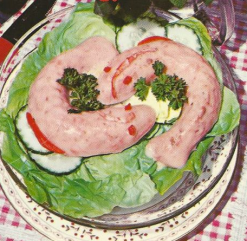
No, I don’t know what kind of jello. I don’t want to know.

And what’s that red stuff in there? Hmm? Just what is that…. No, don’t tell me. I probably don’t want to know that, either.

And why  top it with olives? Hell, I don’t know. Why the olive in the pink cake/sausage/whatever it is up there? Maybe they figure we’ll go “Oh, look, a nice olive!” and then ignore the fact that the rest of it looks like something a very sick cat coughed up in your shoe?

It’s bad enough when actual food, the stuff we’re supposed to eat before we start fiddling with it it, is utterly horrible. Like lima (shudder) beans. I mean, who actually buys the things? Lima beans, I mean? I’ve seen them for sale in the store, but I’ve never seen anyone actually buy the things, much less eat them. I did meet one fellow once who claimed he actually liked lima beans. But since he also claimed he was in direct communication with the evil shape changing lizard people from Andromeda who secretly control the entire world, well, I tend to disregard a lot of the things he says. He’s dead now, so I can’t give him a lie detector test or something. Probably killed by lima beans, come to think of it.

Why do we need to do truly nasty and evil things to our food before we eat it? I used to

Screen Shot 2017-03-18 at 2.32.14 PM
The real, actual spawn of Satan?

think lima beans were the spawn of satan, but  then I ran across this little item and realized they weren’t. This is the real spawn of Satan over there. Dear sweet lord… Well, considering the color it’s apparently related to the cake/sausage/cyclops eyed thing, but what is it? The really horrifying thing is that someone, somewhere, actually made this and fed it to someone.

Oh, I wanted to show you this, too. If you do a Google image search for the phrase “lima beans spawn of satan” one of the Screen Shot 2017-03-18 at 2.30.19 PMimages that pops up is this thing over there on the left. Now exactly why it pops up when searching for that phrase I’m not entirely sure. I suspect, however, that the sight of that thing left some poor four year old traumatized for the rest of his/her life and needing many years of expensive therapy…

Let’s face it, we do very, very strange things to our food. Some of it is, or was, necessary, like fermenting. It was done as a way to preserve food so it could be stored. But there’s no excuse for this kind of thing. Lima bean jello. With olives… Give me a break.

Next thing you know people will be, oh, hell, I don’t know, making corn dresses or Screen Shot 2017-03-18 at 2.29.47 PMsomething and wanting you to wear…

Oh, wait, they do.

Never mind. Well, it’s better than that pink cyclops olive eyed sausage/cake thing, I suppose.

So, GF, is there a point to any of this or are you just wasting our time?

Oh, come on, if you had a blog and you ran across that photo of that pink cyclops eyed sausage/cake thing up there, you’d write a whole entry about it too, wouldn’t you?


Milk Prices: Sigh…

Milk prices, especially the price of skim and whole powdered milk, plummeted at Global Dairy Trade of New Zealand, dropping 12.4% and 15.5% respectively. (Source: Agrimoney.com | New Zealand milk prices follow Europe, US lower)

People were starting to think that milk prices were beginning to stabilize, and that milk prices were finally starting to go up to the point where dairy farmers might not be under such financial stress from low prices.

But that might all have been little more than a house of cards. There were always a lot of problems with those hopes.

The first problem was that except for the New Zealand and Australian producers, milk production in the rest of the world had not really declined all that much, and in large parts of the world like North America, production had actually been increasing. While prices have been going up here in the US, that increase in milk price seems to have been due more to market stabilization and corrections than to anything else. There has been no significant increase in demand for dairy products to push prices up.

The second was that many seem to rely on prices at GDT as some kind of indicator of the overall health of the milk market. They shouldn’t. Global Dairy Trade is owned by Fonterra, the huge milk co-op in New Zealand. It markets it products mostly to Southeast Asia and China. And because it is owned by Fonterra, Fonterra can do whatever it likes with it. Fonterra has deliberately restricted or increased the amount of product flowing through GDT in order to manipulate the market prices in the past.

So relying on a sales organization that serves a rather narrow market, and which is wholly owned by a milk producer, and which has used that sales organization to manipulate market prices in the past… Well, do I really need to tell you that relying on sales figures at GDT as some kind of indicator of market conditions is really not a good thing to do?


Who’s Fault Is It?

Farmers in 10 states can join a possible class action lawsuit against Monsanto over the illegal use of dicamba that damaged their crops because of tine introduction of the company’s Xtend line of GM crops that are immune to the herbicide. AgWeb has a story about it here if you want to take a peek.

Source: Farmers File Class Action Against Monsanto for Dicamba Drift Damage | Agweb.com

The situation is a bit complicated so let me explain what’s going on.

A lot of weeds are becoming resistant to RoundUp and its generic equivalents. Dicamba is an herbicide that has been in use for quite a while already to fight broadleaf weeds, but it wasn’t used in this type of application because it was also toxic to the crops until Monsanto came out with it’s Xtend line which is resistant to it as well as glyphosate, the active ingredient in RoundUp. Monsanto’s plan was to market Xtend seeds along with a new herbicide that blended dicamba with glyphosate in order to deal with weeds that were resistant to glyphosate alone.

The problem comes in because Monsanto started selling the Xtend seed before the new herbicide blend was approved for use by the government.

This is an important point. Dicamba is nasty stuff to work with. It vaporizes very easily while it is being applied, and the vapors can drift for long distances even on a relatively calm day, killing or damaging plants in fields far beyond the field being sprayed. The new herbicide blend contained dicamba in a form that was not as volatile and was safer to use as long as it was applied correctly with the right equipment. The new blend would help to prevent the herbicide drifting.

Even though the new herbicide wasn’t available, Monsanto started selling Xtend seed anyway. And you can see what’s coming, can’t you?

That’s right; now that they had a dicamba resistant seed, some growers drenched their fields with regular dicamba, ignored the application warnings and restrictions, and ended up with herbicide drifting all over the place causing damage to crops in the adjacent fields of other farmers. I’ve heard estimates that the amount of damage caused by drift is as high as 200,000 acres.

Oh, at least one murder that I know of. Yeah. Seriously. They actually shot someone over herbicide drift.

So, as the headline asks, whose fault is it?

The suit claims it’s Monsanto’s fault. They should not have released the new seeds into the market until the new herbicide designed to go with it was ready to go as well. They should have known that some growers would abuse the system and use dicamba herbicides off-label and illegally as soon as they had their hot little hands on the new seeds.

Monsanto says wait just a minute, we didn’t spray the stuff. We warned them not to, and to wait until the new herbicide was ready to go. It’s their fault, not ours.

The other side counters that any rational person should have realized that if the seed was put on sale without the herbicide some growers would use the unapproved and dangerous form of the herbicide…

And so it goes around, and around, and around. This will probably be lurching through the court system for years…

So what is the answer to that question up there? Whose fault is it?

This is one of those situations where I think both sides have a valid point. As Monsanto claims, it did not do the spraying. It’s recommendations for use indicated that Xtend seeds were to be used only with approved herbicides and approved application techniques. Once it sold the seed, it has no control over what the growers do afterwards.

On the other hand, why put seed up for sale where the primary benefit of using it is to enable the use of a herbicide that was not yet legal to use? Monsanto knew there was no reason to buy the new seed unless the growers were going to make use of the seeds capability of withstanding dicamba…

What do I think about all of this? My issues with the whole thing are at a more fundamental level. I think we’ve become locked into methods of food production that are basically unsustainable over the long haul.

And we know that. We know that eventually herbicides are going to fail. They just are. We can’t keep up this endless cycle of having to develop new and ever more toxic herbicides as the old ones fail. It’s the same with insect control. The insect population eventually becomes resistant, and we have to start all over again. BT corn is a good example of this as the insects that are controlled by BT become resistant and begin to spread, and within a few more years we are going to have a root worm problem that was just as bad, if not worse, than it was before BT corn was introduced.


Side Note: I’m going to start trying to move away from talking about agriculture so much in the future. I’m not involved in the business any more, sold the farm a couple of years ago, so why do I still go babbling on and on and on about it when there are other things I’m interested in?

But then I’ve told myself that before and I keep coming back to it for some reason. Oh, well.

I’m going to try to push this onto other things I’m interested in; amateur radio and electronics, amateur astronomy, building furniture and fiddling with wood, photography…

This was never intended to be focused on a single topic in the first place, so I’m going to try to get back to that.

The War On Weeds

So, let’s talk farming. I ran into this article about weed control over at Agweb and it’s actually pretty good so go take a peek at it if you have the time.

Differentiate fact and fiction as you plan your weed control strategy. Source: Myth-Busting Weed and Herbicide Rumors | Agweb.com

Now, the reason this article has popped up (and I’m sure you will see others in the ag press similar to this in the future) is that there are a few new GM crops coming on-line now, modified to work with a couple of new blends of herbicides in an effort to deal with increasing weed resistance to glycophase. The herbicides aren’t really new, though. They are simply blends of previously existing herbicides with glycophase. They incorporate either 2,4-D or dicamba, both of which have been around for decades already. The only thing new about the system is the GM crops that have been engineered to tolerate 2,4-D and/or dicamba.

And they aren’t going to work any better than glycophase alone did. At least not in the long run. Sooner or later weeds will eventually develop resistance to these new blends as well, and we’ll be right back where we are now. In fact, there is already resistance to both of those herbicides “out in the wild” so to speak, because both have been in use for some time.

We have allowed ourselves to become dependent upon a system of weed control that we know is eventually going to fail. So, if we already know that these reformulated mixes are going to eventually fail, why are we bothering with them at at all?

Part of the reason this isn’t going to change any time soon is that over the last few decades we have adopted almost across the board farming techniques that make it difficult, if not impossible, for us to change.


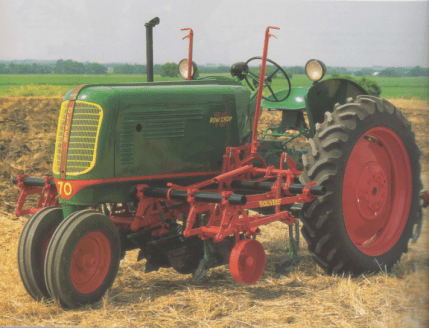
How did we do it in the “good old days”? Well, like this:

screen-shot-2017-02-10-at-11-58-31-am
Oliver 70 with cultivator attachment

Now, if this text editor has managed to put the image in the right place, that is an old Oliver 70 with it’s optional corn cultivator rig. I used to drive one of those when I was a kid. For hours. And hours. And hours. And hours. And hours. And.. Well, you get the idea.

It was boring, tedious, took huge amounts of time, huge amounts of fuel. And with how expensive fuel is these days, how expensive labor is, if you can even find labor, how time consuming it is… Well, it isn’t surprising that the agricultural industry has always been looking for something, anything, to try to eliminate weeds that doesn’t involve so much time, labor and expense.

But some alternative to this never ending cycle of herbicide failures is going to have to be found. We’re running out of options. No matter what kind of chemical intervention we may come up with, sooner or later nature will figure out a loophole to work around it because that’s just how nature works.


I wish I could tell you that there is a solution to this, but there isn’t. People are experimenting, yes. But so far all of the efforts I’ve seen in trying to get out of this dependency on herbicides have involved techniques that simply can’t be scaled up. I’ve seen flame throwers to burn weeds, steamers to steam weeds, “cookers” that scoop up soil and literally cook it to kill weed seeds… All of them are tedious, time consuming, and worst of all, very energy hungry.

There are some new robotics and AI technologies that are looking promising. I suspect that may be one possible solution; machines that do the cultivation for you using cameras, LIDAR, GPS to guide them. Even systems that can identify weeds by sight and mechanically remove them, leaving the desired plants alone.

But those are years away, maybe decades. But who knows? Maybe there is some kind of “magic bullet” out there. Ah, well, no, there isn’t, but we keep looking for one, don’t we?

Give Me Land Lots of Land

screen-shot-2017-01-04-at-4-37-48-pmOne trend in agriculture has been making me nervous for some time now, and that is how large quantities of farmland are being concentrated in the hands of fewer and fewer people.

This has been going on for some time, of course. When I was a kid the road we lived on was dotted with small farms of various sizes ranging about 80 acres to 150 acres or so. Ours was actually one of the larger ones when I was a kid, with 140 acres and about 120 under cultivation. If memory serves me correctly, there were ten or twelve farms just on that one stretch of road when I was a kid. Today the houses and even many of the barns are still standing, but they aren’t farms any more, they’re residences. The actual farmland is now owned by one of three huge farming operations.

Whether or not this is a “good thing” is open to debate. But there is one trend that I think is definitely not a good thing, and that is that large amounts of farmland is being snapped up by investment companies.

Corporations like Farmland Partners (which doesn’t actually do any farming) and a lot of others, located both in the US and in other countries, are buying up farmland wherever they can find it and then renting it back to real farmers. For, of course, a profit

One can understand their point of view. People have to eat, after all. Therefore there is always going to be demand for land on which to grow crops. If a farmer can’t afford to buy land, he or she has to get it from somewhere, so they’re forced to rent it from a land owner. To an investor this seems like a fairly safe type of investment, especially with the stock markets being as volatile as they are.

But for farmers, for agriculture in general, this practice is disturbing in more than one way and is potentially damaging for consumers, farmers and agribusiness in general.

These companies do no farming, grow no crops, harvest no grain, raise no cattle. They do nothing to improve the quality of the land they own. They exist for only one reason, to rent land back to real farmers for the maximum amount of money they can squeeze out of them. They contribute nothing to agriculture. I dislike the term ‘parasite’, but, well… Isn’t that what you call an entity which does nothing but syphon off the resources of others and provides no benefit to those it feeds off of?

So far these companies have had little adverse effect on agriculture. Up until now they have been picking off the ‘low hanging fruit’, so to speak, snapping up deals here and there, in widely scattered areas. But as they acquire more, as more farmland is taken out of the control of farmers and placed in the hands of a few companies that care only for making profit… Well, the potential for abuse is obvious.

This kind of thing is legal. I certainly can understand the attraction people may have for this kind of an investment. With the stock market going through endless series of boom/bust cycles over the last few decades, a fairly stable investment like farmland is certainly attractive.

But what kind of effect is this going to have on agriculture as ever increasing amounts of land are being held in perpetuity by companies whose only goal is to squeeze as much profit out of farmers as possible?

But Is It Milk?

I always thought that milk was a substance that was excreted by special glands of mammals which was used to feed their young. Or, in the case of some types of cattle, to make yummy, yummy cheese (1).

But apparently what I learned in school is wrong, because if you look through the dairy section of the grocery store these days you’ll find out that you can apparently milk a lot of different things. You’ll find almond milk, soybean milk, rice milk, coconut milk, milk stout… One quickly gets the impression that just about anything can be milked. And judging from the prices on this stuff, one quickly discovers that what is really getting milked is the consumer.

So, the question is, is this stuff, these various liquids derived in one way or another from non-mammalian sources, really “milk”?

Of course it isn’t. And some people are getting a wee bit irritated by all of these people calling a product that is basically nothing more than water, thickening agents, flavoring agents and a ground up vitamin pill “milk”. Like these people here. This is a communication from an assortment of Congresspersons to the FDA politely pointing out that calling what is basically some type of nut flavored water, ‘milk’ is grossly misleading, inaccurate and even deceptive.

What’s especially irritating about these various “milks” is that while they are heavily advertised as being nutritional powerhouses, that they are healthier for you than real milk and are more ‘natural’ somehow, they pretty much aren’t.

Let’s look at almond milk. Now there is no doubt that almonds are good for you. Lots and lots of nutritional value and they’re pretty damned tasty. But almond milk? Ah, well, about that…

There are very few almonds actually in commercial almond milk. If you start scrounging around Google you’ll quickly find out that a lot of these almond milks are mostly water, various additives and flavoring agents, and very few actual almonds. Many of them contain only 2% actual almonds. Two cups of almond milk will have, if you’re lucky, maybe 9 actual almonds in it. If you don’t believe me, go look it up yourself. I’ll wait… Ah, back, are we? Good. Let’s get on with this, then.

A year or so ago, a couple of makers of almond milk were being sued in New York because their “almond milk” had only 2% actual almonds in it. It’s basically just almond flavored water with lots and lots of additives. Their argument was that calling something “almond” anything when the product has only 2% almonds in it is wildly misleading.

Then there is the problem of the other ingredients in the stuff. If you read the ingredients labels on most almond milks and similar products, it reads like a high school chemistry experiment. Various gums and thickeners, flavoring agents, salt, sugar and vitamins are added to the stuff. Basically it’s little more than water with thickening agents, flavorings, colorings and a ground up vitamin pill in it, with a bit of almond flavoring.

Now I have nothing against chemicals(2). Everything is chemicals, really. Chemicals are nothing but the basic components of, well, everything. But when you’re buying something labeled “almond milk” wouldn’t you want, well, almond milk, and not something that’s 2% almonds, 8% thickening agents, salt, sugar, flavoring agents and added vitamins, and the rest water?

They have to add all that stuff because when you soak a bunch of nuts in a vat of water, very, very little of the nuts’ actual nutritional content ends up in the water. Neither does flavor. Also the resulting ‘milk’ looks a bit like thin, cloudy water with some sludge on the bottom. So vitamins have to be added to make the stuff seem healthy. Thickeners have to be added to make it look more like real milk and less like, well, water. Flavoring has to be added to make it taste like something.

So, is it legally “milk”, this stuff? Under FDA rules and regulations that I’ve been able to find, the answer is no. Under FDA rules and regulations, milk is defined as “the normal lacteal secretion, practically free of colostrum, obtained from the milking of hooved mammals.” If you want to wade through all of the legalspeak and other nonsense, you can do so here at the FDA’s regulatory information site.

But that’s simplifying things enormously because definitions of terms is a strange and arcane branch of law and when it comes right down to it no one seems to know for sure.

So why don’t they just call it, oh, nut juice, then?

Well, they can’t do that because it isn’t. In order to be labeled ‘juice’ it has to be mostly the juice of the item on the label, and most of these “milks” contain less than 5% (in some cases 2%) of the nut listed on the label.

So is this stuff “milk”? No. Not by any stretch of the imagination. It resembles actual milk only because it is highly processed and has a variety of thickening agents, emulsifiers, colorings and other additives mixed it. It is nutritionally beneficial only in that it has vitamins and minerals from external sources added to it.


  1. Or the infamous Peruvian Beaver Cheese. And the less said about that, the better.
  2. Mmm — yummy yummy chemicals…

Drought, Climate and Agriculture. Like it or not, Change is coming.

Water is an increasingly precious commodity across the country, and lack of water has become an extremely serious issue in Southern California where a years long drought continues. I ran across this item over at Ag Professional’s website and while brief and far from in depth, it does talk a bit about the problems that are going on and the changes that are starting to take place.  California Drought is a U.S. Problem | Ag Professional

The ongoing drought in California is driving a lot of farmers over there into bankruptcy and causing others serious problems as they scramble to fight with cities and other users over an increasingly scarce resource. During his campaign Donald Trump claimed that there is no real drought in California and the other south western states, and he could bring the water shortage to an end if he was elected. But no, Trump is not going to end the drought by simply claiming it doesn’t exist. Even if the new administration changes or repeals existing water regulations, it doesn’t do you much good when there isn’t any water to begin with, which is the situation southern California and Nevada are facing.

With ground water being pumped out of aquifers at rates so high it’s causing the ground to sink, that wells are drying up wells all over that part of the state, and with surface water already being rationed, simply declaring there is no drought and blaming it on regulations is ridiculous. Sooner or later those aquifers are going to be completely depleted or drawn down so far that it is no longer possible to drill deep enough and build pumping systems powerful enough to deal with it.

Are there things that could be done to improve access to water? Sure. But it would take tens, even hundreds of billions of dollars in new infrastructure, new dams, new aqueducts, new pumping systems, etc. And even then they’d have to steal water from other parts of the country, suck rivers dry and pretty much ruin every river system they tap into in order to do it. From an engineering standpoint it could be done, but economically and politically? No state is going to stand by idly and allow it’s water be siphoned off to irrigate crops, water lawns and golf courses and fill swimming pools in states like California and Nevada.

Could the situation out there be solved some other way? Sure. But it would require change. And people don’t like change. The agricultural industry would have to fundamentally change how it works. Not just changing how they farm, but what they farm. Water intensive crops that require irrigation would have to go. Some types of agriculture, like dairy, would probably have to move elsewhere entirely. Consumers would have to get used to the idea of not having “fresh” produce of certain types available every month of the year. It would require a lot of changes that a lot of people don’t want.

And it isn’t just in California and the other states in the south west. How we use water, how we manage our water resources, is going to have to change. The changes are coming whether people like it or not.

Agrimoney.com | Revival in US milk prices to continue, says Dean Foods


Source: Agrimoney.com | Revival in US milk prices to continue, says Dean Foods

This is one of those situations where I don’t know where they’re getting their information because what they’re saying here isn’t what I’ve been reading in the ag news.

Dean Foods seems to be trying to claim farmgate prices are going to go up significantly, that US dairy exports are robust and growing, and that the markets are giving off “buoyant signals”.

But well, no, the market is doing no such thing, and there seems to be no indication that we’re going to be seeing any kind of significant increase in farmgate prices in the US any time soon.

While milk production in NZ and the EU is trending down a bit, here in North America it has continued to rise significantly, with significant numbers of new cattle being added to milking herds and continued increases in milk production. Texas was up about 11%, Minnesota and Wisconsin were up about 2% or a little less. Overall US production is around +1.2% to +2.3%, depending on the numbers you believe, and there doesn’t seem to be any sign that’s going to stop.

As for cheese, yes, there was a blip in the cheese price last week, but that happens all the time, especially as we get closer to major holidays, and we haven’t even begun to make a dent in the truly massive amounts of cheese and butter already in storage. The USDA’s recent purchase of about $20 million in surplus cheese (if I remember the number right) didn’t even make a dent in the amount of cheese in storage. And as of this morning, cheese prices have already started to fall again, down 6 cents over the weekend.

And the statement that “foreign buyers are lapping up” US dairy products is, aside from being a horrible pun, simply not true. Exports of dairy products actually dropped 2% in September.

There is always an uptick in prices this time of year as we approach the holiday baking season. Cream, cheese and butter prices almost always begin to rise around this time of year as retailers and suppliers try to cash in on increased demand. It’s a seasonal blip that doesn’t really indicate any kind of significant improvement in the market.

Maybe Dean foods is just trying to make investors feel a bit better about the fact that Dean’s profits fell by 28% last quarter?