The buds from yesterday are in full flower now and absolutely beautiful.


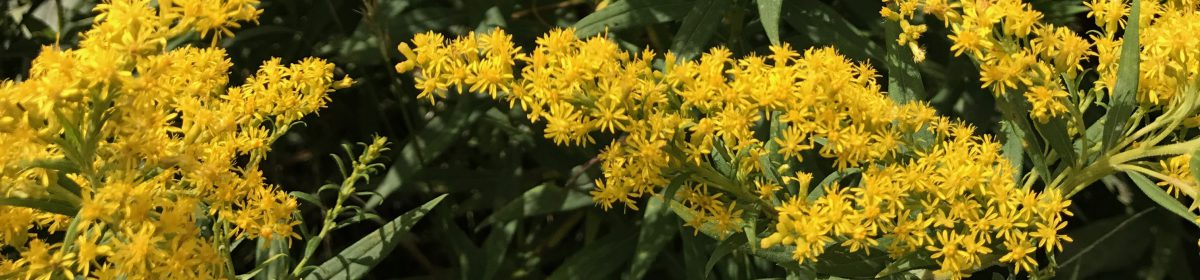
The buds from yesterday are in full flower now and absolutely beautiful.
Despite the cold, rainy weather we’ve been seeing signs of spring outside in the gardens as a few things start to peek their heads up out of the leaf litter, mulch and debris left by the winter.

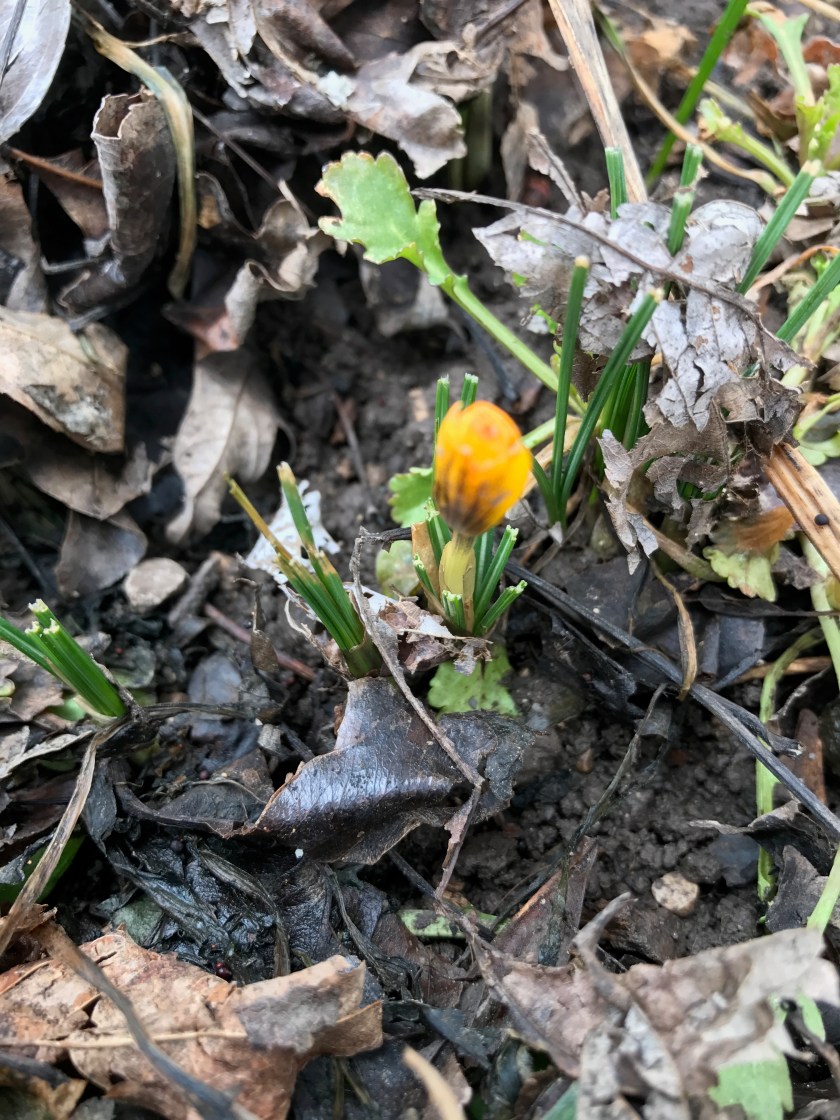
Not the best photos in the world but I took these with the iPhone 7. I’ve only had it for about three weeks and I haven’t used it much for photography and I’m still trying to get used to it’s quirks.
It’s certainly better than the camera in the iPhone 6 was, but it’s still not even close to what something like a, oh, a mid-range Nikon or Cannon pocket sized camera could do for about a third of the price.
And unless I’m doing something wrong, the iPhone camera has some rather serious, for me anyway, issues. The color seems off to me. Color rendition actually seems worse than it was with the iPhone 6. Photos seem darker than they should be except under bright sunlight. The autofocus is constantly changing as it struggles to try to find something to focus on when taking closeups.
I’ve seen some spectacular photography that was done with the iP7, but I’m beginning to wonder how many of those photos were taken under ideal, artificial conditions or even had considerable post processing done to them. If I can work up enough ambition I should go out with the good camera and take side by side photos with both the Fuji and the iP7 so I can compare them side by side.

This image was taken with the Fuji. I wish you could see it full size because the detail is so good at full resolution it would more than fill your entire screen and is so sharp you can count the hairs on the bee’s legs. And the Fujifilm camera I use isn’t exactly a high end camera/lens system and has been out of production for a few years now.
I suppose it comes down to the lens system being used. I don’t care what kind of optical systems they develop for these phone cameras, it comes down to basic physics. A lens that’s not much bigger than the head of a match isn’t going to produce results as good as what I get with something like my Fuji’s macro/zoom lens.
Trying the gallery mode now. Click on a photo to start the gallery thingie. I hope. Note: Photos here are from the Badlands National Park in South Dakota


Doing still more testing
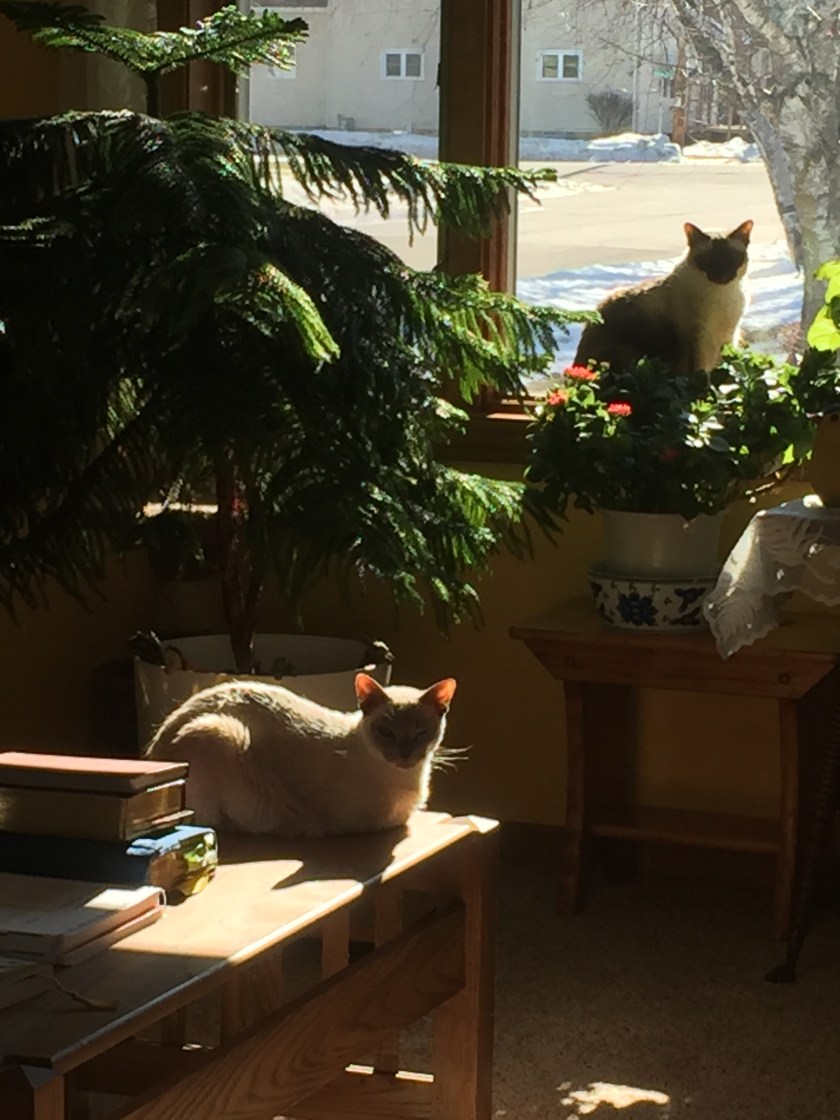 Speaking of cats, here are the Siamese recharging their solar batteries the other day when the sun made one of its rare appearances.
Took these this morning
Taken with an iPhone 7S from the jungle we have growing in the living room. I’m experimenting with the camera in the 7. It’s a significant upgrade from the POS that was in the 6. Still not as good as a ‘real’ dedicated camera, but they’re starting to get close.
Also experimenting with how media shows up here on the blog. Never tried a slide show before. Alas the photos are only showing at a fraction of the full resolution so here they are again in a better size.


 Egads, there’s cat hair everywhere, even in the flowers
Catching up with what happened this past week.
As in I wish I could. I occasionally suffer from insomnia and it’s been pretty bad the last  few days. I’m not sure why. Which is why I’m writing this at two in the morning instead of being asleep. I know, I’ll try looking at photos of, oh, blossoming apple trees. That will put me to sleep!
Ah, well, apparently not. Didn’t work. Still it’s a really pretty tree.
Spring is coming! I hope. Getting so tired of cold, wet weather, and especially the lack of sun. So I’m going to drop in some photos of spring and summer flowers in an attempt to lure spring a bit closer.
Agriculture Secretary Hearings
The senate ag committee hearings and questioning of the administration’s nominee

Sonny Perdue finally took place on March 23. Unlike the hearings for most of the administration’s nominees, this one was relatively short, cordial and even pleasant for the most part. Mr. Perdue is perhaps the least controversial nominee put forward by the administration. He is also unusual in that he actually seems to know something about the agency he would be running.
The government of Brazil arrested 38 people involved in an alleged scam where inspectors were bribed to permit rotten and tainted beef to be passed for sale at a beef exporters JBS

and BRF. Several countries have instituted temporary bans against beef imports from Brazil. Here in the US some government officials are calling for a ban as well but there is none as yet. USDA says it is stepping up inspection of meat coming from the country. But USDA also certified Brazil’s inspection system as being as good as that here in the US, so who knows…
Addendum: Since the US was forced to repeal the Country Of Origin Labeling law (known as COOL) US consumers no longer have any idea where their food comes from. But there is nothing to prevent beef processors, wholesalers, etc. from doing it voluntarily.
It seems to have slipped under the radar of most media, but there is a rather nasty (and expensive) fight going on between the state of Mississippi and the city of Memphis, Tennessee. At the core of the fight is the question of exactly who owns the water being pumped out of wells.
Memphis sits on the Mississippi river but gets it’s water from wells that draw from the

Memphis Sand Aquifer that stretches under Arkansas, Mississippi and Tennessee. And like most aquifers, water is being pulled out of the ground far faster that it is being replaced.
Back in 2005 Mississippi demanded that Memphis pay for the water it was withdrawing from the aquifer, claiming that the city was actually sucking up Mississippi water. The state is demanding over $600 million from the city.
This has been dragged through the courts ever since, with Mississippi losing at every level. But now the state of Tennessee has been dragged into the case as well giving it new life, and it’s going to the Supreme Court.
This case has the potential of setting off a hornet’s nest of problems if the SC rules in favor of Mississippi. It could cause major legal problems wherever large aquifers are used for water supplies and could even extend into international disputes. it will be interesting to see how this one plays out.

There, now I’m going to try to get some sleep!
So I ran across this item this morning at Agrimoney.com.
Source: Agrimoney.com | Crop farmers may become fishes’ best friends
Apparently this company has developed a type of canola that contains relatively large amounts of an oil with omega-3 that is similar to that produced in fish. The GM seed has been produced by adding in genes from microalgae which make omega-3 oils. The claim is that this microalgae is the source of the omega-3 oils that are found in fish. About 2.5 acres of this canola is supposed to produce s much omega-3 equivalent as 10,000 kilos of fish.
The new canola (rapeseed) is still in testing and hasn’t yet received approval from USDA or from other canola growing countries. But everyone is excited about it because this could go a long way to fill the ever increasing demand for omega-3. In the US alone omega-3 supplements are a billion dollar business and people by the millions gobble down the capsules. Food processors are adding it to a wide variety of foods like yogurt, cereals, juice, even cookies for heaven’s sake. So it is hoped that a product like this may help to reduce overfishing that has driven some of the most popular types of fish in the oceans to near extinction.
But there are problems. And everyone seems to have been completely  ignoring them. And the biggest problem seems to be that no one seems to be really sure that omega-3 actually works. Even worse, there are some indications that taking omega-3 might actually be detrimental for the health of some people.
The Journal of the National Cancer Institute published a report a year or so ago that indicated that linked eating a lot of oily fish or taking fish oil supplements to a 50% increase in the risk of prostate cancer in men, and a 70% increased risk for aggressive prostate cancer.
Taking omega-3 supplements is supposed to improve heart health, of course. But studies are indicating it doesn’t do that, either. A study published in 2013 in the New England Journal of Medicine showed that taking omega-3 supplements did nothing to reduce heart attack, stroke or death from heart disease.
Why all this confusion and conflicting information? Because how food and it’s components affect the body is an extremely complex subject and often still largely a mystery. Using supplements for anything other than to treat an actual deficiency is generally something you should do only with caution and great reluctance.
Eating a diet that has fish in it is considerably different from gulping down a handful of omega-3 pills because no one seems to be able to prove beyond a doubt that omega-3 is the only thing at work when there is an improvement in health. It’s more likely you need everything in that fish, all of the vitamins, minerals and other substances that are in the fish itself, not just a single component of that fish.
Even though we have hundreds of companies trying to sell you fish oil and omega-3 supplements, adding it to other foods as a marketing gimmick, there are a lot of studies out there that indicate that taking fish oil and omega-3 supplements to reduce heart problems doesn’t work any better than taking a placebo. Like this one. Or this one. Or… Well, you get the idea so why go on.
Everything we do has consequences, things that happen as a result of our actions. Some of those things are planned and are desirable. Some are unintended and can be undesirable or even catastrophic. And as many business owners, farmers and others can tell you, the current climate of antagonism towards immigrants, both legal and non-legal, is already having consequences that are starting to ripple through the country both socially and economically.
I’m not going to talk about the social consequences of what is going on now, there are already people who are doing that far more eloquently than I could. Instead I want to talk about the economic consequences of what is happening now and what will happen if the current administration continues down its present path.
Like it or not, large sectors of the economy are dependent on immigrant labor. The hotel/motel industry, food service, including restaurants and institutional food service, the tourist industry, child care, elder care, custodial and janitorial services, agriculture, all of these industries and more are dependent to one extent or another on immigrant labor. In Wisconsin, state wide about 50% of all agricultural employees are immigrants, mostly from Mexico or Central America. In some parts of the state that number is closer to 80% or even more. And because of this, the crackdown has already started to effect the ag business here in Wisconsin and around the country. (If you want to read about how serious the situation is, jump over to a Wisconsin Public Radio article here.)
Since this blog is (occasionally) farming related, let me stick with the agricultural sector and leave the effects of all of this on other industries to those more qualified to discuss them.
Trying to find people to work on farms and in agriculture in general has always been difficult. The days of being able to hire high school kids to help with the milking or baling hay or whatever are long gone for a variety of reasons. And let’s face it, even back then it wasn’t easy to find farm help. As is generally the case, these so-called ‘golden ages’ when everything was find and dandy before XXXX (insert your favorite conspiracy theory here) got involved and ruined everything, well, those golden ages never existed in the first place. The fact of the matter is that finding reliable help on a farm has always been difficult, and over the years it’s only gotten worse.
Right now about 50% of all workers employed on dairy farms are immigrants. Here in Wisconsin that number is even higher. Around here and in a lot of counties in the state that number is closer to 80%. I know of farms where almost all of their employees are immigrants.
There is an argument that these immigrants are taking jobs that would otherwise have been filled by citizens. But where are these citizens? Even when unemployment was at it’s height during the recession, farmers told me that they never got job applications from local people. None. Even when unemployment was pushing double digits, the only applicants they got were immigrants.
(The fact that us ‘real Americans’ feel that farm work is so demeaning, so degrading, so — so nasty, that we don’t want to work on a farm even as a last resort, is more than a little troubling, and one of these days I might look into that farther, but for now I’ll skip over that and stick to the topic at hand.)
The situation now is even worse when it comes to finding employees. Now the unemployment rate is down to around 3.9% or even less in some parts of the state. Employers at all levels of the economy are having trouble finding employees. And as for agricultural labor, it’s almost impossible to find new employees at all. The idea that there are hundreds and hundreds of ‘real Americans’ waiting in line for these jobs is false. They aren’t. They never were.
While the get tough rhetoric of the current administration makes for good PR in certain political sectors, out here in the real world it’s a different story. Without immigrant labor, the dairy industry here in Wisconsin and in other states, indeed the whole agricultural sector, would collapse. You can’t produce milk without labor. You can’t harvest food without labor. You can’t… Well, you get the idea. Without immigrant labor thousands of farms would have to shut down, food prices would skyrocket, and the whole economy would be disrupted.
So be careful what you wish for. There are often unintended consequences.
I ran across this over on QRZ and had to show it here. Got to love the soldering technique  she’s using, don’t you? There was considerable amusement on QRZ about her soldering techniques <cough cough>.
 grouchyfarmer